

Read our review of Mina The Hollower here.
After 8 years, Shovel Knight developer Yacht Club Games is releasing its first new IP. Gone are the shovels (and the knights), and in is Mina the Hollower. A whole new world with all new characters and a different gameplay shift, now focusing on action-adventure in a 2D adventure full of digging, difficult boss fights, and wonderful pixel art. We got to sit down with Yacht Club Games’ Nick Wozniak, pixel artist and Animator, to talk about moving on from a franchise and all its spin-offs, and diving back into the unknown.
Our conversation began about how the style and the idea of Mina the Hollower came to be. It may share a pixel art style with its older sibling, but the vibes are completely different. Nick said this all came from a prototype and an idea of making it spooky. “A lot of the prompting was from Alec [Faulkner]. Mina the Hollower started as a way for him to just kind of bone up on programming in general. So he was just choosing stuff that fit the need, not really giving it too much thought, but when he got it to basically a prototype that was playable, he brought it to us.”
Wozniak continued, “We all liked it a lot, and the kind of creepy Halloween vibes, kind of Secret of Nim meets Bloodborne with all the veneer of a Link’s Awakening, that all felt really nice to us. So we pursued that. I wasn’t full-on Mina the Hollower until about two years ago, beginning of 2024, but since then it’s been nonstop.” Up until 2024, Nick was actually working on a different game for Yacht Club Games. “I personally was actually working on the 3D title that we were developing at the same time, up until a couple of years ago.”
Going from Shovel Knight to Mina the Hollower was a big mood swing for Yacht Club Games.

However, it’s no small feat to go from working on all different kinds of games for one universe for over eight years to something completely new, regardless of when a developer joined the project. Nick went into detail about the mindset shift needed for Mina the Hollower. “When you are immersed, and you know you’re making a game, all you’re thinking about is that game. All you’re thinking about is like the narrative bounds for what makes that game fun and good; it’s really hard to shift from that to something totally different.”
He added, “So going from Shovel Knight, where everything is really cutesy, and everybody ends up happy, and it’s generally a nice air to things. It was a little bit hard to go, okay, well, now we’re doing something scary and Halloween.” That’s not to say Mina the Hollower is objectively a scary game. It’s just full of spooky undertones, like the whole area of Septemburg, or Klumpy, the joking skull-faced clown who likes to jump out at you at random times to tell you some eerie jokes.
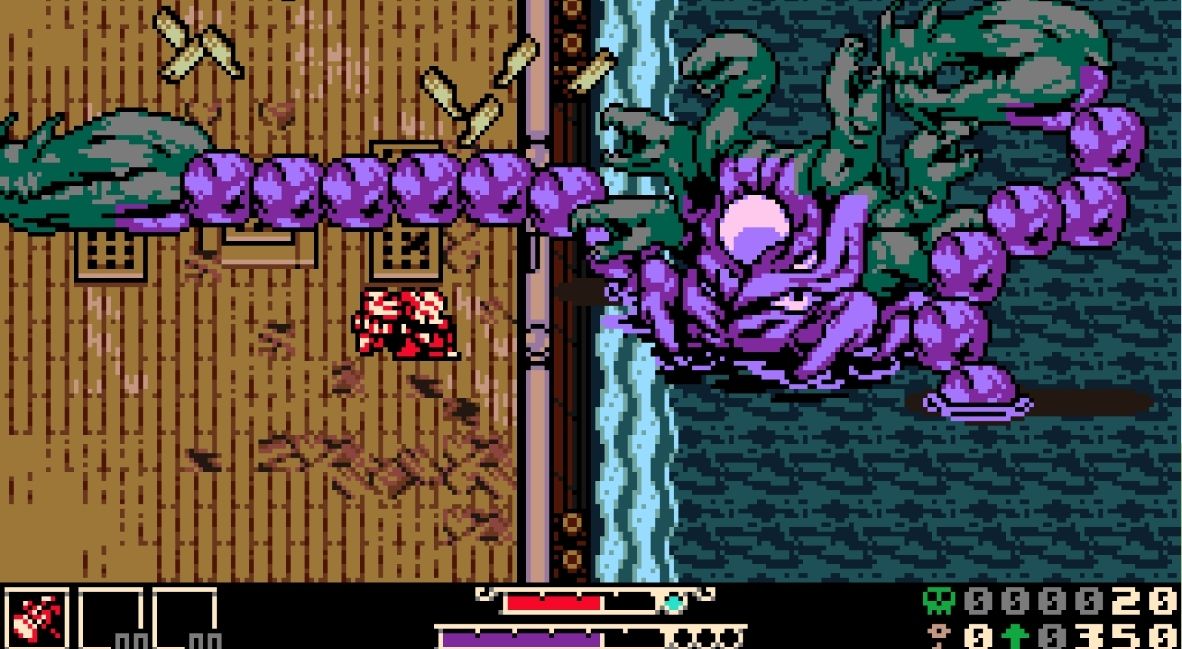
We then took a step back to what Nick said earlier. Going from developing a 3D game back to creating 2D pixel art. “It was more like coming home. I had done all the art for Shovel Knight. It really was like a breath of fresh air. I think one of the first things I did was work on the opening boss.”
“It was really fun to just like draw cool pixel art and have it be done. I don’t need to send this off for VFX. I don’t need to think about how the rig is going to be. I can just draw the pieces. It’s done, it’s cool, and it’s effective. And then a week later, it’s in the game.”
Mina the Hollower is hinting at a capitalist apocalypse.
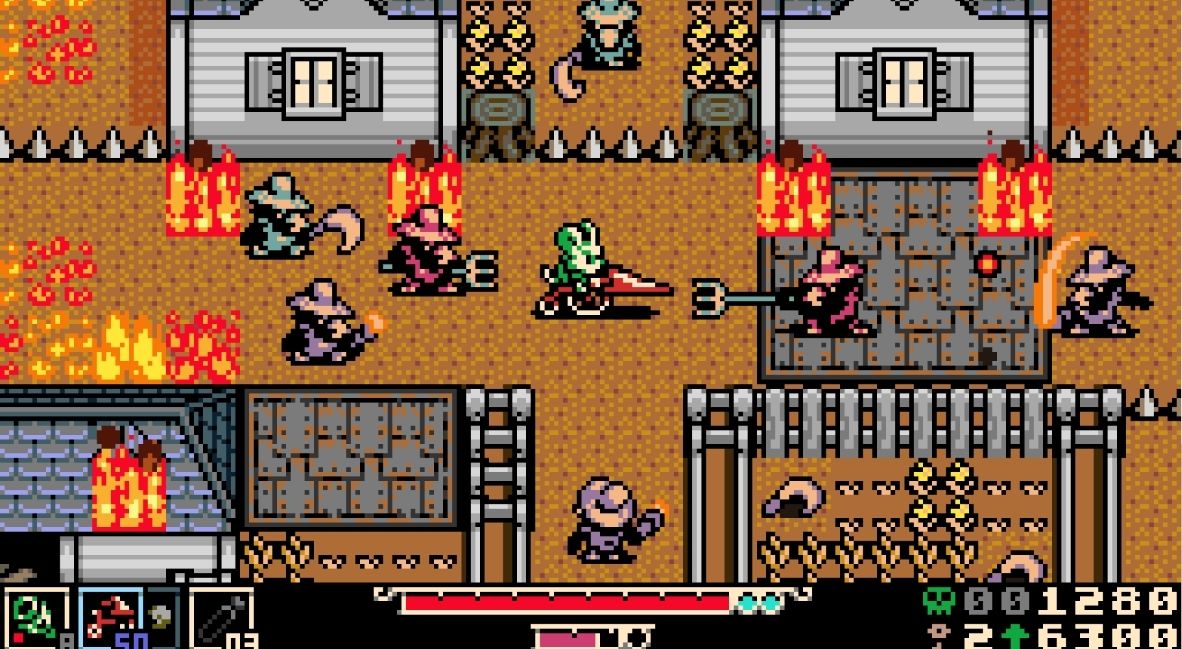
The opening of the game especially sets the tone that Mina‘s story is going to be very different from Shovel Knight’s. Darker, more stakes on the line right from the jump, and most impactfully, lots of death, mystery, and intrigue about the grander mystery of the island Mina gets stuck on. And Nick went on to discuss why they went with the darker tone that they did end up with.
Per Wozniak, “We know that our audience is going to be adults. It’s approachable to kids, and so we don’t want it to be like ‘existential dread’. But we are going to have lines hinting at the capitalist apocalypse that we find ourselves in.” He gave the example of one of the Ossex’s main townsfolk, a person fascinated by one of the collectibles of the game, Kears.
“There’s a character who you help out in rigging the economy for Kears (the keys in the game). By the end of it, you get a little plaque that says ‘The price is whatever we say it is.’ A child’s not going to really understand what a speculative market means, but digging at that is fun for the adults that are paying attention.”
Zelda II is a major influence on Mina.
We then moved on to the balancing of the game. Mina‘s very much like many action-adventure games you’d find on the market. It’s open-ended in how you approach the game’s progression. You may stumble upon a path that’s quite difficult for you, but finding the “correct” path that Yacht Club Games made later could make it much easier for you to conquer. That also leads to some moments that are much easier than anticipated, even when done in the right order, just by becoming overpowered or overleveling, or even getting excellent trinkets to equip to empower Mina to make the game almost trivial.
Nick said balancing is what they’ve been working on for the past year. “So the balancing, that’s basically what a lot of it’s been happening in the past year, besides just finalizing the content. There’s definitely a learning curve at the beginning, getting adjusted to the idea that things are stronger than you and you have to like get stronger to fight them. We’ve had some people play that just find it like way too difficult to even get started, and so there are modifiers that are effectively cheats that you can turn on and off. The modifiers do things like make you invincible, and some of them actually make it harder too.”
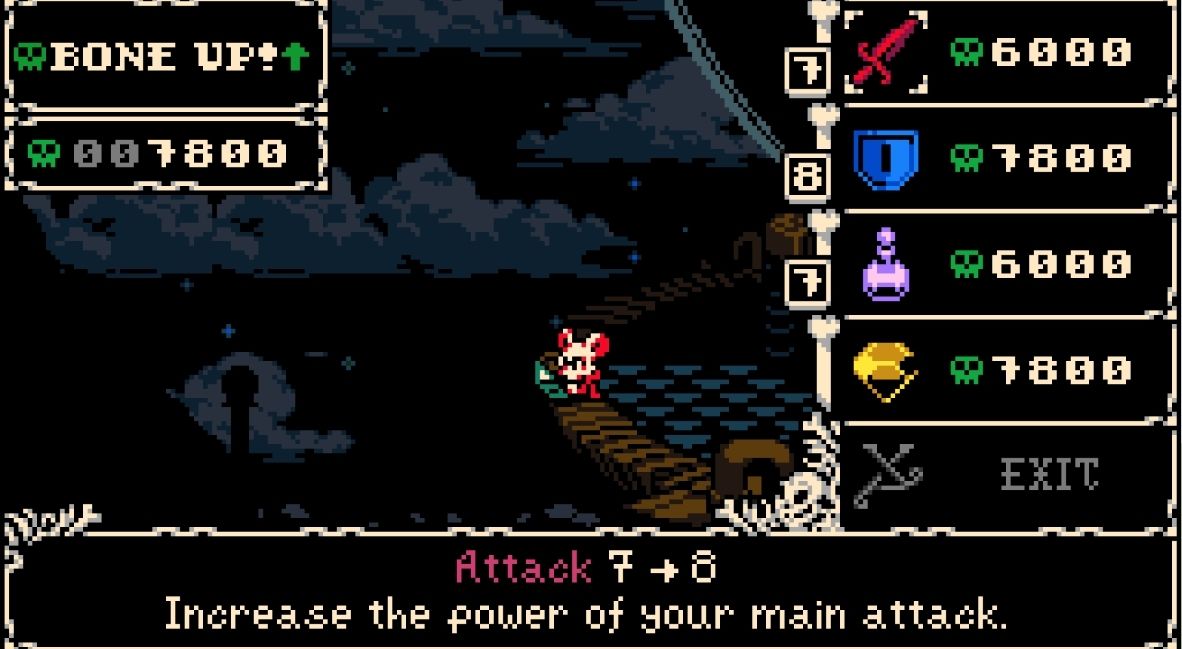
Speaking on leveling, Mina the Hollower‘s leveling system is very similar, in Nick’s words, to an overlooked game in a beloved series, Zelda II: The Adventure of Link. You collect bones as you defeat enemies and explore. As you reach a certain threshold, Mina levels up, and you can improve one of three stats. Rinse and repeat until you reach the max level for all the stats. A game using one of the more frowned-upon entries in The Legend of Zelda series was quite shocking to see.
From our talks, there’s more than just a small handful of staff at Yacht Club Games who really enjoy Zelda II. “The leveling thing was there from the beginning. That was mostly because Sean, who’s the director, loves Zelda II. We like that system a lot, so we ripped it off but tried to make it still feel like our own. There are three main avenues: the attack, defense, and then your sidearms, but having the bone stone as a fourth option, the ability to kind of bank your bones was really important.”
He continued, “We have to provide some ways for you to kind of guarantee some success, even if you’re not fully getting there. So if you don’t have the ability to get the next level of attack, you’re not confident enough to save up for it, well, we give you an out and let you bank bones so that you can’t lose those bones anymore.”
Finally, we talked about the greater world introduced in Mina the Hollower. Tenebrous Isle is just one island, and Mina, at the beginning, is traveling from elsewhere to this land to help fix its energy towers and her friend, the Barion Lionel. Nick didn’t confirm exactly that a sequel is in development, but he did say that they are already throwing ideas around.
Yacht Club Games has proven it can take a great idea and deliver.
“We have ideas for where it could go and where we want to take it for a sequel.” Wozniak added, “When you’re making something, you have to contain it because you’ll just have billions of ideas. So the bucket of ‘let’s save that for the sequel’ grows and grows every day. We’re always thinking about how that bucket can actually be fun and interactive, and I guess I would say there is a hint for what we’re thinking about, but I’m not going to say where.”
Yacht Club Games has proven it can take a great idea, involve fans through successful Kickstarter campaigns, and deliver interesting worlds that fans can’t get enough of. Mina the Hollower is no exception. After talking to Nick Wozniak, it’s clear that the entire team making Mina loves what they do, and are great at making stellar games out of mechanics that fans may not enjoy on their own. Like Zelda II‘s leveling system, or digging to dodge attacks, and the trinket system.