

At Gamescom 2026, we got the chance to see a new hands-off demo of Tomb Raider: Legacy of Atlantis. With a presentation given by Crystal Dynamics‘ Jeff Adams (Experience Director) and Flying Wild Hog’s Michał Kuk (Creative Director), we got the chance to see the developers demo their take on the Swords of Damocles. While the demo session was filled with platforming spectacles and reimagined big swords falling from the ceiling (sometimes intentionally), the finer details stood out to me.
Having already gone hands-on with the title at Summer Game Fest, the demo didn’t really highlight anything new in terms of gameplay. It showed puzzle-solving elements, and the developers stressed that players wouldn’t need the new scanner just to solve puzzles; instead, they could use it for a bigger challenge and to learn lore and history about the places Lara enters. The hands-off Gamescom demo also showcased platforming far more than our time with the game at SGF.
Still, finding something new to discuss for Tomb Raider: Legacy of Atlantis was a tall task. That is, until I noticed Lara Croft’s braid. It’s a tiny element that most in the room didn’t notice until I asked a question during the Q&A portion, but Lara’s braid and her ponytail (when in the Legends outfit) get stuck on her backpack.
It had just so happened that I had been forced to braid my long hair because the bottom of my ponytail had been caught on my backpack so frequently over the course of my nine-hour day. As Lara walked and did her signature acrobatics while moving through the world, her hair moved just like mine.
It is small details like these that demonstrate the depth of craft going into it.
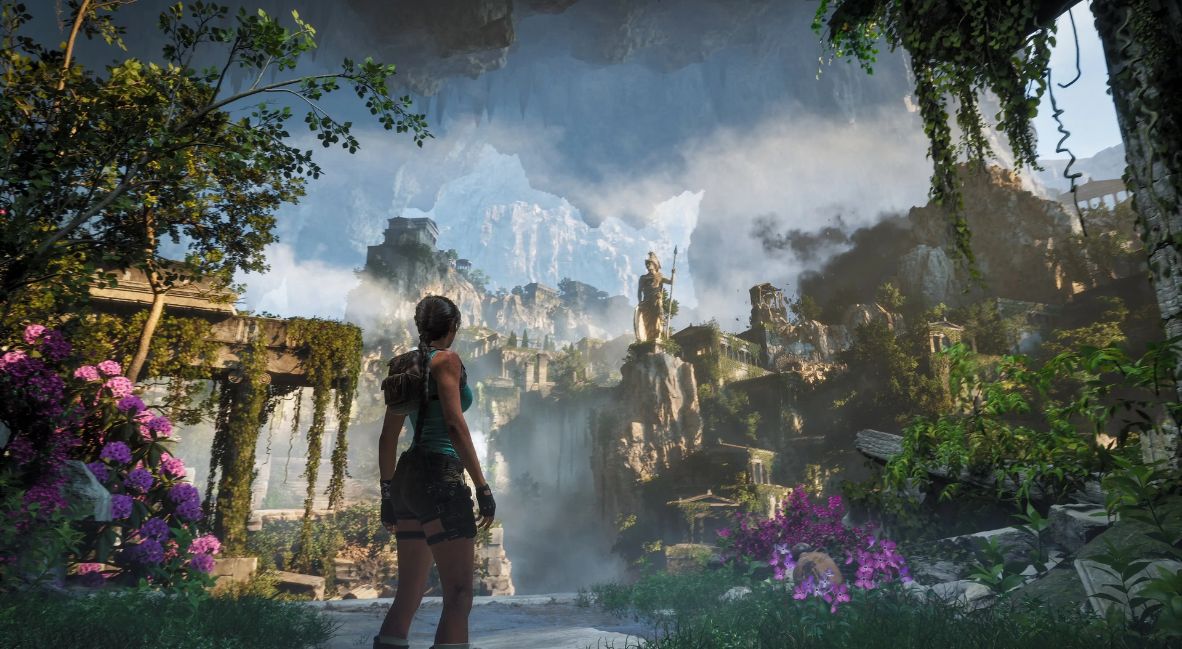
While this element is small for some, it highlights the care that has gone into designing the hair mechanics for the game’s lead character. Too often, women characters in games are subjected to weird haircuts that look more like LEGO hairpieces. That, or we’re limited to extremely high ponytails that no amount of hair ties or hairspray would keep in position comfortably. If not that, there’s sometimes some weird pigtail combo that does more to infantilize the character model than anything else.
Hair in video games is often an afterthought. This is especially true for Black characters and any character sporting anything longer than a bob. While Veilguard’s hairtech was a step forward, it still remains a rarity outside of sports games. But not here.
It might seem like the movement of a character’s hair is simply an aesthetic issue with no impact on gameplay, but getting these elements right matters. Men have endless power fantasies in games. Lara was mine. And part of that is about immersion.
The movement of Lara’s hair made me hone in on the other small details too, from the cuts on her arms to the dirt on her face. Visually, her character model pulls off the pristine makeup and pout we see actresses like Jennifer Lopez write into their contracts. But her beauty is only a small part of her charm. It’s the mechanics that make Tomb Raider so iconic.
Modern expectations versus faithful reimagining’s and finding a good balance.
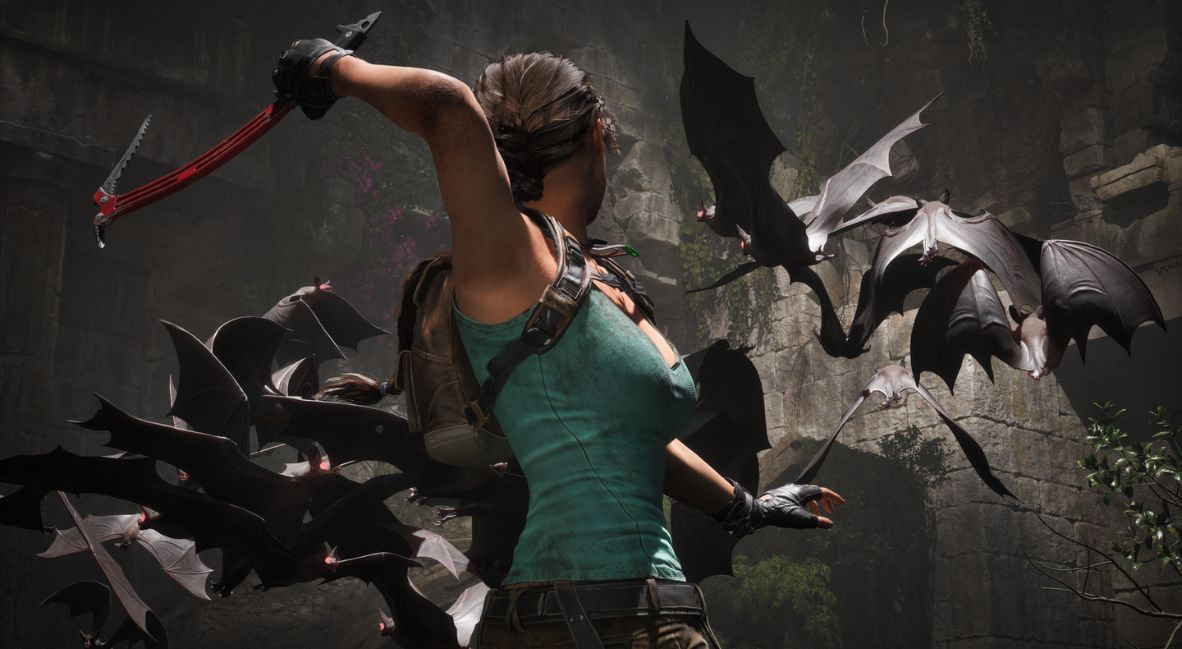
Throughout the demo, as Lara Croft moved through Tomb Raider: Legacy of Atlantis, each interaction offered a new take on old-favorite systems, reimagined to meet modern audiences while still holding onto what helped define Tomb Raider as a franchise. While some in the room asked questions about the larger focus on platforming or the more interactive elements of the Swords of Damocles, for me, it was again the small things.
If you’re unfamiliar with the original Tomb Raider series, Lara Croft’s debut in video games wasn’t just the first woman protagonist in a game (that wasn’t only revealed at the end, like Samus), but the game also ushered in 3D snap platforming in a way that Western games hadn’t done yet. That was alive and well in this hands-off Gamescom demo.
That said, there is a delicate balance between using the 3D snap-based grid platforming Tomb Raider became known for and adapting to modern platforming tastes that have become increasingly focused on magnetism, or, on the other end of the spectrum, difficulty fueled by fluid movement.
The snap-based grid design of the original Tomb Raider games offers moments of forgiveness when players understood the gridlocked design. While not entirely magnetized, the tank controls used to move Lara offered forgiving snaps once you could execute ledge hangs at just the right moment or space. While Legends accelerated the franchise’s approach to platforming, I couldn’t help but wonder where Tomb Raider: Legacy of Atlantis landed on the spectrum of modern expectations and faithful reimagining of old systems.
Tomb Raider: Legacy of Atlantis aims to create a sense of danger without punishing players.
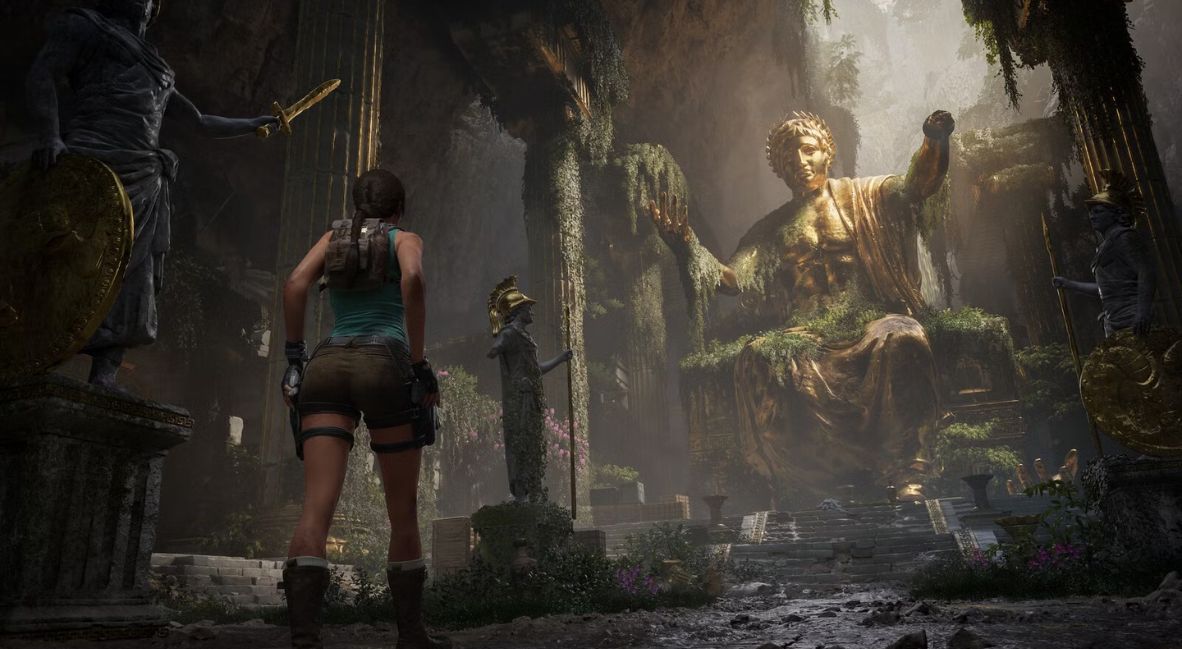
When we went hands-on with Tomb Raider: Legacy of Atlantis at Summer Game Fest, platforming wasn’t the primary focus of the Peruvian section we played. Instead, that demo was focused on showcasing the acrobatics and environmental puzzle design. Here, though, the developers chose to show off the reimagined verticality of the new Swords of Damocles puzzle section in Greece to showcase Tomb Raider’s most vital mechanic: platforming.
When asked about this, Tomb Raider: Legacy of Atlantis Experience Director Jeff Adams answered that it was somewhere in the middle. Adams said, “Sometimes I think we have to think about what was [done with intent] and what was because of the limits of controls. And so, those crushing experiences—I think I have plenty of experiences of beating my head against the wall trying to get through a certain level and then as a developer, I had to ask myself, was that hard? Or was it just unfinished? Was it something that just could not get to where it needed to be?”
He continued, “So we believe with modern gaming tastes, [players] are much more versed in controls, and we want to make sure that we have an invisible hand that makes traversal feel intuitive and natural. We still take the guardrails off, and you can put yourself in danger and fall off ledges if you aren’t paying attention, but we want to make sure nothing feels like ‘hey, I should have made that.’ So, if anything, you’ll never know when we’re helping.”
But it was just the right amount of snap-locked grid platforming that allows Lara to do the gymnastic feats we’ve come to recognize her by. It’s what has allowed her to pull herself onto ledges in a handstand, and in the hands-off demo, lets her gracefully land on the tiny sword hilts, relying on animation to bring home the danger without punishing players.
The three pillars define the game to Creative Director Michał Kuk: Platforming, Puzzles, and Combat.
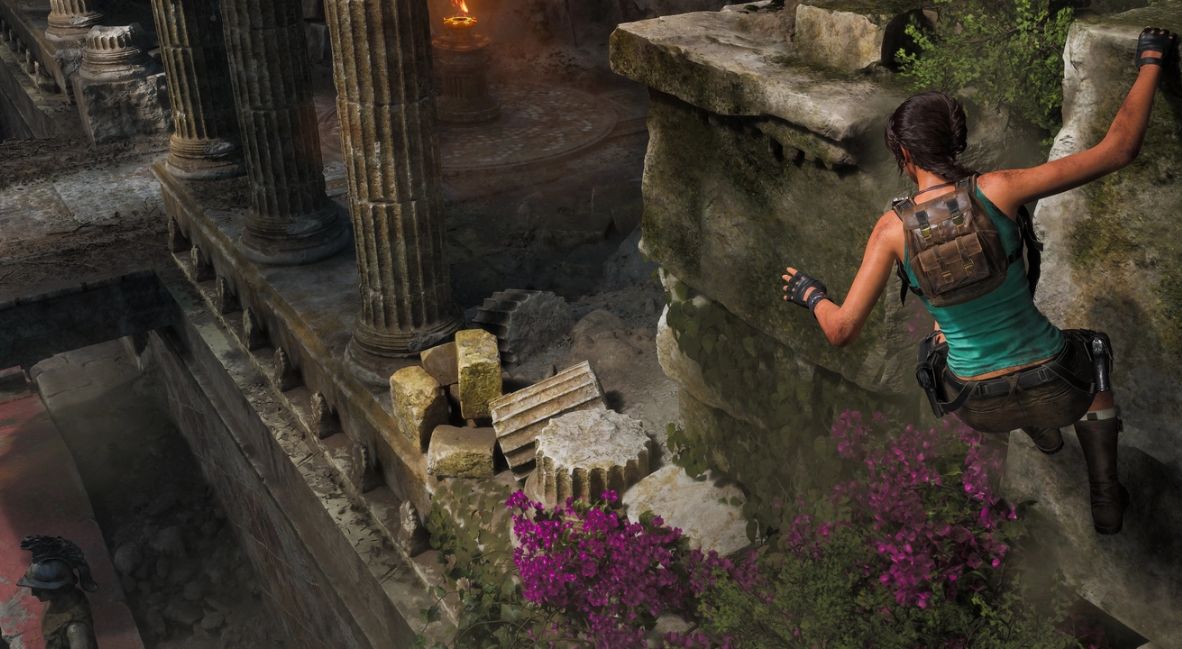
I was worried about adding modern, more-magnetized platforms after the complete ease of platforming in Crystal Dynamics’ Survivor series. But after speaking with the developers and seeing in practice, the invisible hand of the developer isn’t overcompensating like Crystal’s outings with Tomb Raider (2013) and Rise of the Tomb Raider; instead, we’re getting something a bit more complex.
“Platforming is number one for Tomb Raider, and we’ve designed the game around it. But that’s just one pillar; the second is puzzles and then combat,” Creative Director Michał Kuk, from Flying Wild Hog said, in response to a question about how open platforming will be in the finished game.
Adams added to Kuk’s answer, “Part of the reason that Damaclese is such a great demonstration of Greece is [that] it does focus on a lot of those platforming elements. The original Damaclese level was more about floor puzzles and dodging stuff from the ceiling and making sure you don’t get spiked from the ground, so we’ve added more verticality to it. This shows that traversal is a core pillar of the gaming experience.”
Tomb Raider: Legacy of Atlantis isn’t looking to be a one-to-one remake of the original game, but it’s also not trying to take the Survival trilogy’s aesthetics and sensibilities. That’s what makes it exciting, and it comes through in the small details. While Lara’s hair and her platforming movements and mechanics don’t immediately seem connected, both highlight an attention to detail that looks to the past through the lens of the present.
Outrunning the shadow of early development, AI usage remains a hurdle for the game.
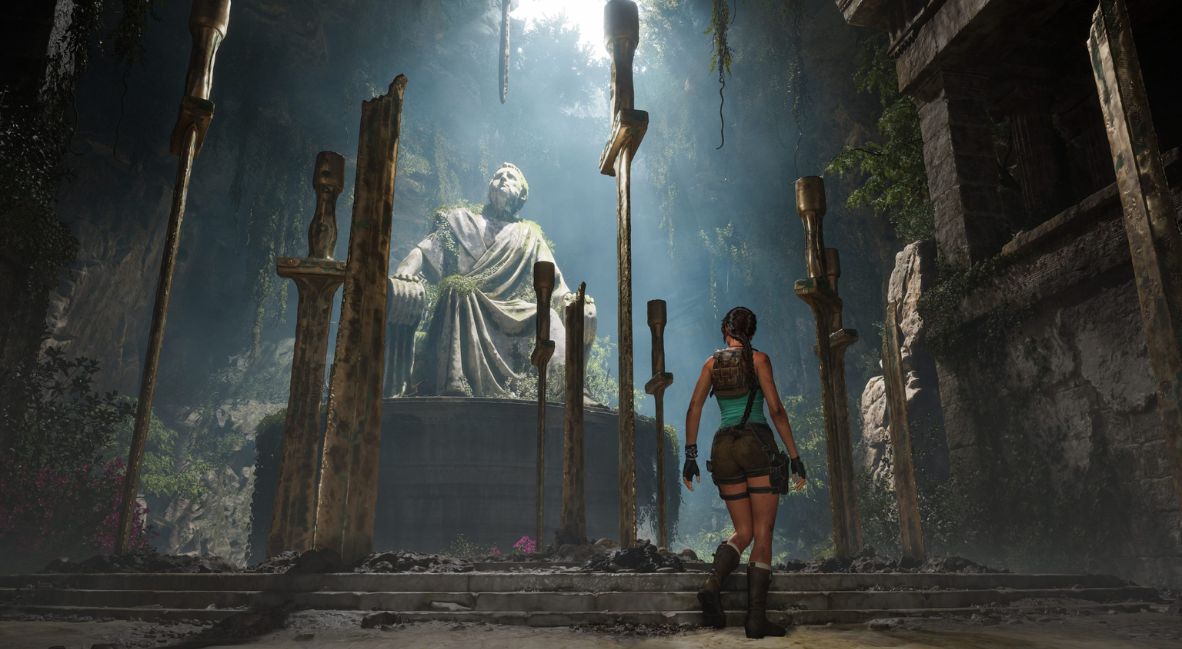
The reimagining players are being offered does have the shadow of AI usage hanging over it, in a way the developers have tried to distance themselves from. With usage similar to what players have seen in other games for early-game development, like Clair Obscur: Expedition 33 (though those assets made it into launch), the developers behind Tomb Raider: Legacy of Atlantis will have to work to present the human-created element of their game in a distinct way.
The question remains whether Tomb Raider: Legacy of Atlantis can outrun the boulder of its early development gen-AI usage, and whether the human-made work on display in every subsequent showing can wipe the asterisk from its title. During the Gamescom hands-off demo, it seems that the developers have gotten that memo. During the Q&A session, the developers seemed keenly aware of the asterisk on the game’s work.
While the demo featured all the ways the game honors the past, it also offered a very, very, very small glimpse of new additions that could make the game feel dated in the post-Uncharted adventure space the Survivor Trilogy found itself in: skill trees.
Still, walking away from the appointment, the love for Tomb Raider wasn’t just simply there – it was the focus. It’s clear it comes from a thoughtful approach in bringing to life a game that seeks to honor a legacy that has defined a generation of players. Tomb Raider: Legacy of Atlantis continues to capture elements of the originals that made me fall in love.
While the jury is still out on how the action-adventure RPG skill tree will affect the game’s homage to the past after this demo, it is still giving me everything I wanted. If only it could escape that creativity-crushing boulder hurdling its way.
Tomb Raider: Legacy of Atlantis is set to release February 12, 2027.