

The thing that I tell everyone is that I am who I am today because Lara Croft. Tomb Raider (1996) was the first video game I beat myself, and it was something my mother saved up for a year to afford with the console and all. When Lara Croft’s franchise was resurrected in 2013 by Crystal Dynamics, I wanted to love it.
Still, the lack of tombs, puzzles, platforming, and the focus on Uncharted-like combat and story was too much. While I fell in love with the reboot of Lara Croft in Shadow of the Tomb Raider, something was still missing.
Now, with Tomb Raider: Legacy of Atlantis, it’s hard not to feel like she is finally back. Developed by Crystal Dynamics and Flying Wild Hog, and published by Amazon Games Studios, Tomb Raider: Legacy of Atlantis is a remake of the original game, taking players back to Lara Croft’s globetrotting adventure, and of course, she only plays for sport.
To do this, the development team has brought back Lara Croft’s braid, signature green top, and dual pistols. Yes, she looks like the woman who taught me to be unashamed in my curiosity and grit, but the most important thing about my time with Legacy of Atlantis is that it’s not about aesthetics. The developers also resurrected the gameplay I have been yearning for in a Tomb Raider game.
Lara Croft is finally back.
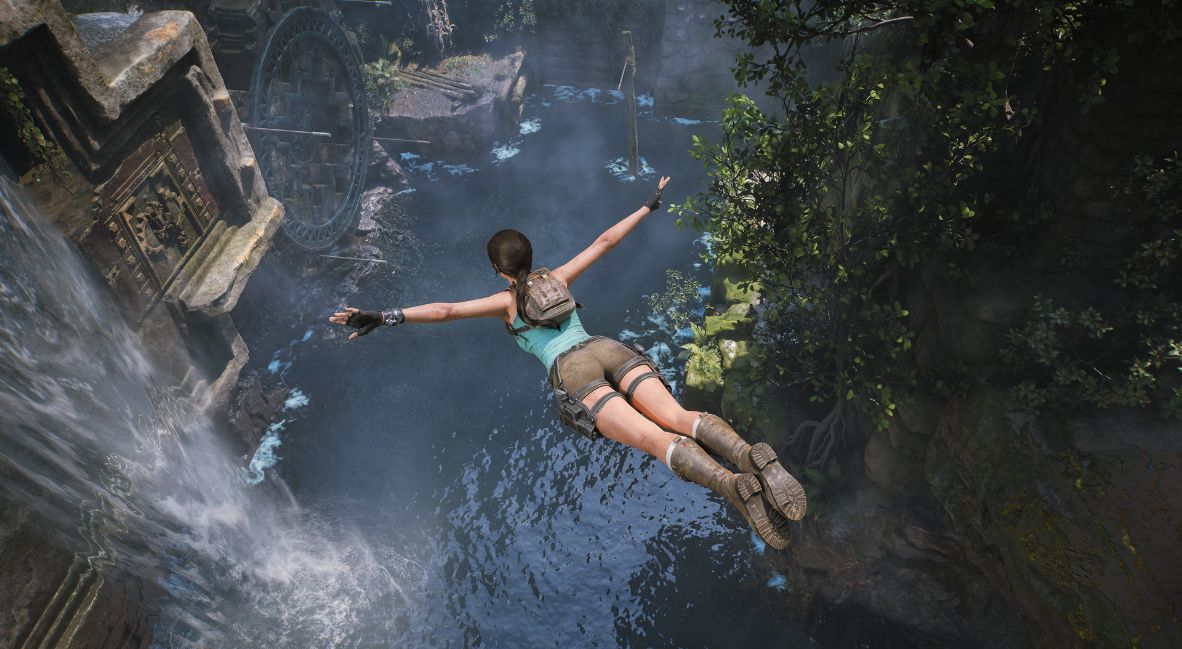
During Summer Game Fest Play Days, press and content creators got to go hands-on with Tomb Raider: Legacy of Atlantis for about an hour. We worked our way through a temple in a hidden city in Peru for about as long as it would take you to solve the puzzle and explore the richly layered environments, filled with foliage, small insects, and artifacts from a time long past.
At this point in the story, as we were told, Lara Croft has been hired by Jacqueline Natla, a wealthy businesswoman and collector, to recover a mysterious artifact buried deep within a hidden city in Peru. Called the Scion, this artifact originated in the legendary civilization of Atlantis, where it was split into three pieces and hidden across the globe. Now, Lara has to traverse thousands of years of history and the globe to collect the pieces.
For us, we were dropped into the tomb of Qualopec, a member of the Triumvirate who ruled Atlantis before its fall. Our job was to find the artifact somewhere in Qualopec’s tomb, nestled within The Lost Valley in Peru. And cap it all off with a dual pistol gun battle that showcases the game’s combat, and the return of Lara’s signature acrobatic dodges and jumps.
Set early in the game, the Legacy of Atlantis demo takes its time to introduce the game’s mechanics and Lara Croft’s movements, and to familiarize the player with how puzzles develop, driven by the environment’s design. While the puzzles are fairly simple to solve, the challenge for me was seeing just how much of the world I could explore. The Lost Valley in Peru offers varying elevations, rich foliage, and lighting that sets the tone for everything you experience.
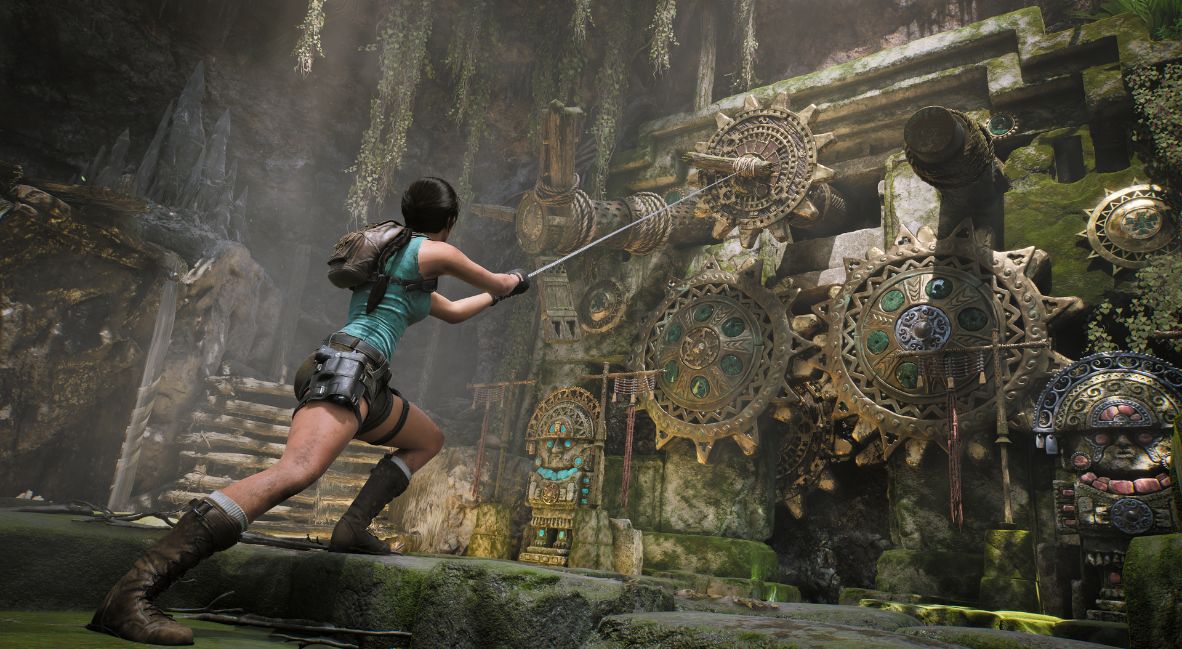
More importantly, the beauty and mystery captured in the tomb we enter are thoughtful. Not just from how the player interacts with the puzzles inside of them, but also how every inch of the walls has been artfully crafted. The complexity of the environment is too much to explain, and with that artistic depth, the developers also have to do enough to show the player how to solve the puzzle they may not even recognize.
If you do have issues spotting elements, with a noticeable lack of in-your-face environmental clues, players can use the Scanner, which allows Lara to identify elements important to completing the puzzle by scanning objects and architecture. The Scanner is also essential because of how integrated each lever and cog is tied into the ancient structures they’re attached to.
That said, we’ll have to wait and see how much investment the developers have put into capturing the history and culture of areas outside of what lends itself to puzzle design. From what we saw in the demo, that element isn’t entirely clear despite what the developers said in the introductions.
One element from the reboot series, and particularly Shadow of the Tomb Raider, was that it showcased Lara’s intelligence in her respect for the ancient places she was entering, a curious balance for sure, but one that isn’t alien to the character, even in her later titles made outside of the reboot series.
Platforming and puzzles regain the spotlight in the next take on Tomb Raider.
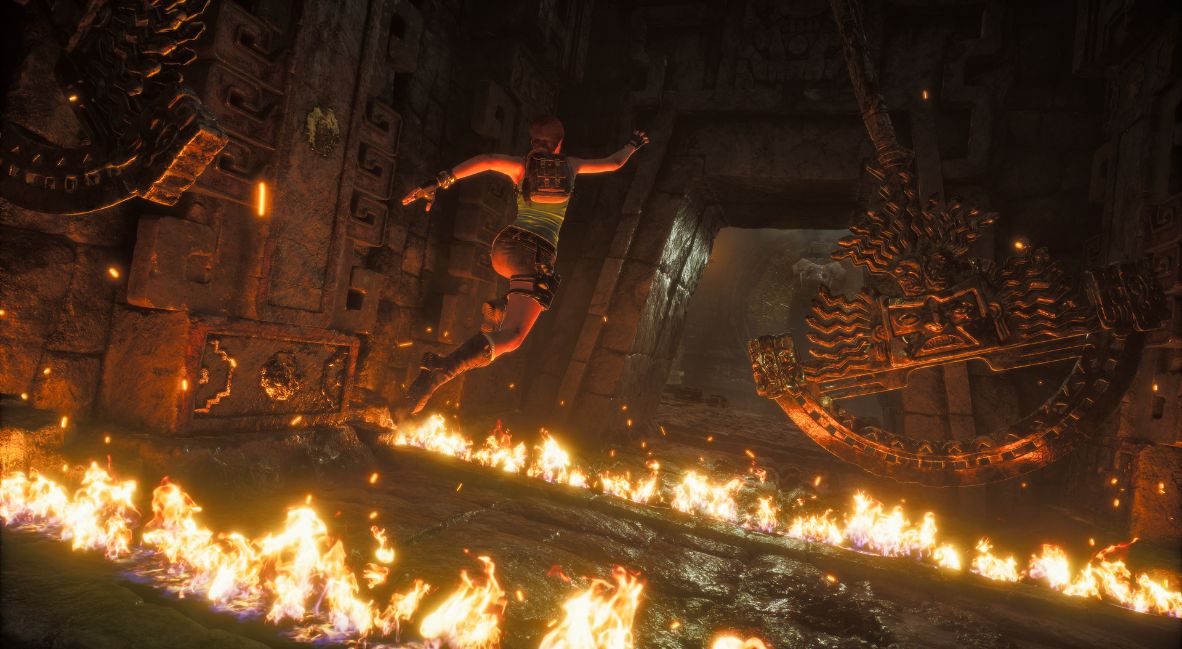
With a focus on physics-based puzzle mechanics and movement, Tomb Raider: Legacy of Atlantis feels like the original game, in terms of design and handling, only refined to our expectations. The game meets the expectations of the original’s trailblazing 3D platform mechanics, capturing pathways through platforms that will feel familiar to players; however, the use of water and other environmental features like light throughout the game elevates the experience, while classics like levers and pressure plates are essential to what the game and this demo were meant to be.
Additionally, Tomb Raider: Legacy of Atlantis also captures the old traversal mechanics and animations that became Lara’s hallmarks as her series grew. She climbs, leaps, and swings exactly like we saw in the original franchise, capturing the gymnastic elements that aim to feel fluid and thoughtful, if it’s not always realistic.
In fact, the game’s full-on lean into fun is its strongest call to nostalgia, honoring the long lineage of action-adventure heroes that Lara helped define, alongside Indiana Jones. Lara is always athletic, always deadly, and always has something to say.
More importantly, one of the modern upgrades noticeable on the sticks is that Lara’s body has a weight that shifts forward, backward, and side to side, making platforming require more precision. Traversal never feels bogged down, just more authentic to how bodies move. Oh, and of course, she has a grappling hook that isn’t just there for traversal but is essential to solving some puzzles.
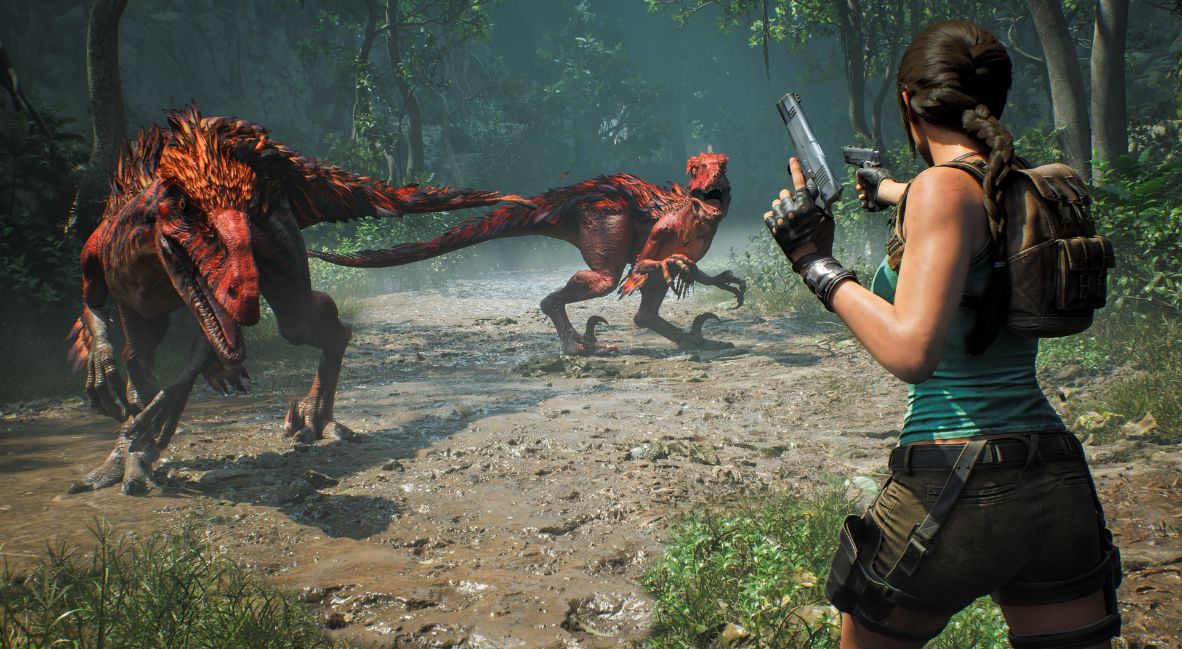
The way Lara comes to life hints at the game’s eventual embrace of more campy elements, similar to what we saw in The Great Circle, which helps establish what we understand the series and genre to be. Gone is the grim, dark, survivalist telling of who Lara Croft is; now there are dinosaurs.
The end of the Tomb Raider: Legacy of Atlantis demo was all about combat: walking into a valley surrounded by cliffs, raptors came out of nowhere. With a focus on dodging and continuing to move instead of staying stationary, combat is easy to pick up. It’s designed to reflect that Lara is always on the move, using her acrobatic skill set and grappling hook to outmaneuver enemies, but the most exciting part of the fast-paced action combat is that you can enter Focus Mode.
Throughout combat, players fill their Focus meter in the bottom corner, represented by small circles that fill over time. Quickly filled up through combat action, using the Focus System to your advantage is how to clear combat, and it works beautifully.
When you enter Focus, players slow down with Lara dodging the attacker in front of her. With time at a near standstill, players are able to line up perfect shots, and the best bit is that your ammo refills, even if you’re completely empty.
Combat is weighted perfectly with a focus on Lara Croft’s agility and fearlessness.
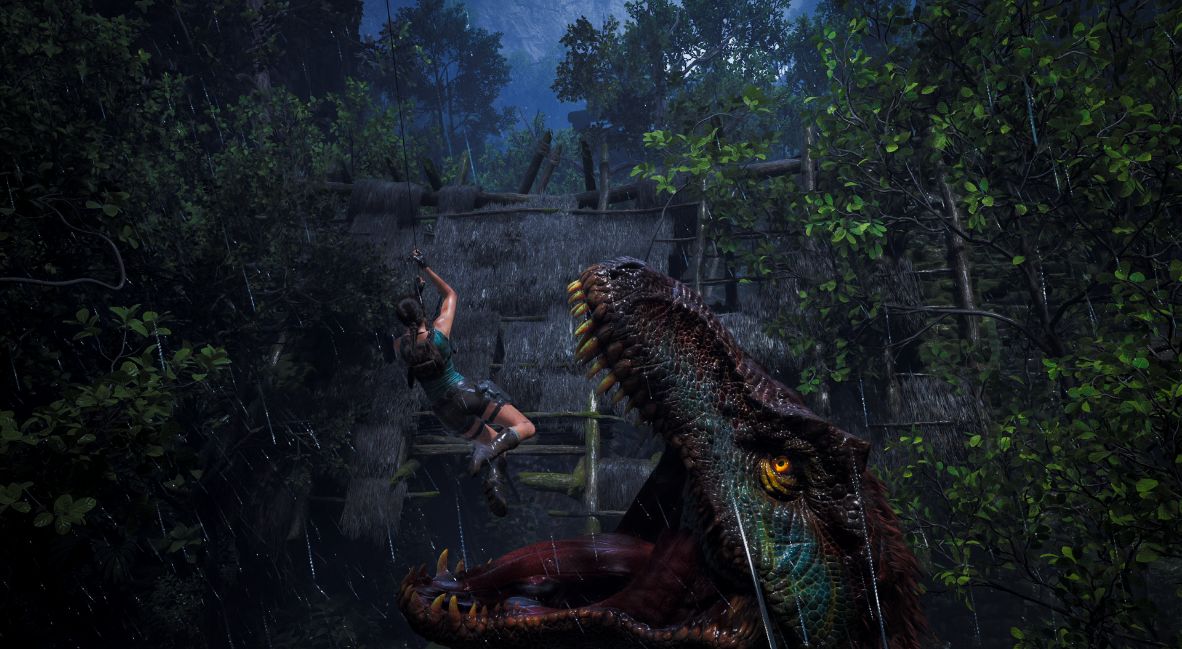
To close out the Tomb Raider: Legacy of Atlantis demo, we also got a look at a cinematic quick response sequence where Lara runs and slides away from a T. rex encounter that makes you focus on the sticks. This ultimately highlights how nimble and unafraid Lara is, symbolic of one of gaming’s most important women.
While the T. rex is similar to the original, the model has been redesigned to better fit the tropical surroundings it inhabits, showcasing one of the updates the developers have made to some of the original’s most iconic moments.
Tomb Raider: Legacy of Atlantis is everything that fans of the original games and those who love action-adventure cinema in its purest form will appreciate, without being weighed down by the AAA-Sony treatment that Uncharted stunted the genre into replicating. While some may dismiss the game as a safe bet, the choice to return to the past by elevating it to the present day is a bold swing. Especially with elements of Lara’s combat calling cards of the early aughts and late 90s.
Platforming is responsive, puzzles require awareness and care, and ultimately, the game itself felt like coming back to a memory I didn’t know I was starting to forget. Grounded in honoring the past, the mechanics are anything but stuck in the early 2000s, and the more dated elements are there by design and for a nostalgia that I didn’t know I had.