

World of Warcraft‘s latest raid, The Venomous Abyss, and the top guilds have just reached the final boss after almost two full weeks of raiding. Ula’Tek, a giant snake monster that was summoned to defeat an old, dark threat, is stirring. And several guilds: Team Liquid of North American servers and Echo and Method of EU servers are battling it out to be the first to kill Ula’Tek on WoW’s hardest raid difficulty, Mythic.
This has been dubbed the “Race to World First” by fans and has grown immensely since its ambiguous start around the end of Classic and the beginning of Burning Crusade. The RWF, as you may see it abbreviated, is also one of the greatest e-sports events that you may not have heard about, and could easily take the crown as the best in any given tier. Here’s why.
World of Warcraft’s Race to World First players have to play intense hours every day for weeks.
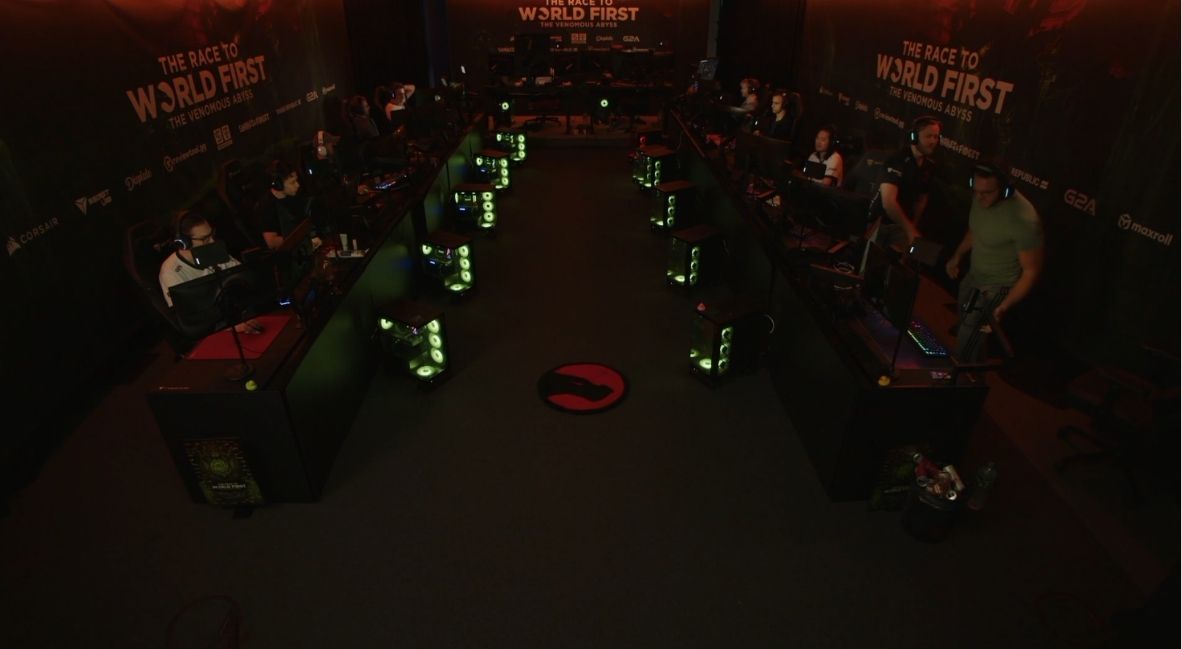
The Race to World First has been around since raiding grew massively popular throughout the life of the original Classic, 2004 release of World of Warcraft. Back then, most raids required 40 people to coordinate to take down the hardest challenges. Also, there was only one difficulty.
Since then, raiding has evolved from some 10-man and 40-man raids to 10- and 25-man raids, and now to the current difficulties of Normal, Heroic (which both allow a range of 10-30 players to play together in this content), and the set 20-man Mythic difficulty. Even more recently, like in 12.0.7, Mythic Flex raiding was introduced, allowing about 15 and 25 players to fight a Mythic boss. But not The Venomous Abyss. It’s keeping the standard 20-man format.
To even beat any raid on Mythic, you need to really know your class and specialization inside and out. You also need to understand how to quickly and effectively gain gear to push the envelope of what’s possible. To be a Race to World First raider, you need to do all of that on top of raiding almost 14 to 15 hours a day, every day, away from family, from work, and usually from home, until the raid is completed.
The amount of support racers need to compete is astronomical.
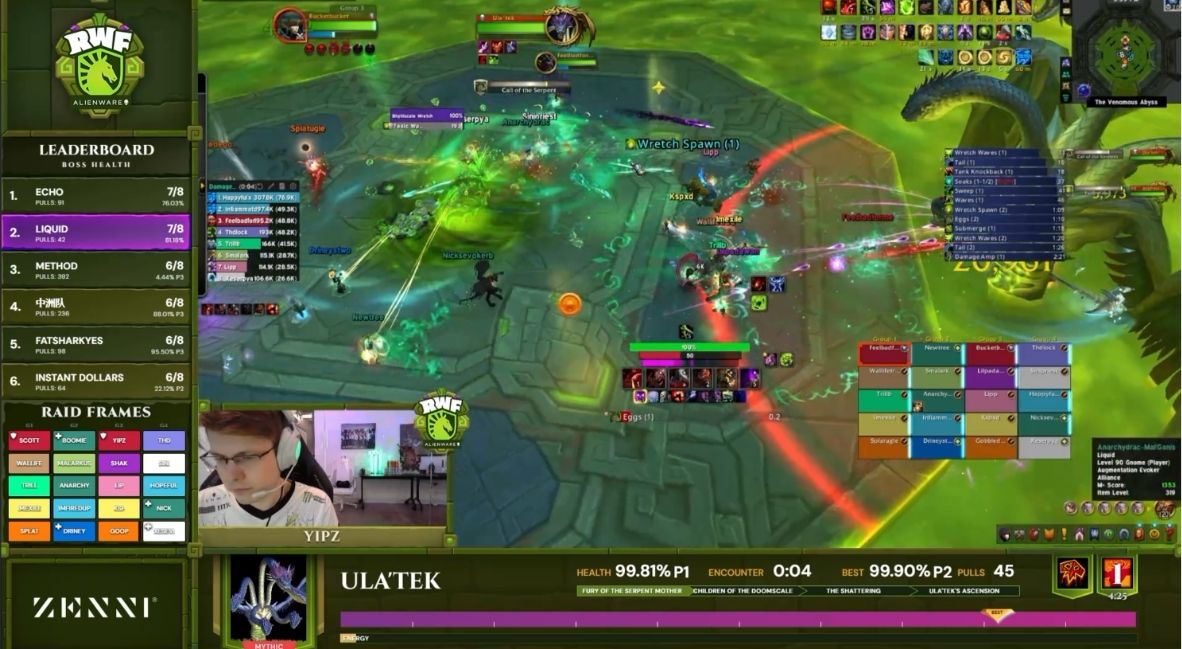
The average race (from release to the last Mythic boss dying) lasts about two to three weeks. In other words, these players are racking up easily 200+ hours of game time in such a short period. As for an e-sport, the RWF is way more akin to an actual sporting team. It’s not just the 20 best of the best playing together. It’s a whole team. Back-ups in case of any technical issues, with those back-ups equally geared and ready at any time. A “21st” man raid leader who watches the fights without playing to be a shot-caller, strategize, and center the team.
Analysts who simulate and do the math to min-max every piece of gear to give it to the right player for the most power. Casters to commentate, stream, and technically support players. Private chefs to feed the team balanced meals. Programmers to help make addons for coordinating these grueling fights. The list goes on. The amount of support these top teams get is astronomical.
But why is the race so interesting? Because it’s taking all of these items and watching two to three equally good teams do constant sprints in a battle of inches. In the average eight-boss raid, the first four to five bosses die quickly to these guilds. The last two to three, paired with Blizzard’s top-tier raid and boss design, lead to days, and sometimes weeks, of attempts to just barely overcome the hardest challenges in gaming as quickly as possible.
Race to World First may be one of the easier E-Sports to watch without prior knowledge.
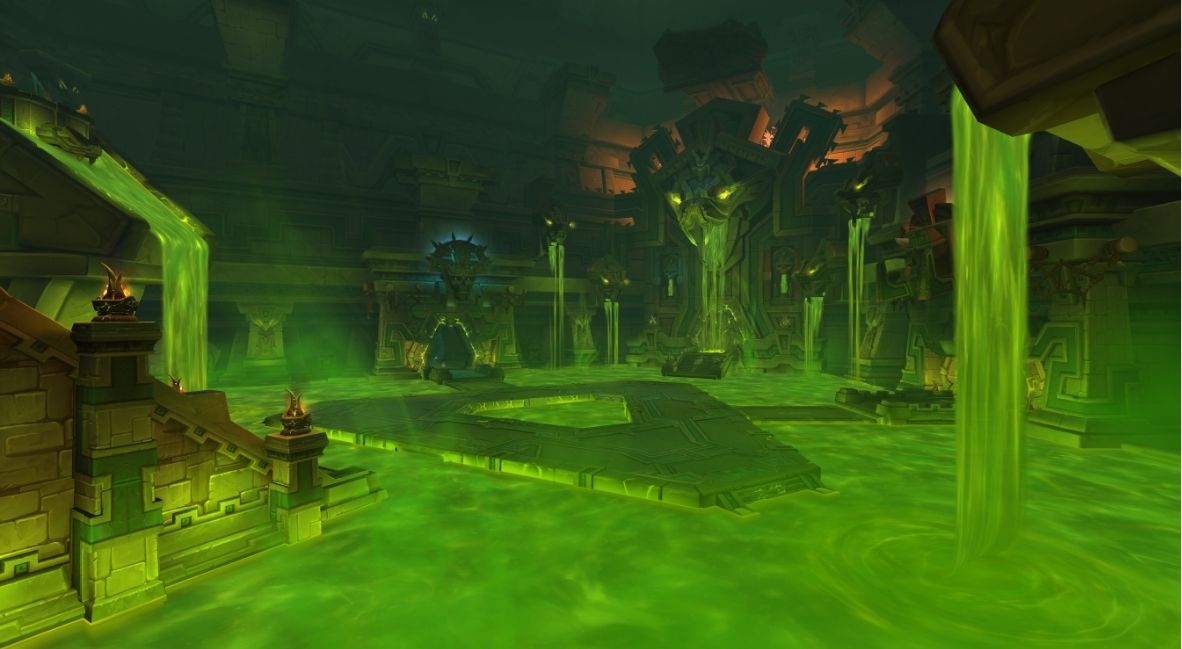
With The Venomous Abyss shaping up to be one of the hardest raids in World of Warcraft history, watching these fights happen on a different monitor is intense. Especially when compared to my raid group, which just finished Normal mode. The same night we beat Normal mode, Team Liquid took the lead in the race by beating the penultimate boss, Coiled Altar, after over 300 pulls. Any one pull could last even five to ten minutes, depending on how long it lasted, too. Echo has since joined them and retaken the lead simply by boss health percentage.
For any lay-watchers, watching a Race to World First may be one of the more easily approachable E-Sport events to tune into without being familiar with WoW. You don’t need to understand the intricacies of how a Mage or Monk work, or know why a Boomkin could be taken over a Warlock. You don’t even need to know the differences between a Paladin, Warrior, or a Bear tank.
You are just watching diehard fans of WoW puzzle-solve a complex boss live. Even watching one of the numerous streams on Twitch, the production really focuses on the overall group pushing further and further into the fight, not on how each class interacts with one another in highly complex ways that lead to their success or failure.
Moreover, the last boss of each raid is where the race really heats up. The final bosses aren’t tested on PTR. All these groups have to go off of are datamined abilities and the in-game dungeon journal. This has led to amazing moments, like in 12.0’s final raid, March on Quel’Danas, where on Easter Day, L’ura, the final boss of that raid, was killed by Liquid. But to the surprise of everybody, after intense play to even reach that point, L’ura came back from the dead for a secret fourth phase of the encounter.
Regardless of your affinity to World of Warcraft, you should tune in to the Race to World First.
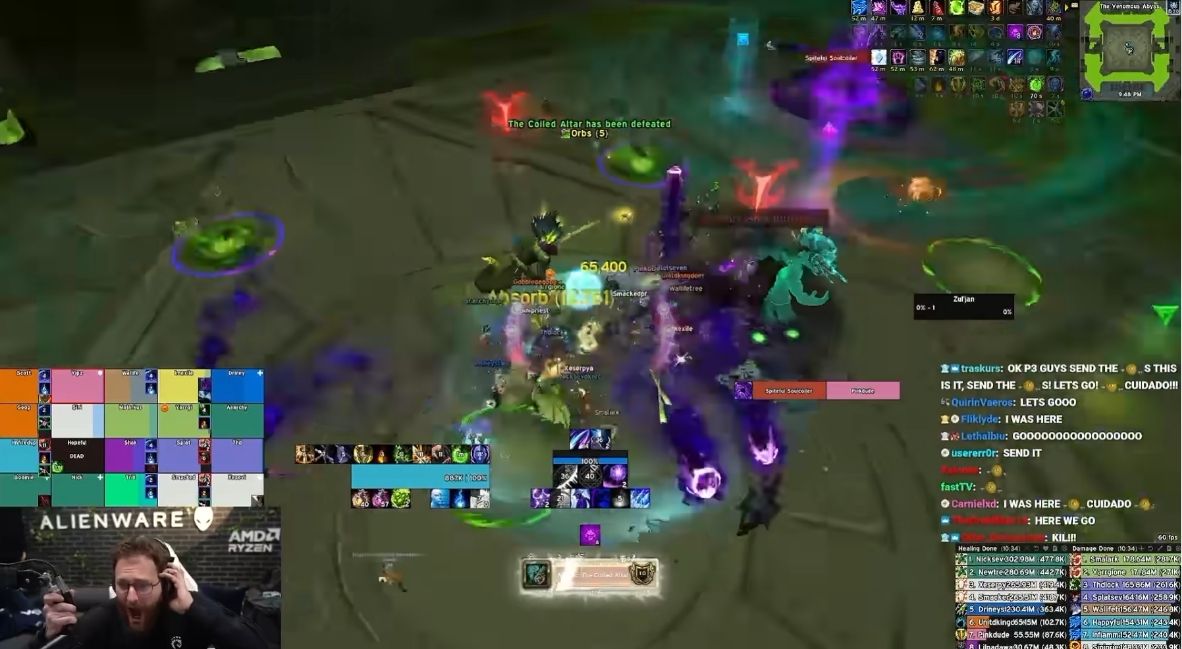
Tuning in occasionally is also perfectly fine. At any point in the day, one of those three guilds is actively streaming on Twitch and YouTube. You can step away and come back to even more progress being made after a break. Plus, the win when you have the leading teams up, and one of them finally kills the boss, and you hear whole buildings of people scream and celebrate always leads to a dopamine hit. Seeing people overcome what seems impossible, or even mathematically improbable, and pull it off.
Plus, there’s also the built-in regional pride with the race. With Liquid representing North America, Echo and Method repping Europe, and Chinese guilds slowly entering the fray after their brief absence, there’s an easier time building that fraternal bond through location. Just like when the Olympics or World Cup roll around. Just this one is every 6 months. Even then, there are some issues with the regional differences.
Like with Europe starting the raid a day later, and having their resets on a Wednesday instead of a Tuesday. But all of these guilds overcome that. NA servers seem to be buggier at release, and EU players can watch NA teams to learn fights before going in there themselves.
Regardless of your affinity to World of Warcraft, you should tune in to the Race to World First. Teams of 20+ people who are the best at their class and game, independently battling it out to beat the hardest, most complex encounters, the fastest. And these games require complete team cooperation, where failing any one mechanic could lead to everyone’s death, forcing a restart from the beginning. Yet the constant game of inches between NA and EU is just a joy to watch, to see who gets the kill first, and who lets out those glorious nerd screams of joy first.
World of Warcraft Midnight is available now on PC.