

Few figures in the animanga sphere have had the same seismic impact as Osamu Tezuka, a cartoonist and animator whose seminal works have earned him the title “the Father of Manga.” As the creator of many foundational texts, his stories have unsurprisingly been reimagined many times: a recent example is Pluto, Naoki Urasawa’s excellent adult-oriented take on Astro Boy.
Among Tezuka’s many manga, Princess Knight is one of his most impactful, inspiring everything from magical girls to the Takarazuka Revue-styled theatrics of Revolutionary Girl Utena. While this deeply embedded influence makes this story difficult to reinvent, director Yuuki Igarashi and OUTLINE take a largely successful swing at this classic with the new Netflix film The Ribbon Hero, which seeks to introduce Sapphire to modern audiences. It’s a grandiose, visually impressive remake with heady ideas that admittedly ends up as less than the sum of its parts.
Within the opening minutes of The Ribbon Hero, it’s clear that this animation team isn’t interested in a beat-by-beat retelling. After a storybook introduction lays out a world where humanity is beset by giant monsters, we’re almost immediately treated to fantastical mixed-media sights.
The Ribbon Hero is a new take on a familiar tale, tackling themes that viewers might not expect.
A floating cartoon heart flitters toward a stage formed from collage, physical curtains parting as the camera takes us back in time. There are flashes of Tezuka’s black-and-white vistas before we’re spat out in a colorful new world. “This is a new take on an old tale,” the dizzying sequence reads.
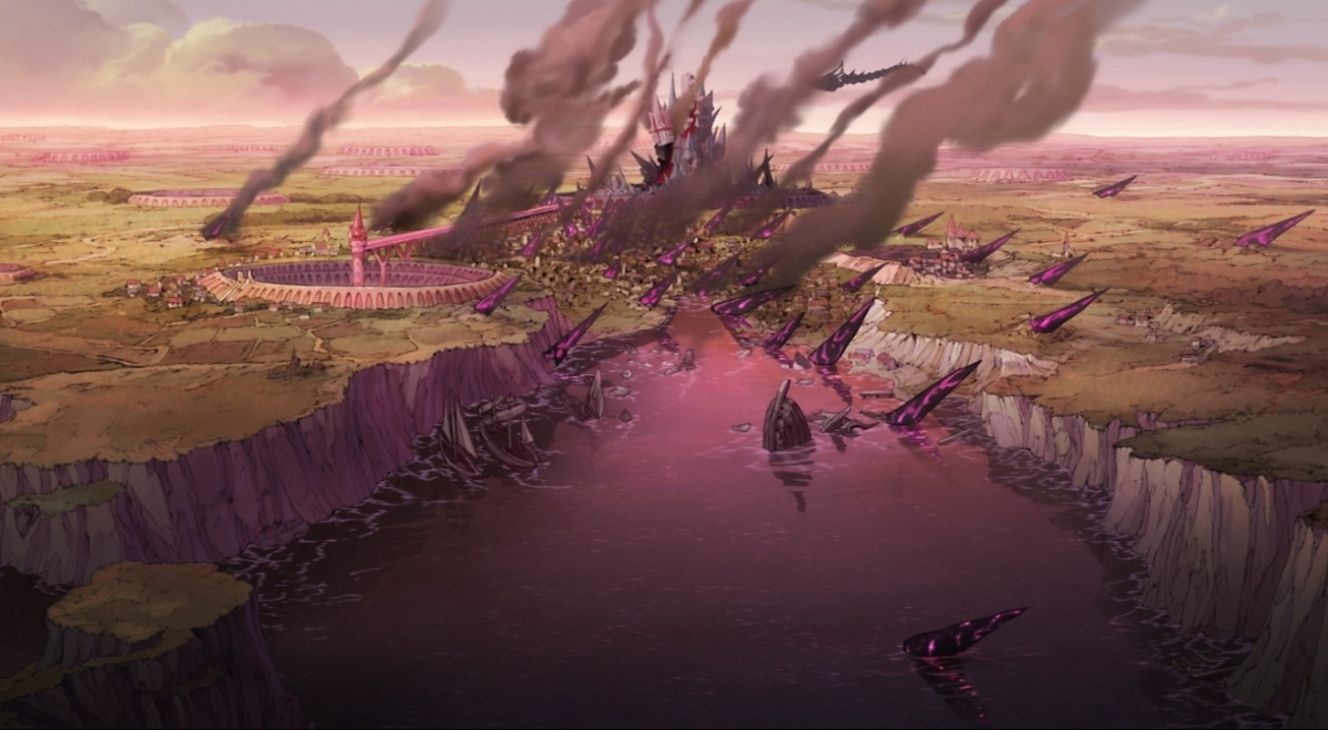
The Ribbon Hero begins in media res as Princess Sapphire (Saya) wakes up to find her castle destroyed and her parents, the King and Queen, on death’s door. She was unable to defeat the Nergal, a flying creature that laid waste to Silverland and slew her family. With nothing left, she leaves home alongside Zirco (Mayumi Shintani) — an elderly retainer drawn in Tezuka’s rounded style — until she finds the power to fight back against the monsters that took everything from her.
If the original manga is deeply connected to gender, with an androgynous heroine who “had both the heart of a girl and a boy,” this version has different thematic preoccupations. Most of these stem from how Sapphire’s new home, Goldland, is not a great place to live, especially if you aren’t native borne. It’s a religious state that worships the Nergals, suppresses political dissidents, and exploits migrant laborers.
The background art is undeniably beautiful.
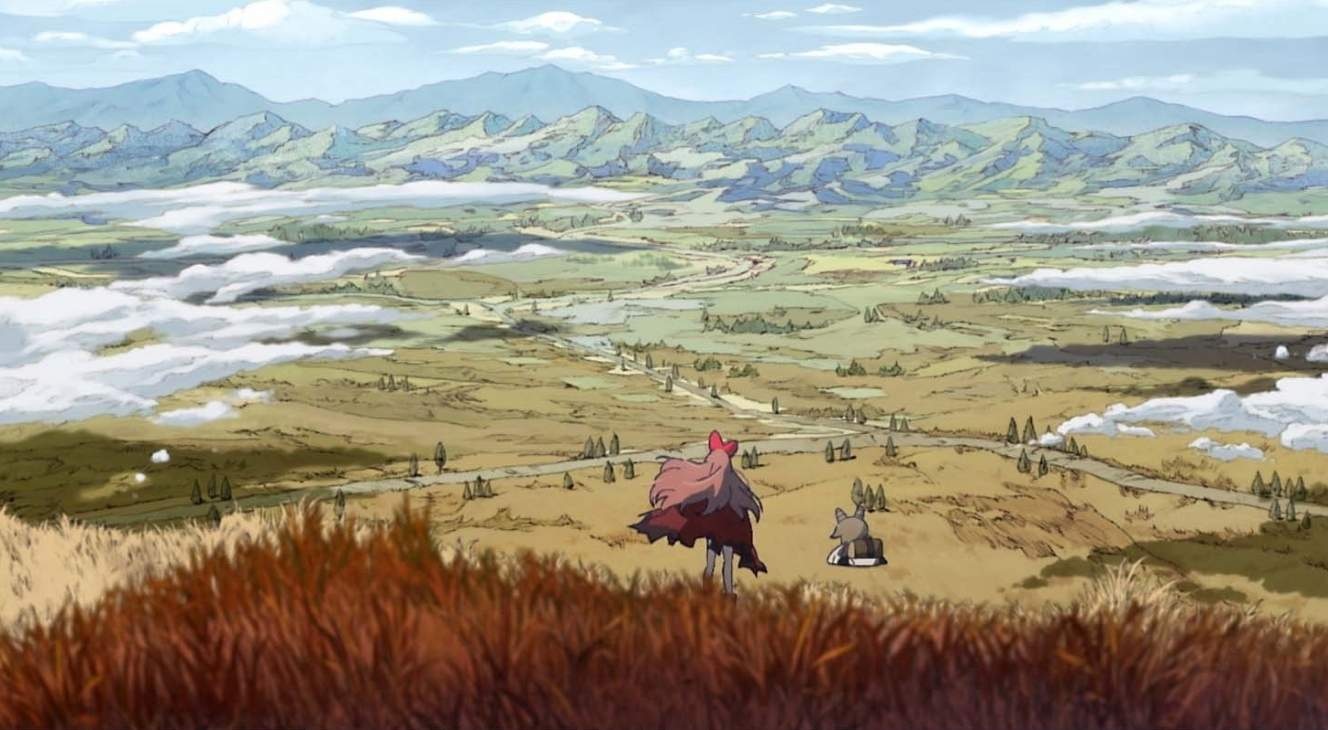
As this backdrop suggests, The Ribbon Hero plays with heavy ideas, essentially following a group of immigrants who push back on ecclesiastical orthodoxy to create a world where the weak are no longer sacrificed to the strong. Sapphire struggles with feelings of disempowerment and self-sacrifice throughout the film, as her survivor’s guilt ensures the story has more heft than its fairytale setting would suggest.
It’s an excellent setup that’s decently explored, but the movie is undercut by a screenplay that feels cobbled-together. Most of the problems stem from a script that lacks focus, racing through plot beats like a string of narrative “and thens.”
Sapphire’s home is destroyed, and then she becomes a miner, and then she becomes a superhero, and then she fights a bunch of monsters off-screen, and then there’s a finale. We’re never given enough time to settle in, and The Ribbon Hero either needed more than 109 minutes or for one of these parts to be trimmed.
The pacing gives little time for viewers to get to know the characters.
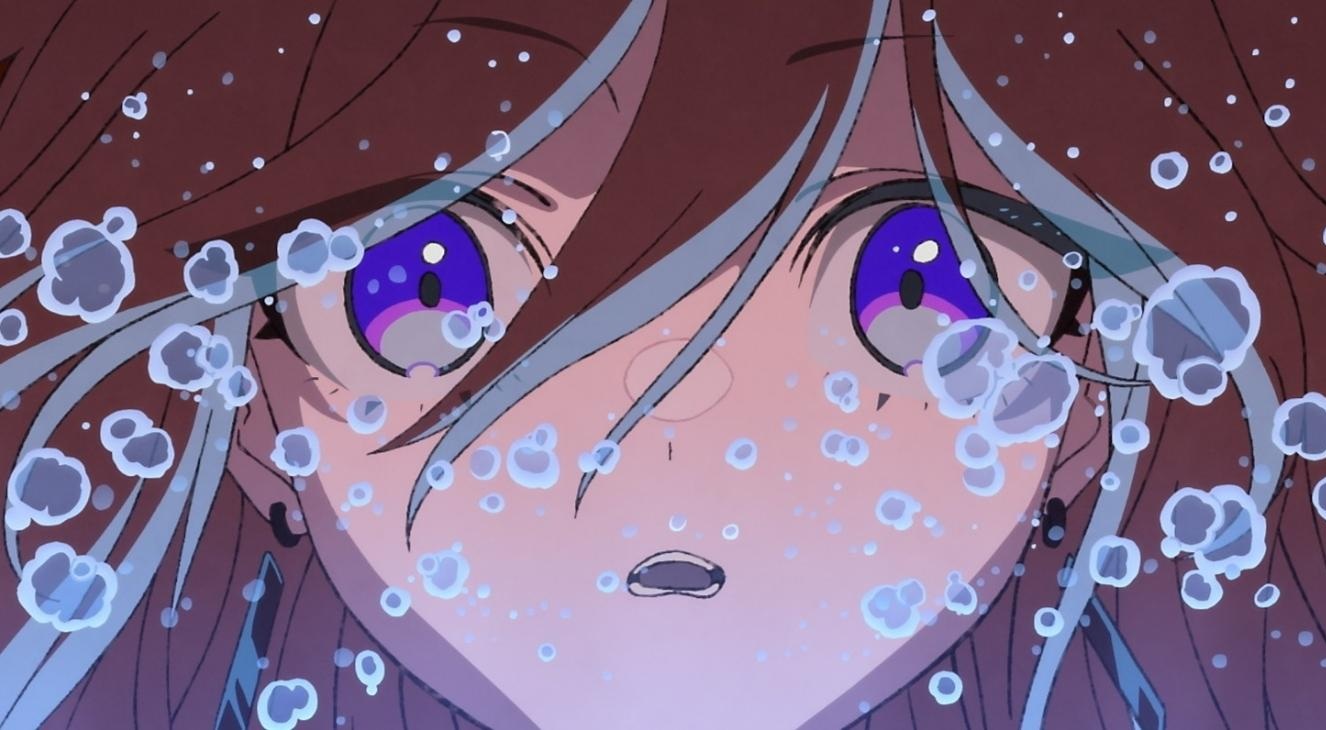
The rapid-fire pacing leaves little time to get to know most of these characters. While Sapphire’s inward guilt contrasts nicely against her heroic impulses, many of her buddies don’t get to be more than one thing, coming across as little more than background props.
Her retainer Zirco is a gimmicky inventor type, while the friends she meets in Goldland are mostly quite flat. Thankfully, the villains eventually become a bit more interesting as the movie goes on — one reveals motivations that tie in nicely with Sapphire’s central traumas, and another drips with a sharply defined religious paternalism.
Kei Mochizuki’s character designs go a long way in imbuing these figures with some amount of personality, giving each major player a legible visual identity that stops just short of being overdesigned (the Princess Knight does have one too many belts, though). There’s an evil mage pope and a guy who looks a bit like Kamina from Gurren Lagann, and they somehow all fit in this medieval European milieu.
The action sequences in The Ribbon Hero are fantastic.
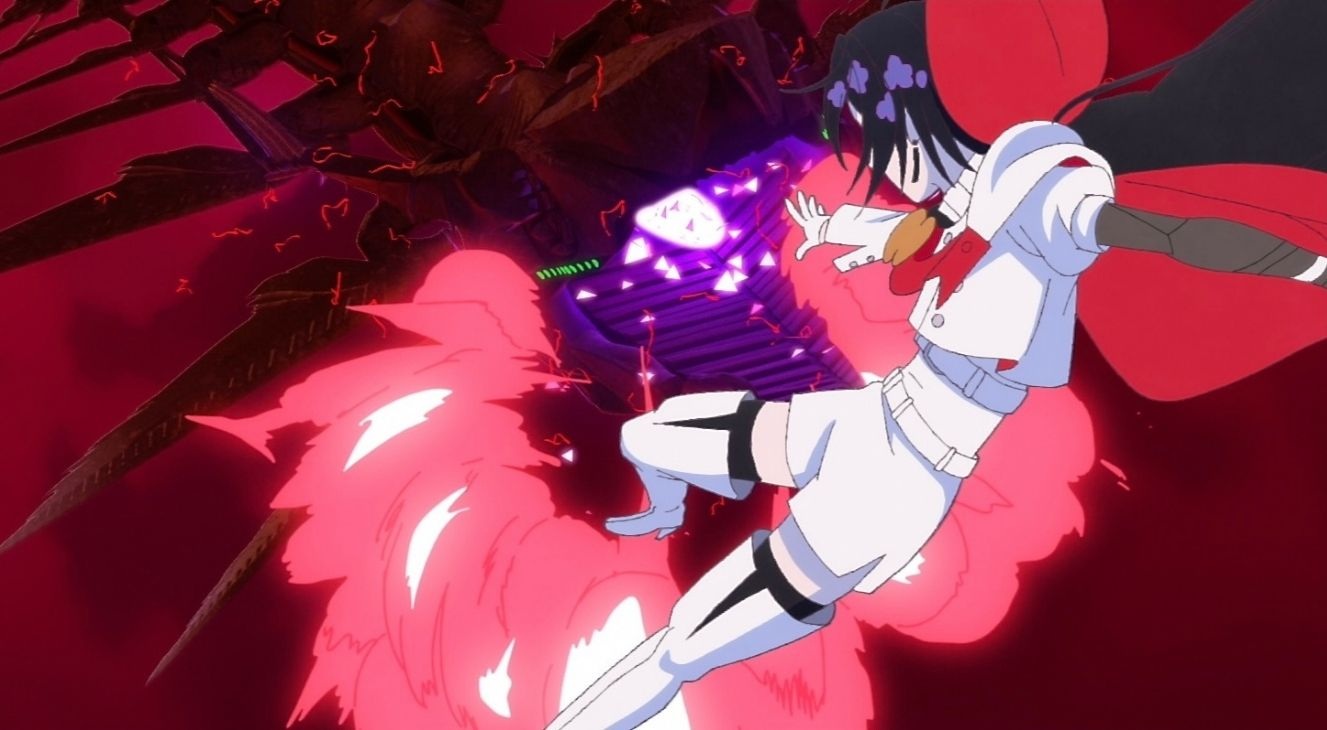
The background art is similarly enchanting, combining a fairytale aesthetic with bold flourishes that drive home Goldland’s cultish religious fervor. This colorful landscape contrasts nicely against a dramaturgical pocket dimension that connects with the original story’s Takarazuka Revue roots. These sights are eye-catching, all red skies and impossible spires.
On the flashier end of the spectrum, the action sequences are excellent. Whenever Sapphire dons her princely wardrobe to battle monsters, she moves with confidence, as exaggerated perspectives and smooth sword motions convey her power and speed. Her conviction comes across in these chivalric acts, and we see her desperation to help others in every blow.
While The Ribbon Hero falls short of its full potential due to an uneven screenplay, its well-considered aesthetics and plucky heroine power through tough times, culminating in a flashy finale played against Antonín Dvořák’s Symphony No. 9 in E Minor. The Ribbon Hero may not be the same kind of revelation as its source material, but it certainly doesn’t forget a sense of theatricality.
The Ribbon Hero is now streaming, exclusively on Netflix.
The Ribbon Hero
-
Rating - 7/107/10
TL;DR
The Ribbon Hero may not be the same kind of revelation as its source material, but it certainly doesn’t forget a sense of theatricality.