In Marumittu Games’ puzzle-adventure game D-topia, players assume the role of a facilitator of a utopic environment. The community, which shares the game’s identity, is primarily run by a series of robots called “Troids,” all at the behest of an AI that has spent centuries refining itself. As speculative science fiction, D-topia’s premise opens up several contemplative questions. But being a relatively breezy game, D-topia doesn’t do a ton to offer much of its own perspective.
With the backing of publisher Annapurna Interactive, there is an instinct to look at the initial moments of D-topia and wonder when the shoe will drop. But there is, in fact, no shoe even in the air. That’s not to say that D-topia doesn’t engage with its own premise – the folks at Marumittu Games have also seen Wall-E – but there’s no fake outs here. Anyone expecting a late-game, horrific twist with the AI in charge should look elsewhere.
That straightforwardness is a blessing and a curse. D-topia’s society is clearly meant to be somewhat alien. Its version of humanity is deliberately so far removed from real life that it can be jarring. These people don’t understand war or even borders, but they also don’t know what a hamburger is. It creates a sense of dissonance between the player and the game, seemingly by careful intention. It’s an artificial culture clash.
Marumittu Games straightforward approach doesn’t allow for deeper storytelling.
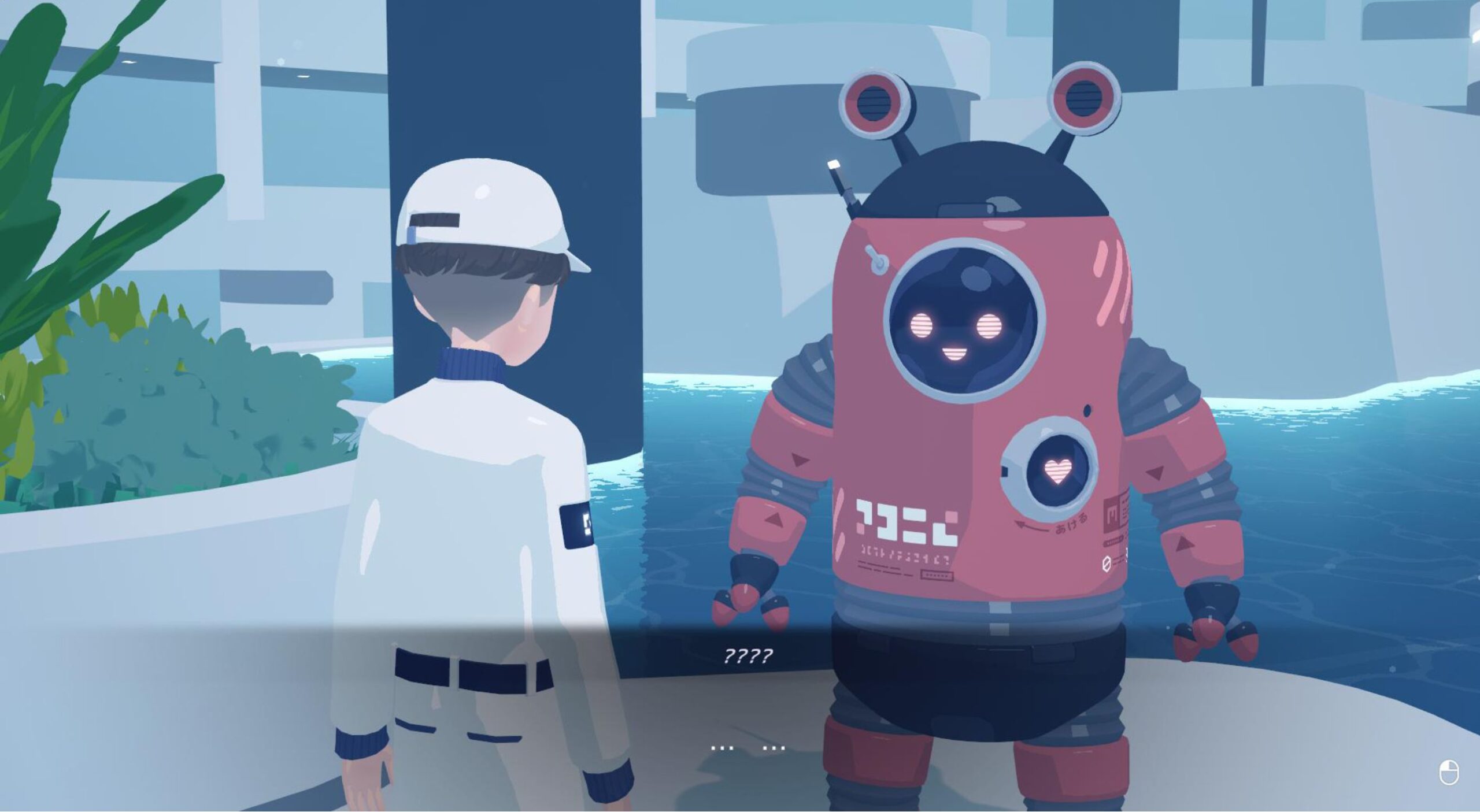
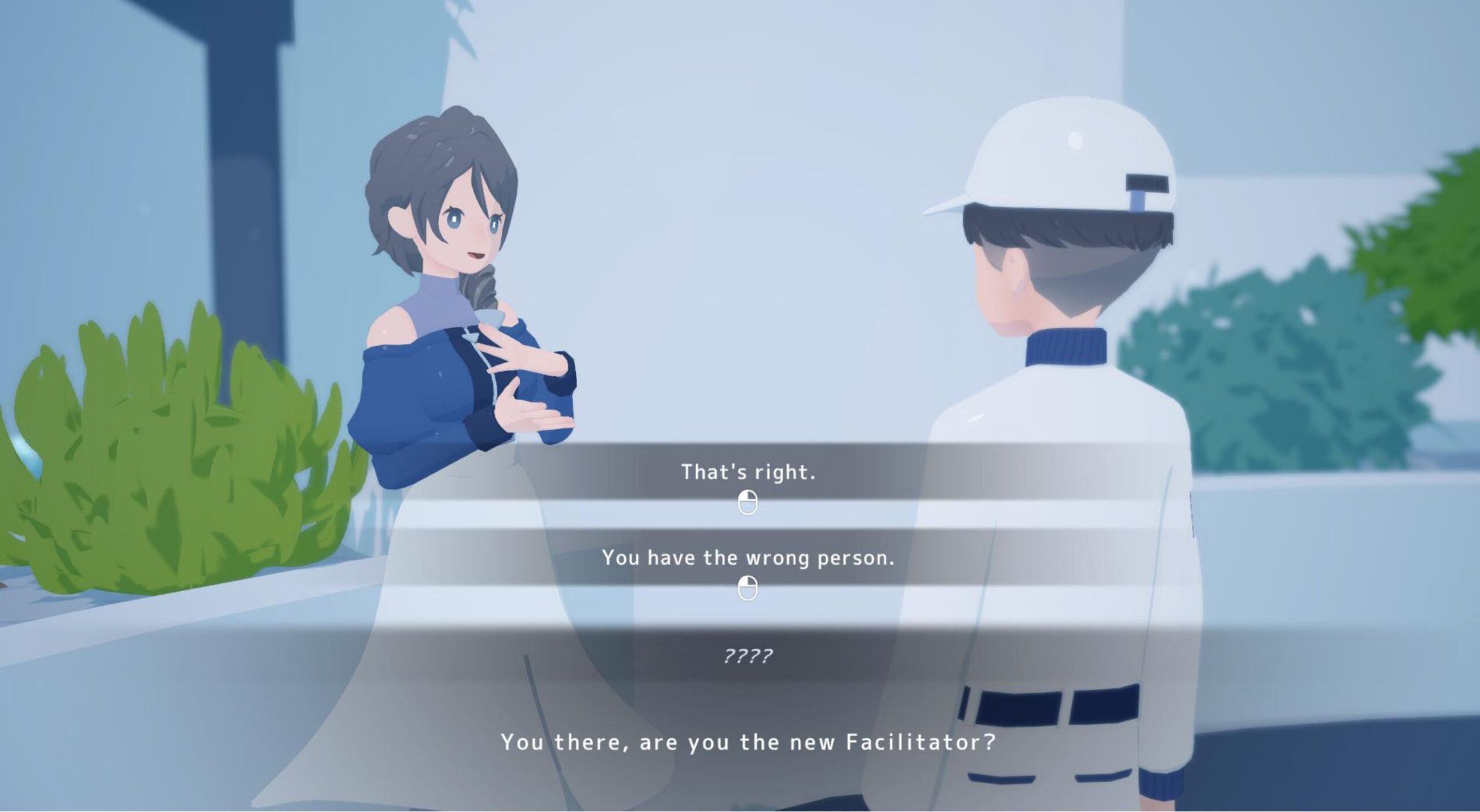
When D-topia delves into some of the more thought-provoking aspects of its premise, that dissonance evolves into frustration. The characters, human and robot alike, speak with a nearly unshakable level of acceptance of how things are in this society. To them, it simply must be this way because it is the plan for utopia, and they are the closest to achieving it.
Even so, there are issues. One of the earlier conflicts Shiro has to deal with comes from Tot, someone who is struggling with behavioral problems and overeating. He lashes out at one of the Troids when they try to limit his food, and Shiro has to decide whether or not to cover for him.
The answer is generally pretty obvious to us, but even Tot isn’t sure he doesn’t deserve to be ejected from the community. It’s difficult not to react with occasional indignation at some of the decisions and problems the facilitator, Shiro, is presented with.
The hacking puzzle games grant D-topia some tactility.
D-topia’s gameplay leaves a large gap for contemplating the challenges of the story. A large chunk of the puzzle part of the game takes place at the factory, which exists because the AI concludes that not having something to do, at least for a little bit of the day, creates problems. These puzzles aren’t particularly complicated, but every so often, one throws enough of a curveball to warrant full focus.
These puzzles use number sequencing and spatial challenges in tandem to create a sense of circuit working or debugging, depending on the context. In general, “hacking” minigames like these are often filling time, and it’s not like D-topia isn’t doing exactly that. However, they grant a bit of tactility to the world of D-topia.
Without these, D-topia is just a game where Facilitator Shiro goes from point A to point B to have a chat, then from B to C to do the same. Those chats have their own payoffs – saying the right things can get residents to open up more and even earn Shiro gifts to put in his residence as decorations.
The clean, aesthetically pleasing design leans into the contrast of game and players.
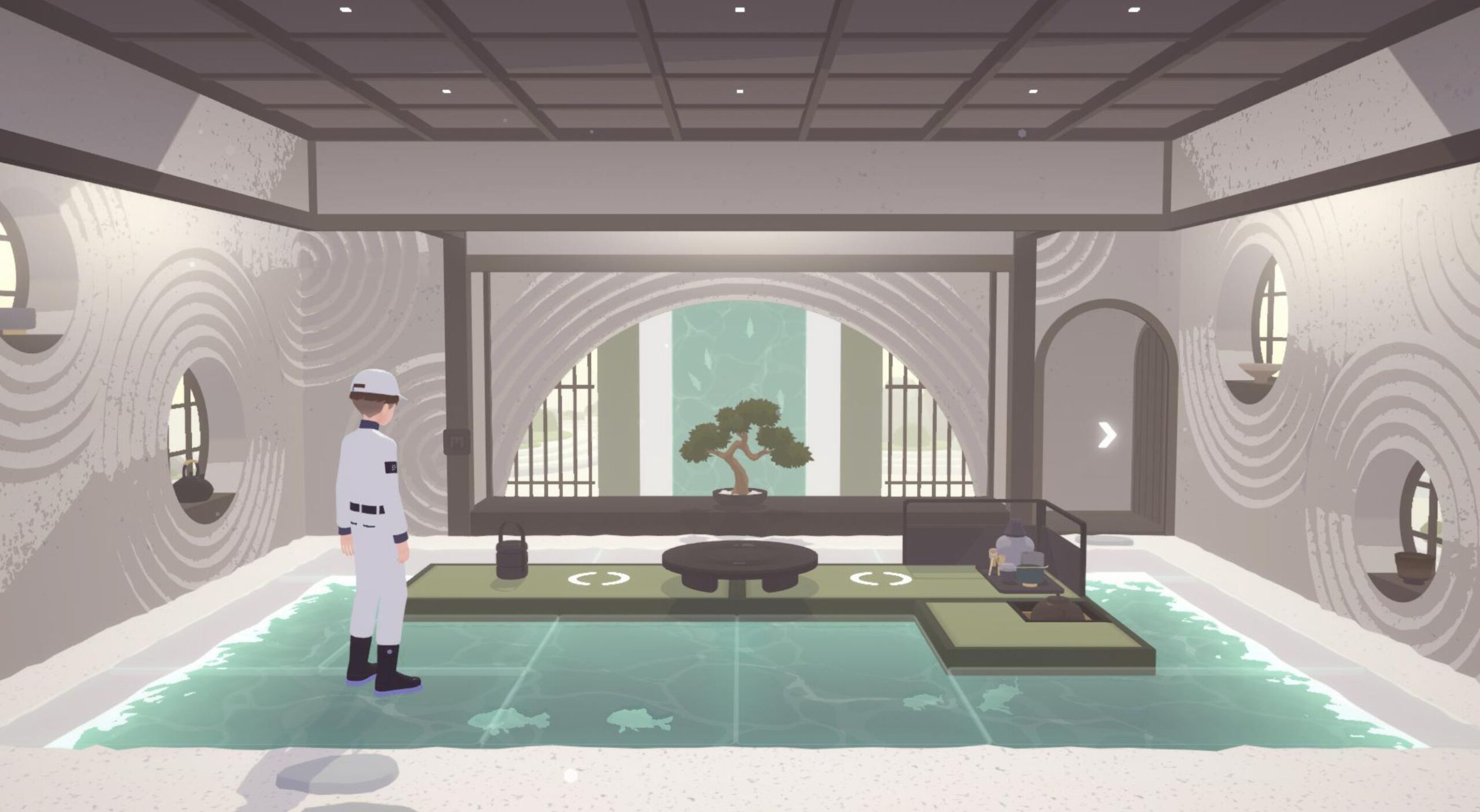
All of this comes in a very aesthetically pleasing package. Marumittu Games is iterating on its house style, using light colors and cute eyes to soften any potential edges. Despite being a primarily white, bright, and simple world, each zone receives thoughtful architectural design and visual depth.
Yes, these environments are a little too clean, but that, too, plays into the dissonance D-topia creates between its world and its players. The game’s soundtrack reinforces that dissonance as well, with compositions that stick to a melodic softness of its own. It plays listlessly, just on the periphery of the player’s hearing, reinforcing the sense of the community being inoffensive and unchallenging.
Which brings things back around to the dissonance of D-topia. By being elevated by Annapurna’s publishing, there’s a certain expectation that this game does not reach. It asks big questions about what utopia is and could be, but doesn’t have much depth in its answers.
D-topia can’t quite reach the highs Annapurna promises but is compelling none the less.
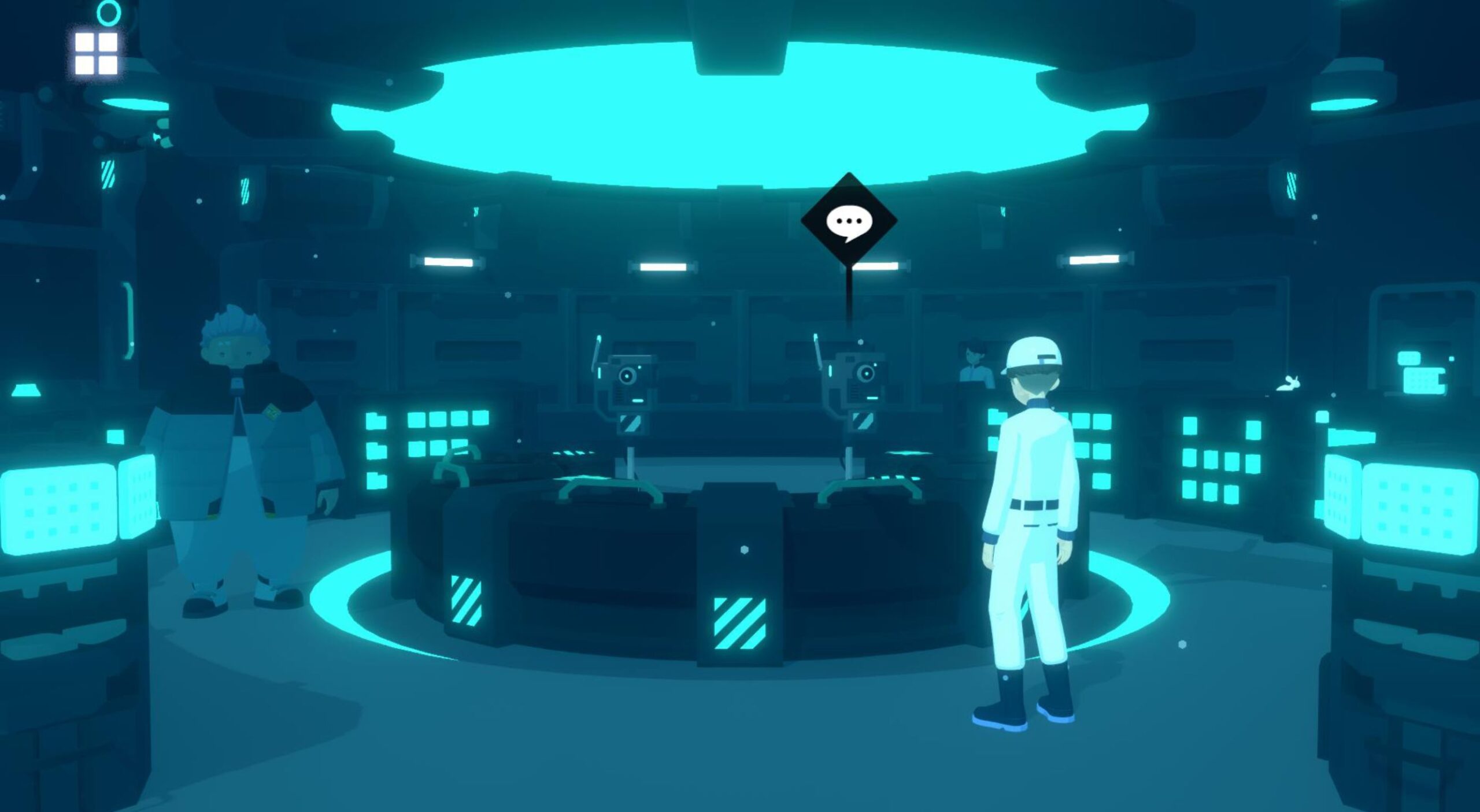
The cute aesthetic is appealing, but also further obfuscates the more serious topics the narrative wants to scratch the surface of. D-topia is a cozy puzzle-narrative game trying to be about something, but it doesn’t manage to strike a balance between these demands.
But there’s something compelling in that imbalance. Speculative science fiction isn’t really supposed to be a guidebook for the future. Even if D-topia commits more to a position on any topic, it’s unclear if that would be better. Moving further away from its credits, the more that is left on the table to think about begs for answers that only its players will be able to answer in their own ways, away from utopia. In a way, these imperfect conclusions are a perfect capstone to D-topia.
D-topia is available for purchase on PlayStation 5, Xbox Series X|S, Nintendo Switch, Nintendo Switch 2, and PC.
D-topia
-
Rating - 6.5/106.5/10
TL;DR
D-topia is a cozy puzzle-narrative game trying to be about something, but it doesn’t manage to strike a balance between these demands.