

Bluey’s Quest for the Gold Pen is not the type of game one usually envisions going to check out at an event like Summer Game Fest. In an event filled to the brim with first looks at major AAA titles and huge indie darlings, the presence of a licensed game based on a children’s TV show, objectively aimed at that target audience, feels like an odd choice. Especially because, unlike most games at Summer Game Fest, Bluey’s Quest for the Gold Pen is already out and available.
Again, seems like an odd choice. And it is! But for parents, especially those who have fallen under the irresistible spell that is Bluey, knowing about this game is a delight. With a story written by series creator Joe Brumm, developer Halfbrick’s game feels like a lost episode of the show, in the best way possible.
The game has a simple premise. Bluey and Bingo are drawing at the family table with their parents, when Bluey needs a gold pen. Bandit (their dad) decides to take the pen for himself, declaring it his treasure.
Bluey’s Quest for the Gold Pen is the perfect gateway.
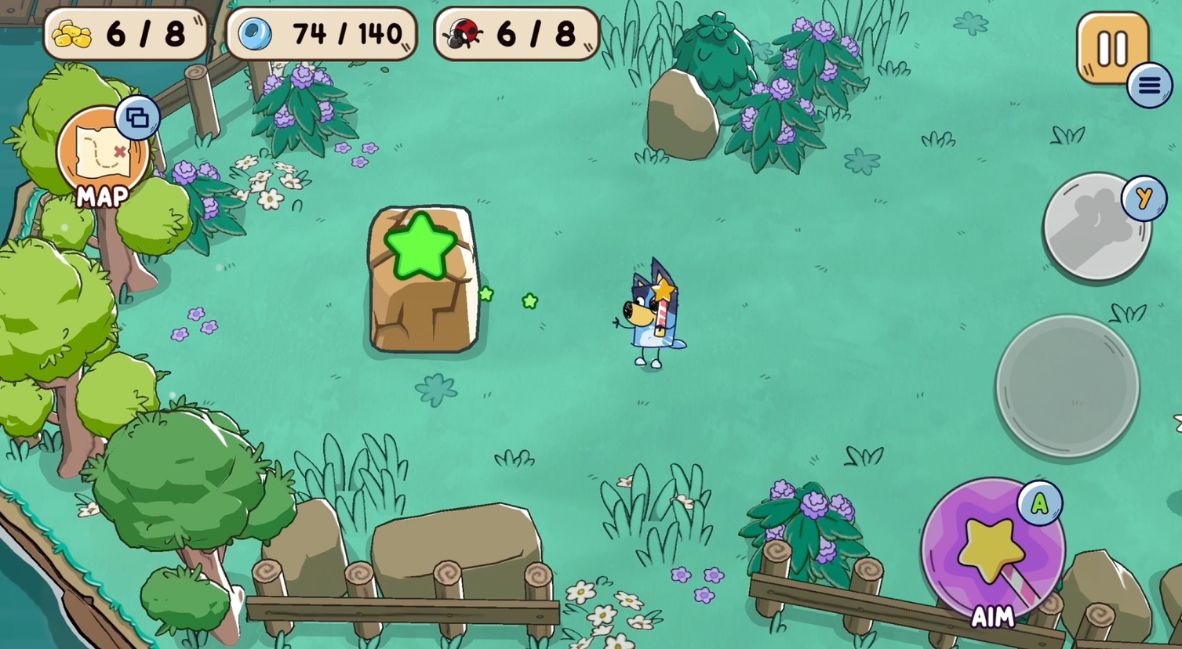
What follows is an imagination-fueled quest to retrieve the pilfered pen so that Bingoose (Bingo as a silly goose) can lay a golden egg. If that sounds absurd, it is. But if you’re familiar with the world of Bluey, you already know just how adorable and heart-warming that tale will end up being.
Across nine “handcrafted” worlds (the levels are being created by Chili, the mother), Bluey and Bingo, sorry, Bingoose, will travel around, collecting itemfs, solving simple puzzles, and performing some light platforming.
For any gamer familiar with the medium, nothing about Bluey’s Quest for the Gold Pen will present a challenge. In fact, the core gameplay loop of “enter a new world, collect x amount of items hidden within, unlock the next world” will be so simple that it can easily lead to tedium. But this game isn’t meant for established gamers. This is meant for their kids.
It can easily be said that this is a perfect “first game” for young children. It is bright, vibrant, simplistic, and based on a series that they most likely already love. As a father to a young 5-year-old daughter, I feel very confident in backing that claim. Knowing her limits and ability to read and use a controller, I could very quickly tell this would be a great choice for her to cut her teeth on.
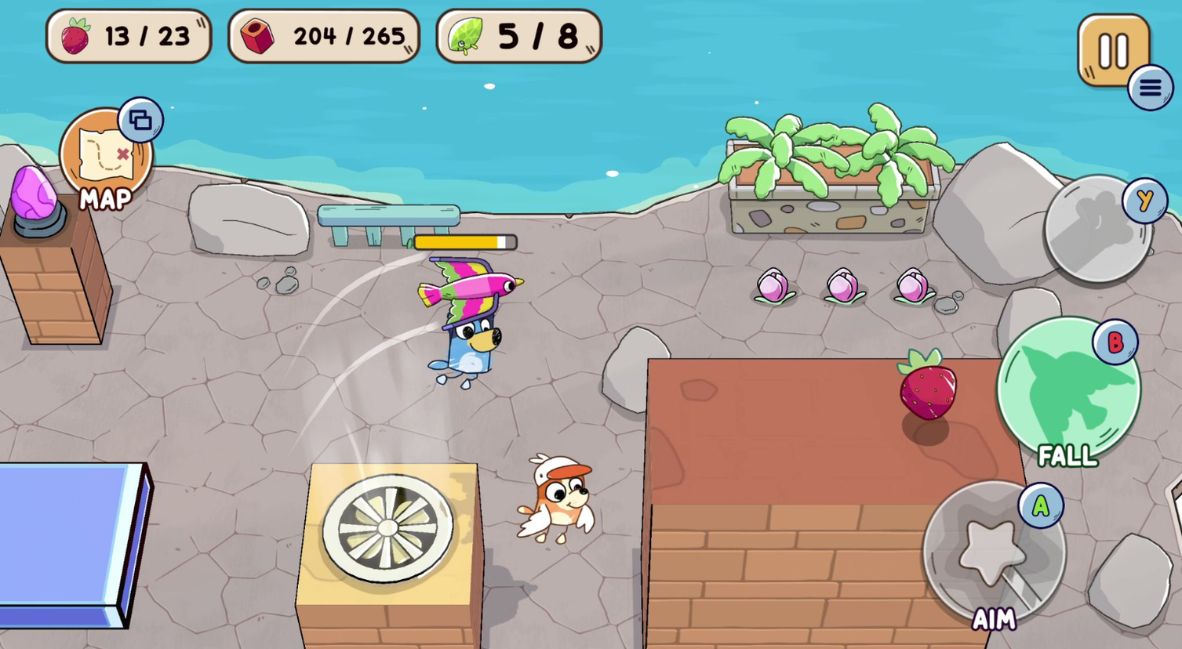
The controls are intuitive, with no complex button combinations required – at any given time, you only need to use one button. An example in a later world would be that you need to use one button to glide to a new platform, and when you land, you need to use another button to use Bluey’s wand. But you won’t need to ever combine the glide ability with the wand in mid-air.
It gives younger and newer gamers a chance to learn the increasingly complex puzzles without getting overwhelmed by inputs. The collectibles and points of interest are clearly visible and discoverable, greatly reducing the potential frustration of not being able to find what is needed to progress.
In every aspect of the game, it feels lovingly crafted for an audience with limited gaming experience to enjoy. The only knock I have against this for young kids is that none of the in-game text is voiced, which means kids either need a stronger grasp on reading or need a parent sitting alongside them to narrate for them.
< h5>The largest miss for Bluey’s Quest for the Gold Pen is not being co-op.
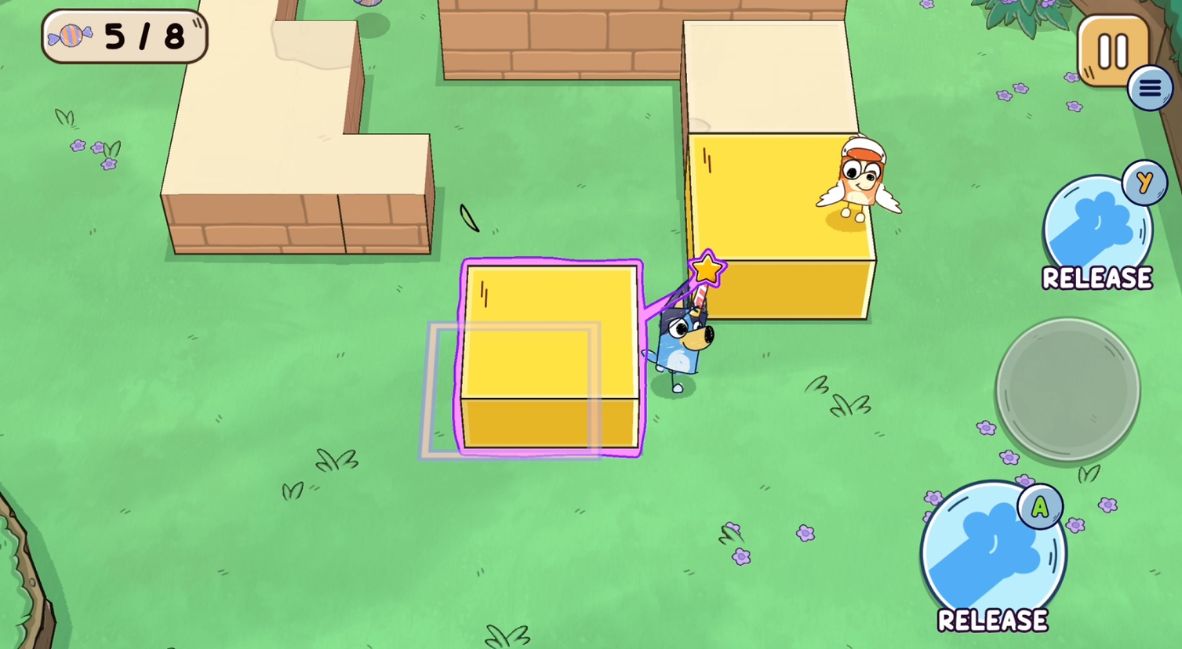
Visually, the game is lovely. Bluey and Bingo are “crayon drawn” and sport stick figure arms and are not fully colored in, representing the fact that they were drawn by children. The world around them is colorful and cartoony and more fully realized, as evidence that the mother is behind its creation.
Each level is shockingly vast, employing fast travel checkpoints to remove some of the backtracking. Dozens of collectibles litter each world. Luckily, none of them require a completionist’s touch to progress. A handful of discoveries will unlock a path forward – another very useful gameplay implementation that shows how perfect it is for the young.
Gameplay-wise, the game uses a contextual button input system. The main button is for Bluey’s wand, allowing for the interaction of objects such as removing a rock or manipulating a platform to move it into place.

Other levels grant Bluey a glider to move across gaps, a jetpack to jump upward, and more. All these interactions are used for simple platforming puzzles, all of which will directly lead to one of the level-specific collectibles. There is a slow, very gradual ramp-up in complexity and challenge as you progress to each new world, but it feels implemented in a way that even young children will be better equipped to succeed by the time they reach those.
The main issue, and weirdest misstep for the game, is Halfbrick’s decision not to make this co-op. By having Bingoose float behind Bluey but never actually doing anything, it definitely feels like a very backward choice. Especially since the previous Bluey video game did have co-op for parents to enjoy with their kids.
While the cutscenes are fully voice-acted by the show’s cast, the in-game dialogue is not, which may present a challenge for younger gamers. All in all, though, young kids will most likely enjoy this game, and their parents will enjoy experiencing it with them. While not the most exciting hands-on at Summer Game Fest, Bluey’s Quest for the Gold Pen has earned a place at the event.