

When a series gets canceled, there is always a movie waiting in the wings to close out the story. And that’s essentially the function that Prime Video’s Tom Clancy’s Jack Ryan: Ghost War is serving. Directed by Andrew Bernstein and written by Andrew Bernstein and John Krasinski, Ghost War is trying to be a victory lap for the series, but winds up stuck in the shadow of four seasons of television.
After four seasons, Tom Clancy’s Jack Ryan ended, and while there were promises of more series and movies in the Tom Clancy franchises with either Michael Peña or Michael B. Jordan, none ever really came to fruition. Whether it was due to cancellation or to living in production limbo, those circumstances made the announcement of Tom Clancy’s Jack Ryan: Ghost War surprising. That said, coming back to the character isn’t the worst thing.
While the Jack Ryan Prime Video series isn’t as beloved as, say, Reacher, the two series come from writers who tackle corruption and morality in different ways. One from inside of it, something that Tom Clancy is known for, and one from outside of it (and with more violence), which is how Lee Child has defined his work.
But in this new film, Krazinski’s Jack Ryan is pulled back into espionage while he is supposed to be retired. This different approach to the character helps showcase a different side to the former CIA asset, but the film’s runtime leaves it lacking.
Jack Ryan is back in the thick of it in Ghost War.
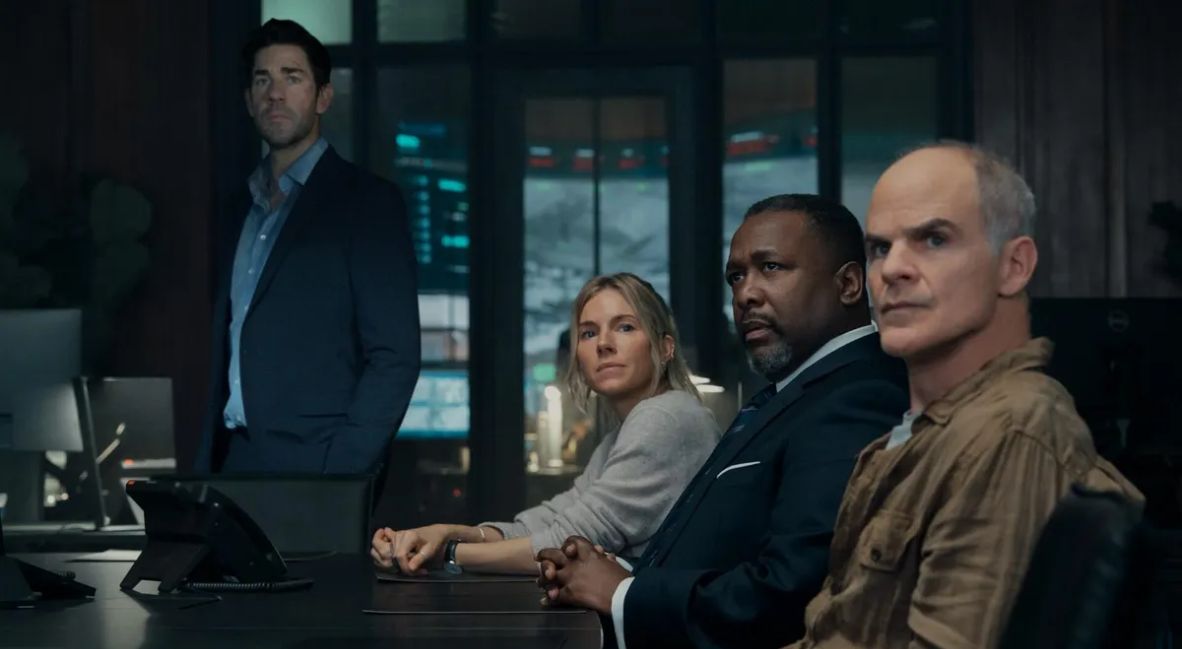
In Tom Clancy’s Jack Ryan: Ghost War, the titular character finds himself at the center of an international covert mission when it begins to unravel. Officially retired from service, Jack returns to the world of espionage and yet another deadly conspiracy that pushes him to reckon with the “cost of freedom.”
A central theme in Tom Clancy’s Ghost War is the lack of morality driven by post-9/11 paranoia. In adaptations of Clancy’s work, especially in the Prime Video series, reckoning with the ethical fallout of that event has been central to understanding the violent rot that lies not only in clandestine operations but also in characters Jack has come to think of as friends.
The same is true for Jack Ryan: Ghost War, where James Greer (Wendell Pierce) is put in the spotlight as one of the architects of Starling, a black-ops unit established after 9/11 to “protect” the United States and its interests. But in true American fashion, the unit’s lack of boundaries and disregard for human rights led to its shutdown, and Greer was one of its progenitors.
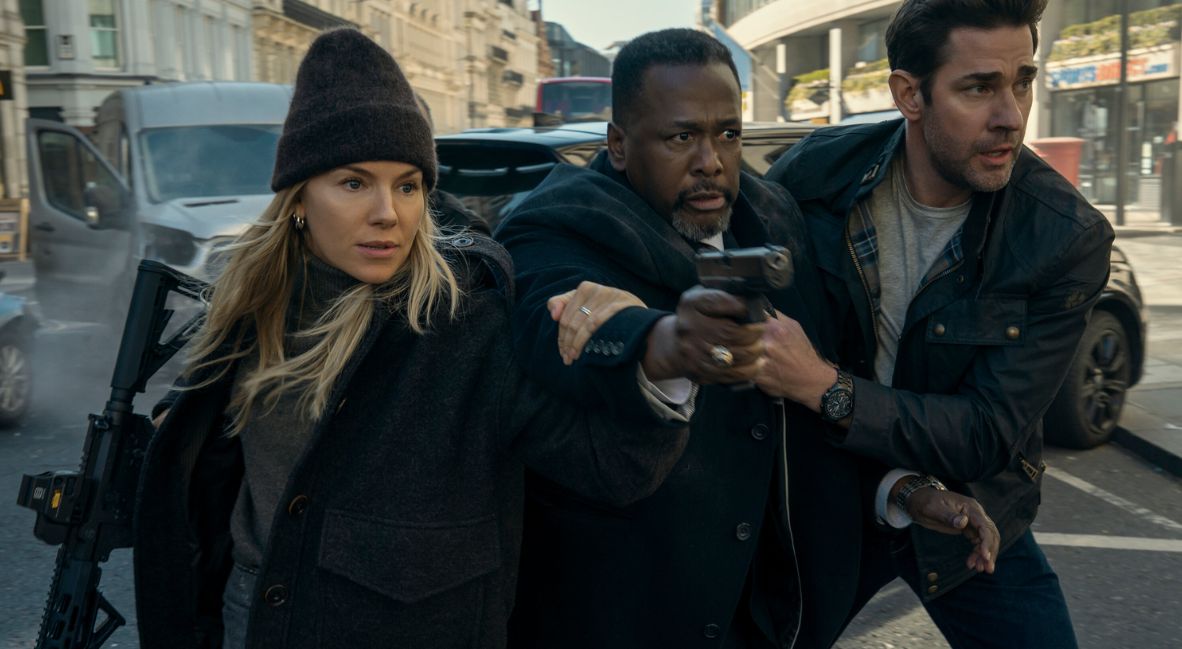
Now, Crown (Max Beesley) is trying to show that the US Government and its allies need Starling to survive, as he works to reactivate every cell that the black ops unit stopped. With Jack being pulled into the center of it, he reunites with the CIA’s Mike November (Michael Kelly), Greer (for obvious reasons), and newcomer Emma Marlowe, an MI6 officer played by Sienna Miller. To put a stop to the threat, Jack and the team navigate a treacherous web of betrayal, facing a past they thought was long put to rest, and with personal stakes that keep rising.
The core conflict in Jack Ryan: Ghost War is that Jack is called in to try to stop the resurgence of a unit that believed that when “you’re attacked, the rules change.” The rules here are the rules of engagement in a time of war. Watching a film that is deeply informed by the post-9/11 human rights abuses that the United States committed is awkward to say the least, when the current administration is acting like international law is a detriment.
That said, that sticky situation is what Tom Clancy is known for, even when this clown car of an administration is making these fictional aberrations a reality. Which is to say that watching a Tom Clancy-based movie at this time is a frustrating experience. Not because Ghost War is bad, but because the conversation around the conflict between Greer, who still stands by his wartime decisions, and Jack, who has accepted that the freedom he fought for is essentially dead, is built up. However, it goes nowhere.
John Krasinski’s titular character could have been great, but his choices fall short.
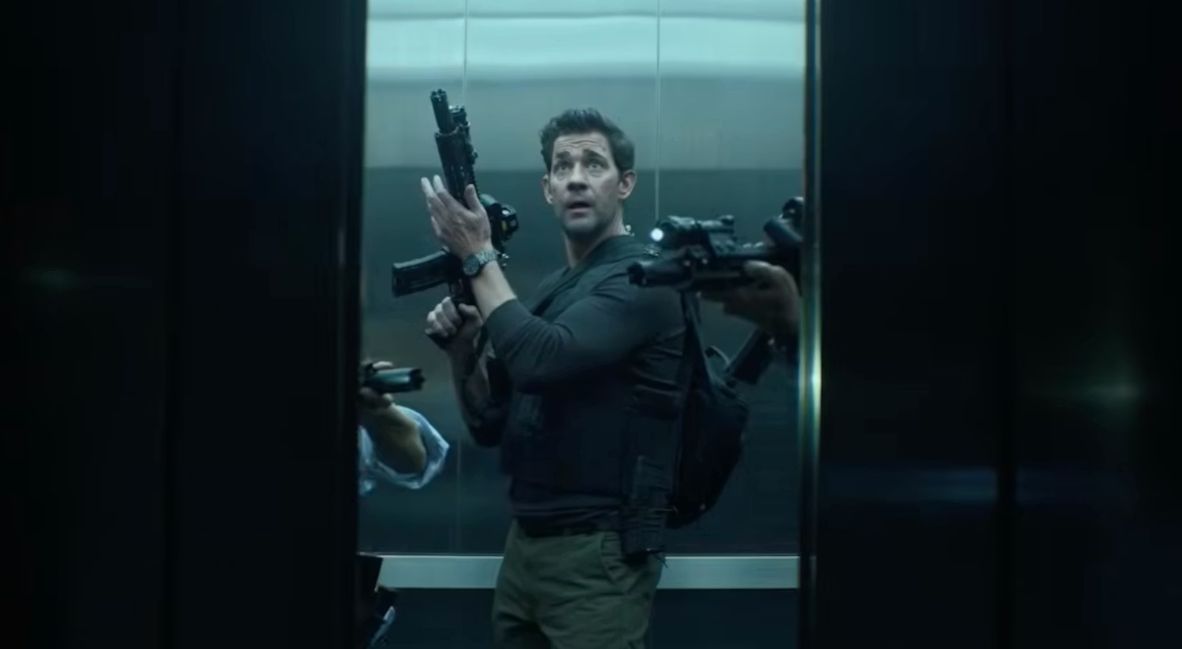
Understanding why Greer made the calls that he did leads to one of the film’s most contentious moments between him and Jack. Where Greer says that the tip of the spear needs to be someone ready to push human rights away for the greater good, Jack won’t cross that line, or at least not at the scale and scope that Starling did. This leaves the audience questioning whether the person being thrown away matters more than human dignity, as we see in the film’s finale.
That said, Ghost War doesn’t do much to absolve Starling (Greer included) when the reasons for decisions are made. Instead, we see the subtle reactions to the ripples that his role in Starling has caused. Jack Ryan’s role in this film is to highlight the violence the “good guys” are willing to use and to ask its audience to investigate it. Everything that we learn, and by that token, Jack learns, is just presented to us. A series of actions with little prompting to explore behind them. The antithesis to a Tom Clancy story.
The film format wastes the best parts of the Jack Ryan series. While there is intrigue and mystery, the pace at which it unfolds feels like jostling something loose, rather than showcasing the longstanding rot in America’s clandestine services and the moral dilemma of propping them up. Tom Clancy is at his best when being adapted into a television series because of the time it takes to unravel the mystery and the choices that have caused ripples across time, people, and organizations.
Here, with Starling, the pace of the film is too fast to say much about Greer’s role in the unit, his sins, or whether he believes Starling should come back. When someone he’s close to dies, Ghost War shifts, and it leaves the viewer with a situation where Greer’s regret isn’t about the people he helped kill or the rights he abused; it’s about getting someone he was close to killed, which leads him to push back hard against Crown.
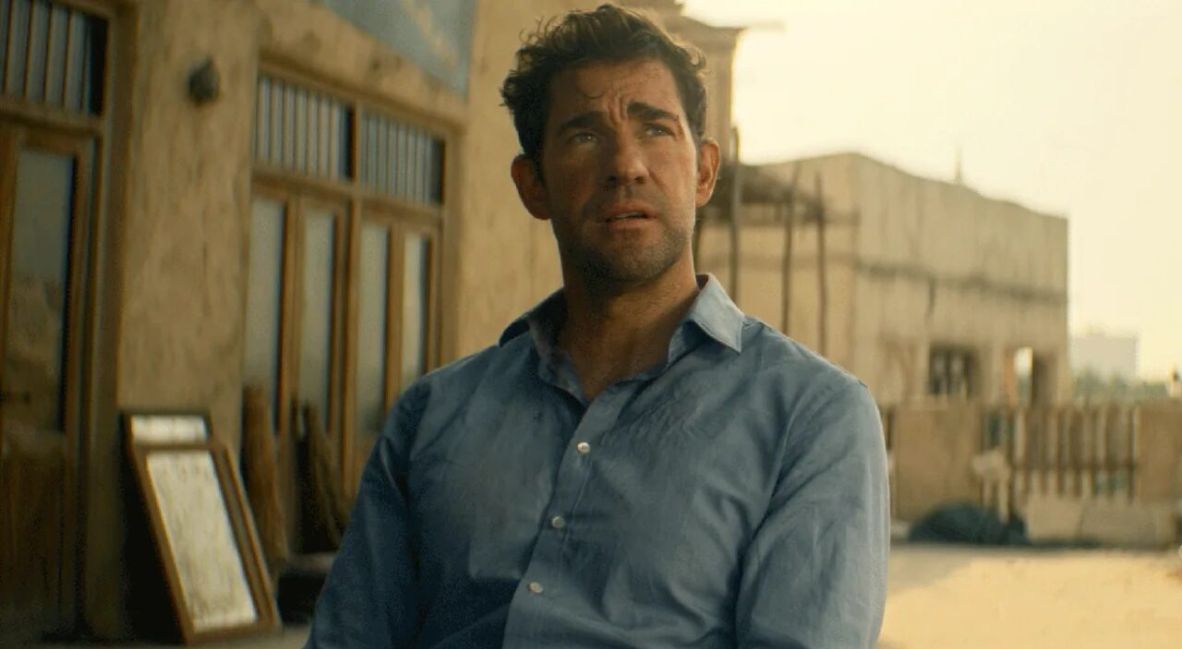
For his part, Jack Ryan stands as a man jaded with what he’s seen. Each decision in the four seasons of television that lead up to this film has taught the titular character that the United States is not the good guys, as it subjugates others and creates the threats it claims to fight. It’s central to who he is and to why he decided to leave the CIA. And in the closing of the first act, he stands there and asserts that Starling is wrong now and was wrong when it was founded.
However, by the end of Jack Ryan: Ghost War, Jack is pushed into a situation where he makes the call to kill someone. As he does, right toward the end of the film, Greer’s voice plays over the sequence, and it’s clear that Jack is the “tip of the spear” now, but it also paints him in the same light as Starling. In doing this, Ghost War loses itself and its purpose.
The film’s length undercuts its message and betrays the layers we often see in Tom Clancy’s stories. While it’s easy to dismiss Jack Ryan as American propaganda if you haven’t watched it, once you do, you see a man beaten down by his country’s decisions and the role he has to play in them. The television format worked extremely well to tease out the layers of impact from one government decision across the people who are impacted, using Jack Ryan as a focal point to explore it.
Tom Clancy’s Jack Ryan: Ghost War could have been a Season 5; instead, it’s stunted in its pace.
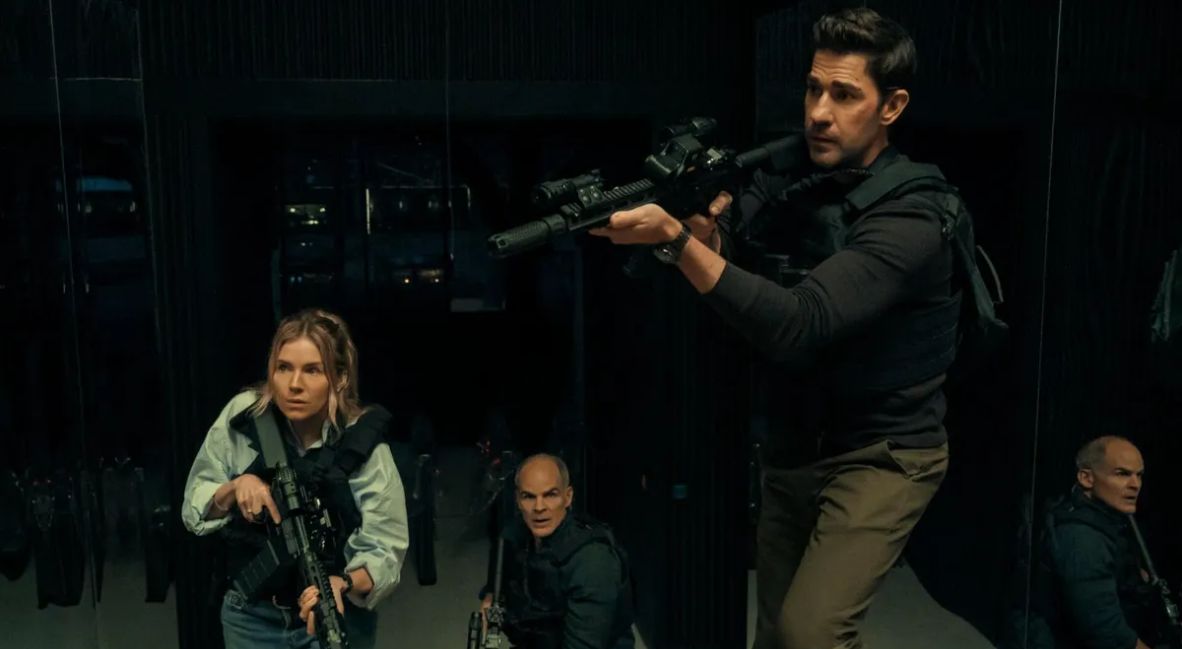
In Ghost War, the ethical depth that we’ve come to expect and solid messaging are erased to give viewers something fun to watch. It’s hard to buy into all of it because of the short runtime. Watching the film, it’s easy to imagine how the story would have unfolded as another season of the series, and the pull of that “what if” is too strong for the film to escape.
The action sequences, including the car chase and the end-of-film shootout, all adhere to the standard set by the mainline series. But the narrative around them is thin at best. Which leads me to wish that this film had just been the premise for Tom Clancy’s Jack Ryan Season 5 instead of the sub-two-hour film that only skims the surface of what could have been a good story, especially in this time. It’s a detriment to the story, the characters, and the four seasons we’ve gotten before.
Jack Ryan: Ghost War isn’t bad, but it stands in the series’ shadow, unable to come out of it. That said, James Greer and Mike get more prominent roles in the film than they do in the series, with both Wendell Pierce and Michael Kelly putting on a great show. But ultimately, it’s all just not enough.
On the whole, Tom Clancy’s Jack Ryan: Ghost War is a fine movie to watch on a Friday night, and ultimately necessary viewing for people who have been watching Krasinski’s character since Season 1. But the film’s emptiness is all thanks to its length, and its attempt to tackle a typical Tom Clancy story beat struggles by refusing to really pick a side in this ethical question.
Tom Clancy’s Jack Ryan: Ghost War is streaming now, exclusively on Prime Video.
Jack Ryan Reviews: Season 1 | Season 2 | Season 3 | Season 4
Tom Clancy’s Without Remorse Review
Tom Clancy's Jack Ryan: Ghost War
-
Rating - 6/106/10
TL;DR
Jack Ryan: Ghost War is a fine movie to watch on a Friday night, and ultimately necessary viewing for people who have been watching Krasinski’s character since Season 1. But the film’s emptiness is all thanks to its length, and its attempt to tackle a typical Tom Clancy story beat struggles by refusing to really pick a side in this ethical question.