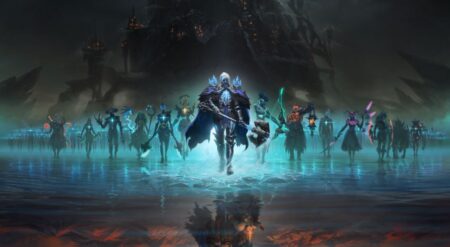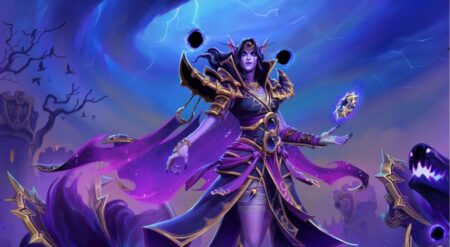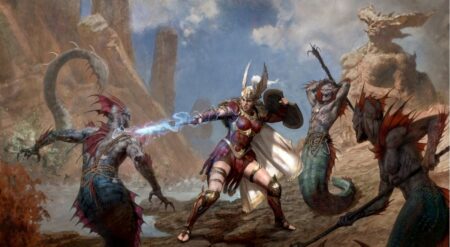


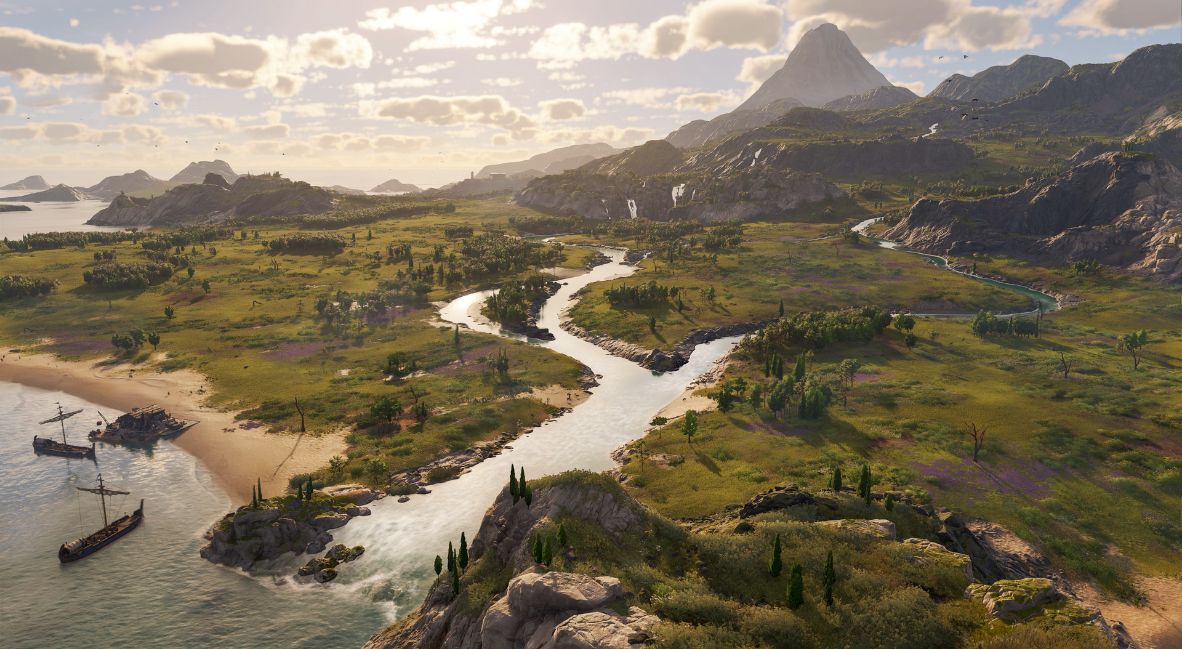
Anno 117: Pax Romana has begun Season 1 of its update model, and it’s starting it all with an eruption. The Prophecies of Ash DLC tasks players with managing the largest island in any Anno game. And if you’re like me, and wondering just how big it is, well, it’s 13 percent bigger than Anno 1800‘s Crown Falls.
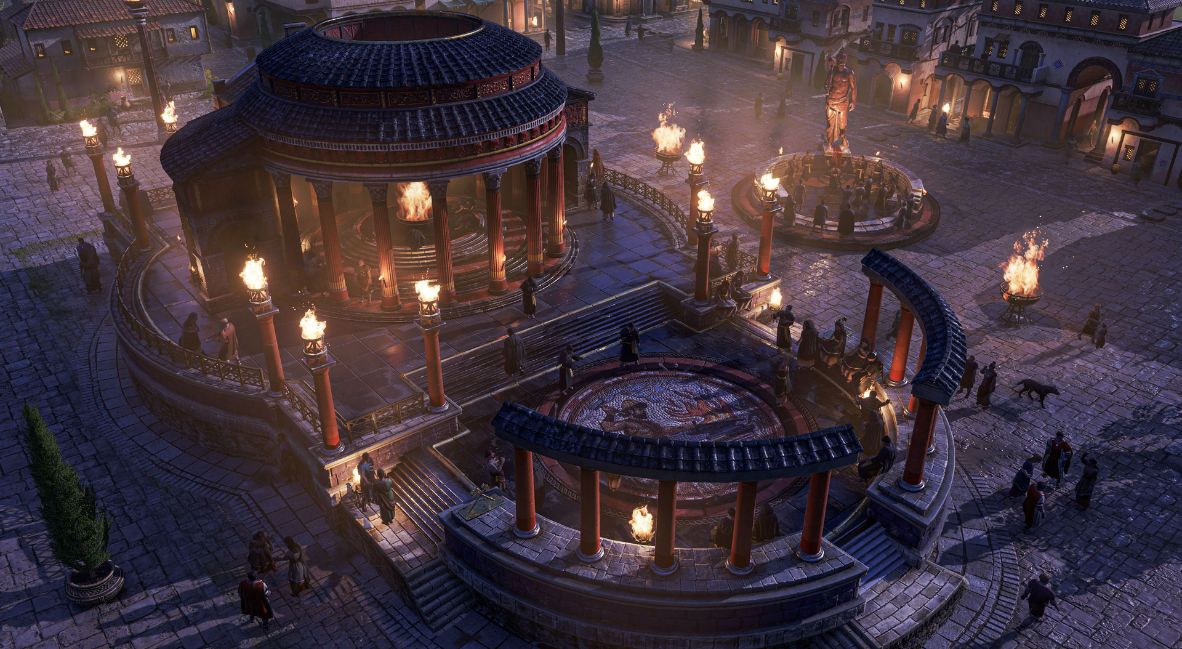
If you’re unfamiliar with Prophecies of Ash, this marks the first major update for Anno 117: Pax Romana. As such, it’s introducing a new deity, a new resource (obsidian), a new trader named Ceacilia, and Cinis–the largest island ever in the Anno series and home to a volcano that threatens to erupt at any moment.
We spoke with Ubisoft Mainz developers Manuel “Manu” Rheiner (Creative Director) and Matt Cook (Senior Writer) about the upcoming Anno 117 DLC, how the team chose to go with Pompeii for Season 1, and how adding any new expansion calls for balancing and offers developers a bevy of avenues for storytelling (yes, even the resources you harvest and the products you produce).
While Pompeii seems natural, putting players on the Anno franchise’s largest island with the threat of an eruption as the first DLC after launch feels like a big swing for Ubisoft Mainz. But the reality is that the Anno 117 team knew Pompeii was coming from the start of game development.
The Prophecies of Ash DLC was always taking us to Pompeii.

“The idea to have Pompeii as part of the game’s story elements has been present since the very beginning [of development],” Senior Writer Matt Cook explained, after first giving the caveat that he didn’t work directly on the Prophecies of Ash DLC.
“As [an example] for cities in general, in the Roman world, Pompeii is the best example we have, [in addition to] Herculaneum. Those are the best examples of how cities really were. So, we knew we always wanted to have [the volcano] there, and this kind of jeopardy, or this sense of threats. I know [Anno is] a really cozy game, right? But [we wanted this game to have] a little bit of higher stakes,” Cook said.
Expanding on the decision, Creative Director Manu Rheiner said, “The volcano was a part of the vision of a game set in the Roman Empire. [Anno 117] is about the rise and fall of an empire, to some extent. And that’s why it was clear right from the start that we wanted to deliver [Pompeii]. We also thought that, gameplay-wise, it’s nice to combine [the volcano] with this huge, gigantic island. It’s the biggest island we’ve ever delivered so far in the franchise, [and the volcano] creates some tension.”
With more space, the expansion of supply chains is an obvious question. With a new approach to needs and supply chains, Anno 117: Pax Romana isn’t as strict with production, but that doesn’t mean that it’s simpler, just that there are different elements to watch and more ripples to consider when the team adds more resources in expansions, like the Prophecies of Ash DLC.
Read our launch interview with Manu Rheiner here.
While the world economy is one angle to looking at production chains and supply routes, the other is through storytelling. And that’s where Manu Rheiner explained, “For the Prophecies of Ash DLC, the whole volcano eruption is a big disruption for [all] gameplay. You need to be very careful to find a good sweet spot. And this is even more complicated because we have a lot of different players out there… So [new resources are] a big puzzle piece where we try to carefully orchestrate how to find the best possible formula for us.”
Matt Cook explained that with the new Resident needs systems, it’s easier than ever to opt out of certain elements of production chains, even with a new province coming later. “There’s more optionality in the game than ever, really. You can always opt out in a way you maybe couldn’t before,” he said.
Adding, “I think I am particularly excited for when this new province comes, but also for the first DLC, to see how those goods are perceived in different places. It’s not the case that [products are] the same to every province.” This was a new element I didn’t know before speaking to the developers.
Cook explained that the current system, which will increase in value as new provinces are added, weighs how residents of each province view the products you are making. Saying, “If you import a good or export a good to a different province, those people treat that good differently, and the attributes that you garner from that good are different [compared to the other province].”
Expanding production chains is about balance and narrative.
The resident reception to production goods is something I admittedly hadn’t thought much about, and hearing Cook explain this system I totally ignored in my 100 hours of playtime made a lot fall into place. On the surface, the optionality seems easy, but to fully understand what you need and what you don’t, you need to understand how each province responds to it. All of a sudden, it made sense why my people in Latium couldn’t care less about cloaks.
Matt Cook also explained that the care for specific goods is part of the game’s narrative. Latium spins products one way, and Albion another, perceiving goods differently, and thus bringing in even more cultural differences that are a focus in Anno 117’s core gameloop about Romanizing the Gaels.
Cook also pointed out that players can read the descriptions if they want to learn how the goods were perceived. Sharing that each of the goods that you can produce has a description relevant to the area that values or devalues them.
Read Manu Rheiner’s interview about Anno 117’s Albion’s creation and focus.
The changes to Anno 117’s production chain and needs systems for residents compared to Anno 1800’s systems are significant. Despite having almost one thousand hours in 1800, adjusting to Anno 117‘s structures was a bit of a learning curve. Only the curve was set to how quickly I could break old habits. When asked about balancing the system changes and adding more optionality, Rheiner explained that Ubisoft Mainz had conducted extensive playtesting with Anno 1800 players to gauge the differences.
“When we did the first play tests, you have to remember there were people coming from 1800 playing for the very first time, 117, and we saw a lot of them failed. The game had no tutorials, no onboarding, and so on at this point. So we knew that it was a good sign to some degree, because, of course, we wanted to keep analyzing the foundation of the game; [Anno 117] is not a complete revolution from [1800], where we trash everything. But we wanted to add meaningful innovations to the game to make it more flexible,” Rheiner said.
Additionally, he said the goal was for everything to have more meaning in Anno 117, noting that this is also why every building has a much higher stake in where you place it (positive or negative). But to find that balance, they needed to know what amount of differences would push 1800 players to adapt as well.
Explaining with an anecdote, “If a player just applied everything that they learned on 1800, then they were struggling or running into walls, which was at first a good sign, because it showed that [Anno 117] is different… We observed this very closely in the play tests, both internally and externally… We also had the intention to change certain aspects, and along the way, we have several opportunities that we want to take, like [building] buffs, that were carefully integrated.”
The Prophecies of Ash DLC is just the start for Anno 117’s post-launch content.
Anno 117 easily distinguishes itself from Anno 1800, but for some in the community, that difference is an issue, if only because there are not numerous seasons of content already available. But the shift in the game is what the studio wanted, and now, with the Prophecies of Ash DLC, we’re getting a look at what Ubisoft Mainz is planning as the game expands.
And expansion was top of mind for both Manu Rheiner and Matt Cook as we closed out our conversation. With the launch of the Prophecies of Ash DLC, I asked the duo to look back on their work with the game so far and what it taught them about themselves, and all they could do was look forward.
Rheiner answered first, explaining that, with a long development cycle, he learned he was more resilient than he thought and how important it is to have a team you trust. Finally, though, he explained that he also learned how “rewarding it is to see such a big game now in the hands of the players and also to see the fire in the team to now deliver the post-launch and how fast it was ignited.” Adding, “I was expecting that we would all get tired, but no, everyone is now super eager for the [DLCs] to come.”
By that same token, Matt Cook shared that while he isn’t working on Prophecies of Ash, he is working on another DLC in Anno 117’s Season One content. For Cook, the learnings were all about the Anno community’s feedback for elements that the team had changed from previous games. “Now that we know more about some of those features and sub-features, we think we can execute those even better. This is the main takeaway, workwise: We did some of the [features] pretty well, but we reckon we can get more juice out of these oranges. And everybody’s really excited for all three DLCs coming.”
Having delayed the release of the Prophecies of Ash DLC by a week, Anno 117 is bringing players to Pompeii a little later than expected. Still, as Anno 117’s Season One kicks off the game’s post-launch content, it’s easy to get excited with anticipation for the game’s expansion. But will Cinis be the change that players have been yearning for? We’ll have to see.