

When it comes to games based on an IP, I tend to go in as blind as possible. I don’t want to hear the discourse or see the teasers; I want the studio to show me how they are stepping into a legacy, and for James Bond, that legacy is storied and revered. In 007 First Light, IO Interactive has taken their signature Creative approach to level design, their talent for making the best suits in games, and imbued it with a James Bond DNA to craft something cinematic and fresh.
During a media preview event, we played through three sections of the game. First, we played through the game’s opening mission, culminating in the game’s Lana Del Rey title sequence. Second, we experienced the advanced combat that the game offers through a capture-the-flag training ground. And then finally, we got the chance to meet James Bond when he was more assured and already working for MI6.
And the results? Well, this is a Bond game. At least when it comes to style, killer clothes, charisma, and combat. But ultimately, with about three hours of game time total, hitting the “does this feel like James Bond?” mark is a testament to how many of the little nuances of Bond’s history have been added, yes, even if he isn’t 007 just yet.
007 First Light feels like a James Bond game, and that’s what we wanted.
It is important to note that when handling any IP, there are two realities that you have to tackle. The first is about pleasing the generations of fans who fell in love with the IP you are adapting, and the second is being welcoming to newcomers who don’t know Bond from Adam. This is why IO Interactive succeeds and what makes 007 First Light a must-play.
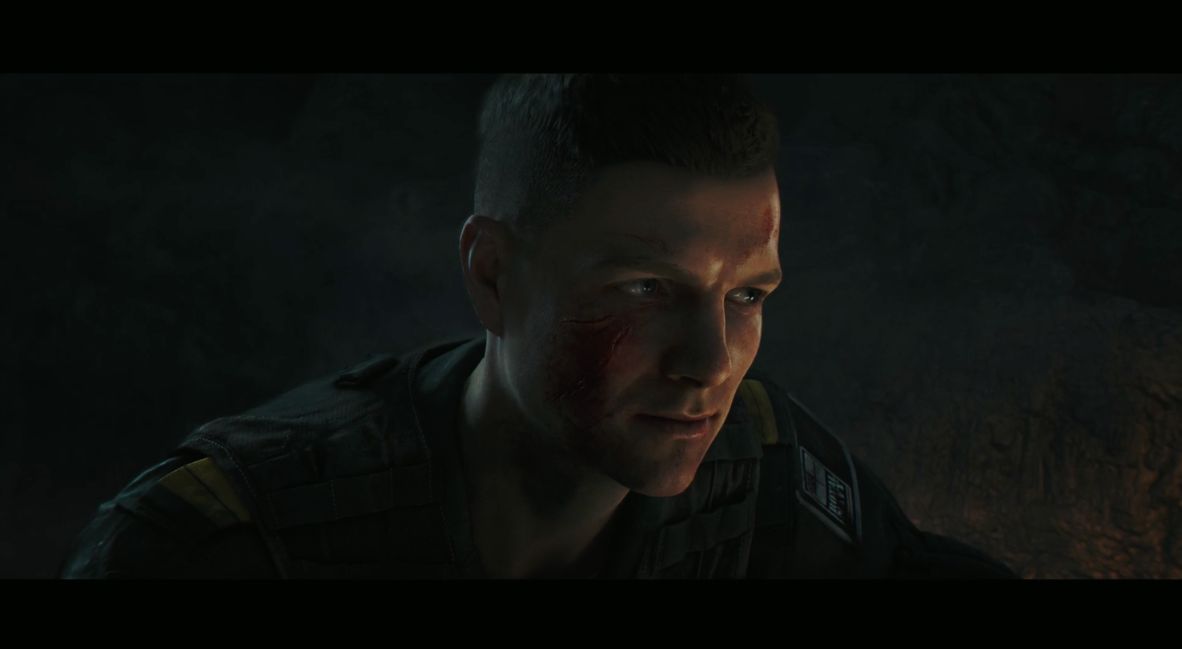
At the beginning of my time with the game, I was as filled with about as much trepidation as this young version of James Bond was. Having just been shot down and marooned on an Icelandic beach, Bond is young, worried, and having to take instructions from a woman he has never met before. But still, with that uncertainty, he moves forward.
This level is entirely stealth-based. As the opening level of the game, you get to see who IO’s Bond is and what the focus of the game’s combat and systems will be. A tutorial by any other name, this opening chapter also establishes the basics for the gameplay. This is a young James Bond; in fact, it’s the youngest we have ever seen him. And you can feel it in this opening mission.
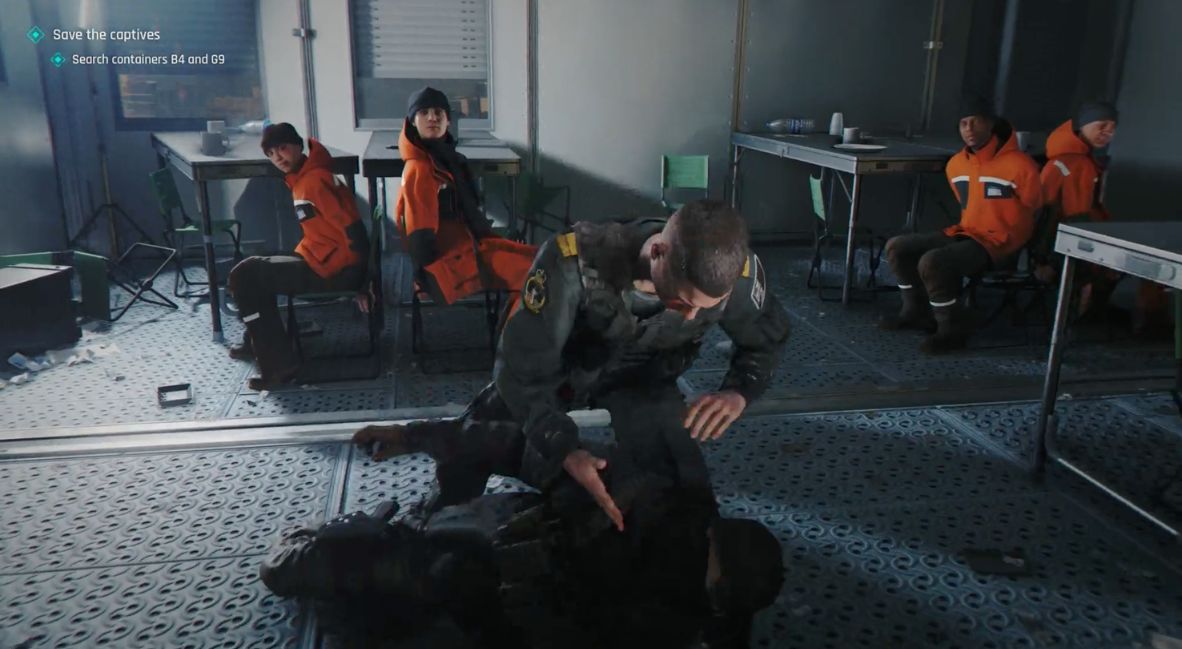
But as the mission draws to a close, he makes a choice that shows his bravery and his penchant for not always following orders. Underneath the surface of this green Bond, working to “earn the number,” is the man we all know and love. And as our time with 007 First Light continued, we saw that.
As the level ends, a slight variation on the Bond theme plays out, and we get the opening title sequence. With an original song by Lana Del Rey, the moment that the title sequence starts, everything clicks into place. This is Bond. While some may still feel a disconnect because of the character’s age, the moment that the sequence starts, you can see the love of the franchise, honoring one of its hallmarks.
While you can watch the title sequence ahead of playing the game, I don’t think you should. Despite airing during the BAFTAs, I still managed to come into the game nearly completely blind. The build-up that is rewarded once you hear Lana Del Ray’s voice pays off, and it settles you into 007 First Light.
007 First Light’s soundtrack and score immediately transport you into a Bond film in the best way.
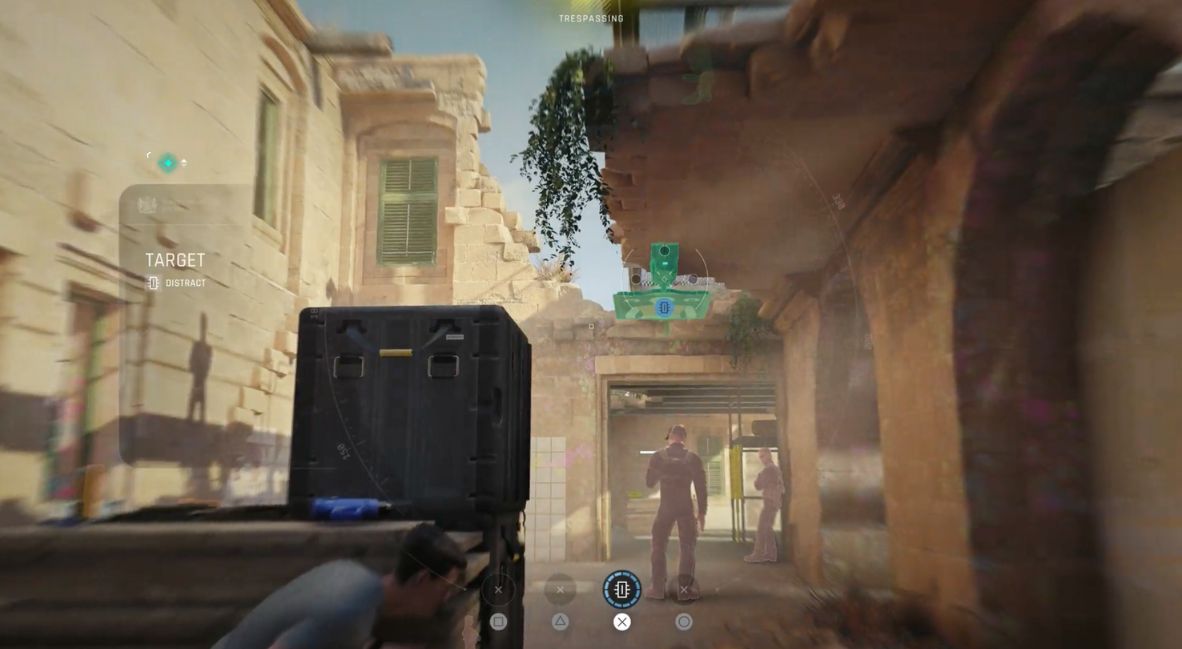
After setting up what players can expect, we went through a training ground. Tasked with capturing a flag, you work your way through the environment however you see fit. This was an excellent display of player choice and agency. As I looked at the two other press folks on either side of me, it was clear that we were not anywhere close to doing the same thing.
While 007 First Light’s introduction was prescribed, with one right path and a whole lot of wrong ones, the training ground showcased the openness with which the development team had designed locations. Similar in style to the non-prescriptive missions you receive in the Hitman series that allow you to creatively set up your kills, navigating your way through the training grounds isn’t something that is set up from the start.
With full access to some of Q’s tech, including the Q lens, I was able to experiment with disrupting the environment around me. I can wholeheartedly say that I am not a person who loves stealth combat or missions. The freedom the combat system gave me to decide when to hide, when to engage, and when to disrupt is a necessary element that ensures players will tackle Bond in their own ways and, hopefully, feel more immersed in their choices.
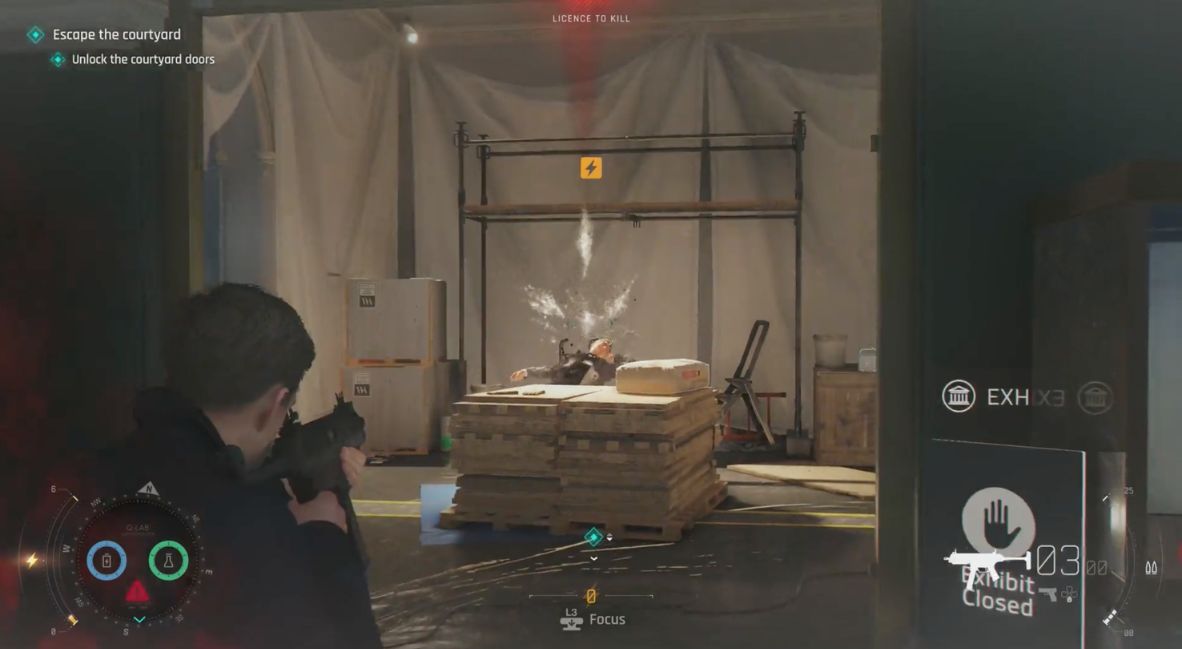
Additionally, combat lethality is restricted to when the words “license to kill” appear on screen. This denotes that Bond’s enemies are using lethal force, and you, of course, can too. But who is to say that you don’t just Rambo through the missions? Well, if you’re mindful enough of your environment, you kind of can.
Gadget combat, hand-to-hand, firearms, there is a suite of combat functions for you to choose from, and you’ll never do it the same way twice. While we didn’t get much of the narrative or combat, we got to experience it at our own pace, building our own thrills. What matters here is that as you fight your way (or sneak) through the museum, you can immediately see how the scenario would take place in a film.
Akin to Indiana Jones and the Great Circle, the filmmaker’s cinematographic techniques appear throughout the sections we experienced. Whether that is from lens flares, character angles, or the way that dust floats in the air, shining in the light. This is a game that benefits from its cinematic foundation while still avoiding being consumed by it.
The switch between film and video game is seamless, thanks to the shifts in aspect ratio from playable sequences to cinematics. It’s a distinct gap between the two, but that’s not a complaint, just an observation about how closely IO Interactive
IO Interactive has put player creativity first in level design, building on the foundation they solidified with Hitman 3.
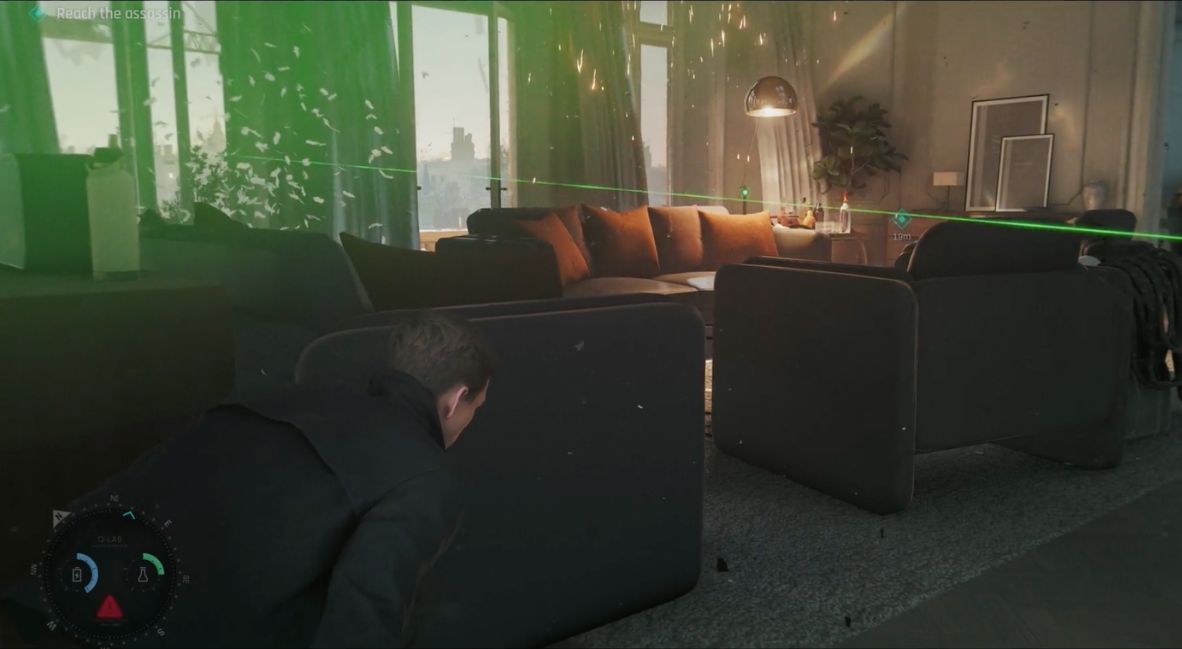
The last section of the preview event showcased one full level, and one after Bond has been working with MI:6 for some time. Called the Kensington mission, you’re tasked with entering a party and finding out who is behind the targeting of you and your colleagues. After some story moments that detail some of the narrative’s more emotional moments, you’re put into a party situation.
Paying attention to my peers’ screens, I adamantly refused to walk the same path they did. I mean, during the introduction to the game, IO Interactive developers explained that player creativity is one of their core pillars of game design. So why not test it?
What results is gameplay that is clearly built on the solid foundation set by the studio’s last Hitman game, Hitman 3, but it doesn’t feel derivative. The elements of Bond’s life and his access to tech don’t feel like set dressing for another Hitman mission. Instead, everything feels unique, from fighting style to limitations enforced by your environment.
Throughout this mission, you have to avoid cameras, steal security cards, lie (read: charm) people, and ultimately explore the world how you see fit, using what you have to arrive at the answer. Find an invitation to the event may be the directive, but how you do it doesn’t matter.
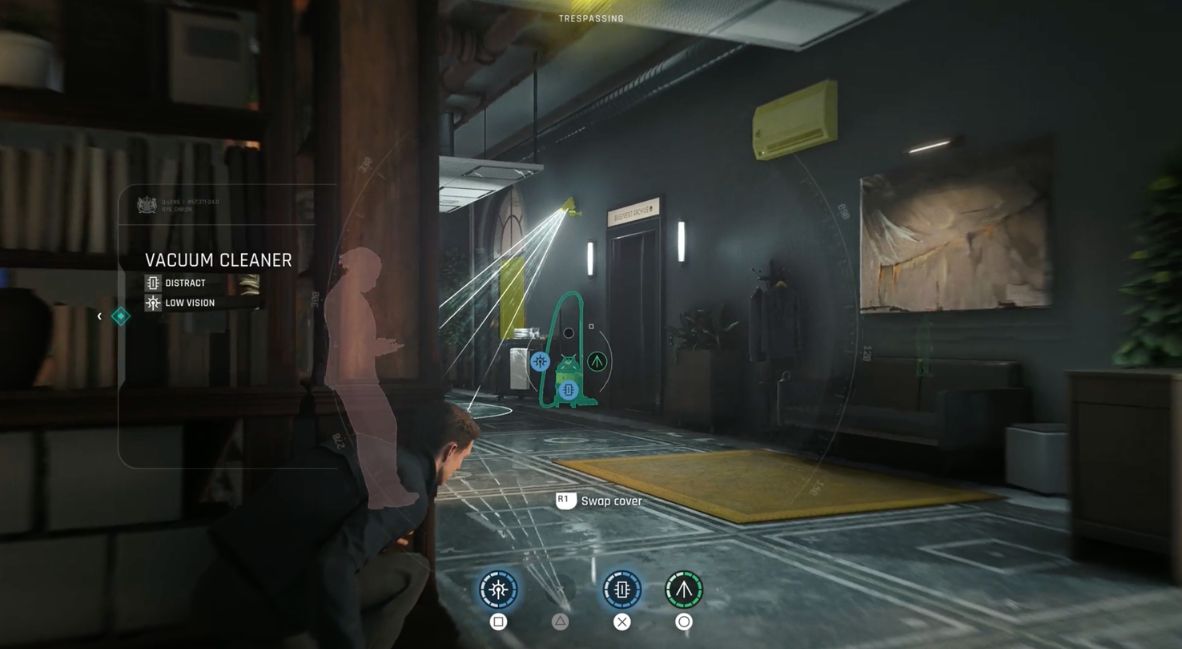
You can blind someone with your Laser Strap or make them sick with a poison shot from your Dart Phone. You can also use the Q-watch to disrupt electrical equipment around people, causing a scene. And of course, all of this gadget combat is influenced by the view of the field you see with your Q-lens, which helps you spot items you can interact with and your mission. The interactive layers of every area are a hallmark of IO, but the execution of it within the context of Bond’s existing lore and 007 First Light’s narrative makes it all feel fresh and not a reskin.
That particular point was my primary worry for 007 First Light. Additionally, I wasn’t entirely sure how Bond would be, well, Bond at such a young age. However, in the mission we played, there is one moment when you’re captured and are supposed to hack the phone of the man holding you hostage.
To do this, you need to be near him. So, you taunt him or stall him. And to be honest, the dialogue written for this moment captured the youth of the character, but more importantly, the fierce humor and charisma that you have come to expect from the iconic character.
James Bond’s youth doesn’t overshadow his charisma.
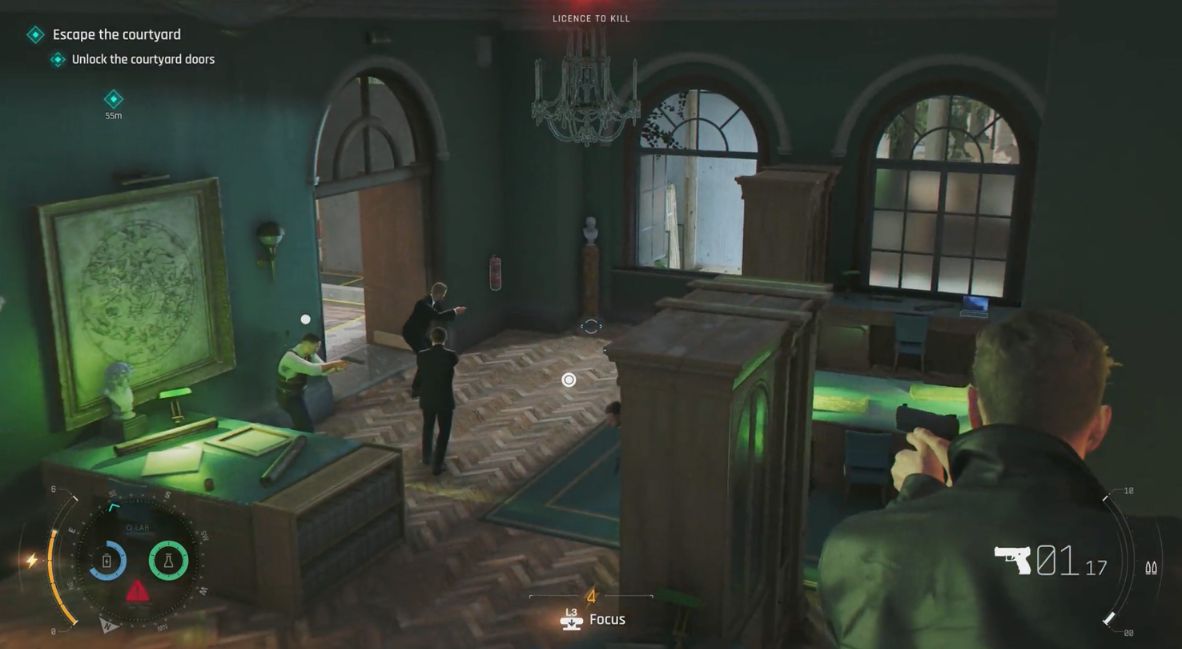
The ending of the zone has you fight your way through a museum or use stealth. But I wanted to see just how far you could get by being a bull in a china shop and shooting more than sneaking. While I did die a couple of times, once you realize that the entire environment is at your disposal, the combat system opens up.
You can fling items on desks at people, hand-to-hand combat and perfect counters give you the chance to pop a gun out of someone’s hand and into yours, and finally, the gunplay isn’t oversaturated, with bullets running out and no ammo refill. If you want another gun, you’re going to have to fight for one.
By pushing players to use their environment, IO forces them to understand their surroundings and think quickly, as James Bond does. It’s an element that also lends to the game’s pacing. Having commented that Bond’s combat style is a snowballing forward progression, it all made sense.
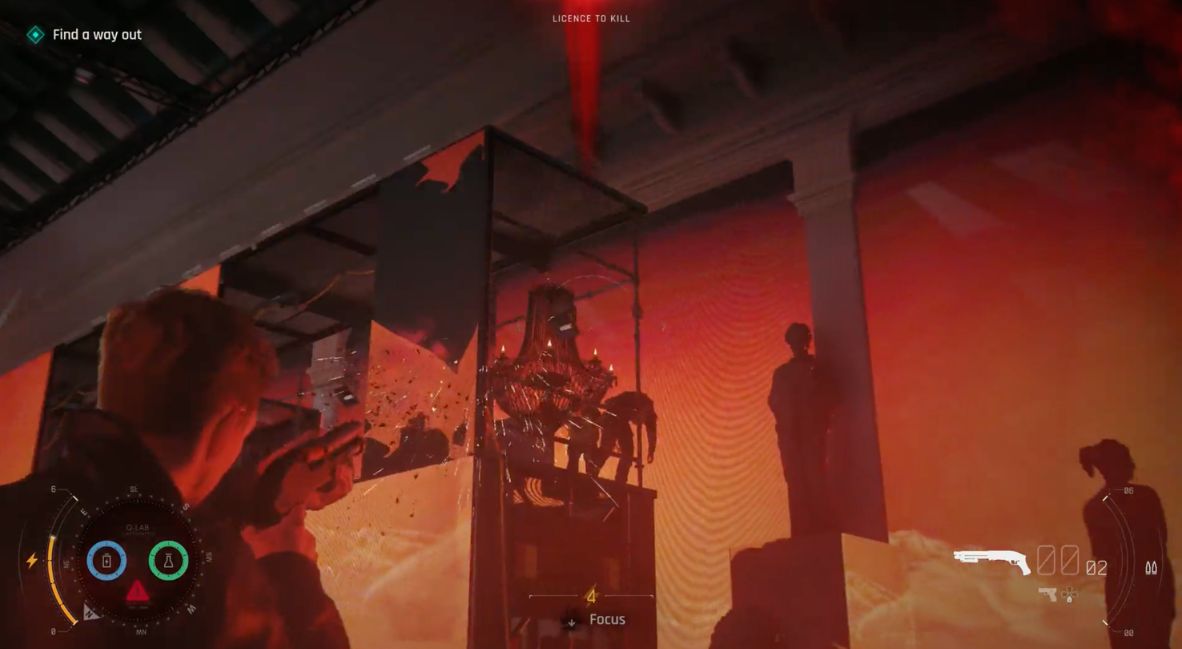
As Bond, you move forward, using combos, taking direction from screen prompts for grapples and finishers, and you use everything you have to keep driving your opponent back. Overwhelm enemies in close quarters, but be more strategic when you shoot. It’s a unique way to approach combat, and one that directly captures a cinematic parallel.
The verticality of the last room before you escape is excellent, and the neon-soaked red obscures your vision, making it hard to see if it’s a statue or a person. Environmental design is core to the success of 007 First Light, and making sure the combat system, whether close quarters or ranged, is fueled by it makes it some of the cleanest and most creative combat that IO has put forth.
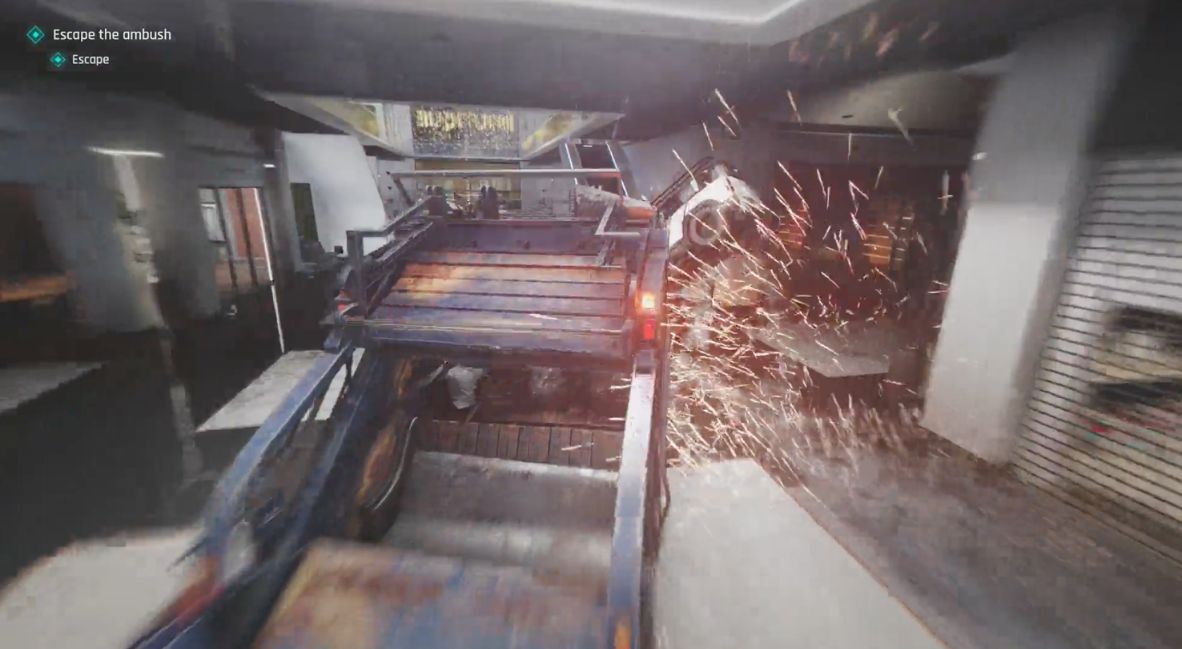
Finally, it has to be said that the three hours of play time ended with stealing a truck and ramming through all sorts of buildings, tables, and cars, all done just to escape. Throughout the last mission, there was no doubt that this was a James Bond, but as you enter the truck and the chase ensues, the score and cinematic visuals of the on-the-rails action further immerse you into the world of Bond that IO has brought to life.
007 First Light has cleared the bar for being more than a Hitman reskin and thrives in Bond’s legacy.
007 First Light has a difficult task of making fans of both the IO Interactive games and James Bond happy. What shines through on that uphill challenge is the passion for the Bond franchise and the design know-how to make every inch of gameplay and the environments leave no room for ire.
While the game’s story is still shrouded in mystery, even the spoilers I know now have confused me more than they have given me a clear vision of the game’s narrative. When it comes to combat and charisma, IO Interactive has nailed exactly who Bond is.
Better yet, with player agency, they’ve given me the power to make Bond who I have wanted him to be. 007 First Light went beyond my expectations, and now, I’m just waiting to finally play the whole thing. It would have been easy to make a love letter to James Bond with 007 First Light; instead, this game feels like it’s stepping into a legacy and shaping it, too.
007 First Light releases on May 27, 2026, for PlayStation 5, Xbox Series X|S, Nintendo Switch 2, and PC, and is available for pre-order.