Close Menu
  • Support Us
  • Login
  • Newsletter
  • News
  • Features
  • Interviews
  • Reviews
    • Video Games
      • Previews
      • PC
      • PS5
      • Xbox Series X/S
      • Nintendo Switch
      • Xbox One
      • PS4
      • Tabletop
    • Film
    • TV
    • Anime
    • Comics
      • BOOM! Studios
      • Dark Horse Comics
      • DC Comics
      • IDW Publishing
      • Image Comics
      • Indie Comics
      • Marvel Comics
      • Oni-Lion Forge
      • Valiant Comics
      • Vault Comics
  • Podcast
  • More
    • Event Coverage
    • BWT Recommends
    • RSS Feeds
Facebook X (Twitter) Instagram
Support Us
But Why Tho?
RSS Facebook X (Twitter) YouTube
Trending:
  • Features
    Wuthering Waves 3.1

    ‘Wuthering Waves’ 3.1 Tells A Perfect Story Of Loss And Love

    02/06/2026
    D&D Secret Lair

    From Baldur’s Gate to Castle Ravenloft, New D&D Secret Lair Drop Has A Lot To Offer

    02/03/2026
    Star Wars Starfighter

    Disney Says Goodbye To Bold Diverse Casting Choices With ‘Star Wars: Starfighter’

    01/30/2026
    Pre-Shibuya Maki in Jujutsu Kaisen

    Everything To Know About Maki Zenin In ‘Jujutsu Kaisen’

    01/26/2026
    Pluribus is the Anti Star Trek But Why Tho

    ‘Pluribus’ Is The Anti–Star Trek

    01/23/2026
  • Holiday
  • K-Dramas
  • Netflix
  • Game Previews
  • Sports
But Why Tho?
Home » Books » REVIEW: ‘The Chile Pepper in China’

REVIEW: ‘The Chile Pepper in China’

Jason FlattBy Jason Flatt03/08/20204 Mins ReadUpdated:04/20/2023
The Chile Pepper In China — But Why Tho
Share
Facebook Twitter Pinterest Reddit WhatsApp Email

The Chile Pepper In China — But Why Tho

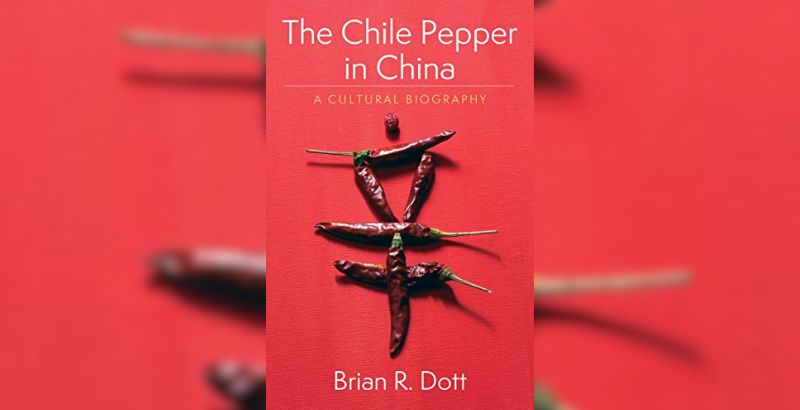
The Chile Pepper in China by Brian R. Dott is a non-fiction history of how chile peppers, a plant native to the Americas, became ubiquitous in China. Dott, an associate professor at Whitman College leads readers through the complicated and sometimes unclear history of how this spicy fruit came to hold such significance in Chinese cuisine, medicine, culture, and politics.

Get BWT in your inbox!

Subscribe to our weekly newsletter and get the latest and greated in entertainment coverage.
Click Here

Get BWT in your inbox!

Subscribe to our weekly newsletter and get the latest and greated in entertainment coverage.
Click Here

It is important to note that The Chile Pepper in China is an academic, non-fiction book. The book therefore spends as much time walking the reader through its methodology and sources as it does telling the chile pepper’s actual history. While much of those parts of the book are equally interesting, not all of it will feel germane to the casual reader. This is by no means a negative attribute of the book, especially since these walkthroughs are well-researched and well-explained. In fact, The Chile Pepper in China is a book that can be easily understood and enjoyed by casual readers, something not all academic non-fiction books can say.

For anybody with interests in learning about non-America cooking, medicine, or even language, The Chile Pepper in China is an excellent resource for learning about an array of Chinese practices. Dott explains how Chinese systems for classifying foods and medicines were intertwined with language in ways that are easily understood in the English language for an American not well acquainted with the concepts. I do wish that some of the explanations of chile peppers’ use as medicine were discussed in a modern context. There was ample discussion of how capsaicin, the chemical that makes chilis spicey, was used as preventatives and treatments for many types of illness. I was just left so curious about the ways Dott explained food and medicine as virtually one and the same that I found myself wanting to understand if its uses have evolved since the 1600s.

The way the book breaks down Chinese words and phrases is also really compelling. The book is very careful to make clear that China is not a singular culture and that in different groups and regions across time periods people have held different and sometimes contradictory beliefs. I enjoyed seeing how the word for and words used to describe chile peppers evolved and eventually landed on “the foreign pepper.” 

Beyond being a well-researched history, The Chile Pepper in China does an excellent job demonstrating how cultural symbols, even when recognizable by an entire population like the chile pepper is, do not always hold the same symbolic meanings for everybody. The book’s latter chapters demonstrate this in both classic Chinese literature and in contemporary politics. For example, the chile represents the trope of the “spicy girl,” a somewhat aspirational and attractive quality of being bold, passionate, and firey. Meanwhile, the pepper has been used as a warning against that very inversion of traditional gender roles.In more recent times, chile peppers in China have come to be associated with revolution and even Mao himself.

I particularly appreciate The Chile Pepper in China as a reminder that culture is constantly evolving, its symbols are not uniformly interpreted, and its origins are rarely what our society wants us to believe. The positive, harmless foray into developing culturally can be applied to American cultural symbols just the same. Whether we are talking about popular films or controversial political symbols, The Chile Pepper in China is an excellent and interesting reminder that just because something is ubiquitous does not mean it’s universal. Culture is neither created in a vacuum nor suspended in the time of its inception.

The chile pepper was not native to China until one day, it was, and as Dott shows in The Chile Pepper in China, the fruit has meant different things to different people over the centuries and probably will continue to mean new things as time goes on. While I wish The Chile Pepper in China had even more examples of the spicy plant’s cultural importance in China rather than repeating the same information often, it is an excellent history and an even greater reminder of how culture is ever-changing and not everybody experiences culture the same as one another.

The Chile Pepper in China is available now.

The Chile Pepper in China
4

TL;DR

While I wish The Chile Pepper in China had even more examples of the spicy plant’s cultural importance in China rather than repeating the same information often, it is an excellent history and an even greater reminder of how culture is ever-changing and not everybody experiences culture the same as one another.

  • Buy via our Bookshop.org affiliate link

Share. Facebook Twitter Pinterest LinkedIn WhatsApp Reddit Email
Previous ArticleCO-OP REVIEW: ‘The Division 2: Warlords of New York’ Is an Example that Future DLCs Should Follow (Xbox One)
Next Article REVIEW: ‘Machine Gun Wizards,” Vol 1
Jason Flatt
  • X (Twitter)

Jason is the Sr. Editor at But Why Tho? and producer of the But Why Tho? Podcast. He's usually writing about foreign films, Jewish media, and summer camp.

Related Posts

Jedi Battle Scars - But Why Tho

ADVANCED REVIEW: ‘Star Wars Jedi: Battle Scars’

02/22/2023
The Battle of Jedha - But Why Tho

REVIEW: ‘Star Wars: The High Republic: The Battle of Jedha’

01/04/2023
A Day of Fallen Night

ADVANCED REVIEW: ‘A Day of Fallen Night’ Is An Epic Tale

12/03/2022
High Republic Convergence - But Why Tho

REVIEW: ‘Star Wars: The High Republic: Convergence’

11/22/2022
Sensory Life on the Spectrum - But Why Tho

ADVANCED REVIEW: ‘Sensory: Life on the Spectrum’

10/17/2022
Star Wars: The Princess and the Scoundrel

ADVANCED REVIEW: ‘Star Wars: The Princess and the Scoundrel’

07/26/2022

Get BWT in your inbox!

Subscribe to our weekly newsletter and get the latest and greated in entertainment coverage.
Click Here
TRENDING POSTS
Black Women Anime — But Why Tho (9) BWT Recommends

10 Black Women in Anime That Made Me Feel Seen

By LaNeysha Campbell11/11/2023Updated:12/03/2024

Black women are some of anime’s most iconic characters, and that has a big impact on Black anime fans. Here are some of our favorites.

Iron Lung (2026)
9.0
Film

REVIEW: ‘Iron Lung’ Is An Excellent Filmmaking Debut For Markiplier

By James Preston Poole02/03/2026

A slow-burning submarine voyage into cosmic dread, Iron Lung, directed by Mark Fischbach, fundamentally trusts its audience. 

The Strangers Chapter 3
7.0
Film

REVIEW: ‘The Strangers Chapter 3’ Makes The Trilogy Worth It

By James Preston Poole02/06/2026

The Strangers Chapter 3 goes beyond being a serviceable slasher to a genuinely quite good one by having a fresh take on its titular villains.

Gojo Jujutsu Kaisen - But Why Tho (2) Features

Everything To Know About Satoru Gojo

By Kate Sánchez09/07/2023Updated:02/16/2025

Satoru Gojo is the heart of Jujutsu Kaisen Season 2 — now, heading into Cour 2, here is everything you need to know about the character.

But Why Tho?
Facebook X (Twitter) Instagram Pinterest RSS YouTube Twitch
  • CONTACT US
  • ABOUT US
  • PRIVACY POLICY
  • SUBSCRIBE TO OUR NEWSLETTER
  • Review Score Guide
Sometimes we include links to online retail stores. If you click on one and make a purchase we may receive a small contribution.
Written Content is Copyright © 2026 But Why Tho? A Geek Community

Type above and press Enter to search. Press Esc to cancel.

But Why Tho Logo

Support Us!

We're able to keep making content thanks to readers like YOU!
Support independent media today with
Click Here