
Avatar: Seven Havens throws audiences into a riveting and shocking ride. After a long time away, the Avatar, a young desert wanderer girl named Pavi (Saheli Khan), has returned. But is she ready for the responsibility as the world is in the most chaotic state that we’ve ever seen in the Avatar Universe?
The Four Nations are no more, engulfed in an apocalyptic wasteland that has forced humanity to retreat to the titular “Seven Havens” around the world. One of which is Ellora, where we find the new young Avatar.
Worse yet for Avatar Pavi, the world believes that her predecessor, Avatar Korra, is responsible for this state of utter chaos, with the typically revered figure now labeled “humanity’s destroyer,” not its savior. Hunted, maligned, and seemingly alone, Pavi will have to face a world that hates her and do everything she and her new allies can to save it, and Avatar fans old and new will be enthralled to follow her journey.
Avatar: Seven Havens picks up with a new character adopting the Avatar moniker.
Avatar: Seven Havens was created by Avatar Bryan Konietzko and Michael Dante DiMartino. The first episode, “On the Horizon,” is written by Sehaj Sethi and directed by Kenji Ono. The second, “Into the Storm,” is written by Chad Quandt and directed by Jen Bennett. The third, “The Order,” was written by M. Willis and directed by Jasmine Goggins.
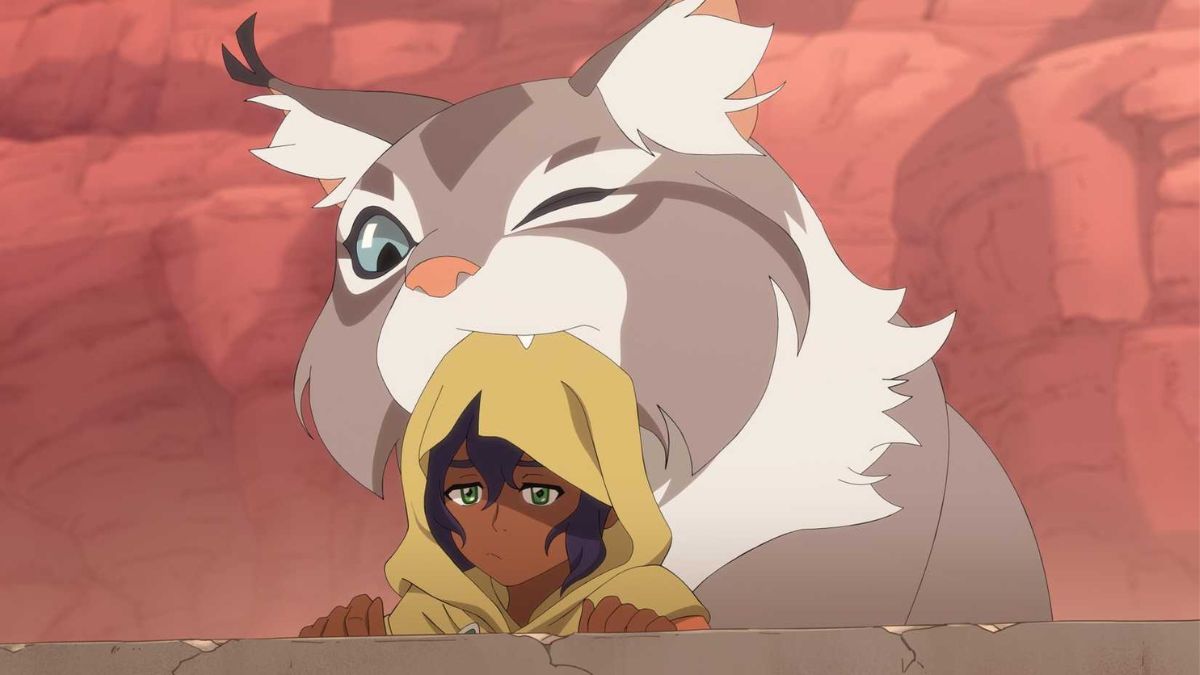
Pavi is unique as the Avatar for several reasons. But primarily, she is unique from the outset in her almost absolute solitude, having only her cat-monkey Geet (Dee Bradley Baker) as her friend. Aang was a child at 12, thrust with gargantuan responsibility when he started out.
Korra was more eager than most to assume the role as the Avatar but was still an adolescent when she started in Republic City and had the weight of the world crashing down on her. Pavi, along with her twin sister Nisha (Aishu Devan), is even younger and is perhaps the most reluctant to be the Avatar, especially as the role is extraordinarily vilified in this new age.
Like Avatar: The Last Airbender before it, the series contends with the burden placed on child soldiers to save the world, and does so in even more poignant and considerate ways than its predecessor. Pavi is not reluctant solely because of the vilification, but because of her sincere self-doubt, loneliness, and desire to just remain a happy-go-lucky nomad who need not root herself anywhere and spare herself potential pain.
The Avatar world remains lush and gorgeous.
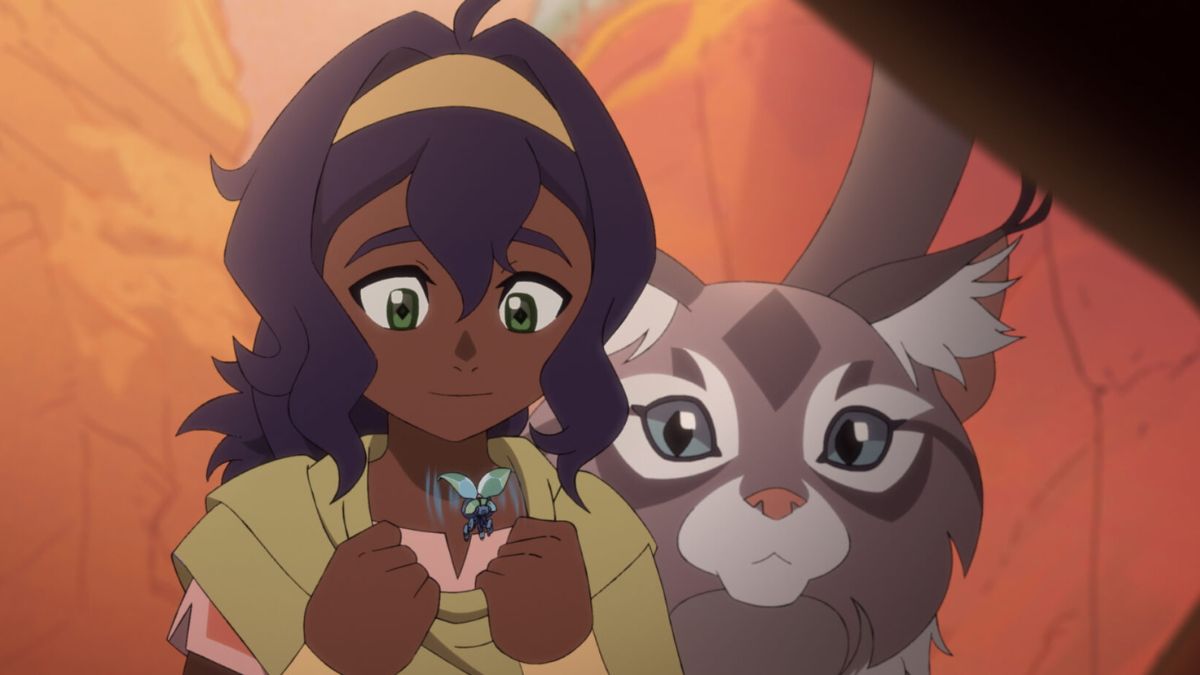
The writing for her is luminous, with Khan and Devan giving tremendous performances as our young heroes. The writing and direction do a remarkable job of having you immediately cherish Pavi and Geet, and be eager for their adventures to come in Ellora and beyond.
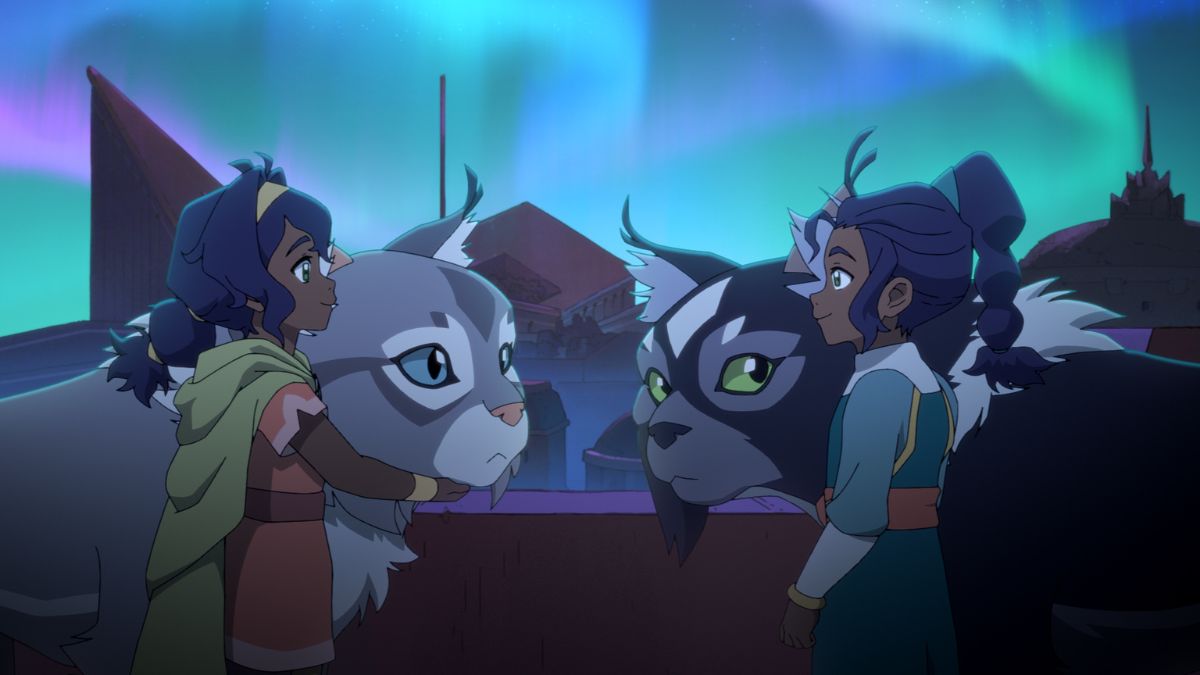
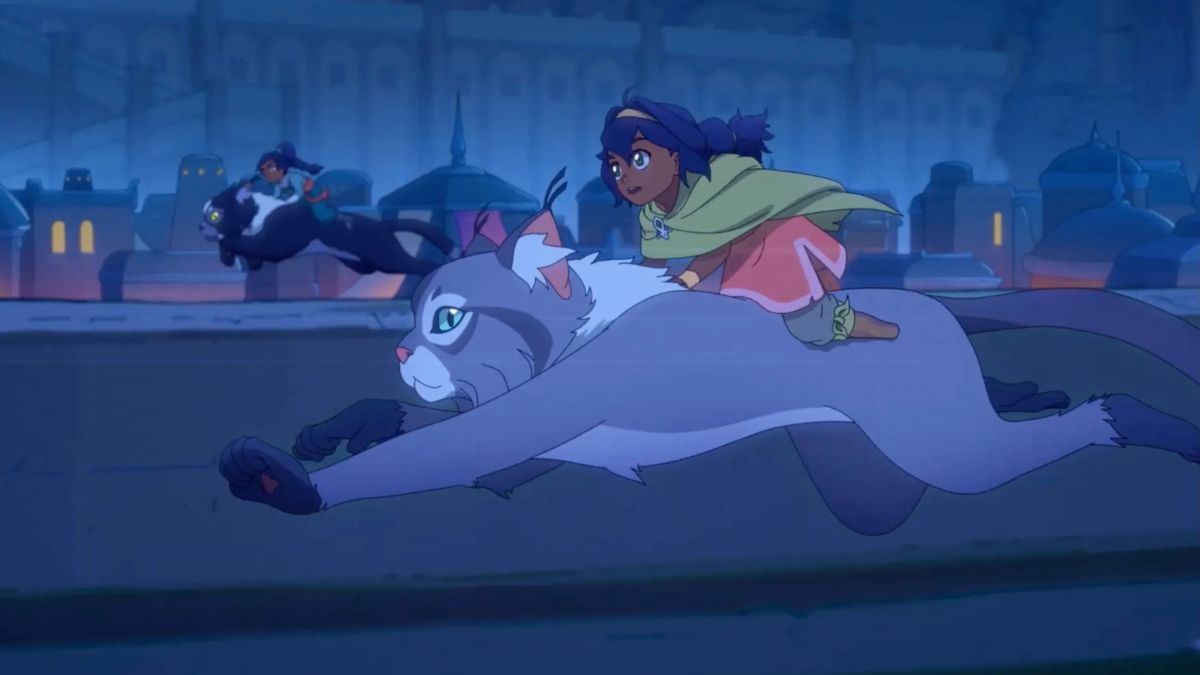
Nisha, a brash young Earthbender, who also has a cat-monkey named Ruhi (meaning “soul” in Sanskrit and many other Indo-Iranian languages, as well as Arabic), offers a contrast to her long-lost sister, bolder and more willing to take on the challenges Ellora presents her and Pavi. Devan’s performance carries more grit, whilst Khan’s is markedly much softer and benign, but both carry their roles with nuance and depth, along with the fantastic animation for their characters. All of this will have you root for our young heroes as they uncover the mysteries of their separation, their family, Pavi’s Avatarhood, and much more.
The Avatar’s World remains as beautiful as ever in this new era, as we see that Ellora (named after the famous Ellora Caves in western India) takes more inspiration from South Asian architectural design and symbolism. It is appropriate and imperative to do so, as the very concept of the Avatar is rooted in Hindu and Buddhist traditions originating from the subcontinent.
From the settings to the action the animation remains stellar.
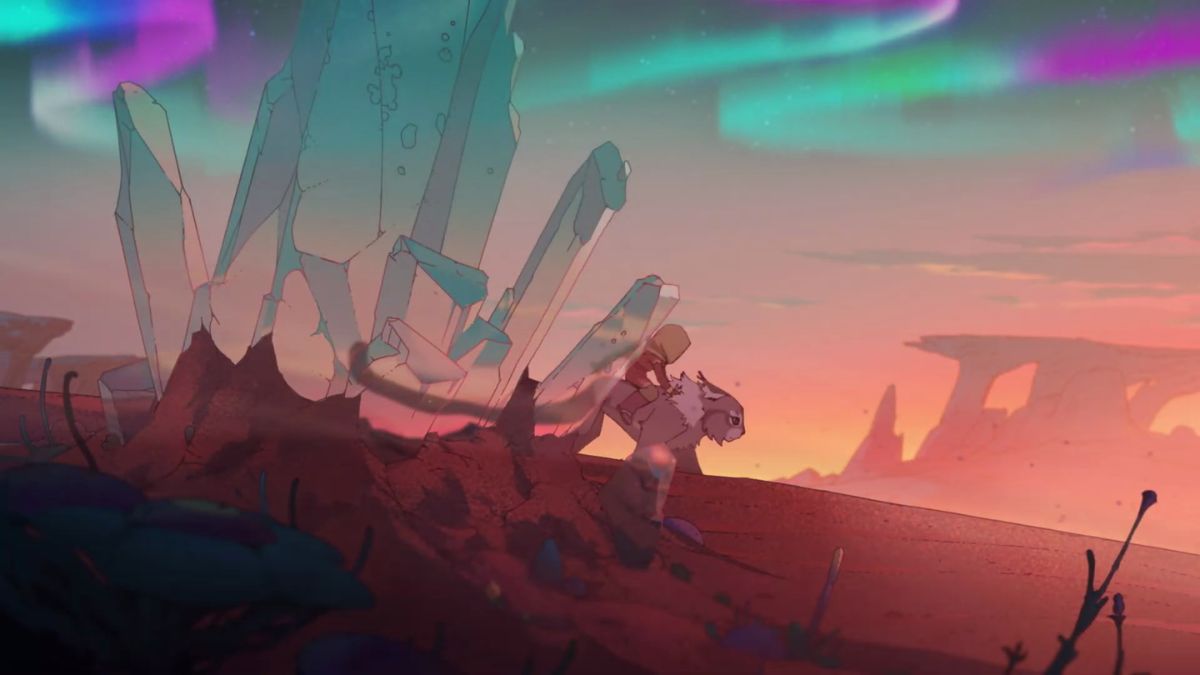
The animation of the the mega-city, the desert environment, and extreme weather is all captivating. Large Indian-inspired stone structures, with gorgeous arches, towers, columns, and foundations make Ellora feel ancient as well as modern, and will you engross you further into this new era.
And of course, the Bending Arts are a majesty to behold, with all the trademark stances, kicks, punches, along with newer swirling movements and animations of air, water, fire, and earth to behold in this new setting. The desert swirls beautifully during the storms, the aurora borealis majestically sits in the night sky, and the various plant-animal hybrids of the Avatar’s World remain a marvel to behold.
Along with the superb Avatar Aang film, Seven Havens continues Avatar Studios excellent new record of actively embracing South Asian culture, making it truly feel like the Pan-Fantasy Asia the series always purported to be. The inclusion of these architectural elements, food like Kachoris, naan, and chai, along with East Asian food like Kimchi Jigae and congee, and, along East Asian names, South Asian names, including some names here originally based in West Asian Arabic, continues to make the Avatar’s World a meaningful parallel to ours.
Jae is just one of the many new characters we meet that instantly capture our hearts.
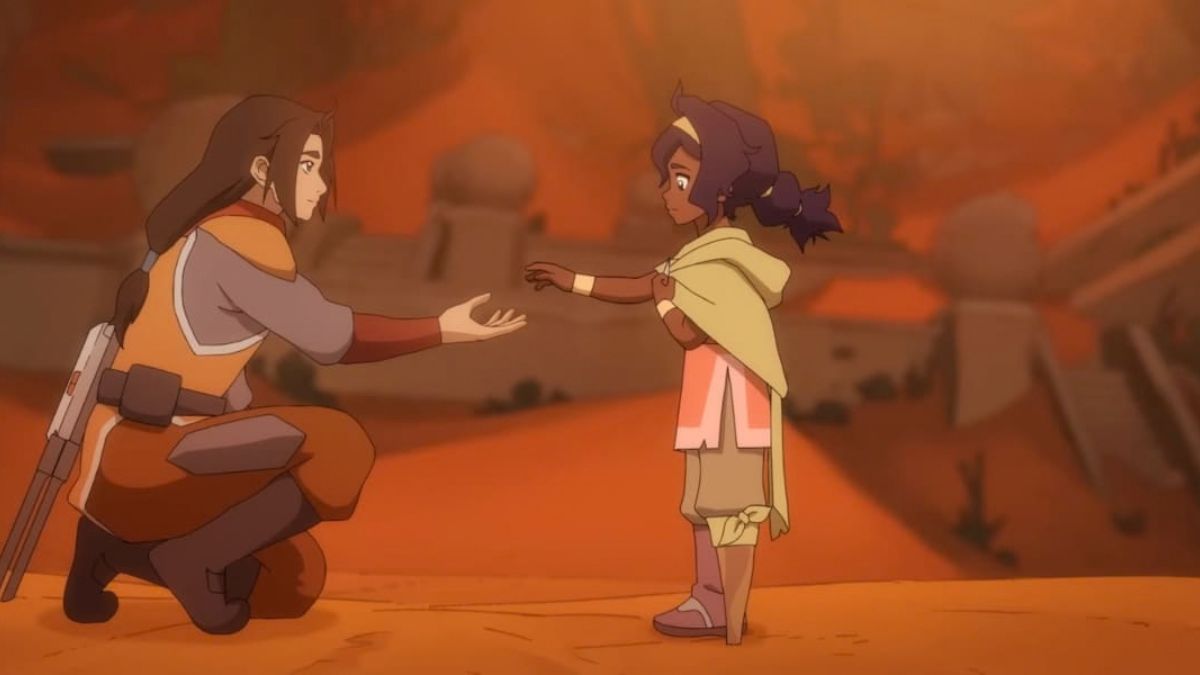
Along with the brown skin of Pavi, Nisha, and Karthik, there is such great diversity of skin tones and features throughout the people of Ellora, showcasing the wonderful diversity of Asia that too many so often belie and ignore.
Jae (Major Curda) is a great deuteragonist, an Airbender Elloran who is steadfastly devoted to protecting his society along with his fellow Benders, who are alas too few to handle the threats Ellora must face. This is a key point in this new time: fewer and fewer Benders are being born. It makes sense, as the people of Ellora, and presumably most of the rest of the Seven Havens, have lost their spirituality as they have lost their reverence for the Avatar.
This is a world defined by fear of the unknown and the cataclysm outside, reinforcing protection above all. Being in such a state of insecurity makes the elites’ propaganda (particularly against Korra) all the easier, and the writing makes it straightforward to identify. The forceful conscripting of all Benders to defend Ellora is appropriately jarring and seen to be wrong, even as the conscripts convince themselves they are simply doing the right thing. Jae initially is dedicated to this until he meets Pavi in Seven Havens, forcing himself to reevaluate what he was taught.
The series builds out its new Team Avatar.
He is steadfastly kind and true to doing the right thing and honoring his word, as any Airbender should be. Curda is joyful, insecure, and incredibly warm in his performance, and the animation will attach you to Jae as he goes on his own journey of self-discovery. Additionally, Jae is a very welcome queer representation, as queerness is allowed to be more visibly present in the animated shows and not just the extended materials. Every Avatar must have an Airbender mentor and friend, and Jae fits the bill easily as Seven Havens builds out its new Team Avatar.
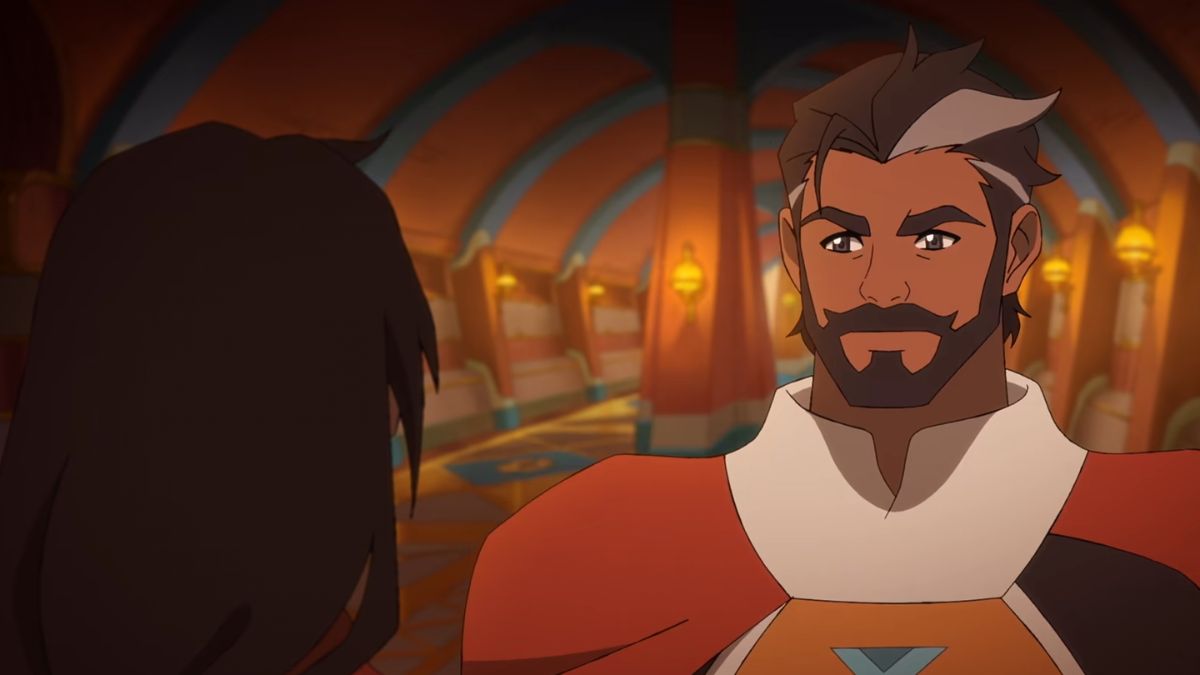
Also an excellent member of the cast is Akhsay Khanna as Airbender Captain Karthik, who is not everything he seems in his first appearance. Warm, strict, frustrated, and carrying heavy burdens, Karthik is a great new senior figure for the series.
He may recall to Tenzin in The Legend of Korra, but he very much his own character in Seven Havens, especially as his mysterious past continues to unfold in the show. Additionally, Darren Barnet is great as the Waterbender Daemin, Sakina Jaffrey is warm and uplifting as restaurateur Agam, and the rest of the predominantly Asian cast enriches the world of Ellora even further.
Avatar: Seven Havens Episodes 1-3 are magnificent.
On the whole, there is excellent tension from jump that will keep you hooked to the screen. The writing plants the seeds of its mysteries judiciously throughout its premiere three episodes, but not overwhelmingly so. It does so organically, setting the stage for Pavi, Nisha, Jae, and Karthik must work to uncover the secrets of the Avatar’s past, bringing us audiences along for the ride as we too work to make sense of the chaos of the world.
What you might initially think going into the show will be likely be upended, as it roots itself firmly in the new and bold story it tells. As Pavi and Nisha say in the show, maybe together, it could all be a little less scary.
Jeremy Zuckerman’s score is as stunning as ever, with more South Asian vocals and beats incorporated into the world to reflect its respecting of its now more prominent cultural inspirations. He also now incorporates synth strings to convey the dire futuristic setting juxtaposed against the trademark mysticism of Avatar. And the story usage of one particular new song gives an emotionally rich and stirring display for us to cry before it. The master behind “Leaves from the Vine” has done it once again.
The first three episodes of Avatar: Seven Havens are a magnificent start to what promises to be an exciting and bold chapter in the Avatar Universe. Pavi, Nisha, Jae, Karthik, Geet, and Ruhi are all fantastic characters, along with the rest of the cast, making for an exciting journey on which to take their audience. But above all, the heart of what makes us love the Avatar’s World is ever present, even if the world we’ve always loved looks so drastically different now. Avatar: Seven Havens promises us satisfying answers, and perhaps we should trust it to take us along for the ride.
The first three episodes of Avatar: Seven Havens are now streaming on Paramount+
Avatar: Seven Havens
-
Rating - 9.5/109.5/10
TL;DR
The first three episodes of Avatar: Seven Havens are a magnificent start to what promises to be an exciting and bold chapter in the Avatar Universe.
The first three episodes of Avatar: Seven Havens are a magnificent start to what promises to be an exciting and bold chapter in the Avatar Universe.