
There is, without question, intrigue at the heart of MGM+’s American Hostage, created by Shawn Ryan and Eileen Myers and based on the podcast of the same name. Inspired by true events and, because of the cesspit cyclical patterns of human nature, still timely, it follows a man hell-bent on exacting revenge on a system that stole his livelihood and reduced people to numbers. Eat the rich narratives are becoming a (valid) genre in their own right. Still, the series crests on lethargy.
It doesn’t help that this is the second telling of this story in as many years, coming on the heels of the Gus Van Sant film, Dead Man’s Wire, which primarily told the hostage part of the story. American Hostage, despite its name, is just as interested in the journalism. And that’s far past the point of entertainment, turning a cold sweat-inducing story into something humdrum and flatlined.
Journalism is interesting and vital, and stories about journalism have, over cinematic history, elicited the necessary human response, from All the President’s Men (1976) to Spotlight (2015). Its vitality is strengthened in an era of near-constant mockery, as AI threatens the human element. These are subjects that should be catnip for viewers desperate for competence and who are striving against socio-economic pitfalls and the strain of making a living where we don’t compromise our free time for the sake of staying above overdraft notes.
American Hostage takes too much of a backseat, happy to observe instead of investigate.
So for American Hostage to lack any sense of enthusiasm for its subject – both sides of the phone calls that often connect our two main characters – doesn’t just seem like poor writing but apathetic. Writing that doesn’t want to make any big, sweeping assumptions or declarations. It, like reporting, is trying to stay apolitical and observational only. But goodness, there’s got to be some oomph and fire lit to tell a story like this one in these times.
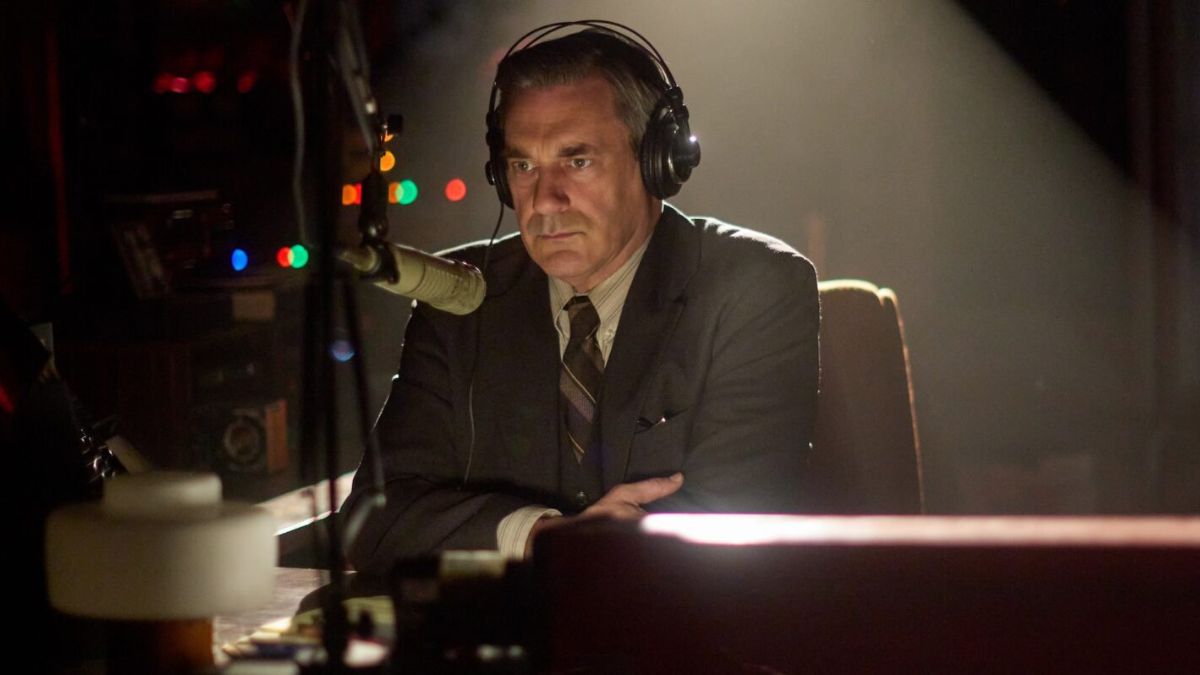
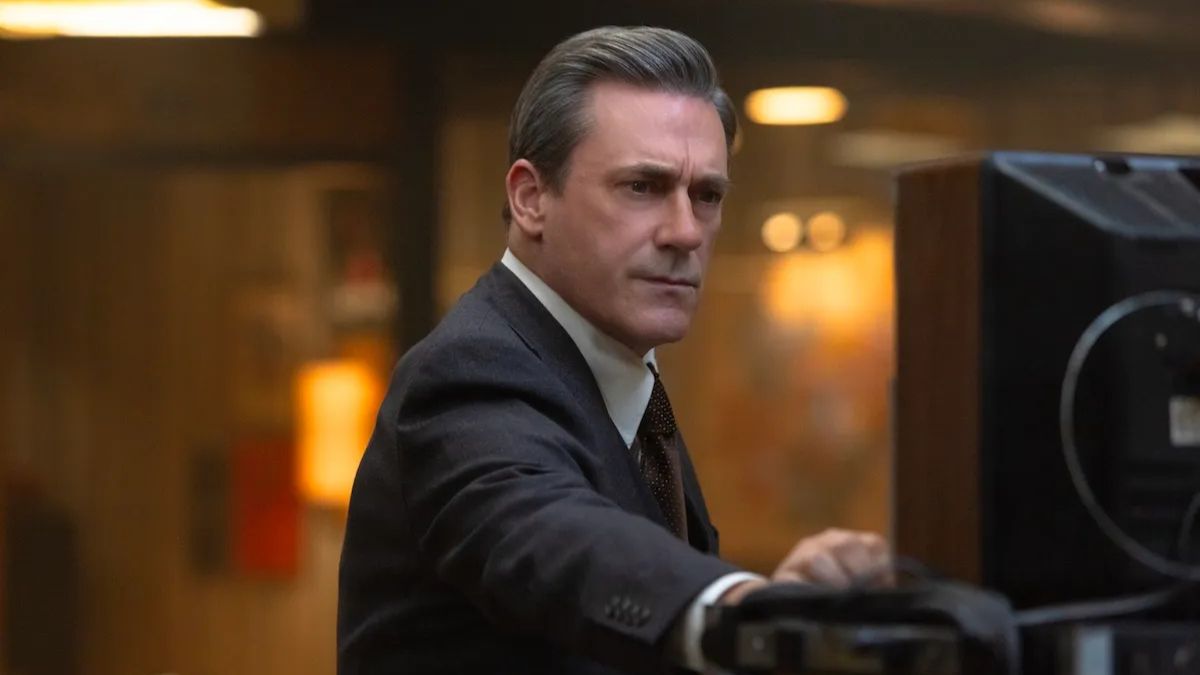
Jon Hamm, resting on well-tailored suits, his affinity for this era of drama, and a distinctive, made-for-TV jawline, reprises his role as radio reporter Fred Heckman. A staple in Indianapolis, he’s looking for more, on the cusp of accepting a bigger and better gig away from the city where he cut his teeth. His beloved nature touches everyone, including Tony Kiritsis (Giovanni Ribisi).
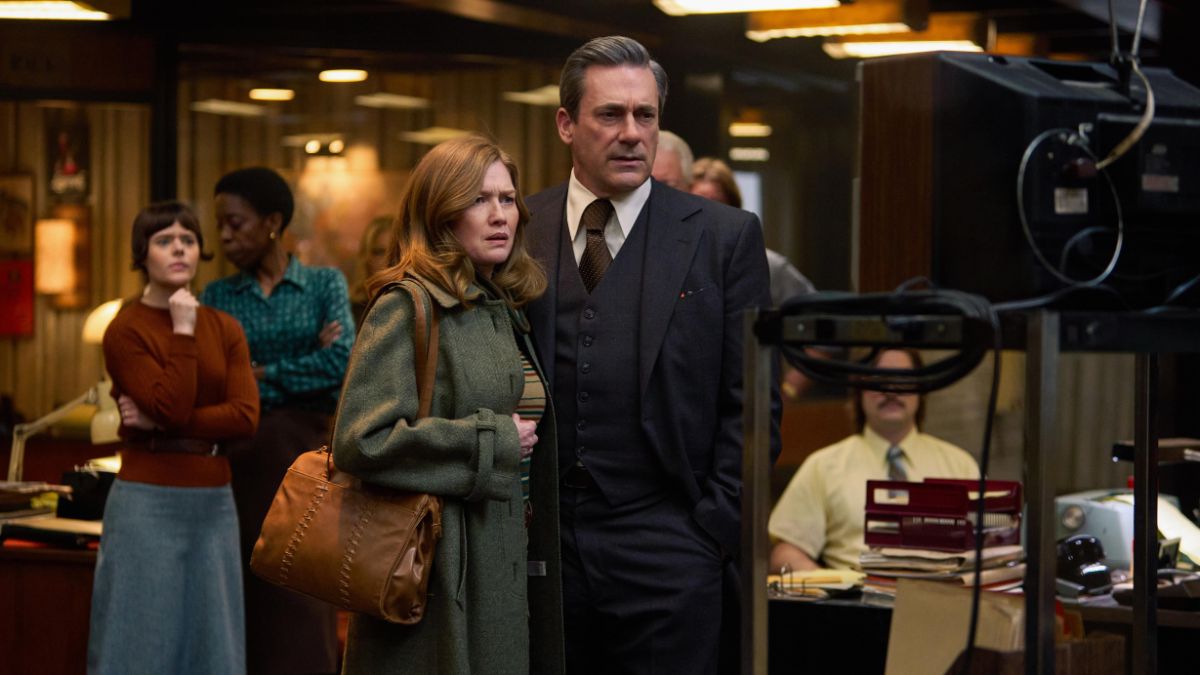
Set in 1977, the story follows the events after Tony Kiritsis takes his mortgage broker hostage. Holding the man at gunpoint, Tony demands to be interviewed by Heckman on his news program. American Hostage cleverly finds new ways to plant a level of stress by showing the inner workings of a news station having to cover life-or-death news. It’s yet another note that feels shockingly relevant, considering the widespread access to some of the bleakest, shocking bouts of violent footage at our disposal today.
Despite a sleepy pace, American Hostage finds moments of human connection that work.
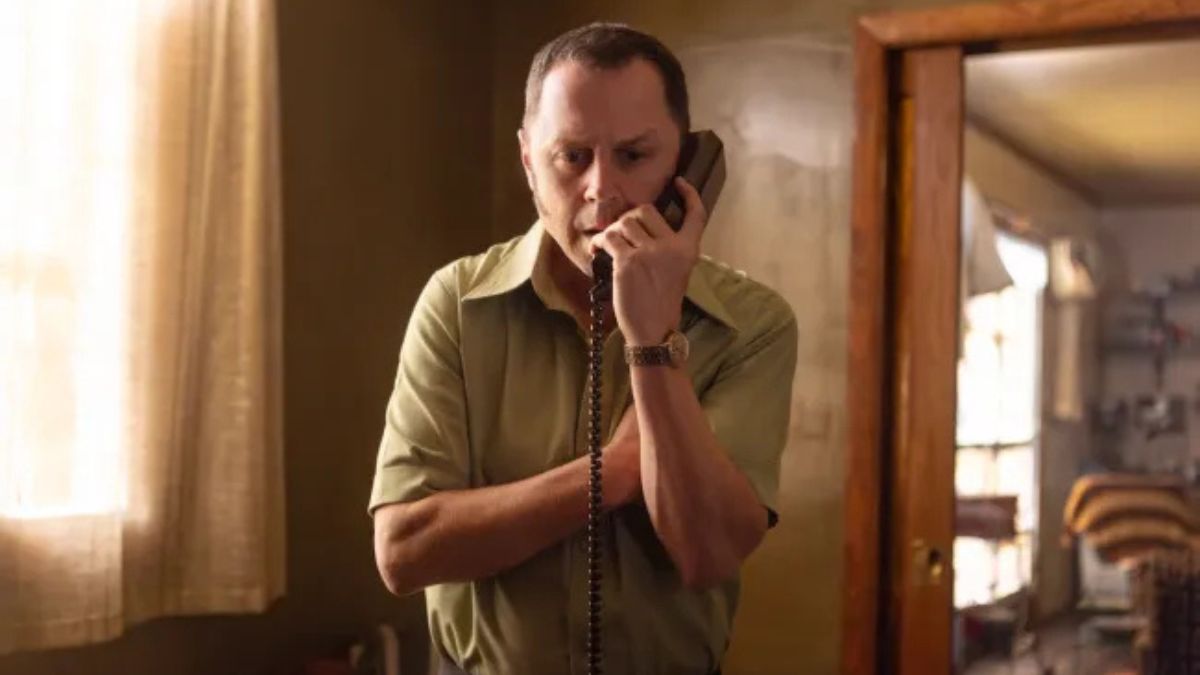
American Hostage isn’t so much pro-censorship as it is pro-protecting the viewer (and their sponsors). Tony curses and threatens, waving the sawed-off shotgun at the back of Dick Hall’s (Kristoffer Polaha) skull. He’s a trip-line interview. Any wrong move and it’s bloodshed and disaster, all reported live. Fred must play three roles now in his efforts to maintain peace. He’s the reporter, the therapist, and friend, a voice who can try to subdue the restless anxiety and rage that Tony moves with.
Over the course of the series, American Hostage finds interesting threads to delve into, even if, by Episode 5, it begins to feel like treading water. From the inner workings of the newsroom, especially as his co-worker, Ben Hairston (William Jackson Harper), takes on more responsibility as Fred is embroiled in the drama, to the unlikely bond between Barbara Heckman (Mireille Enos) and Ibby Hall (Kat Cunning), there are smart character beats that help flesh the world out beyond this one news story.
What especially works is how the lines blend and blur when it comes to reporting on such a sensitively told story. Fred, trying to reach Tony and speak to his character, divulges a secret of his and his wife, twisting the loss of their daughter into something palatable and newsworthy. He uses his real grief to manipulate his listener. It’s one of those unspoken truths of storytelling. We come from a place of honesty and truth; we seek to tell stories that mean something and speak to the human condition, but we also self-edit and add in flourishes to make our small, personal stories feel big.
William Jackson Harper and Mireille Enos deliver understated and fully formed performances.
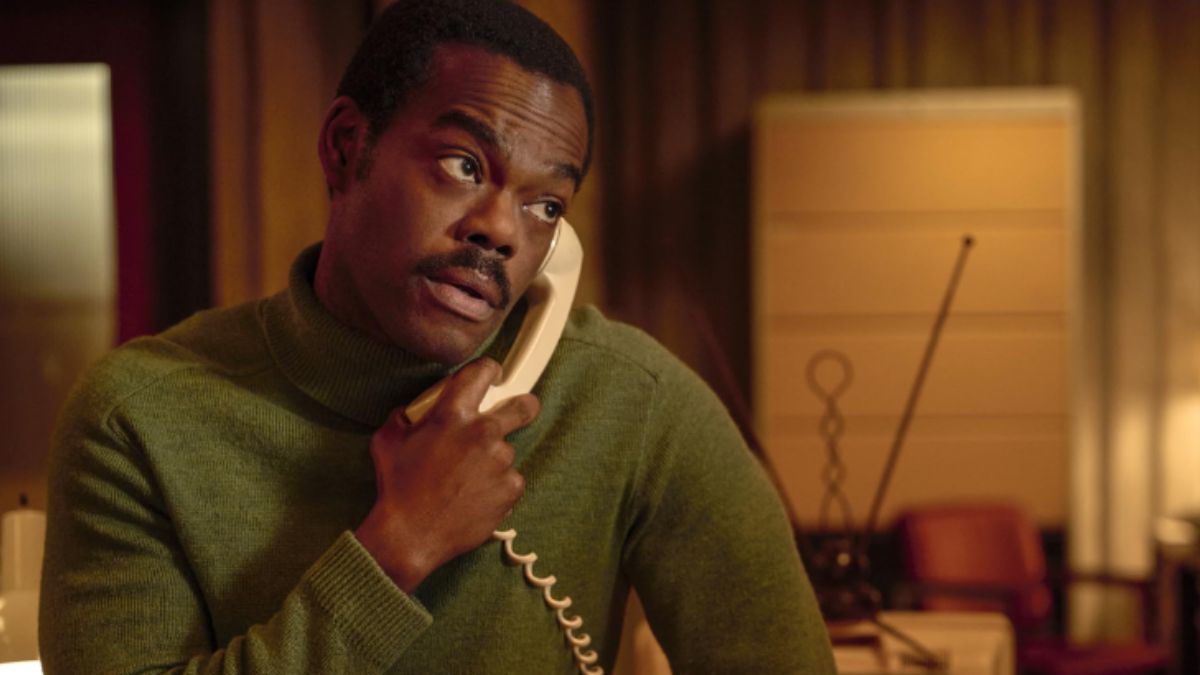
But Fred Heckman is a reporter who isn’t meant to add those flourishes or indulge. Yet, he’s also the only voice keeping a disaster at bay, so where do you go from there? It’s a fascinating glimpse at how we as humans find ways to connect and also how easy it is to assume a level of self-importance.
That said, these strengths are blips. It really needed to be a movie. There’s simply not enough story to spread across the season without it growing thin and tired at times, warped in the efforts to keep things going. American Hostage has brief moments of understated brilliance, but it’s hard to remember them when you’re so lost in the tedium of it all.
The series nails the time period, from the plucky score by composer Robert Duncan that plays with notes that emulate the sound of a typewriter, to the handsome set design and the sepia tint to the screen; it believably loses itself to the ’70s grays and style. And even if this doesn’t quite push Hamm to his greatest strengths, he fits the time period with ease. Harper is well cast too, using the little he gets to create a fully formed character.
There’s simply not enough energy to sustain interest.
If anything, it’s Ribisi who struggles the most. The hostage part of the story just doesn’t click. Not because we don’t understand his motives or hold sympathy for someone pushed around by the powers that be. Ribisi is simply playing it too big. He’s shouting to the rafters when it should be more intimate. He’s playing it as a comedy while everyone else believes they’re in a drama, and that dissonance makes it hard to take the character seriously, especially when he’s meant to pose a genuine threat.
American Hostage has all of the parts to make a solid drama. A true story and a timely one, a prestige star, and a classic storytelling structure that doesn’t feel the need to force mystery. Real meat and potatoes television. But it lacks passion, and the result is, unfortunately, boring. It’s work to get to the end, not a must-watch, week-to-week television event.
American Hostage is streaming now on MGM+ with new episodes each Wednesday until its finale on November 1.
American Hostage (2026)
-
Rating - 5.5/105.5/10
TL;DR
American Hostage has all of the parts to make a solid drama. But it lacks passion, and the result is, unfortunately, boring.