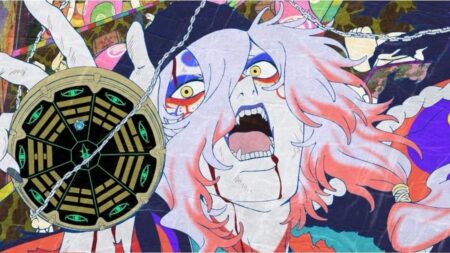


History is ripe ground for storytelling inspiration, and anime is no exception. What sets Jaadugar: A Witch In Mongolia Season 1 apart is how Science Saru takes the narrative of Tomato Soup’s manga and weaves a tapestry of political subterfuge. The twelve episode season is constantly challenging, both in its subject matter and its production. Those aspects pay off in every way and make for one of 2026’s best anime.
Jaadugar: A Witch In Mongolia Season 1 follows slave girl Sitara (Akira Sekine), who finds an opportunity to uplift herself with a devout Muslim family ripped away by the rise of the Mongol Empire. Permanently changed by the grief of losing her home, Sitara resolves never to let go of the resounding rage. Eventually taking on the name of her former mistress, Fatima, she forms a conspiracy with one of the Khan’s wives, Töregene (Ami Koshimizu) to take down the Mongol Empire from the inside.
While this story is fictional, it is inspired by a real Empress Töregene and her advisor Fatima, who led the Emp. Jaadugar is posed as an origin story for the two, using Töregene‘s real history and creating a plausible history for Fatima and how she would come to be seen as a “witch.”
Jaadugar: A Witch In Mongolia Season highlights the best and worst of humanity.
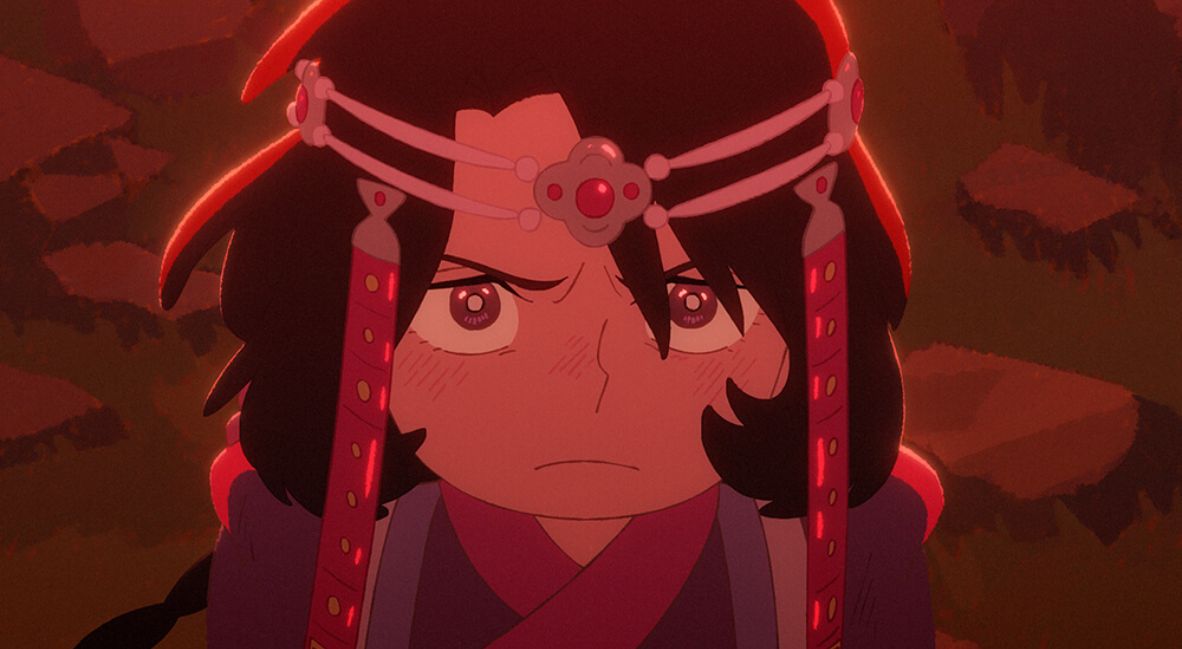
This historical context is not particularly well known in the West to begin with, but even if that wasn’t the case there’s some aspects of this story that are difficult to stomach. While the art direction softens some of intensity and certain aspects are left to speculation, there are some hard truths that Jaadugar does not flinch away from. Slavery, violence, campaigns of war, religious differences, and misogyny are constants in this world.
While not flinching, Jaadugar is also careful to not attempt to apply modern understanding to its proceedings. These are matters of fact for this world, no characters to look at the viewer to assure that the author or production team disavow them. Trust is placed in the viewer to understand the intent and not look away.
Simultaneously, Jaadugar: A Witch In Mongolia Season 1 puts extreme value on some of the most beautiful aspects of humanity. Knowledge, the pursuit of, and use of is at the core of every relationship of the series. As a child, Sitara is taught the value of science and study. Then, as the Mongol captive Fatima, she regularly leverages her knowledge just as her oppressors and opponents do.
Executive director Naoko Yamada plays a pivotal role in the adaptation’s success.

Throughout the scheming, the backdrop of the Empire moves right along in beautiful backdrops meant to evoke the tapestries of the time period – with great success. The daily life in the steppe is depicted season to season, with the community working normally and simply existing. Alongside them are livestock, horses, and more that never take away the focus but highlight the lives unfolding around the political players. Those moments of humanity are important highlights to the reality behind this story.
All things considered, only a studio like Science Saru could have done Jaadugar: A Witch In Mongolia the justice it derseves. The studio’s output runs the gamut of genre and styles, but whether animating the ultra violence of Devilman Crybaby or the slice of life basics of Keep Your Hands Off Eizouken!, they are excellent at identifying the heart of their characters.
Executive director Naoko Yamada is the secret weapon of this production. The director of A Silent Voice has a keen eye for adaptation that highlights characters beyond the sensitive subjects those characters they’re thrown into. Certainly, this vision is how Jaadugar: A Witch In Mongolia Season 1 finds the depth beyond the pain and rage that fuels Fatima and Töregene’s mission.
The immersive art style brings the world to vibrant life.

Finding that depth lets the production deviate from its art style in bold, astonishing ways. The most ambitious reflects the various faiths of the characters. Every ritual depicted over the course of the series gets spectacular set pieces that strike a great balance between respectful and mythological. Simply depicting this region’s faiths is a refreshing departure from what even anime tends to explore.
But of course, it is the characters that shine the brightest. From the first moments of the OP sequence, Jaadugar: A Witch in Mongolia Season 1 locks firmly in on its characters. Often, scenes are composed to center a single character or intimately frame two together in close quarters.
Much of this is logistics, the Mongols at this time still hedged towards nomadic patterns, moving around their territory and mostly living in small tents. However, it also gives the animators ample opportunity to show rather than tell, using body language, reactions, and piercing looks to reveal as much as the dialogue does.
Töregene’s complex character gains even more depth through Ami Koshimizu’s performance.

Production values are buoyed by strong vocal performances, and the two come together perfectly with Töregene‘s depiction. Her position in the series is a bit strange – she doesn’t enter the story for several episodes and then spends the last several intentionally hidden from view – which forces Science Saru to make the most of what they have. The result is an extremely compelling animated character especially when paired with Koshimizu’s complex delivery.
Other standouts are Kujira (Naruto’s Orochimaru) as rival schemer Empress Boraqchin, Hiro Shimono as Ögedei, the curious successor to Genghis Khan, and Sekine as Fatima. All of them have multiple layers that constantly have to be juggled in different ways depending on those who they are in the room with. Fatima has to keep her true feelings in check, which stands in parallel to the magnanimity of Ögedei by the season’s conclusion; in ways that make the prospect of a second one very exciting.
If you look for setbacks, they’re in the very nature of the material. Jaadugar: A Witch In Mongolia Season 1 is firmly in the josei genre, which means it is pointedly a story about women, meant for women, and grown up. There are no “hype” moments to find here. Action scenes are few and far between and while the twelve episode season never lingers long on any particular beat, it is methodical to a fault.
With patience and expert pacing, Jaadugar: A Witch In Mongolia is one of the best of the year.

This is not a deal breaker by any stretch, but the casual viewer may not be as compelled by the structure of the story. It also means the season finale is a bit of an anticlimax, serving more as table-setting for the next story arc than a conclusion in its own right. Again, this isn’t a production looking for a single moment of excitement, but tying together naturally rising and falling instances of tension. The trade-off is that it may not fit as neatly into a modern anime broadcast structure.
Between Jaadugar: A Witch In Mongolia and The Ghost In The Shell, Science Saru’s 2026 is a high watermark for what was already one of the best currently making anime. Jaadugar: A Witch In Mongolia Season 1 is a perfect match for the studio’s skills and talent, a not unexpected but very welcome success all around. Its material and structure take a bit of getting used to, but the reward is oh so sweet.
Jaadugar: A Witch in Mongolia Season 1 is streaming now, exclusively on Crunchyroll.
Jaadugar: A Witch In Mongolia Season 1
-
Rating - 9/109/10
TL;DR
Jaadugar: A Witch In Mongolia Season 1 is a perfect match for the studio’s skills and talent, a not unexpected but very welcome success all around. Its material and structure take a bit of getting used to, but the reward is oh so sweet.