


A twist can be a wonderful thing in a mystery, especially if it alters a shift in a narrative that completely knocks us off balance and is justified. However, when there are too many twists, they shift from an impactful storytelling tool to a writing crutch, as in Netflix’s Mousetrap (Deuljwi). With its disorienting opening episodes, the mystery of unpacking who is who is already a fascinating setup, but with each twist and shift in the layers of identity, Mousetrap ultimately twists itself into knots that leave one frustrated.
Throughout an unevenly paced ten episodes, the story homes in on Je Moon-jae (Ryu Jun-yeol), a best-selling author who has shut himself away from the world inside his luxury apartment. Traumatized by the brutal death of his parents, he’s developed a panic disorder and lives vicariously through his classmate and friend, Son Soo-hyun (Mu Jin-sung). He sticks to the same routine daily, and that routine keeps him safe. But underneath, he knows something needs to change and desires a fresh start, a recurring theme among several characters in this series.
That fresh start comes with a brutality that Moon-jae never expected. His identity and everything that he’s built for himself are stolen right out from underneath him. Without an identity to call his own and no way to prove it, he’s left with no resources. Surprisingly, the reveal of his identity thief comes early (and shows Ryu Jun-yeol playing a dual role fantastically in the process), signaling a change of pace from the typical cat-and-mouse format. Fittingly, he’s referred to as the Rat, a nod to the folktale that inspired the series
Ryu Jun-yeol delivers two distinctly incredible performances in Mousetrap.

Through manipulations that become clearer as the series progresses, Moon-jae is pushed into the path of No-ja (Sul Kyung-gu), a loan shark Moon-jae took money from three years earlier and then disappeared on. That is, until the Rat starts using Moon-jae’s credit cards, creating a paper trail for No-ja to hunt down. While their reunion is violent and attempts to reason fall short in Episode 2, the two men eventually agree to try to find the Rat. At that point, the discordant pacing in Mousetrap finds more balance, but barely.
As a pairing, No-ja and Moon-jae take on a clear senior/junior dynamic. No-ja is played with proper exasperation by Sul Kyung-gu, who, with each new bit of information discovered (and subsequently tossed out when variables twist it all up), grows increasingly frustrated. He’s gruff and no-nonsense, and one look from him can induce terror. At one point in Episode 6, he almost steps in as an audience surrogate when yet another umpteenth wrench is thrown in to muddy up an already complicated mystery, causing him to explode.
With the Rat ahead of them every step of the way and Moon-jae proving to be mostly useless for much of the series, the frustration builds naturally. For a time, though, the screenplay by Lee Jae-gon, who adapted the webtoon series from Ludovico, and the direction by Kim Hong-sun lure you in and keep you glued. Part of this is due to the distinct differences between the Rat and Moon-jae, which create a clear line between presumed victim and villain at the beginning of the series.
Every step of the way, you’ll be asking what’s actually going on, and not always for the better.
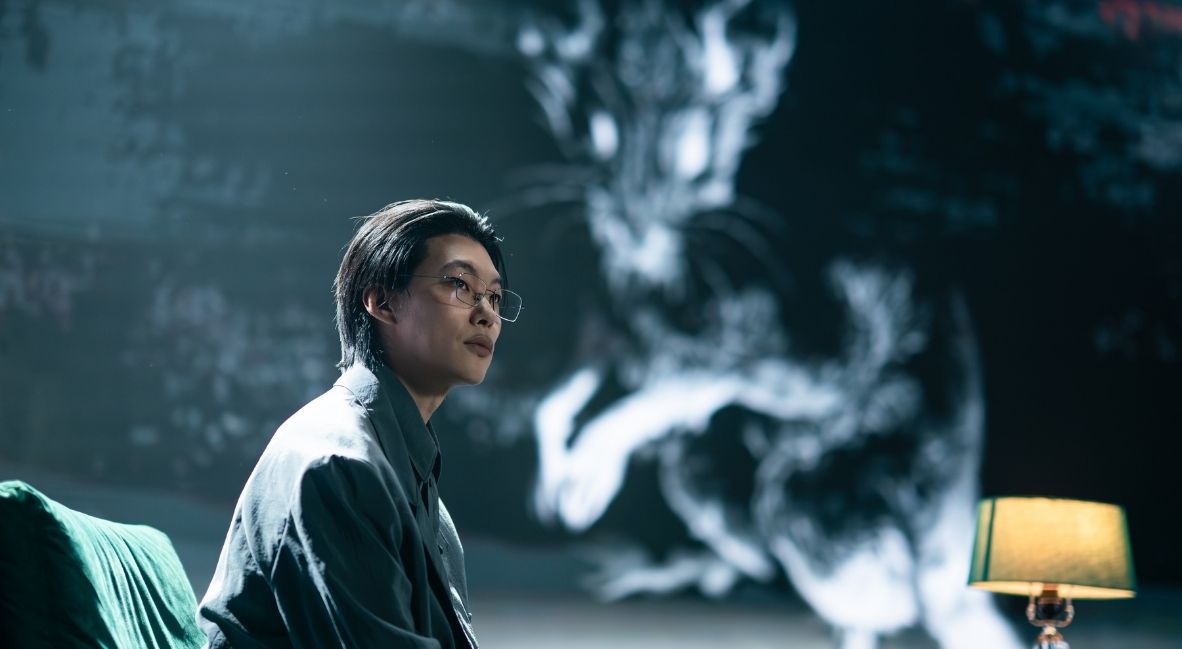
Ryu Jun-yeol takes on the arduous task of playing two characters in the series, Moon-jae and the Rat. He plays both characters with physicality to create clear distinctions between the two, even with the Rat himself taking on the visage of Moon-jae. As Moon-jae, Ryu Jun-yeol plays him as smaller and more anxious, his body language almost collapsing within himself. In contrast, as the Rat, he holds himself taller, with more confidence, and moves with ease rather than the scrambling panic that embodies Moon-jae once outside his apartment.
It’s a shame, then, that despite the incredibly strong performances, Mousetrap becomes utterly consumed by its ambitions and bites off more than it can chew. The expansion of No-ja’s character and Detective Park Sun-young’s (Lee Kyu-hyung) character backgrounds does add weight to the stakes. This isn’t just simply a matter of missing identities or lost money. The more the situation between the Rat and Moon-jae spirals, so too does the control both No-ja and Sun-young have over their involvement.
The thing is, the added expansions for these characters, and the fleshing out of the loan shark network No-ja is part of, bog down much of the natural pacing, suspense, and strength of the overall plot due to how these areas feed into later twists, some of which don’t entirely seem necessary or, much later on, get left on the back burner. And in Sun-young’s case, his arc makes him more of an active participant than his webtoon counterpart. But the transition to the big reveal that upends everything known at that point doesn’t come naturally.
Character expansions, while adding much-needed layers, bog down the pacing.

With such a jam-packed slog of a middle, it almost makes one lose sight of how good the ending of Mousetrap is. Those final two episodes, while also full of twists, lead to final discoveries that, once you shave off the distractions, are wholly resonant. Had the series cut two or even three episodes from the order, trimmed the fat, and maybe narrowed the perspectives further, the story might have been stronger for it, given how satisfyingly it ends and how hard it leans into that psychological horror/thriller tone from the opening episode.
The experimenting with those genre elements pays off exceptionally well in the series’ visual language, cluing viewers into Moon-jae’s mental state from the jump. From severe angles in positioning in frame, hinting at the power difference between the Rat and Moon-jae, to a rapidly distorting, blurring lens every time Moon-jae went outside and started panicking, to the brutal image of the bloated corpse of his father, the visual language set a high horror-enriched bar that was a particular delight when seen onscreen.
As a whole, however, Mousetrap gets trapped by its ambitions, which is fitting, considering how everything pans out. It’s a bloated viewing experience, despite its enticing start and satisfying ending. A case of one too many twists, Mousetrap is a lesson that sometimes less is more. If you have the patience to make it all the way through, the ending is almost worth it.
Mousetrap is now streaming exclusively on Netflix.
Mousetrap
-
Rating - 6/106/10
TL;DR
A case of one too many twists, Mousetrap is a lesson that sometimes less is more. If you have the patience to make it all the way through, the ending is almost worth it.