

The Deadman Issue 1 is published by DC Comics and written by W. Maxwell Prince, art by Martín Morazzo, colors by Chris O’Halloran, and letters by Good Old Neon.
Deadman interacts with both the living and the dead as he helps souls transition.
This story has a serene atmosphere, created by the plane of existence it inhabits. The Deadman Issue 1 is a liminal experience, following Deadman as he helps souls cross over to the afterlife they will arrive in. It’s a balancing act between the living and the dead.
The pacing is very slow and contemplative, as Deadman spends time learning the stories of those around him, whether they are alive or have just died. It makes the comic both smooth and thoughtful, constantly exploring the end of existence and what comes after. Many of the spirits involved are doomed to relive their lives endlessly.
The actual start of his story is only briefly covered, but succinctly summarized. Prince instead focuses on what Deadman does throughout the book. He has a job to do, serving a greater being. It’s only in the last moments of The Deadman Issue 1 that the action really erupts, and the issue evolves into an ominous horror comic.
The dialogue within The Deadman Issue 1 is fascinating. All of the exposition, everything you need to know about the specifics, is scrunched into a single panel filled with text. It’s long and peculiar, and takes a couple of tries to really digest. But beyond that point, the rest of the comic is filled with Deadman’s narration about the people around him. He seems to enjoy being around people, but the tone he and, subsequently, many of the other characters use creates a strange atmosphere.
Boston Brand often seems bored, especially around other ghosts. The repetition gets him down, like someone stuck in a dull, restrictive job. He looks most content around humans, reading their minds and listening to their histories and worries. They can’t hear him, but he likes the conversation anyway. The discussions about death are darkly funny yet intriguing. Prince avoids any cliches, including panic or begging for forgiveness. There is just a general acceptance and understanding of the inevitability of death.
Brand displays a mix of empathy, occasional derision, and fury. Some are given a berating before they pass, while others are given more sensitive words. Occasionally, Deadman explores his ability to possess others’ bodies. There is a neighborhood he goes to where all the spirits are just stuck. It’s the part of The Deadman Issue 1 that is the most haunting, as the spirits seem so aimlessly lost and trapped in eternal torment. And even when talking about their demises, there is a black humor to it.
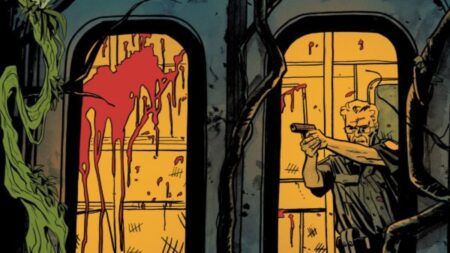
The art is mesmerizing. If it weren’t for the spiritual element, The Deadman Issue 1 would look relatively normal. The comic opens in a hospital, where most deaths occur. The nurses and patients look like the average person. Likewise, Brand isn’t presented in his iconic design. He usually wears a costume that reflects his trapeze background. But in this opening issue, Boston is depicted wearing outfits that make him blend into his surroundings. In the hospital, he is dressed like a janitor, but he also turns up in construction gear and other looks. The bald head makes his expressions stark, and he looks thin and spindly.
The way the undead interact with the living is brilliant. Souls get pulled out of the body, looking identical to the dead body next to them. Then Deadman heads home to a cul-de-sac where the ghosts hang out. There are spirits along the street, sitting on the roofs of houses, and a really enchanting, quiet atmosphere is created. There is one design in particular that is the most emotive, because it signals a loss of personality and self. Towards the end of The Deadman Issue 1, the design of more celestial beings appears and is absolutely sensational, elevating the book to a whole new level.
The colors are terrific at conveying the story’s key elements. The ghosts have a faint glow that makes them look ethereal and otherworldly. Deadman has a blue tinge, whilst almost all the other beings have a yellow, celestial tone. This works perfectly in the middle of the issue, where one of them appears under a yellow streetlight.
The lettering is an excellent piece of craftsmanship. There’s phenomenal work used to show when a character has been possessed and another voice is speaking through them. There are some solid blocks of text, but the font is very easy to read. The only pieces of lettering that can be hard to read are the captions explaining the ghost’s cause of death. But helpfully, Boston explains the death in better detail within the narration anyway.
The Deadman Issue 1 is more than just a superhero story. If anything, it’s beyond a superhero story. Instead, it is a quiet, emotive exploration unfolding amid life and death. That purgatory, the slow nothingness, bleeds into what this comic feels like. It’s beautifully atmospheric, never rushing or forcing in action where it isn’t needed. It’s a comic that makes you think as you absorb the dialogue. And what’s unique is that Deadman is only speaking to us, the reader, because no one else can hear him.
The Deadman Issue 1 is available where comics are sold.
The Deadman Issue 1
TL;DR
The Deadman Issue 1 is more than just a superhero story. If anything, it’s beyond a superhero story. Instead, it is a quiet, emotive exploration unfolding amid life and death.