

If you’re a fan of Nickelodeon’s Avatar franchise, 2026 is a big year. The Dark Horse comics continue to flesh out the worlds of both Aang and Korra; the upcoming animated movie looks incredible; the Netflix live-action series has a new season dropping soon; and the animated sequel series following up on Legend of Korra is headed our way. But despite dominating TV, comics, and film (barring, you know, that one instance), Nickelodeon’s Avatar has never really had a great video game to its name. Until now.
Avatar Legends: The Fighting Game continues the proud video game tradition of adapting a popular action-based cartoon into a fighting game. Even more importantly, it continues Dragon Ball FighterZ’s tradition as a really well-made game with the potential to earn its place in the FGC.
Avatar Legends: The Fighting Game is being brought to life by Gameplay Group International, with devs with a wide history of FGC experience, including Killer Instinct, Them’s Fighting Herds, and more. Eschewing the popular trend of making a tag fighter, Avatar Legends: The Fighting Game instead opts for the classic 1v1 match-up for its bending-fueled brawls. Fans of the genre will be immediately familiar with most of the mechanics.
Avatar Legends: The Fighting Game is visually gorgeous.
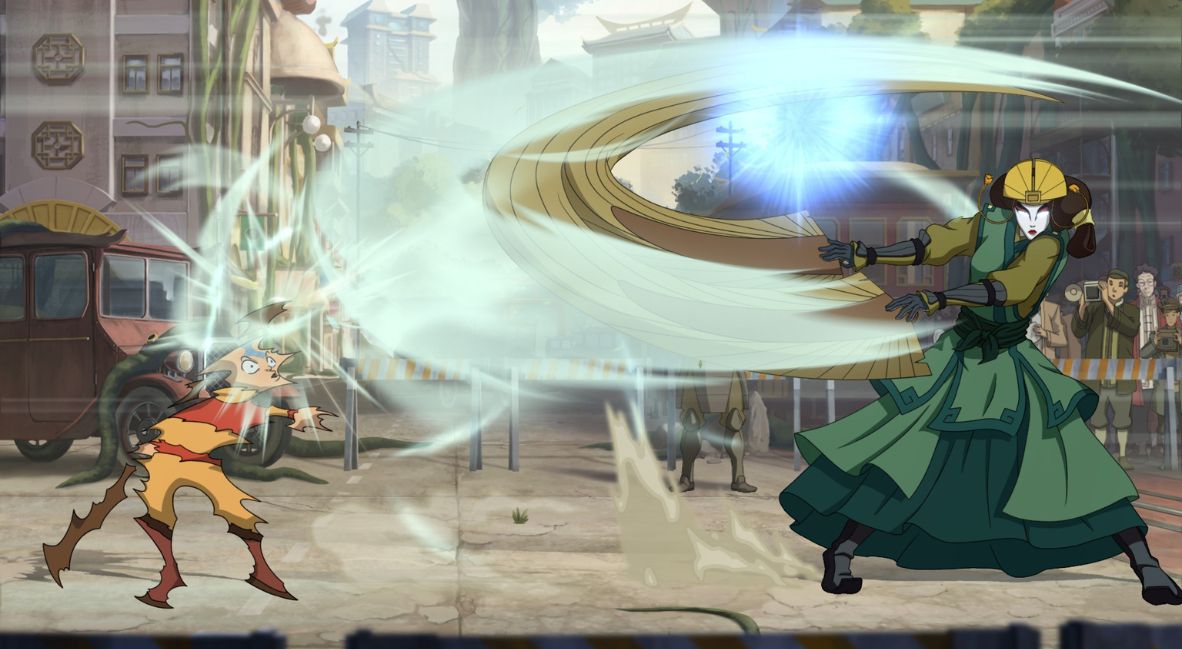
A light, medium, and heavy attack button, the ability to air juggle, throw, block, back dash, and combo, all of the possibilities of a match are on display. This leads to matches full of mind games, footsies, poking, and rushdowns. Watching two competent players duke it out at a neighboring demo kiosk was awe-inspiring. A fighting game lives and dies based on its responsive controls, and thankfully, this game looks to deliver that in spades.
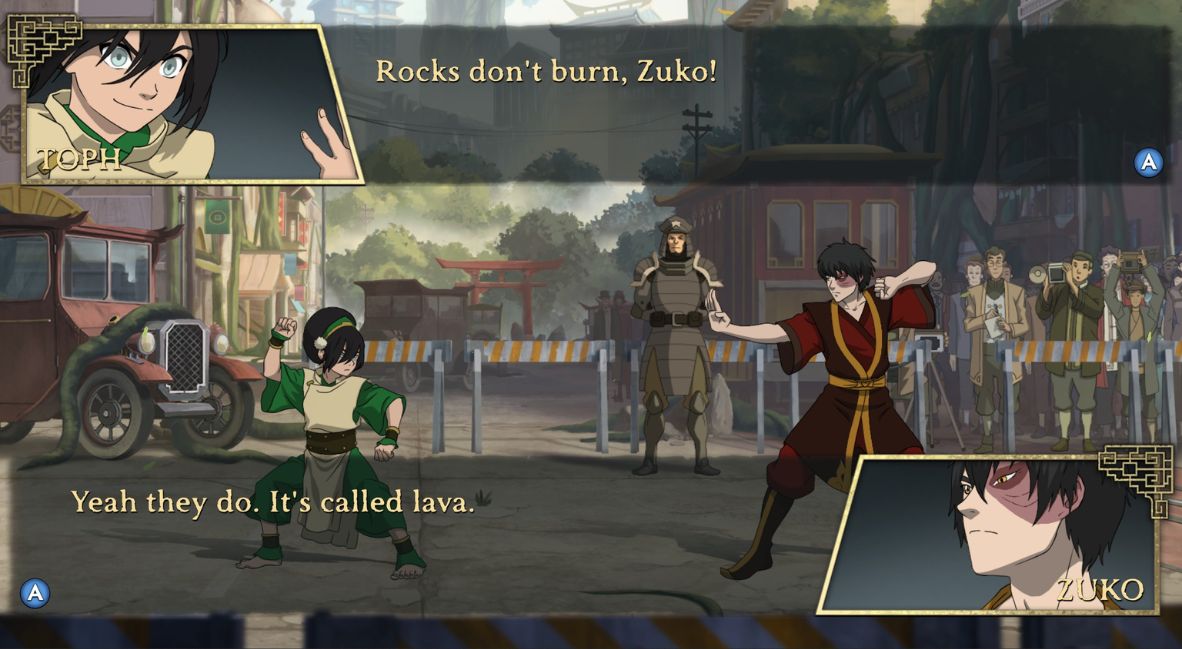
Visually, the game is gorgeous. Hand-drawn animations that play out in 60 frames per second, the fights look like they came straight from the cartoon. Every character has little touches that will make a fan smile. Eight characters were available for the demo: Aang, Katara, Sokka, Toph, Zuko, Azula, and the just-announced Avatar Kyoshi. Rounding out the list was the (for now) sole representative from The Legend of Korra, Korra herself.
The devs said they will have twelve characters available at launch, with five more planned for Year 1. Each character also has access to several support characters that imbue special passives during a match. Aang can choose from Monk Gyatso or Appa, for example. And each support character shows up in the background, cheering them on, which is a nice visual touch.
Each character offers a distinctive type of fighting style agility to brute force.
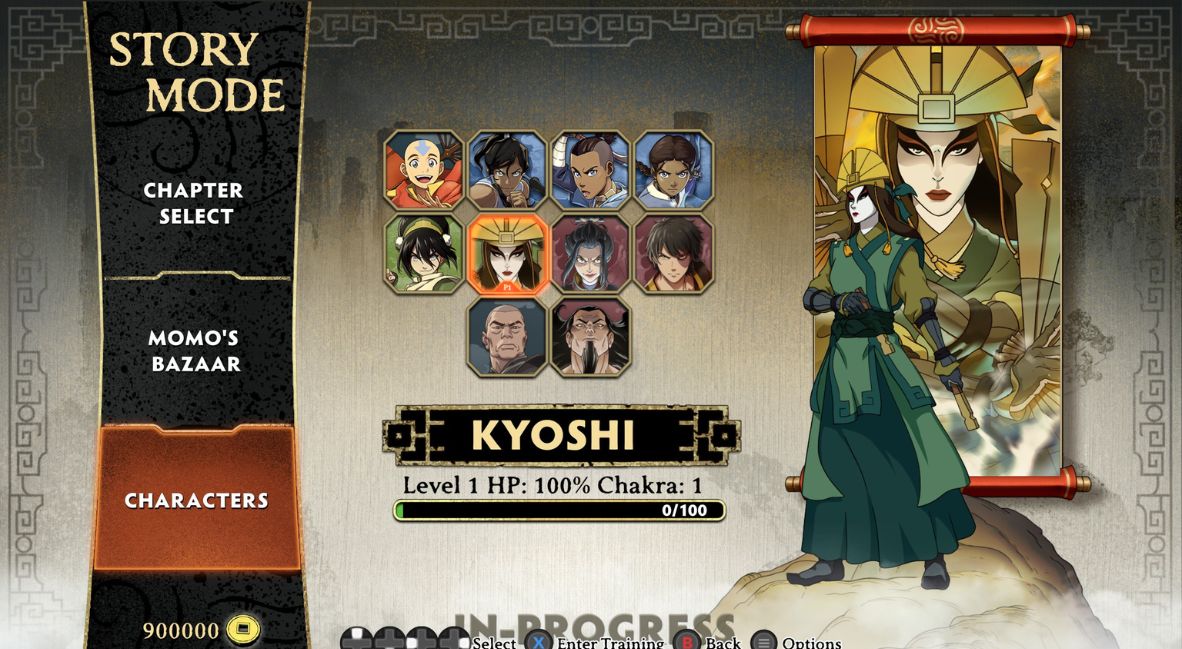
While twelve characters might not sound like much, especially in today’s fighting game world, Avatar Legends: The Fighting Game makes up for that by making each character incredibly unique. Aang is all about agility, Toph can shift the battlefield around, Kyoshi has incredible reach with her attacks, and Sokka is all about positioning and creativity. Each character feels special, and none of their mechanics bleed into each other or feel copy-pasted.
The game delivers Arc System Works vibes in that regard, notably Guilty Gear. Azula in particular stands out. In her normal form, her attacks are about controlling the space and aerial punishment, leaving traps on the ground that can be ignited later, along with really precise movement and skills. However, if Azula happens to lose a match (Avatar Legends: The Fighting Game utilizes the standard Best of Three ruleset), Azula switches from “Focused Mode” to “Firelord Mode”.
As fans of the series know, Firelord Azula is incredibly chaotic, and that is recreated with shocking accuracy in this game. In Firelord Mode, Azula’s attacks gain destructive power and range, her movements become more erratic, and her look and animations become unhinged. It’s one of many wonderful little touches the devs have added.
Avatar Legends: The Fighting Game deserves to make it in the competitive FGC scene.
There is one button that truly elevates Avatar Legends: The Fighting Game to a higher level, and that button is Flow. Flow powers the game’s unique mechanics for each character, mixing in fluidly with their combos to fuel powerful moves, defensive maneuvers, and more.
Pressed by itself, it powers a Guard that will protect against anything but a Throw. But when paired with an input, Flow really shines. It can trigger Flow Moves like Aang’s airball, his glider, or even a burst of air during an offensive. It can be used as a Flow Cancel to cancel moves into something different, allowing for all sorts of creative combos to be chained together.
It can be used as an Escape tool, allowing for aerial recovery or pressure avoidance. The Flow button uses a Chi meter, so it also actively encourages resource management during combat.
Avatar Legends: The Fighting Game is a beautiful game to look at with the crisp animation and a smooth frame rate. It has responsive controls, a deep moveset, and unique characters. It feels like a love letter to the franchise. At a budget price of $29.99, it has a low barrier to entry, making it easy for players to jump in. It has the chops to succeed in the competitive FGC scene; now, we just need to see if the community embraces it.