


Coffee Talk Tokyo is the latest installment of the beloved cult-classic narrative visual novel barista game series. The game maintains all the great aspects of previous titles and even enhances many of them, while adding new elements. While the game’s features are excellent, what really stands out is its narrative influences, executions, and messaging.
In Coffee Talk Tokyo, like previous games in the series, you play as a mysterious barista in a fantastical world. This time, you play as a different barista who owns a café in Tokyo. The new setting also introduces new narrative influences. Players will encounter several yokai and folklore creatures, from the standard Kappa to the Yukionna.
While previous games featured more standard fantasy creatures and anthropomorphisms, Coffee Talk Tokyo offers a more Japanese twist. And, like previous games, Coffee Talk Tokyo also tackles several popular and niche societal and pop culture topics we face in the modern age.
Coffee Talk Tokyo centers all kinds of barely discussed topics.

Topics like uncommon partner dynamics, ideologies, social faux pas, and even several barely discussed topics take center stage in Coffee Talk Tokyo right from the start of the game. While the latest installment also tackles many of the topics seen in previous titles through a bunch of lovable and zany characters, what makes it stand out is its setting, cultural variances, and the intensity of some of the topics.
Regardless, these subjects highlight our ever-changing world excellently, as they are tackled through endearing characters whose stories are incredibly empathetic in various ways. At least one character will be relatable in some shape or form to every player.
One of the most memorable topics highlighted in the game is told through little Erika. She’s a Kitsune-mimi (a fox spirit) whose father is a stay-at-home husband, and her mother is a human scientist. They live happily in Tokyo, but despite being a smart kid, Erika faces bullying and discrimination.
Through impeccable dialogue, Coffee Talk Tokyo has crucial conversations about ethnicity and cultural differences.

You’d think being a mixed-race child would be the reason for the verbal harassment from her classmates, but mixed races are fairly common in Coffee Talk. What actually led to this bullying is that her father is an immigrant from the U.K. As such, Erika’s intellect and ability to communicate in Japanese, despite being fluent, are questioned and teased by her classmates and even teachers.
What makes this especially unfortunate is that this is a real issue some immigrant and mixed-race kids face in the real world in Japan, and everywhere. They sometimes fail to assimilate and have friend groups with locals due to their ethnic or cultural differences, which can sometimes lead to kids having an identity crisis. This topic is excellently observed in Coffee Talk Tokyo through impeccable dialogue between the characters. Said dialogue, in turn, prompts introspection in the player, especially if they relate to the issue the character faces.
This sentiment applies to other subjects in the game as well. Erika’s father is a stay-at-home dad, and her mother is a researcher. While this dynamic is increasingly common in North America, it remains quite rare in terms of gender norms and expectations globally. Through their accounts, we see their dynamic scrutinized by their parents, in-laws, and even by other patrons of the café, until their opinions change after learning more about the nature of the couple’s relationship.
The characters help normalize unconventional relationship dynamics.
Coffee Talk Tokyo highlights the stigmas, stereotypes, and more about men who would willingly opt to be househusbands and women who focus more on their careers than the average woman does. The game highlights these subjects without sounding too preachy through realistic dialogue among the cafe’s adult patrons.
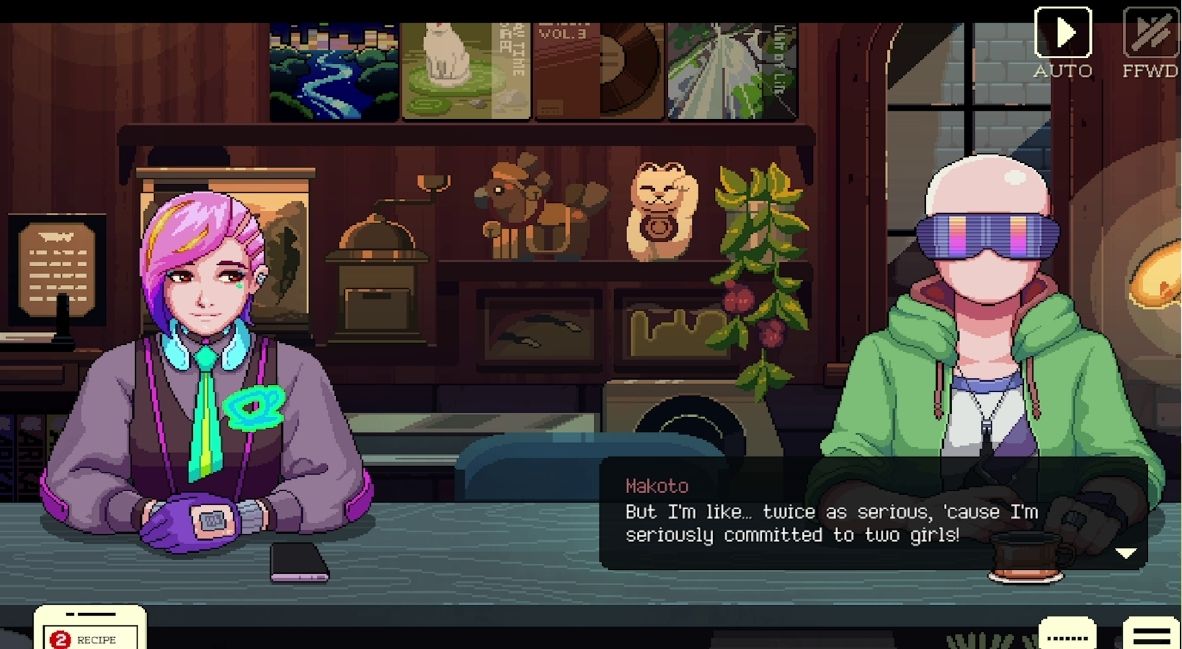
Unconventional relationship dynamics are also becoming more common in the Western world, and Coffee Talk Tokyo knows this all too well and reflects it. Another story that discusses the subject is from Makoto, who has two girlfriends, both of whom he assures other patrons he loves equally and that the relationships work well, especially given that they’re all aware of each other.
One of the girlfriends even has an additional partner. Makoto is secure in his relationship with both partners. Despite public opinion, he maintains his own view that his girlfriends love him and that he loves them, and even that he’s aware of the complexities and difficulties involved.
Coffee Talk Tokyo explores the internet’s ever-growing presence and its impact on our mental health.
How the feasibility and legitimacy of his relationship with his partners is believable or even sustainable is another whole topic. The game explores this topic in a detailed and engaging way, educating players about the intricacies of a relationship like this and how the mind of someone who opts for one works.
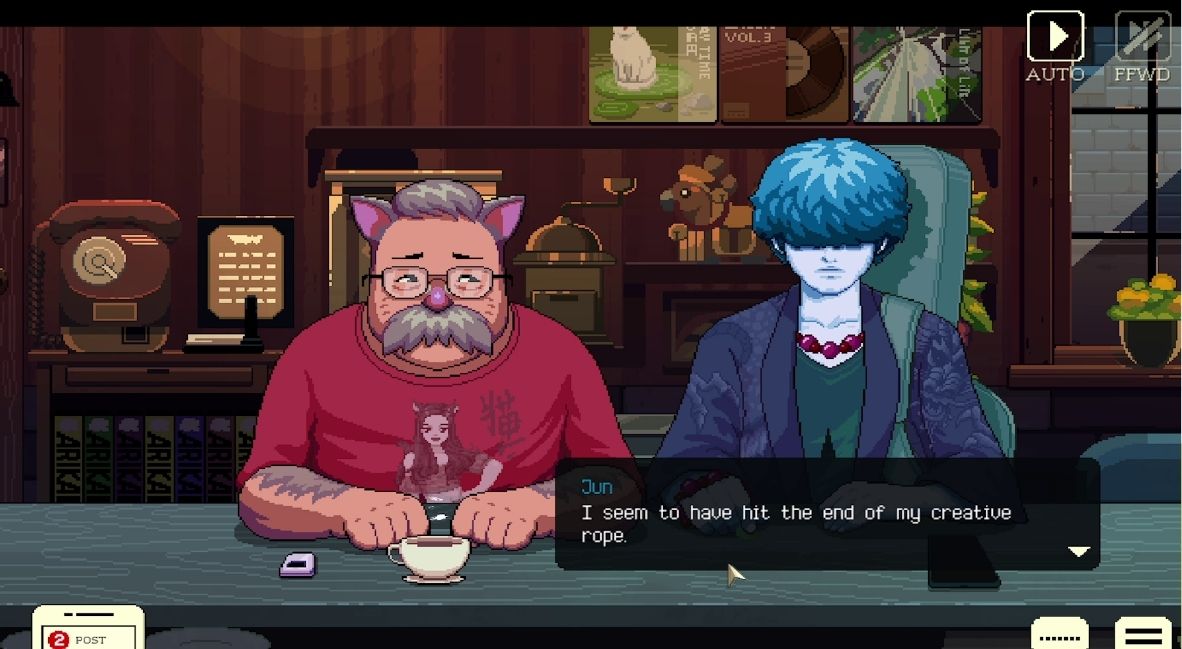
A final theme of great relevance in both the real world and the fantastical world of Coffee Talk Tokyo is the ever-growing presence and influence of the internet and its impact on our mental health. An example, while not applicable to the average person, is seen through Jun, a famous singer who is in a slump after his latest album tanks and fans quickly turn on him.
Negative reviews and cruel words get to him, preventing him from pursuing his passion and leading him to question his abilities and talent in the craft. While this particular topic and its example are arguably the weakest in the game, they still highlight how prevalent the subject has become.
Coffee Talk Tokyo is an excellent game that captures the ever-changing nature of modern society.
All these topics not only make the game’s narrative interesting and engaging, but also introspective and educational. The beauty of a game like Coffee Talk Tokyo is that players don’t necessarily have to agree with or empathize with many of the issues, subjects, and opinions it raises. Nevertheless, they will be engaged by the discussions surrounding them and by the game’s fantastical setting.
All that said, Coffee Talk Tokyo is an excellent game that captures the ever-changing nature of modern society and its intricacies by highlighting topics few games cover in an engaging way.