

Coffee Talk Tokyo, a visual novel developed by Chorus Worldwide Games and Toge Productions, and published by Chorus Worldwide Games, brings the familiar cafe atmosphere of the series to a new location, leaving Seattle behind and embracing Tokyo. But wherever you go, the sky is the sky, and people are people. And sometimes, people need a kindly ear, a chill atmosphere, and a delicious brew to help get them through the hurdles life puts in their way.
Gaming, as a medium, often focuses on the fantastic and exciting. Grand adventures and dramatic confrontations make up many of gaming’s biggest stories. Even when exploring more human elements, games often feel the need to weave in fantastical powers to make it more than just an “ordinary life.” But just like other narrative media, there is plenty of space for games to explore life’s problems, even those that are far closer to home.
Despite Coffee Talk Tokyo featuring characters that are of supernatural origins, it nonetheless houses one of the most grounded and relatable sets of personalities around. Human or yokai, problems come with living, and they can be daunting to face, especially alone. But when you can find a good group of people to build a community with, even life’s biggest problems become more manageable.
Coffee Talk Tokyo thrives with relatable characters.
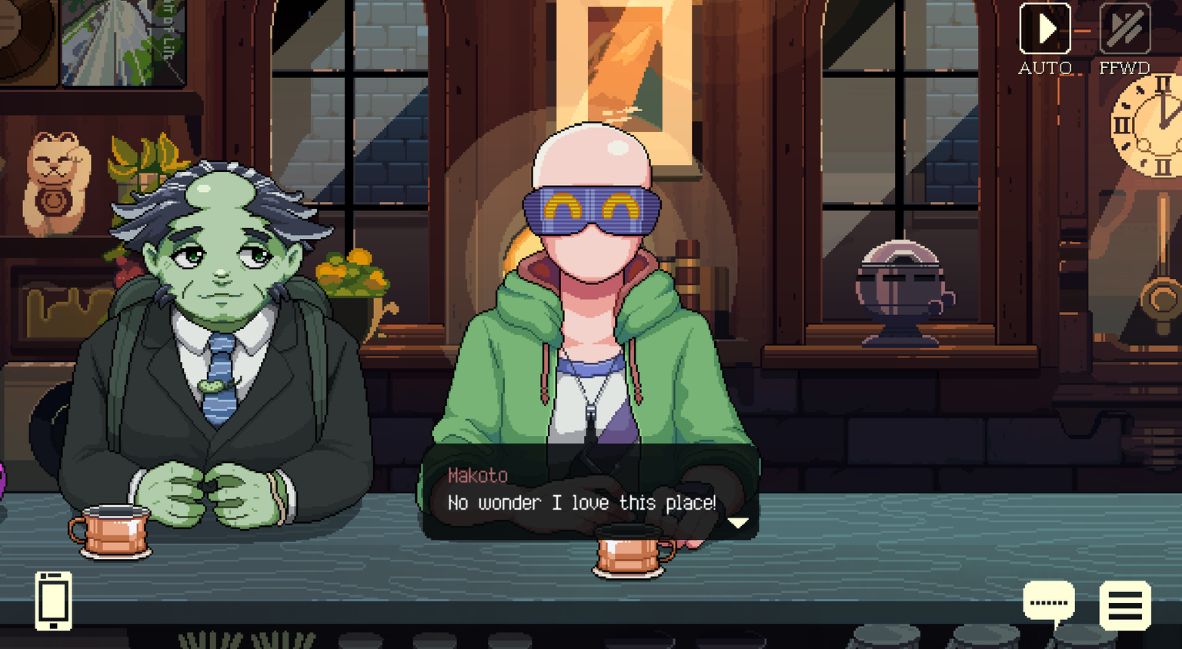
Watching the personalities that come to form your cafe’s regulars mesh, learn, and grow with each other is a resplendent joy that elicits smiles and tears. As you watch them evolve, Coffee Talk Tokyo highlights how important basic concepts like feeling safe and supported are.
The reasons for the cast’s struggles are varied. From personal problems to social issues, every player will likely find a personality to relate to. It explores every issue it raises with sensitivity and grace, showcasing the love and care that every person deserves.
From the pressures of a young child trying to fit in at school to a lifelong workaholic adjusting to retirement, every scenario delivers a relatable narrative and authentically handled plot beats. But while the writing brings every character to life with charm and personality, none shine as much as the cafe’s assistant, Vin.
Vin is just one example of the tremendous down-to-earth writing.
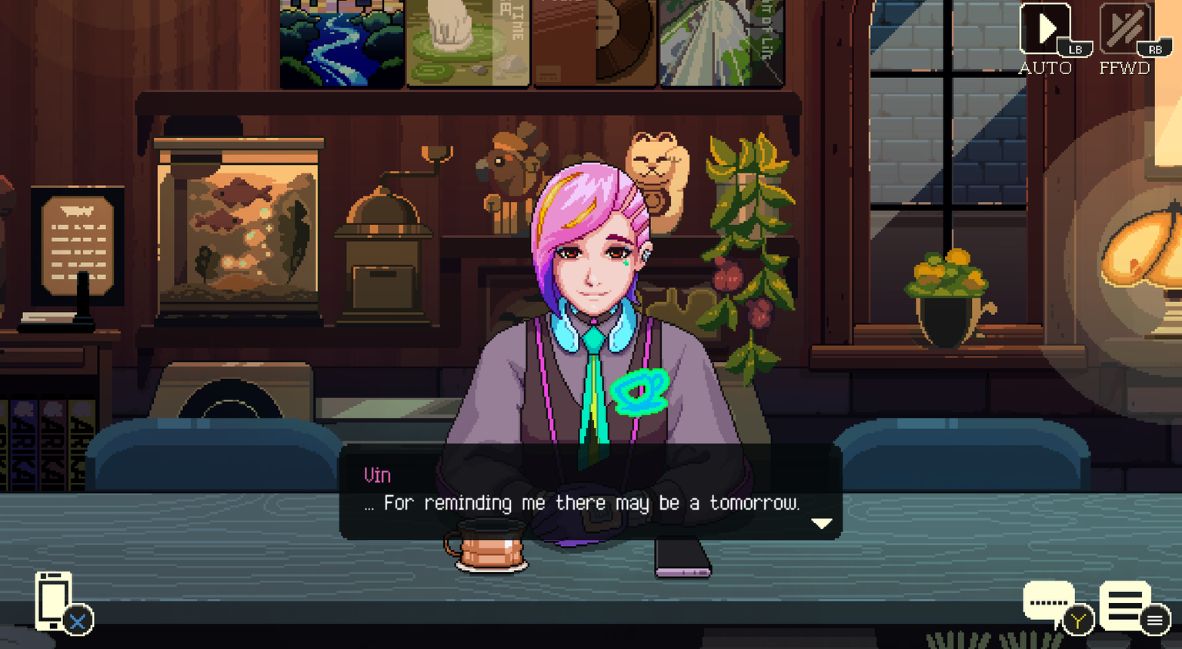
Vin’s story hits the hardest as Coffee Talk Tokyo plays out. Her struggles are persistent throughout the roughly eight hours it takes to play through the story. The way she expresses her feelings and needs is always impactful.
How she is forced to mourn, not just a life she’s lost, but one that seems to be actively denied her due to circumstances beyond her control, is incredibly painful. But as the group comes together over their favorite beverages, seeing the potential for hope to return to this wonderful character is all the more special given the odds stacked against her.
It would be easy to endlessly gush about how the down-to-earth writing captures the cast’s familiar problems with a special “mundane elegance.” That said, there is an occasional hindrance to how the story plays out. And that is with the core gameplay element: making drinks for your guests.
Making a drink is straightforward. Players choose a base, primary, and secondary elements to add to a drink, along with choosing whether it’ll be hot or cold. Lattes can also provide appropriate artistic opportunities for those inclined, though it’s rarely asked for, and any design, no matter how rough, is accepted.
How you make a drink dictates how the story unfolds.
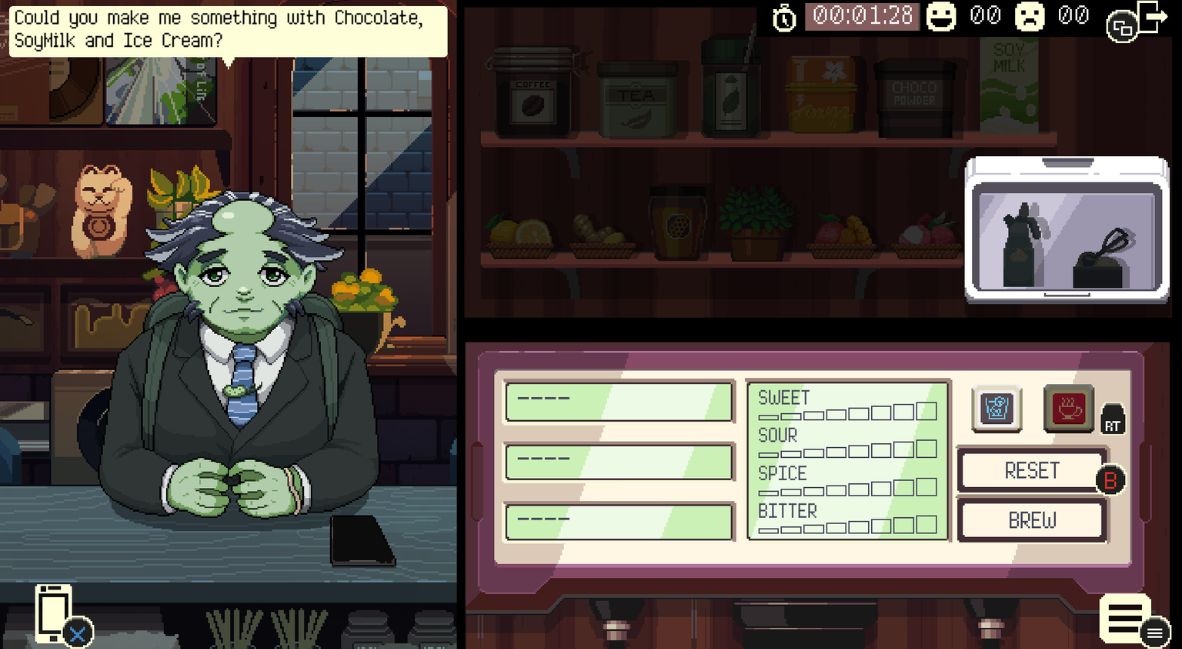
Beyond giving the player something interactive to do, making drinks can also affect how stories unfold. Giving a customer the right drink helps them relax and increases their ability to open up about their problems. How well you serve your guests impacts which of multiple endings each character gets.
Coffee Talk Tokyo can be painfully vague at the worst possible times about what a person wants to drink. And, as one may expect, these obfuscated orders frequently come with the most critical narrative beats, making it clear it is an order you don’t want to screw up. This can lead to a lot of stress that can actively pull you out of the moments that make the game incredible.
Now, you never have to accept a failed order. The game features a save-anytime system, so if you are faced with a critical order, you can save it, make an attempt, and reload if it doesn’t go right.
The gameplay struggles with making the customers orders.

However, remaking drinks and failing, simply because you have no idea what the customer wants, is frustrating, and it frequently happens at the worst times. It feels like the game even expects you to do this, as customers will give special dialogue responses if you get close, but aren’t quite there, so you can reload and refine your brew.
While some drink orders frustrate, more reasonable requests bring great satisfaction. Getting to know the characters and what they like is a natural evolution, sometimes rewarded with fun requests that give you a chance to be creative within reasonably laid-out boundaries.
What also makes a successful brew a delight is the simple but effective visual presentation. The pixel art showcases the characters’ emotions wonderfully, despite the limited animation for each action. Facial expressions and body language convey excitement, sorrow, and contentment with great results. Even the simple wisps of steam that rise from a cup of hot coffee bring just enough motion and presence to accentuate the atmosphere that Coffee Talk Tokyo permeates its story with.
Coffee Talk Tokyo elicits strong emotions with necessary messages.
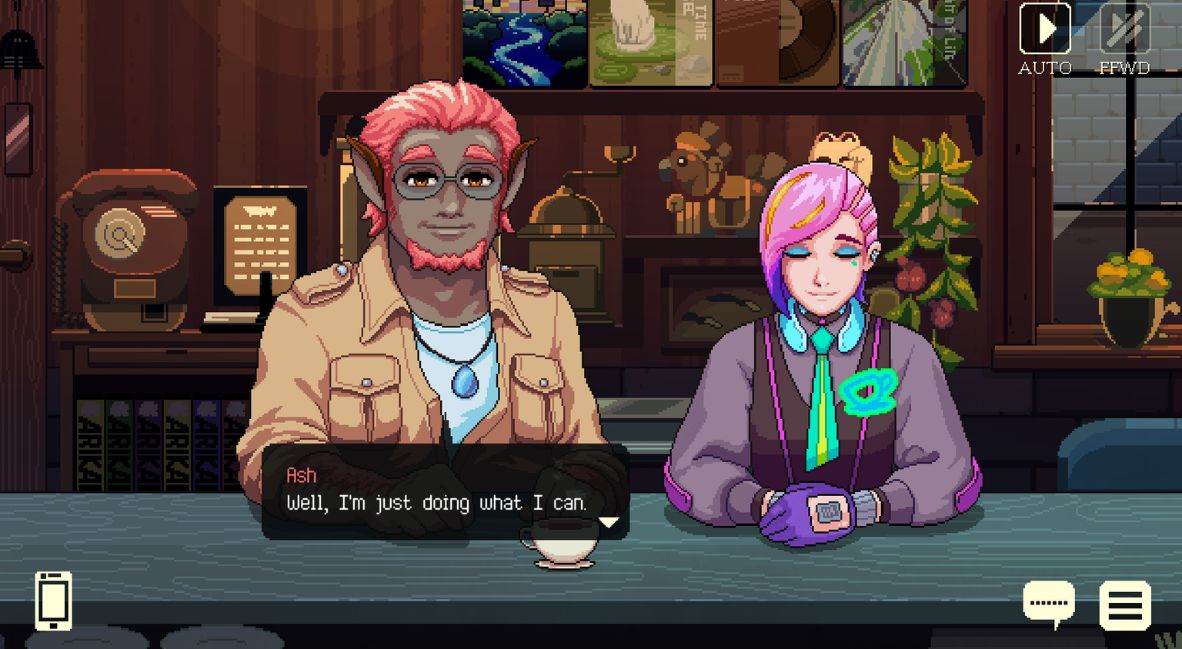
The only place that the game’s presentation falters is with the delivery of its music. While the tunes themselves deliver enjoyable, low-fi chill vibes, it’s how the game transitions between songs that struggles. Rather than fading in and out as tracks end and begin, the music makes a hard cut from one song to the next. No downtime at all. This can create a jarring auditory experience that pulls you right out of conversations as the abrupt change in sound hits you.
Coffee Talk Tokyo delivers an incredible story filled with fully realized characters whose lives will undoubtedly bring players to tears (both happy and sad). What the game says about life, our choices, and how we face both is a powerful statement that we can never hear enough of. Despite the gameplay occasionally hampering immersion and some unfortunate handling of the music, this is a story worth looking back on fondly, cherishing the time spent in that cozy little cafe in Tokyo.
Coffee Talk Tokyo is available on May 21st, for PC, Nintendo Switch, PlayStation 5, Xbox Series X/S, and Xbox One.
Previous Game |
Coffee Talk Tokyo
-
Rating - 8.5/108.5/10
TL;DR
Coffee Talk Tokyo delivers an incredible story filled with fully realized characters whose lives will undoubtedly bring players to tears (both happy and sad). What the game says about life, our choices, and how we face both is a powerful statement that we can never hear enough of.