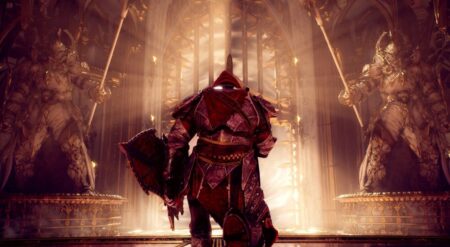


Lord of Hatred doesn’t arrive like a reinvention of Diablo IV so much as a correction of its instincts. It knows what the franchise already does well: moment-to-moment combat, build experimentation, and the loot loop. Instead of rebuilding anything, it just pushes those systems forward.
The result is a version of Diablo IV that feels more deliberate, more confident, and finally more interested in what it means to give players real control over how they engage with its systems.
It’s not a perfect expansion to end a saga, and that’s okay. The narrative still plays within familiar boundaries, and some of the newer systems, like War Plans, remain just shy of fully cohesive. But when Diablo IV: Lord of Hatred works, it works because it commits to a clearer philosophy: power in Diablo isn’t just something you earn, it’s something you negotiate with. Nowhere is that more obvious than in its two additions to defining class identities in Sanctuary, paladin and warlock.
Sanctuary has never been a welcoming place, and Diablo IV: Lord of Hatred doesn’t try to soften that. If anything, it leans further into the idea that this world is permanently unstable, always one bad decision away from collapsing into something worse. What changes here is less about tone and more about clarity.
Diablo IV: Lord of Hatred builds on Sanctuary’s instability.

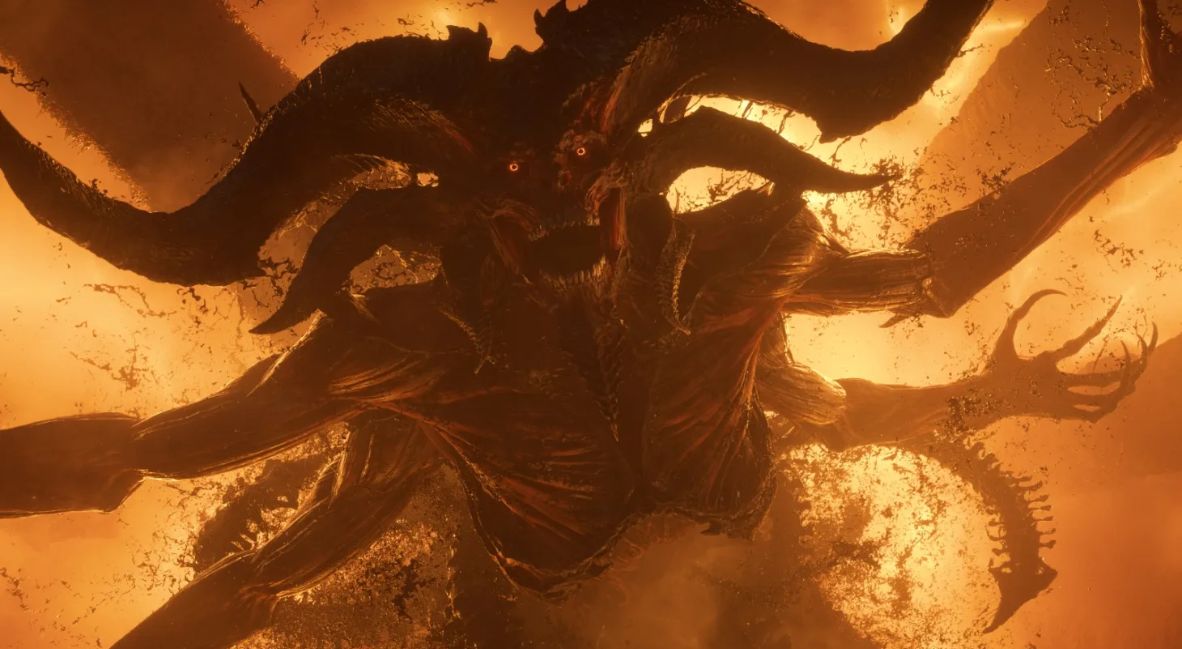
The story builds on that instability by leaning into a familiar Diablo pattern: power disguised as salvation. Mephisto’s role here is less about open confrontation and more about influence; positioning himself as something approaching a savior figure while tightening his grip on the world through manipulation and prophecy. There’s a deliberate sense that the “hope” being offered isn’t really hope at all, just control reframed in a more acceptable form.
That framing becomes even more dangerous when layered against the prophecy surrounding Lilith’s fallen son Rathma, a legacy shaped by betrayal, death, and unfinished lineage. What should be a straightforward opposition, stop Mephisto, gets complicated by the idea that the cycle of inheritance and violence isn’t actually broken, just redirected.
Where Diablo IV: Lord of Hatred distinguishes itself more clearly is not in its plot, but in how that same idea of manipulated power carries into its systems. The sense that nothing is ever fully yours, whether it’s narrative control, build identity, or progression, is echoed most strongly in how classes like Warlock and Paladin shape your relationship with strength. Even if those systems feel like they should have arrived earlier in Diablo IV’s life cycle, Lord of Hatred finally gives them space to define what control in this world actually looks like.
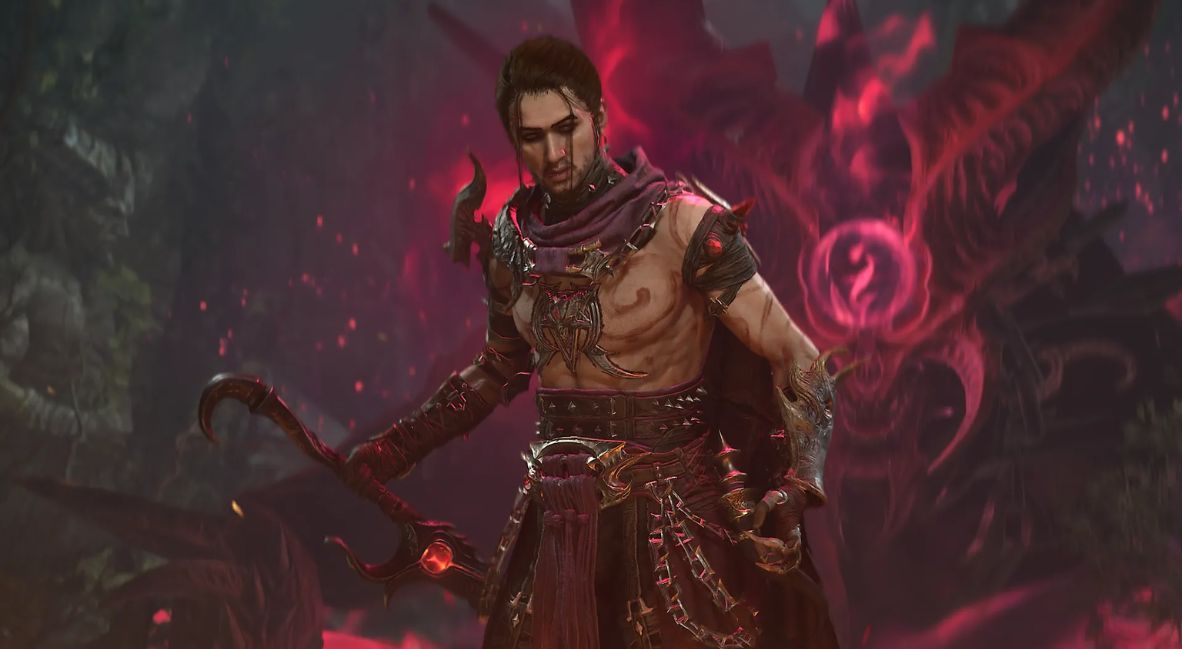
The Warlock sits at the center of everything the expansion is trying to say about Diablo IV’s evolution. On the surface, it’s another damage-focused class pulling from demonic power, but in practice, it plays very differently from anything else in the roster. Its skill tree isn’t built around chasing one optimal path. It’s built around shaping how your abilities behave and how you want to approach fights.
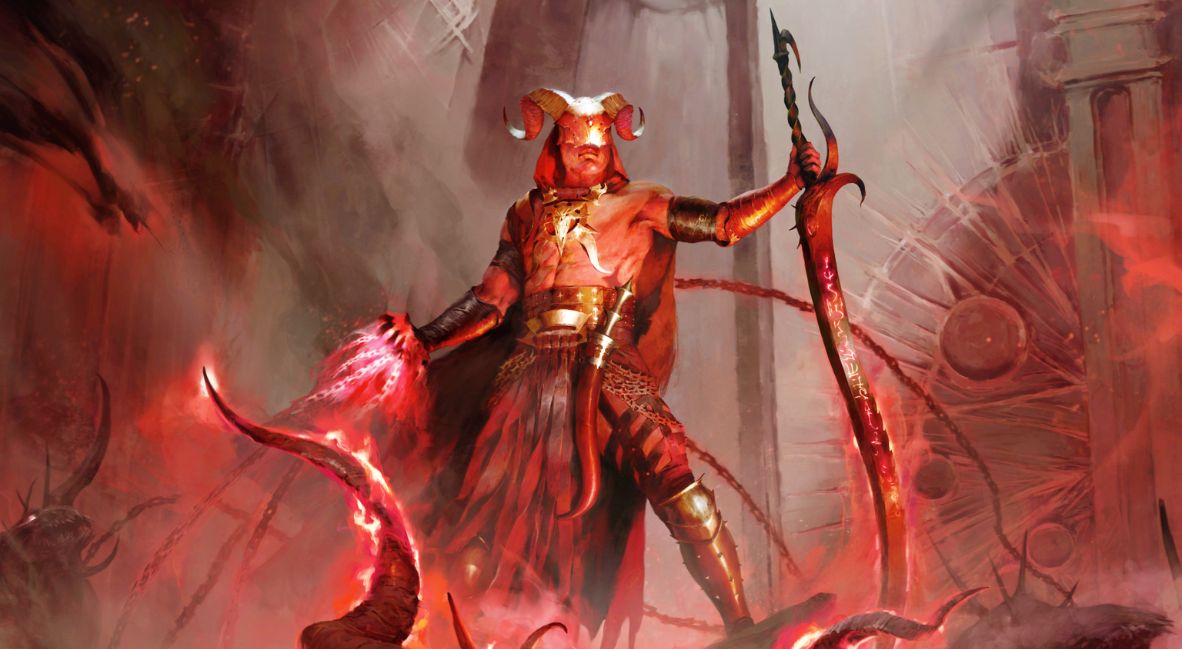
That shows up immediately in how its core skills branch. Curses don’t just apply debuffs; they can be modified to spread, linger, or trigger additional effects when enemies fall. Summoning abilities let you build out a small army of demons that can either lock enemies in place or break formation and aggressively pursue targets. Even your defensive tools aren’t static, shifting between protection and offense depending on how you invest in them.
Instead of stacking flat bonuses, you’re constantly deciding how each piece of your kit interacts with the rest.
That flexibility carries into how builds actually play. Curse-heavy setups slow fights down and turn encounters into controlled spaces where enemies are weakened over time.
Summoner builds shift the focus away from direct combat, letting your demons dictate the pace while you reposition and manage cooldowns. Fire and shadow skills can be combined into more aggressive hybrids, pushing you into closer range where damage ramps quickly, but so does the risk. Each path feels distinct, not just in output, but in how it asks you to move, react, and commit to decisions mid-fight.
What ties it together is that nothing feels completely locked in. Even when a build is working, it feels like it’s being held together through constant adjustment. The more you understand the Warlock’s kit. Cooldowns, positioning, and ability interactions all need attention.
You’re less executing a rotation and more managing a system that can shift if you push it too far in one direction. That tension makes the class feel powerful without ever feeling safe. That’s where Warlock separates itself from Paladin.
In combat, you’re not managing a rotation; you’re managing a system.
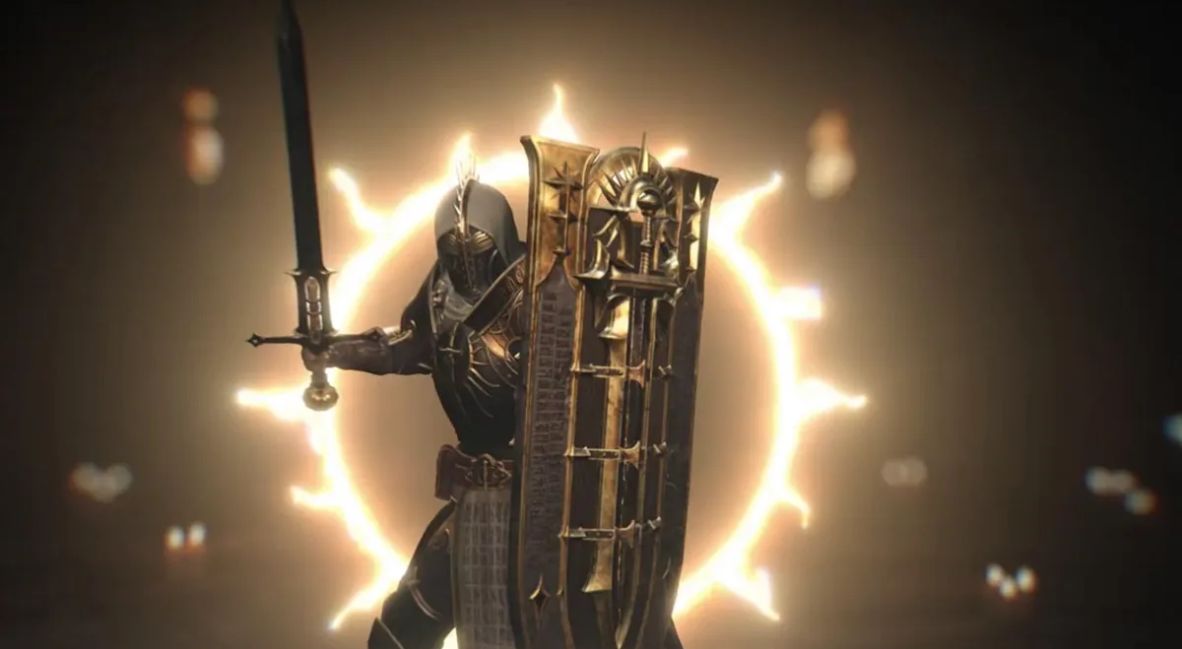
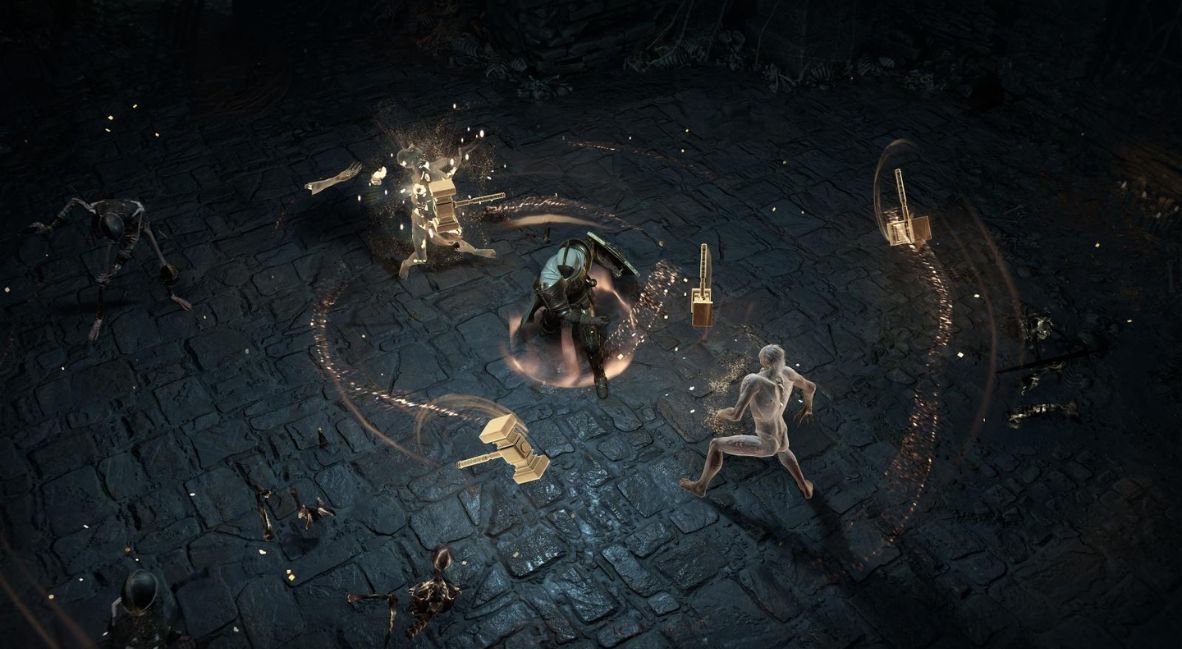
Paladin is the counterweight, and it’s much more straightforward in how it delivers power. Its toolkit is built around consistency. Auras provide constant buffs, defensive abilities absorb or mitigate incoming damage, and its core attacks scale cleanly without needing the same level of setup. You can build into high survivability or strong area damage, but the path to get there is clear, and once you’re there, it holds.
There’s a clarity to how Paladin plays. You establish your buffs, position yourself, and let the class do what it’s designed to do. It doesn’t ask for constant adjustment in the same way Warlock does, and it doesn’t rely on layered interactions to stay effective. That makes it reliable, especially in longer fights or higher difficulty content where consistency matters.
That difference is what defines the two. Warlock builds feel like they’re constantly in motion, shifting based on how you’ve tuned your abilities. Paladin builds feel stable once they’re set. One asks you to manage power in real time. The other lets you lock it in and execute. And in Lord of Hatred, that contrast ends up mattering just as much as the numbers behind them.
The broader systems in Lord of Hatred reinforce that same contrast in quieter, more practical ways. Progression is smoother largely because the game cuts down on how much time you spend fighting its menus and access points. The new War Plans system does a lot of that heavy lifting, turning what used to be a scattered list of endgame activities into a guided loop you can jump between almost instantly.
Instead of chasing keys or manually traveling across the map, you’re moving from Nightmare-style runs to boss encounters to other activities with minimal downtime, which keeps momentum intact in a way Diablo IV hasn’t always managed.
That sense of flow carries into how loot and builds are handled. The loot filter alone makes a noticeable difference, letting you narrow drops down to specific affixes or gear types so you’re not constantly digging through trash to find something usable. When you do find upgrades, systems like the Horadric Cube and Talismans give you more control over how they fit into your build.
Taken together, those systems make it easier to experiment without feeling like you’re resetting your progress every time you change direction. You can tweak a build, adjust your loadout, and get back into meaningful content quickly instead of spending long stretches rebuilding from scratch.
Lord of Hatred doesn’t escape the existing limitations of Diablo IV.
The endgame itself still follows a familiar Diablo structure. You’re running repeatable activities, climbing through higher world tiers, and chasing better rolls to push your build further. Modes like Echoing Hatred lean fully into that loop, throwing escalating waves at you until your setup breaks, then rewarding you based on how far you got. It’s still about optimization, but the path to that optimization is more direct, with fewer barriers between you and the next run.
Within that structure, Warlock stands out even more. Most of these systems are about refining efficiency, getting you to your best build faster. Warlock pushes in the opposite direction. It gives you more ways to shape how a build plays, not just how strong it is, which makes it feel less like you’re solving the system and more like you’re working inside it.
For all its strengths, Lord of Hatred doesn’t fully escape the structural limitations of Diablo IV as it currently exists. The narrative, while well-presented, doesn’t consistently reach beyond its functional role in moving players through content. Some systems still feel layered rather than fully integrated, as if they were added in sequence rather than designed as a single cohesive framework.
Even with improvements to progression and build freedom, the endgame still leans heavily on repetition as its primary form of engagement. The activities are more refined, the friction is lower, but the long-term structure still depends on optimization loops rather than meaningful variation in experience. These aren’t fatal flaws, but they do prevent Lord of Hatred from fully breaking out of Diablo IV’s established boundaries.
Diablo IV: Lord of Hatred understands where the series already is and leans into it. Instead of rebuilding the foundation, it refines it; tightening systems and giving players more control over how they move through it. The story does important work here.
It re-centers Sanctuary, re-establishes the stakes, and makes it easy to step back into the world, whether you’ve been away for months or are just getting started. It’s effective at catching you up and pushing you forward, even if it rarely becomes the reason you stay. That reason is the classes.
Warlock and Paladin reshape how Diablo IV feels in practice, but they don’t carry equal weight. Paladin delivers stability and clarity, a class you can understand quickly and rely on over time. Warlock is where the game actually evolves. Its flexibility, its shifting risk-reward balance, and the way it lets you define how power works moment to moment make it the most interesting addition Diablo IV has seen so far.
That contrast ultimately defines the expansion. The story brings you back to Sanctuary, but the systems, especially Warlock, are what make you want to stay. Diablo IV: Lord of Hatred closes the book on Mephisto’s arc, but not on the future of the game. Instead, it points the game in a clearer direction, and for the first time in a while, that direction feels like progress.
Diablo IV: Lord of Hatred is out on PC April 28, 2026.
Diablo IV: Lord of Hatred
-
Rating - 8/108/10
TL;DR
Diablo IV: Lord of Hatred closes the book on Mephisto’s arc, but not on the future of the game. Instead, it points the game in a clearer direction, and for the first time in a while, that direction feels like progress.