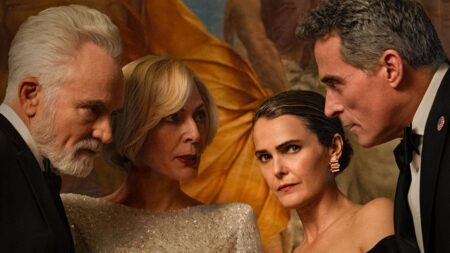

Even when murder mysteries aren’t riffing on Agatha Christie (on screen or on the page), they still feel like they have her DNA. And that’s no truer than with Netflix’s Spanish limited series, The Final Problem. Based on the bestselling novel of the same name by Arturo Pérez-Reverte, the miniseries offers audiences a contained genre mystery that doesn’t hold back on twists and attempts to subvert expectations.
A period piece set in the Spring of 1959, 13 people end up isolated in a hotel on a small island in Mallorca. The group of people is rich, mostly famous, and from different places in the world. Then the reclusive English tourist, Elisa Mander, is found dead.
Initially assumed to be a suicide, the scene begins to reveal all the markings of a murder. Only, it looks like an impossible crime. The chair is blocking the only entrance from the inside; Elisa left a note, and, well, she was acting too mysterious not to have at least one skeleton in the closet.
Netflix’s The Final Problem has Agatha Christie in its DNA.

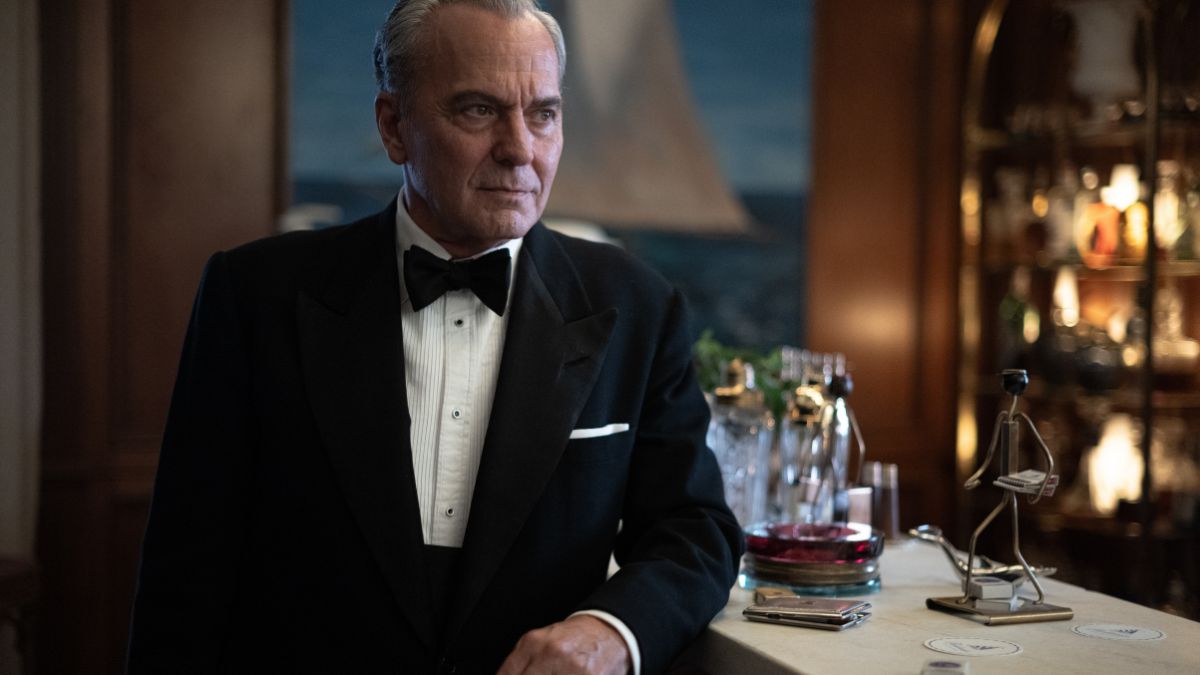
Without the ability to contact the authorities, the group of hotel guests and staff circle around Basil (José Coronado), a retired actor who is known for being one of the best renditions of Sherlock Holmes. Having played the renowned detective for decades, Basil uses what he learned about deduction to play the role of an investigator yet again, but this time, the stakes are real.
As an isolated hotel, the stage is set for a murder mystery in the vein of Christie’s And Then There Were None. No one can enter, no one can leave, and everyone is trapped with a killer. With no other choice but to believe that someone in the group is the murderer, suspicion begins to rot under the surface until it erupts, cracking every fragile relationship in the bunch.
As suspicion spreads among the guests, including Adela Figueroa (María Valverde), a mysterious young woman traveling with a friend, Basil teams up with one of his biggest fans, the aspiring crime novelist Foxá (Martiño Rivas). Working together, they try to turn over every stone, and as they do, they realize everything is meant for Basil.
This ensemble cast of suspects is equal parts charming and memorable.
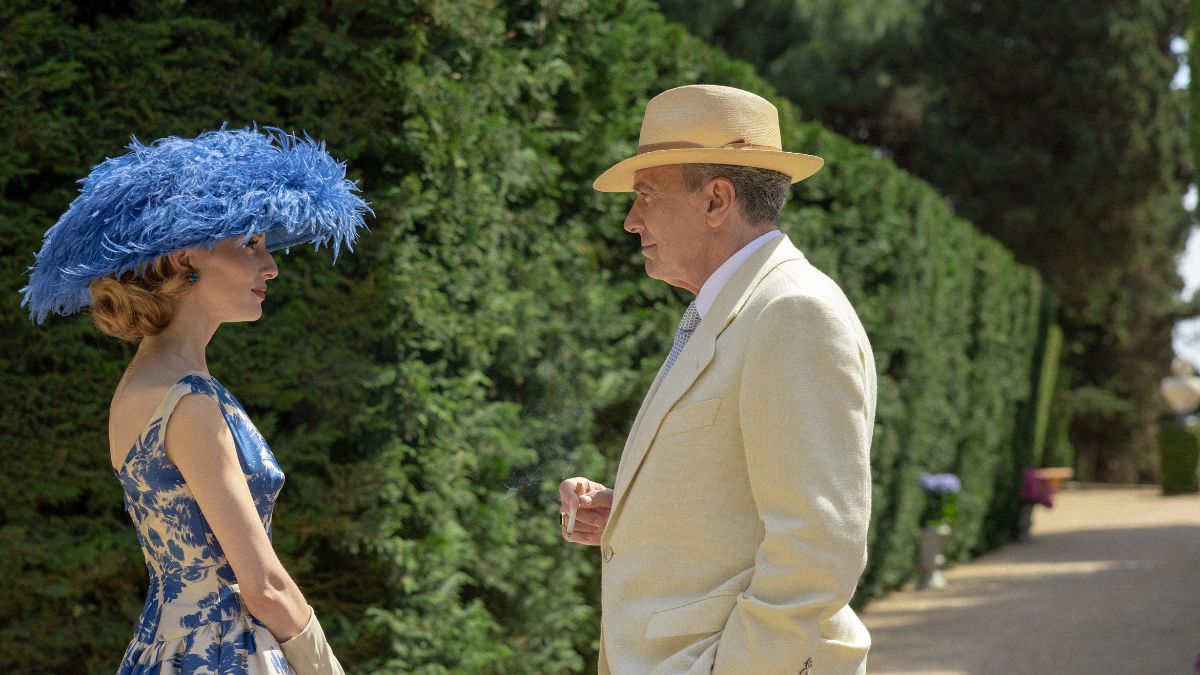
And all of this happens while Mrs. Ausländer (Maribel Verdú), the hotel’s manager, struggles to maintain composure and control over her hotel guests. As one death turns to two, The Final Problem capitalizes on the tension of dropping bodies to the floor by enhancing the drama surrounding the reveal of their murder weapon and suspect.
As with any good ensemble cast, chemistry matters. And this one has that spark in spades. There is Fonseca (Gonzalo de Castro), who is an ambitious film director, and his kind of girlfriend, a young and passionate actress named Vicky (Cristina Kovani). And then, of course, the demure but mysterious Adela (Maria Valverde).
With the tension that another body could drop at any moment and the mounting suspicion, finding the killer is the one thing that matters. With that in mind, Basil tries his best to embody Sherlock Holmes, taking on some of the mannerisms he picked up in the role, repeating “It’s elementary” whenever he can.
Leaning into the Holmes of it all creates an endearing protagonist.
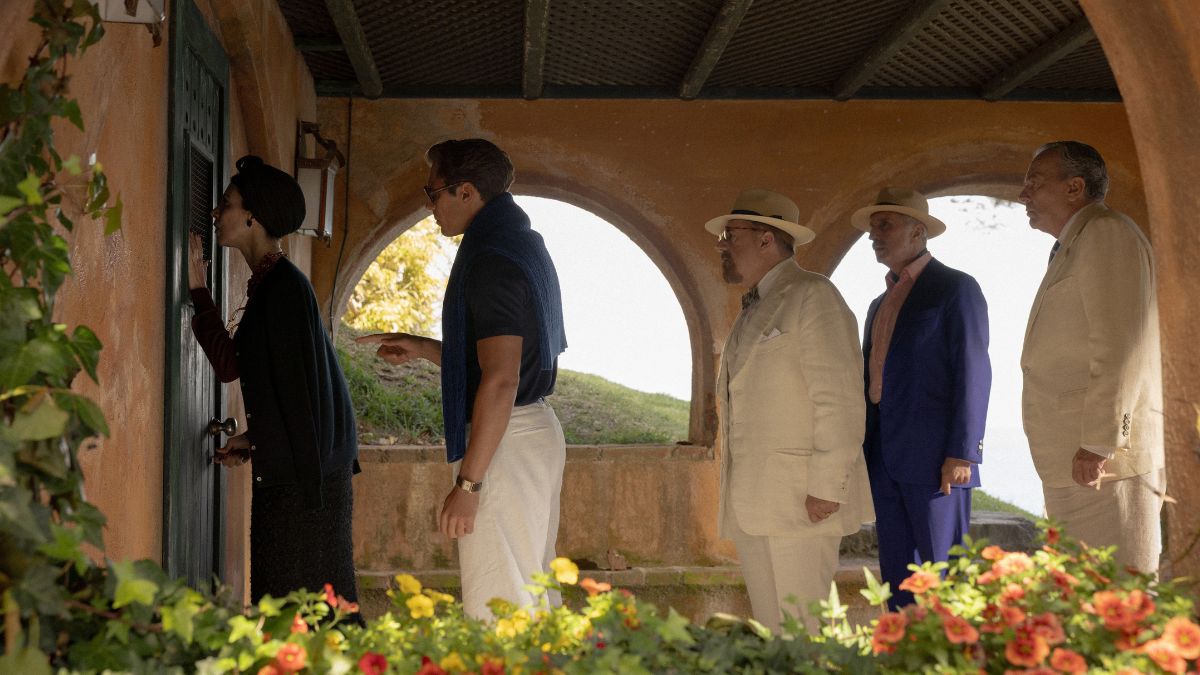
It’s this last bit that makes the series more endearing than it would be without the overt understanding that the actor José Coronado is playing an actor named Basil, who is playing Sherlock Holmes in a real-life scenario. This is ultimately the series’ gimmick, and it uses it to great effect, hardly ever overstaying its welcome and always showcasing Basil’s own quick wit to establish him as a person and not just Holmes.
Ultimately, while The Final Problem is pure Christie in its setup and execution, its focus on deduction both thematically and literally embodies Sherlockian detective work. Pulling together foundational mystery writers, The Final Problem is a series that just keeps giving as expectations get set, ignored, and new twists emerge.
But justice isn’t always possible when you’re a retired actor, leading The Final Problem to do what most murder mysteries of its era do: show us the aftermath. Instead of solving the whodunnit, Basil finds himself in a situation where the evidence, when presented, can point in multiple directions. Finding the Moriarty who has been setting up his last time donning the role of Sherlock isn’t easy.
A love letter to Sherlock by way of Agatha Christie banality makes The Final Problem superb.
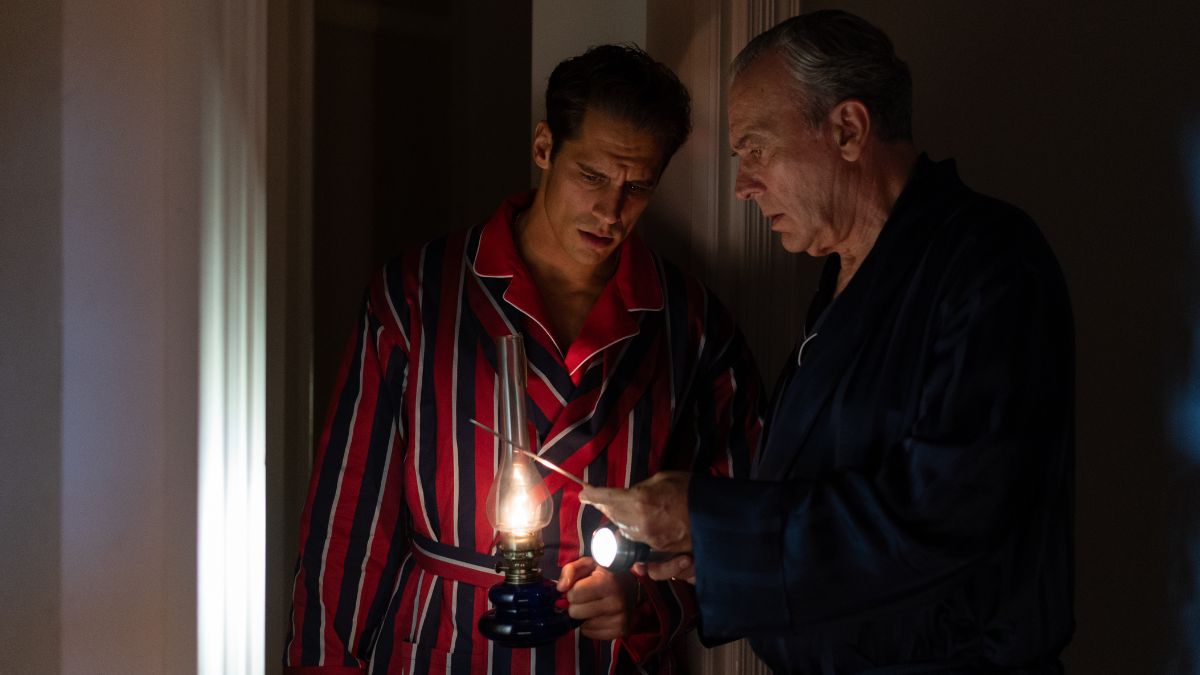
With heavy misdirection, The Final Problem’s greatest success in the genre is how well it unravels the mystery and builds expectations without giving away its twists too early. For fans of whodunnits, this one hits an apex that you’ll rarely find in the modern additions to the genre. The series takes full advantage of Basil’s status as an actor whose intelligence and experience help get him closer to Sherlock Holmes, but ultimately, there is nothing that separates him from anyone else.
In fact, the connection between Basil and the novelist, Foxá, comes from their love of creating and solving a mystery. Only, as the murders (yes, of course there are multiple) stack up and resemble the words that Foxá put to the page, their bond starts to crack. What do you do when everyone is a suspect, and nothing separates you from anyone else except the fact that you’ve worn the deerstalker hat for decades?
The Final Problem makes it easy for armchair detectives to both follow along and make their own accusations. And as Basil learns more and is encouraged to keep trying to solve the murders, you get the permission to do so too. The series is a good whodunnit because of viewer investment and its ability to continuously surprise, even when it pulls you in.
The Final Problem is a murder mystery that allows its audience to play along.
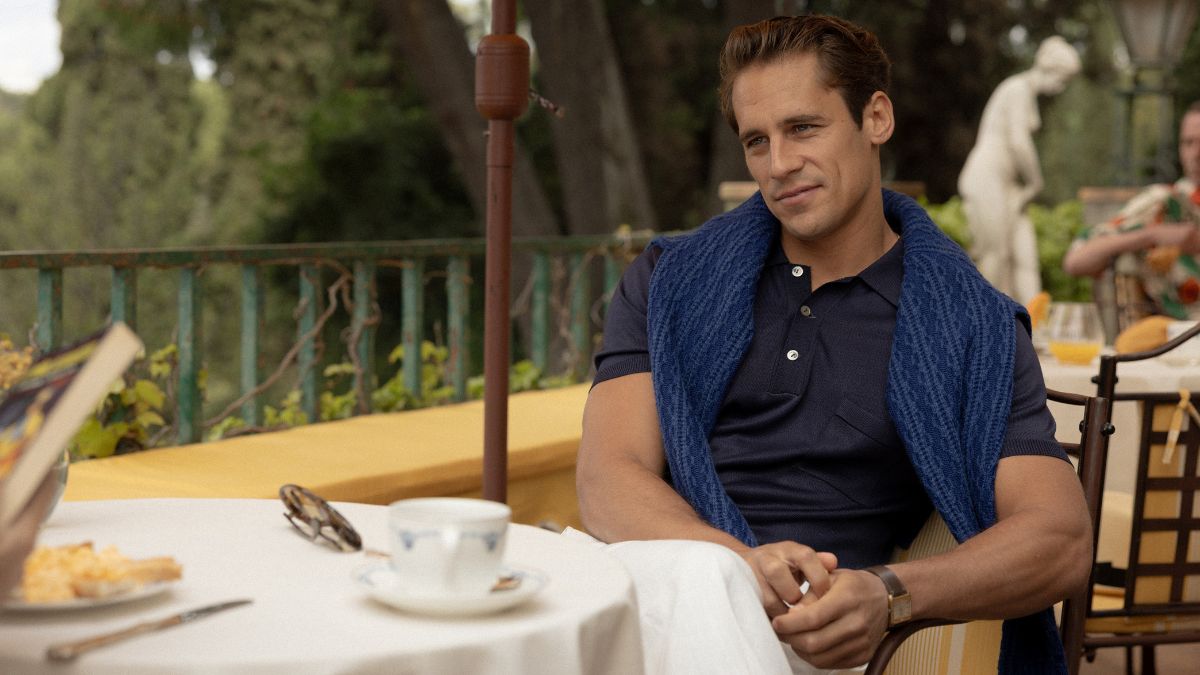
The Final Problem’s narrative, pacing, and structure work perfectly in the television format. The series uses its length to tease out the knots and does a stellar job so that you don’t notice the real breadcrumbs on the side. There is more than enough to chew on in almost every scene, and that’s thanks to both the dialogue and the seriously fantastic performances.
While Jose Coronado’s Basil is the beating heart of the Netflix miniseries, María Valverde’s Adela is a force. Demure and mysterious, much like Elisa, Adela observes more than she speaks. There are moments throughout the series where Valverde’s visual appearance captivates, and once she speaks, you understand that there is much more going on under the surface of her words.
But it’s not just Coronado and Valverde; it’s the entire ensemble cast that makes The Final Problem a mystery worth embarking on. The tropes they embody stand tall as a nod to the genre greats, but there is enough flair of a contemporary hand that guides the series further.
This whodunnit stands out while still honoring a genre made greater by Agatha Christie’s works.

Add in the superb costuming and the intimate hotel setting that is decadent from the floors to the chandeliers, and The Final Problem is the kind of luscious period setting that makes us romantic. And it does so all while maintaining the interpersonal tension that the genre thrives on.
The Final Problem is a whodunnit with a gimmick that never fails to drive the story or captivate the audience. Murders, relationships, and secrets rise to the top in this Spanish murder mystery, making it one of the better binge-watches on Netflix this year. This is a story you want to fall into, and just keep pressing “next episode” every time the credits roll.
The Final Problem is streaming now, exclusively on Netflix.
The Final Problem
-
Rating - 9/109/10
TL;DR
The Final Problem is a whodunnit with a gimmick that never fails to drive the story or captivate the audience. Murders, relationships, and secrets rise to the top in this Spanish murder mystery…