
It’s a shame that so much of what will be discussed about the otherwise beautiful Goodbye Lara will boil down to the enormous fumble in its finale. Much has already been written about it, but no, this is not the textual yuri ending we all desired. It’s not even the one that the series itself clearly positioned itself to be.
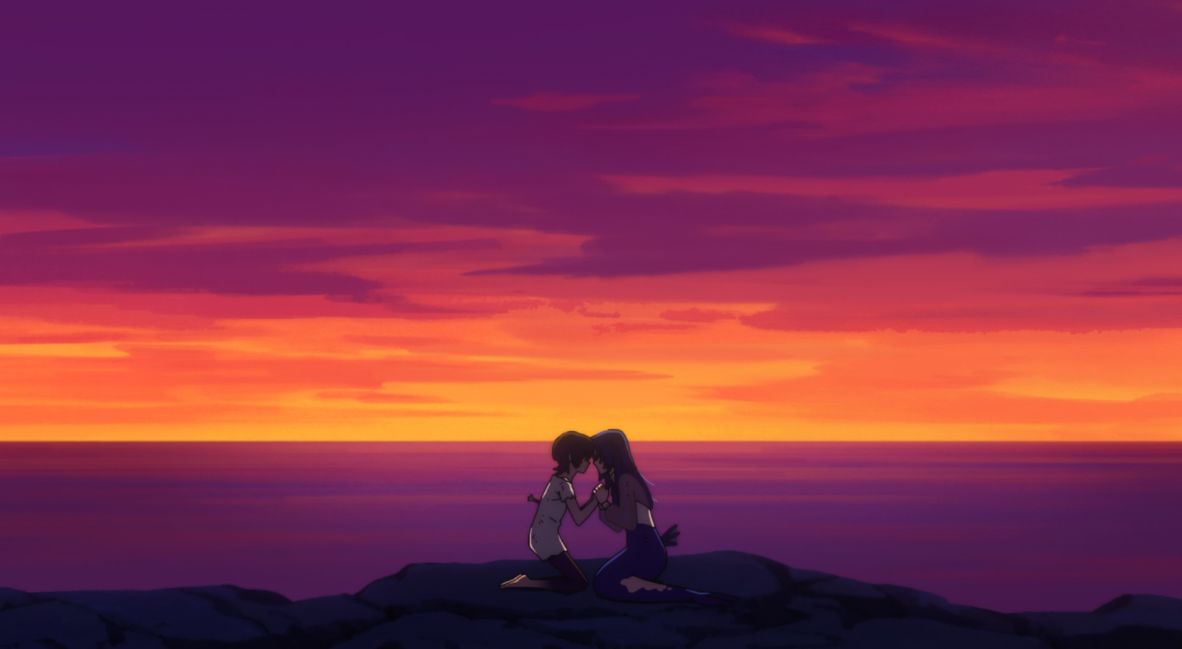
Lara (Hana Hishikawa) leaves Mari (Nana Kawaishi) behind, dates Luca (Ayumu Murase), and there’s no real confession of love, despite her love of Mari being the thing that allows her to walk on her two legs and save the two from the weapon that lay waiting in her heart. She declares she only wants to live in a world where Mari is alive, then promptly leaves.
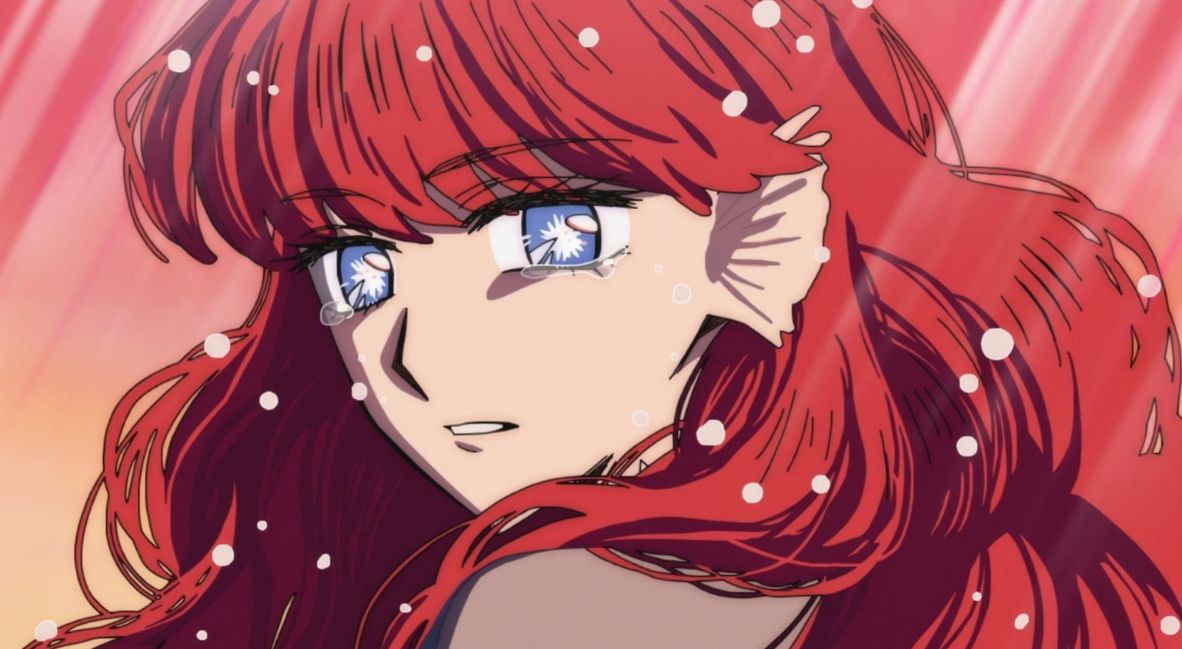
Maybe the series was always coasting on a darker edge that we realized, telegraphed in the stunner of a premiere. Lara’s design is more subdued after her rescue of Mari: the cartoonish vibrancy of her hair muted to a more (in-world) natural red, her ears no longer reminiscent of fins (though the stitching across her tongue remains, forever a visual reminder of her voiceless trauma). But in reality, it was just another bait-and-switch. Yes, there’s queer subtext. A boatload of it, even, between Lara, Mari, and Lara’s sister, Lisa (Minami Tsuda), along with her devoted anglerfish-turned-human, Kota (Kazutomi Yamamoto).
Goodbye Lara flirts with a near-perfect season before a clumsy, ill-fitting end.
But Goodbye Lara refused, in the end, to go there, a self-inflicted wound on what, otherwise, might’ve risen in the ranks to become the best series of the season – one of the single best of the year – in a season and year packed with ingenuity, becoming one of the best in recent memory, period. What a shame. Because, aside from those last few moments, the series is undeniable in its brilliance. But those last few moments, as mentioned, will rightfully dominate the discussion.
The series takes the original Hans Christian Andersen The Little Mermaid and twists it into something new and reimagined. Unlike other, family friendly adaptations of the story, Goodbye Lara maintains the originals darkness. The gorgeous, haunting premiere details the youthful naivety of our titular Lara as she pursues a human prince. Striking a deal with the sea witch, Grace (an “antagonist” so complex and interesting she seems pulled from a Ghibli film), she becomes human in order to make the prince fall in love with her, losing her voice as the price.
However, on the first go-around, the plan fails, as it does in the classic story, and Lara transforms into foam as the prince stands above her, disgusted by her true appearance. But the story doesn’t end there. Instead, she awakens 200 years later, once again granted the chance to find her true love and, in return, save her family from total collapse and death. Her actions, it seems, led to their ruin. And it’s only by finding her “light” that she may awaken them from the deep sleep Grace (Rika Fukami) put them under in an effort to prolong their lives.
The series plays with different genres, from fantasy to coming-of-age tropes.
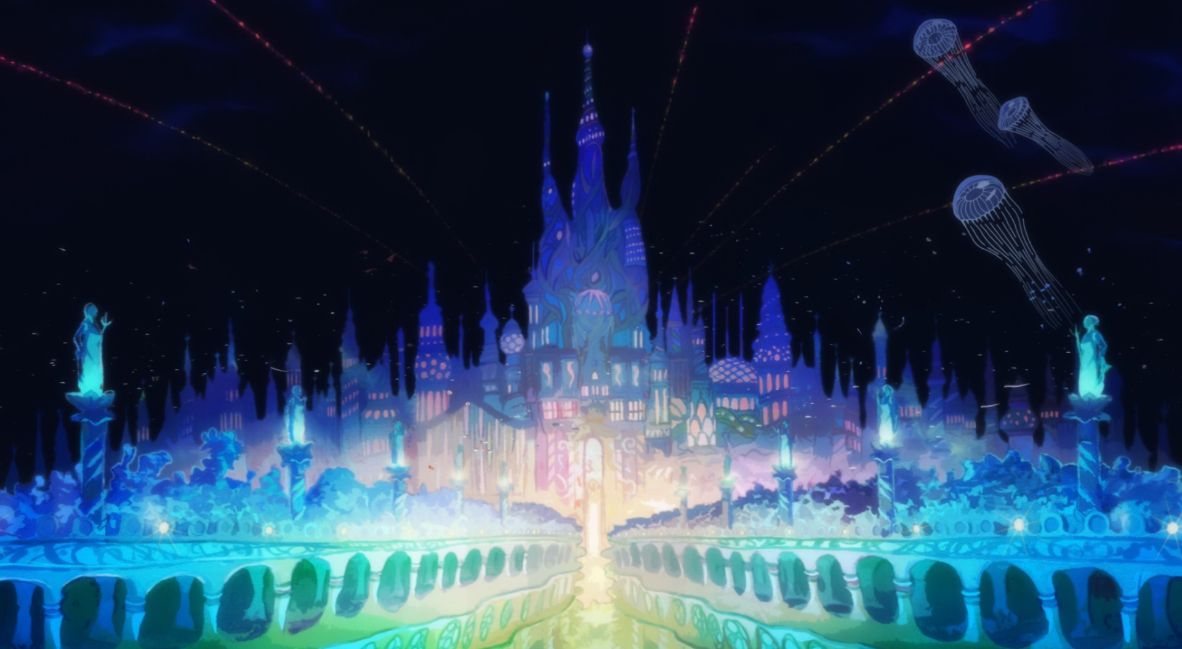
Arriving in the coastal town of Ōtsu, Shiga, Lara must quickly contend with modern life, aided by a growing friendship with Mari. Mari, who has been housing Grace, transformed into a pet fish, is unfazed by Lara’s true identity. More than anything, she’s bothered by Lara’s inability to stay out of her way as she trains in boxing. These slice-of-life elements add warmth to a story that, at first glance, is glacial in comparison. The underwater palace Lara once resided in was less a home and more an opulent tomb. Literally a relic by the time she awakens.
What follows in Goodbye Lara is an odd mismatch of stories. The most prominent is Lara trying to find her true love in an effort to save her family. And even that splits and configures as she tries to discover what “true love” even means, assuming that, when Luca – a boy who shares the face of her prince – appears and shows interest in her, he must be the one she settles her sights on.
Coming-of-age threads weave throughout the story, from Mari’s training to Lara befriending a girl at school, and even a charming episode where she spends time learning the toil of hard work at her first job. Each piece of the story amounts to the overarching puzzle, one that suggests she’s been led astray for too long into believing her only driver should be the hope – or threat- of romance. She can simply live and enjoy the luxuries, big and small, of daily life, surrounded by the cacophony of colors and sounds of Mari’s home.
“The Light That Shines on Me” is an absolute stunner and one of the very best episodes of the year.
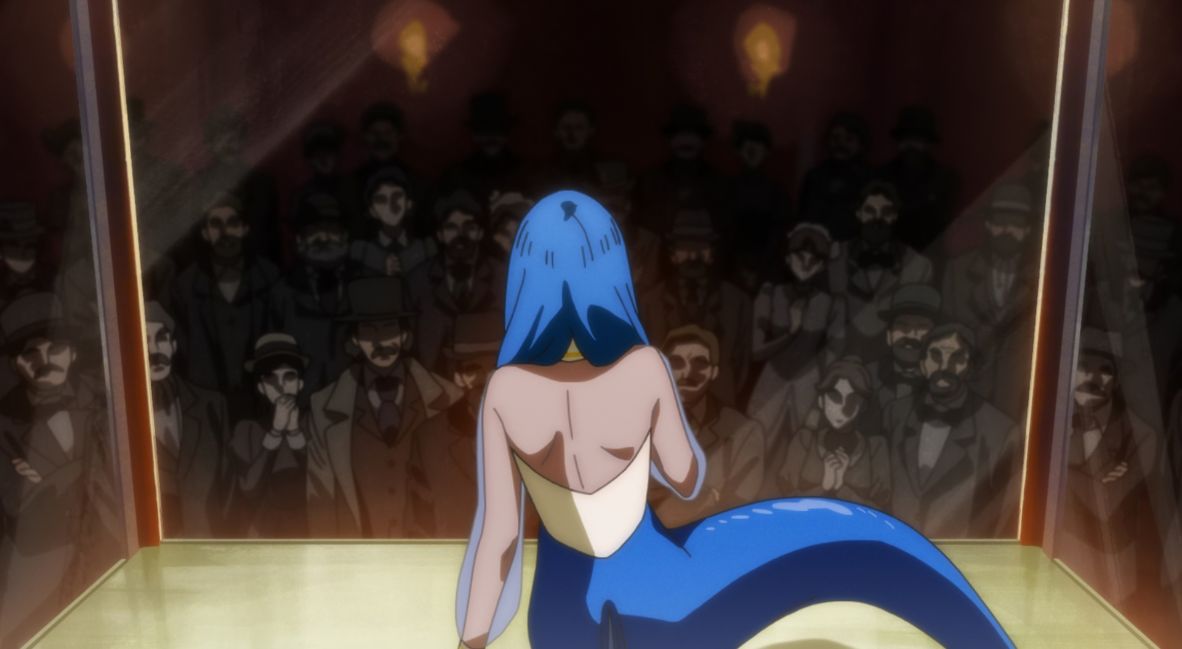
Lisa is another added element, a truly superb character. “The Light That Shines on Me,” directed and storyboarded by Asuka Kosato and written by Yusuke Aose, mirrors the opening’s overwhelming tone. Lisa faces, in the wake of Lara’s first death, the profound horrors humanity is capable of. She’s captured, put on stage, and used as a circus spectacle. She, like Lara, has plenty of reason to harbor hatred for humans, and so is enraged and confounded over why her little sister is so willing to play nice.
While evident throughout the course of Goodbye Lara, “The Light That Shines on Me” is a beautiful showcase for the harmony of narrative and storyboarding, the editing of Lisa’s darkest moment being followed by the now-human Kota, the light in the dark. These transitions would be so easy to overlook if the artwork was anything less than spectacular. But Goodbye Lara, from the very opening moments, is positively spellbinding, ensnaring us with its vivid decadence. Here is a series that offers up its proof of laborious love with the analog format and classic artistry, each frame a painting that begs us to reach out and touch it.
Removing the complexities of the story and the resounding frustration of its final notes, the series is gorgeous to look at. It’s why we fall in love with the medium. These breathless bouts of brilliance inspire us to understand more about the hows of a final product. To see striking color stories that refuse easy palettes and instead choose garish pairings over complementary ones.
Goodbye Lara is gorgeous. Seriously gorgeous.
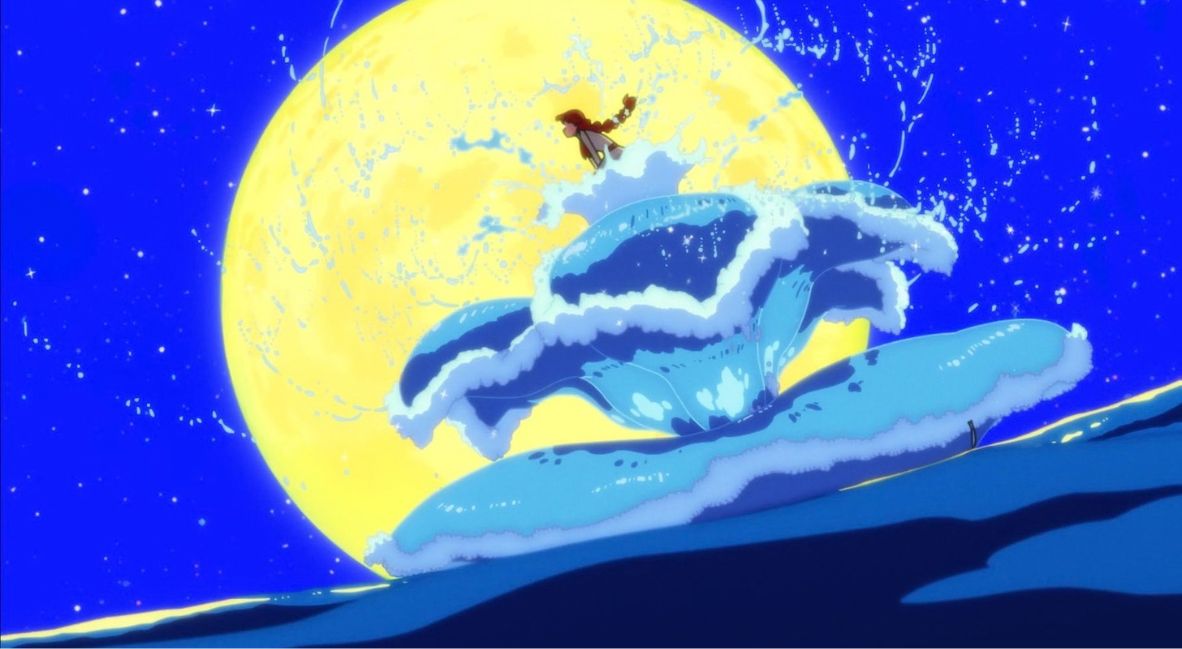
From the blazing moon that looms like a threat over the darkened blues of the sea, to the monolith creature that is as far from “light” and “love” as it is, that crashes down on unsuspecting civilians in their picturesque little village, to the otherworldly rot of the palaces in the sea where our first meeting with our heroine finds us leaving a bloody trail after biting the head of a fish clean off, this is a series of dissonant visual gestures. It’s a fairytale with teeth and muck under its nails.
The backgrounds alone are awe-inspiring and pop even more because of the traditional character designs. Lara stands out due to the vibrancy of her red hair, but Mari and her family, Luca and Grace, all have notes of classic designs, from the shape of the eyes to the way they’re styled, to both fit with the 2026 setting while adopting a timeless sense of style. The world is bursting with life, evident in how Mari’s room and balcony, looking over the town, are stuffed to the brim.
Yuma Yamaguchi’s electrifying, eerie score is another note of wonder. It manages to hit the right whimsical notes while adding in something with an edge, the soft, harmonic vocals that overlay the soft instrumentation, this pressing reminder of a character out of tune with the world around her.
The otherwise fantastic finale will make you grind your teeth in frustration as it comes to a tepid end.
There’s so much about Goodbye Lara that’s worth celebrating. Which is why it’s such a profound disappointment that the final two minutes do everything in their power to tarnish all that was good. Maybe we were all being too optimistic, and the truth was always in the title, literal to a fault. Maybe this was always going to be a story where our two mains part ways.
But that seems too simplistic and at odds with what the story was positioning itself to be about. Surely, the goodbye in question is to the previous version of Lara. To a younger, more naive Lara, as she took a step forward to instead reclaim a life led by love.
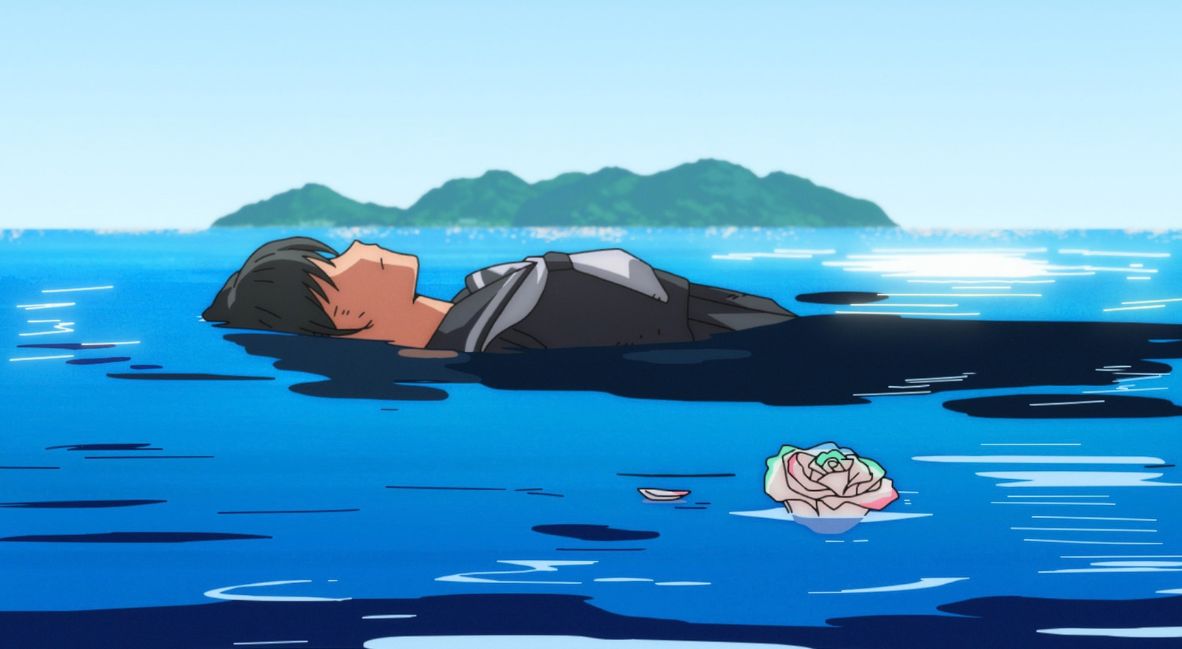
And again, it’s annoying because the series seems to believe this. From the white roses that become a visual motif throughout the series, signifying enduring love between Lara and Mari as they literally scatter around them as they float in the lake in the finale, to the hypnotic OP that suggests a story about the many different types of love, Goodbye Lara, presumably, wanted to tell a story about how love comes in all forms.
Lara and Mari deserved a better, happier ending.
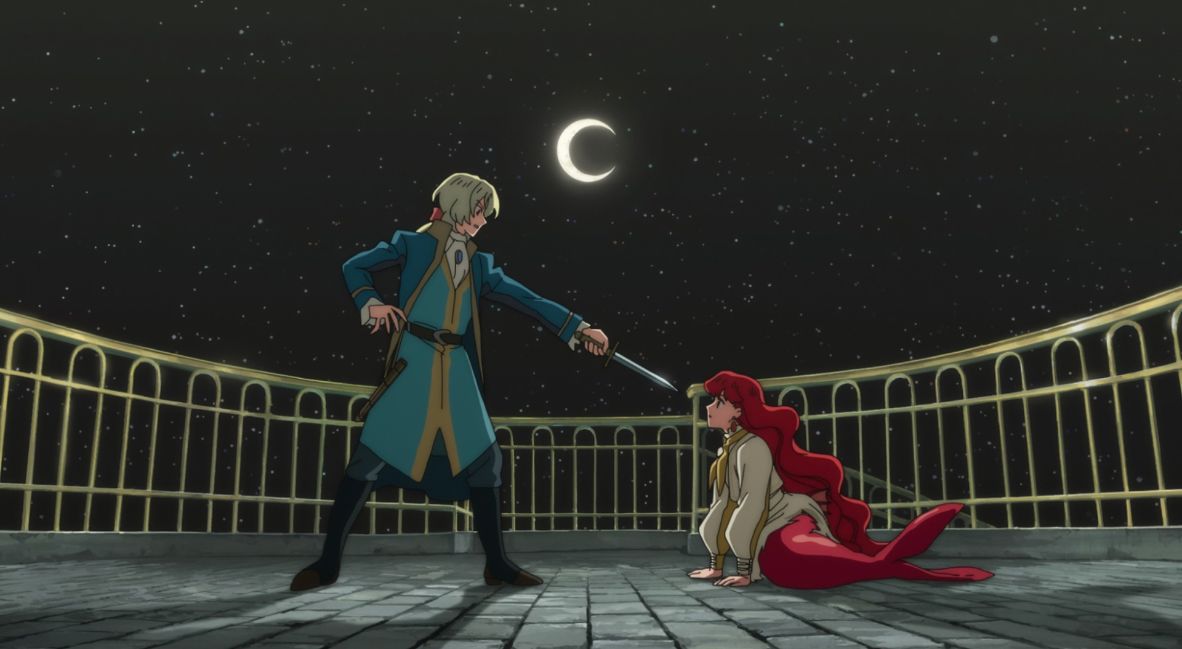
Sure, the story comes close to making the subtext text in Lara’s declaration and in her painful will to live. But the ending seemingly wipes that all away as she leaves town, Mari running after her, with Lara’s face shrouded in shadows for most of the ending runtime.
Maybe they’ll reunite, but it all depends so much on our ability as viewers to contort ourselves and the actual story into what we want rather than what was given to us. Was it that hard to make a text with its expansive backgrounds, richly drawn characters that utilize contrasting linework with vivid color, haunting score, riddled with queer notes, you know, queer? Lara’s story has beats of tragedy, but did the series need to end on such a dour note?
Goodbye Lara comes this close to perfection but fumbles in the last breaths, making us question the overall intent. It is stunning, however. And that immaculate artistry makes it easy to overlook the ending that nearly spoils the entire journey. But my god, what a ride up until then. With its expansive backgrounds, richly drawn characters that utilize contrasting linework with vivid color, haunting score and enchanting story, Goodbye Lara is, for the most part, a magnificent feat of storytelling and a rallying cry for artists to indulge. If only we could come together to rewrite such an unfortunate end.
Goodbye Lara is streaming now on Crunchyroll.
Goodbye Lara
-
Rating - 8/108/10
TL;DR
Goodbye Lara is, for the most part, a magnificent feat of storytelling and a rallying cry for artists to indulge. If only we can come together to rewrite such an unfortunate end.