Science SARU‘s hotly anticipated adaptation is officially here. Unlike previous explorations of The Ghost in the Shell manga, written in 1989 by Masamune Shirow, this take delivers a more direct retelling of the source material, whereas its predecessors took more inspiration from the original than directly adapting the work.
They borrowed concepts, characters, and events from the original, often placing them in new contexts and scenarios and adapting them to a strikingly different tone from the one in which they were first crafted.
Looking back, Science SARU is abandoning many of the elements the franchise has become known for within the anime community. Is this necessarily a bad thing? No.
But while there may not be anything fundamentally “wrong” with Ghost in the Shell returning to the franchise’s roots, there are elements of the franchise that one could argue shouldn’t be left behind, especially as much of what the newest entry in the franchise is bringing isn’t nearly as singular as what it may be replacing.
Science SARU takes us to Ghost in the Shell’s roots in 2026.
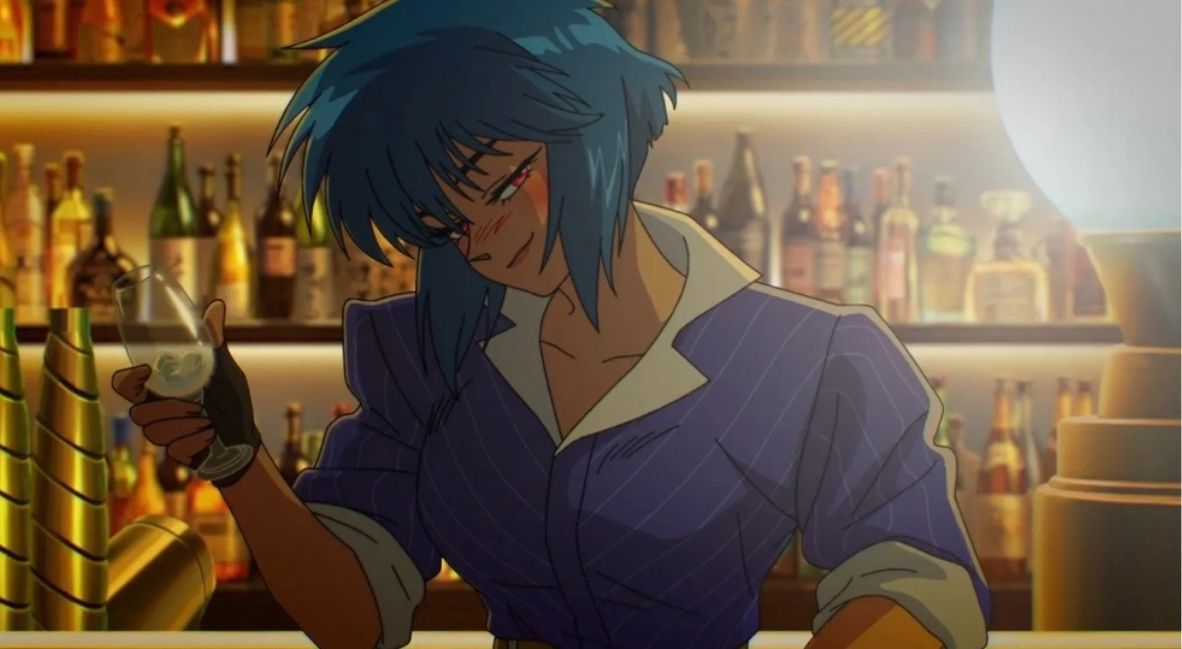
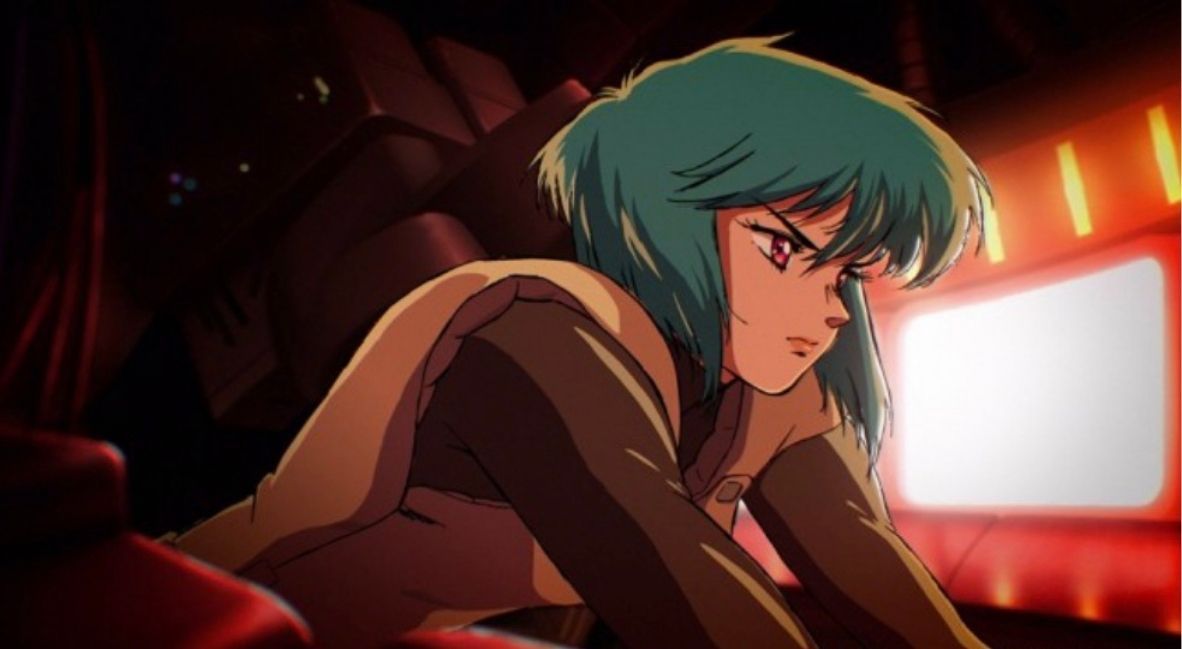
With the full series out, as someone who owns the manga, I can say that it has done a commendable job of recreating the original. There are some changes, of course, but overall, they have been minor. So, as far as judging the adaptation by how true it is, this newest entry is easily the most successful in the franchise.
This success also applies to much of what Science SARU has done for the series’ visual presentation. Everything about the series’ world looks incredibly faithful to Masamune’s work. Even in motion, the animators have found a way to make the animation feel right for the art. The character movements and expressions blend well, making the series feel like a manga come to life. Even the coloring feels in line with covers and other associated materials one can find.
So if The Ghost in the Shell is doing the best job of adapting the source material, that must make it the best entry in the franchise, right? While faithfulness to the source material is often treated as the benchmark from which all adaptations are judged, it isn’t the only metric one can use for quality. I would further argue that it is an exceptionally poor choice in this particular instance.
Stories sometimes grow beyond their creators. While this concept feels odd within the context of anime/manga, as most series are still heavily tied to their original writers, it is not uncommon in other media. Genres like superhero comics have seen the vast majority of their characters move beyond the original creators.
Characters are taken in new directions, concepts are fleshed out in deeper ways, and mistakes are even sometimes corrected as society grows and evolves. And while people fiddling with classics can lead to horrible outcomes, these evolutions can also lead to incredible depth. And a perfect example of this is Ghost in the Shell.
The franchise and the stories it tells have undergone incredible growth after leaving their original creators’ hands. The older anime series have far more nuance, complexity, and morality than the original manga. These characters have been explored, deepened, and improved throughout their time on screen. Even when they explore the same moment as their source material, the results are rarely equal in delivery and skill. This highlights how much the narrative has deepened since then.
A perfect example of what I’m talking about can be found in episode four of the current run, “Robot Rondo.” In it, Batou is assigned to investigate some malfunctioning androids. His investigation eventually leads him to an illegal ghost dubbing facility and the revelation that a young girl who had been trafficked into participating had caused the malfunctions, hoping that the trouble would draw attention to the facility before the ghost dubbing process killed her.
Ghost in the Shell 2: Innocence and others cover the same ground we see in the new series, but better.
Batou’s reaction to the young girl’s confession is less than ideal. Completely disregarding the danger the girl was in, he immediately begins berating her about how her actions caused the deaths of “two VIPs,” apparently who they were mattered in his mind, as well as “12 injuries and other misdemeanors.”
No understanding or sympathy is given. He yells at her and is then pulled away by the evolving situation in the facility. This makes Batou look horrible, as it makes him seem less like a protector of the public and more like a paid enforcer only worried about those who pay his checks. Not what it feels like the series sets out for his character in general.
In contrast, the same core storyline is also explored in the 2004 film, Ghost in the Shell 2: Innocence, with far different results. In this version of the story, Batou’s introduction to the malfunctioning androids takes a darker turn as he is forced to kill one as it drips with the blood of its victims and attempts to end its own existence. This traumatizing start is far worse than what the original served up, and yet this version of Batou delivers a far more meaningful reaction to the final revelation.
When this Batou learns the truth behind the malfunctioning androids, he largely freezes. With only a struggling whisper of a question asking if the girl had thought to consider the other individuals she was affecting, Batou’s reaction still isn’t what one may like, but it doesn’t feel bad either. Knowing what he has seen, and finding out that it was, to some extent, deliberately caused, is sure to create a conflict in his mind.
The way the animation portrays his stillness conveys the struggle within him. He doesn’t seem mad; he understands why the girl did what she did, but at the same time, some horrible things happened because of her. This more complicated interpretation leaves the character feeling far more human than the original work does, as well as creating a pathway to explore what Batou is going through.
While the above is a single moment, these moments are seen frequently, and the changes in tone are felt most harshly overall through the delivery of the franchise’s star, Motoko Kusanagi. Everything that makes The Major great is almost completely due to the anime installments that have less to do with the original manga.
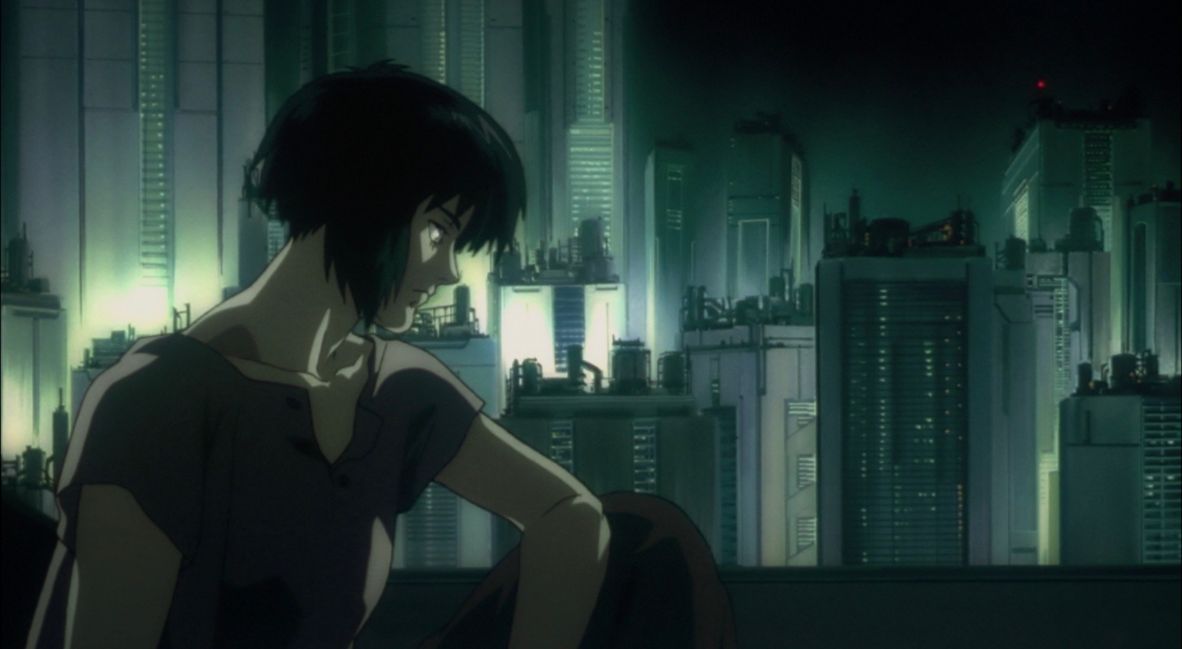
The original anime installments establish Motoko Kusanagi’s impact, not necessarily the manga.
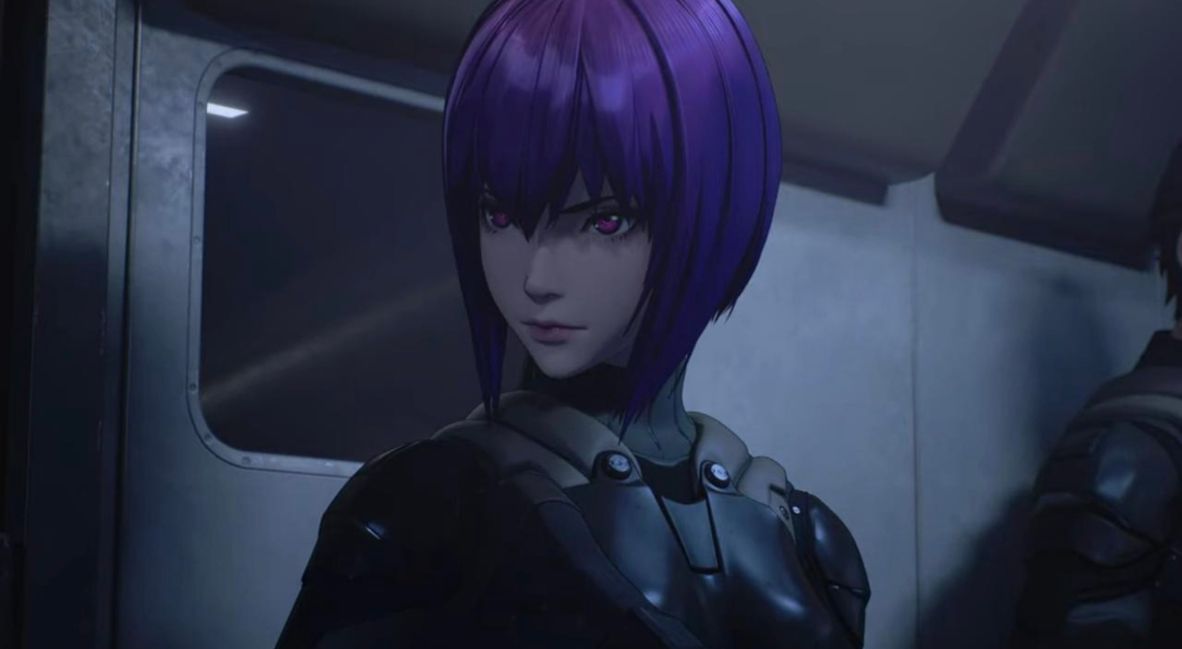
“The Major” Motoko Kusanagi I’ve come to know for the past 25 years is one of determination, intelligence, and compassion. She will stare down the biggest threat, protect any innocent in danger, and call out anyone on their bull. She moves to reach the right conclusion, even if it means doing things others will disagree with. You do not mess with her people, or she will mess with your head.
She has tremendous skills and talent, but is far from flawless. She misses shots and makes bad calls. But she can do so and still win, because her quality has allowed her to draw together a team that is great enough to pick up any slack she misses. All these reasons and more are why she has been, and I suspect will remain, my favorite anime character of all time.
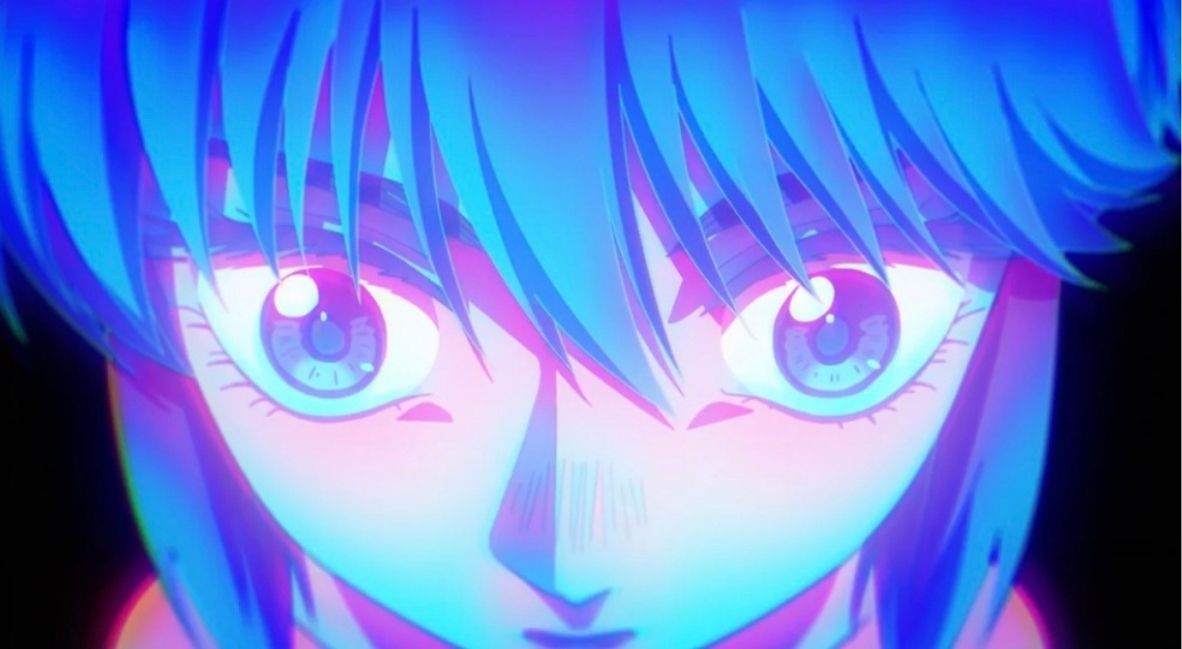
And what are we getting in exchange for this deep, complex, multifaceted leading character in the new series? Someone goofy. Someone whose sexuality is treated as a punchline. A “great agent” who goes out of her way to get a wizard-level hacker to make her fake documents to get into a secure facility, only to draw her weapon the first time she sees security because she forgets she went completely out of her way to get access. She’s become an MC who often behaves like she has an IQ I would suspect is lower than room temperature.
Now, I’ve heard people say that they love this Kusanagi because she is goofy and fun. And you know, that’s valid. Nothing wrong with wanting fun in your anime. I love going back now and then and having fun at Lyco Reco with Chisato and Takina. I love bopping back to have fun with the antics of Bocchi and her bandmates. These and many other series are pure joy to watch. And there lies the problem.
If I were to describe The Ghost in the Shell to you in the simplest terms possible, it would be this: A brightly colored, hyper-animated, action series centered on a goofy MC that tries to be fun. And that description, there’s nothing wrong with it. I love anime like that. But here’s the thing: I can describe half of anime like that. There is so much fun, goofy anime out there. Do we really need that from this franchise too?
And that is where The Ghost in the Shell fails to justify itself. Yes, it is more like the original, but the original hasn’t been “Ghost in the Shell” to a large portion of the audience for 30+ years. And what this franchise does, and the way it does it, is something that I can’t say I’ve seen another anime do.
The Ghost in the Shell fails to justify itself as a new series.
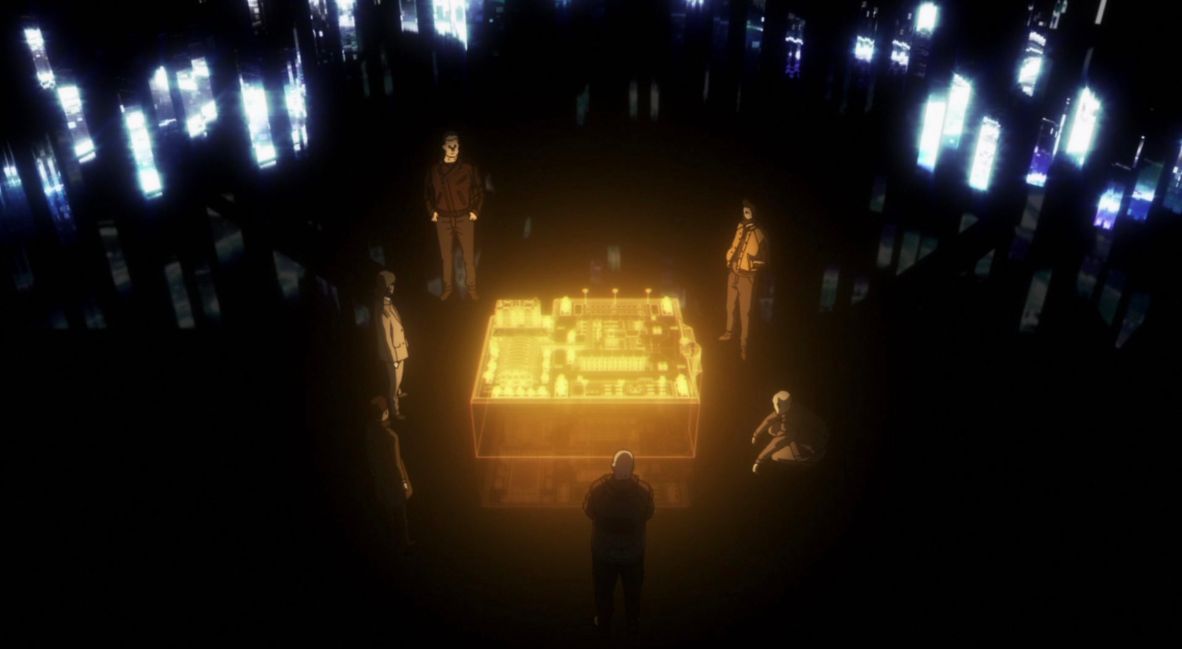
This anime franchise was serious, smart, challenging, and demanding of your attention and focus. It reveals its world and explores backstory in a way that, while it is technically “filler,” doesn’t feel like it. It feels important and enriching. Learning about Saito’s staredown with The Major when they first met, or following an errant Tachikoma as it helps a girl find her lost dog, built the world and its cast into something far more than it would’ve been otherwise.
These episodes were frequently some of the boldest I’ve seen. And not because of controversial plot points or incredibly animated action, but because of the confidence they showed in their story and writing. An episode in season one of Stand Alone Complex takes place almost entirely within a virtual chatroom as The Major and several Laughing Man fanatics debate issues and facts surrounding the mysterious criminal and the near cult-like fandom that springs up around him.
This episode depends entirely on great writing and compelling exploration of the show’s world to keep the viewer’s attention. And it succeeds. The analysis and personality clashes create a densely layered debate that few series would dare pin an entire episode on, much less pull it off if they did. When you can write a story that takes place almost exclusively in a single room and keep it engaging, you have got something.
Stand Alone Complex takes us much further than this new series can.
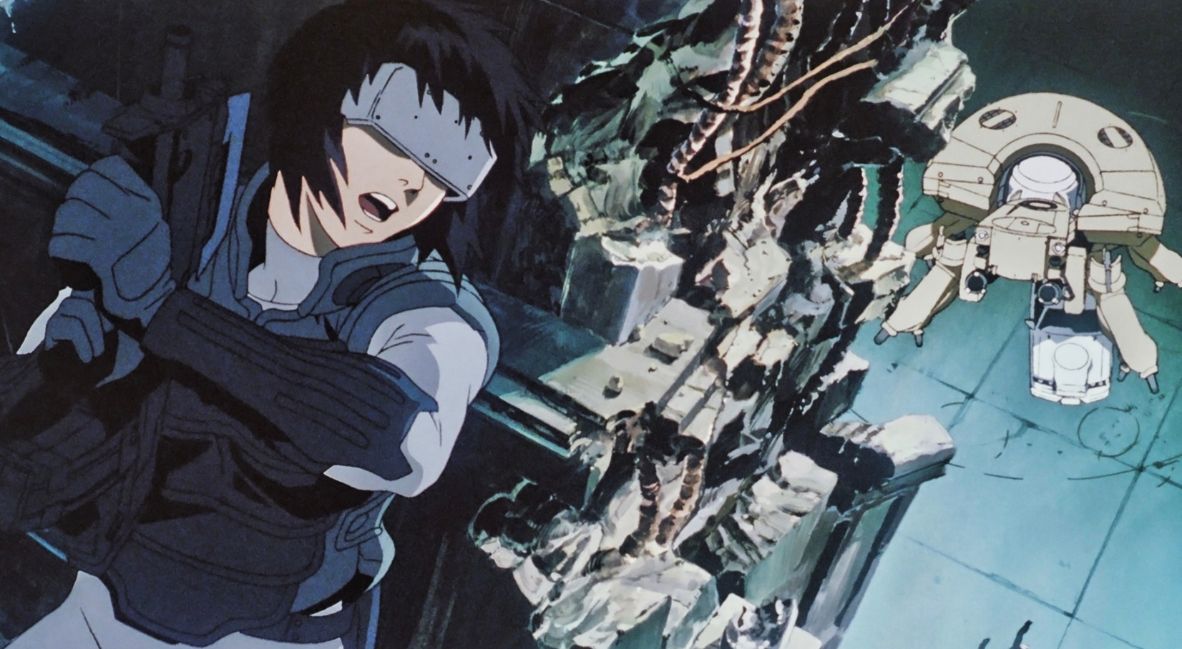
A lot of the thought-provoking dialogue of the above episode and others also comes to feel almost prescient in the modern, social media age. How the net becomes a weapon to manipulate, or something where legions of people can become copycats to a person who may never have existed, feels shockingly close to phenomena we see play out today.
The older series’ more grounded, reflective tone also makes the franchise feel more applicable to us, even beyond its explorations of the net. Ghost in the Shell has always been praised for exploring deep-rooted concepts about humanity and the societies we build.
Having this exploration done through characters that feel closer to us in presentation, even if not in essence, makes their explorations and discoveries easier to reflect on ourselves, even when their scenario involves cyberbrain hacks, full-body prosthetics, or AI-driven tanks.
Throwing out the past for a new 90s nostalgic future isn’t the path we should choose.
After watching the first couple of episodes of the current run, I felt angry, but I didn’t know why. It took some digging to figure it out, but I eventually did. While the series has its charm and Science SARU largely does what it always does with the visuals, it takes something unique, bold, and deep and reduces it to another goofy anime.
It takes one of my favorite franchises of all time and makes it something that, if not for the name, wouldn’t even register on my seasonal watching radar. It would be just another anime. And I fear it means I’ll never get another like the ones I love again. And it will be replaced by something people will enjoy as it airs, only to be forgotten in the endless churn of new content as the next season begins.
But I could be jumping to conclusions. Maybe there is room for two Ghost in the Shell styles. After all, as Kusanagi observes, “The net is vast and infinite.” But if this timeline instead proves itself to be the worst timeline once more, and ends up demanding the former be scrapped for the latter, well… I hope those who enjoy this version find that it speaks to their ghosts as much as what came before it did to mine.
Science Saru’s The Ghost in the Shell (2026) is streaming now on Prime Video.