

We are halfway through Season 9 of Marvel Rivals, and The Hood (Damian Priest, WWE) makes his appearance as the newest Off-Tank in the game. Bringing some survivability and an impressive amount of damage-dealing potential to the role, Parker Robbins seems poised to make his presence known in the meta.
Setting aside the fact that, after a year and a half of service, Marvel Rivals got its first Latin American character in the form of a seemingly race-swapped gangster, the tank provides a unique experience that sees players manage his damage-dealing potential while doing their part to keep themselves and their teammates alive. The core element of this cycle rests with his Demonic Energy passive ability.
The Hood Enters Marvel Rivals Season 9.
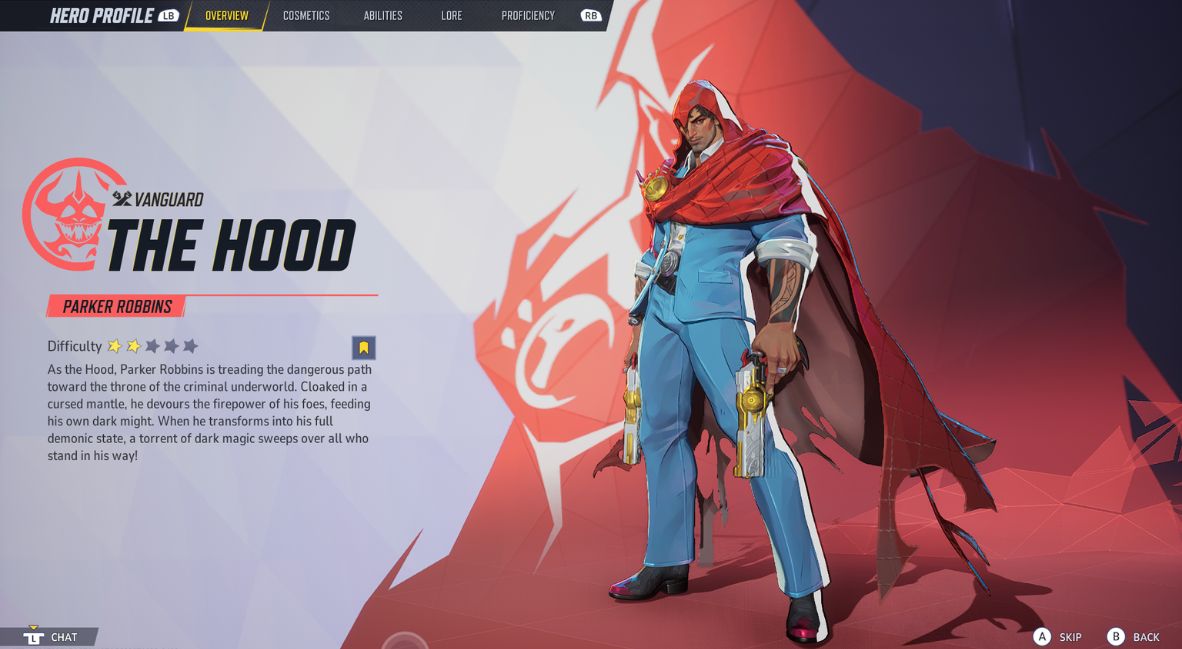
Whenever The Hood lands hits with his pistols or activates either his Abyssal Veil or Cloak of Oblivion abilities, he gains Demonic Energy. When he is over 50% Demonic Energy, his primary fire rate increases and his Cloak of Oblivion covers a wider area on activation.
When Robbins gets a full charge of energy, he undergoes his Leaded Transformation, replacing his primary fire with a gatling-gun-style attack that sports infinite ammo and life steal, but suffers from a wide spread and reduced damage per hit. While in this form, his Demonic Energy depletes over time, returning him to his normal state when exhausted.
Trying to manage when the Demonic Energy tops off is a vital piece of the character. Nothing feels worse than hitting your max just as you help polish off the last enemy at the end of a team fight that would’ve died anyway and watching your meter burn for nothing. Happily, the energy only depletes when active and not during times of idleness like Emma‘s. This makes it a little easier to manage.
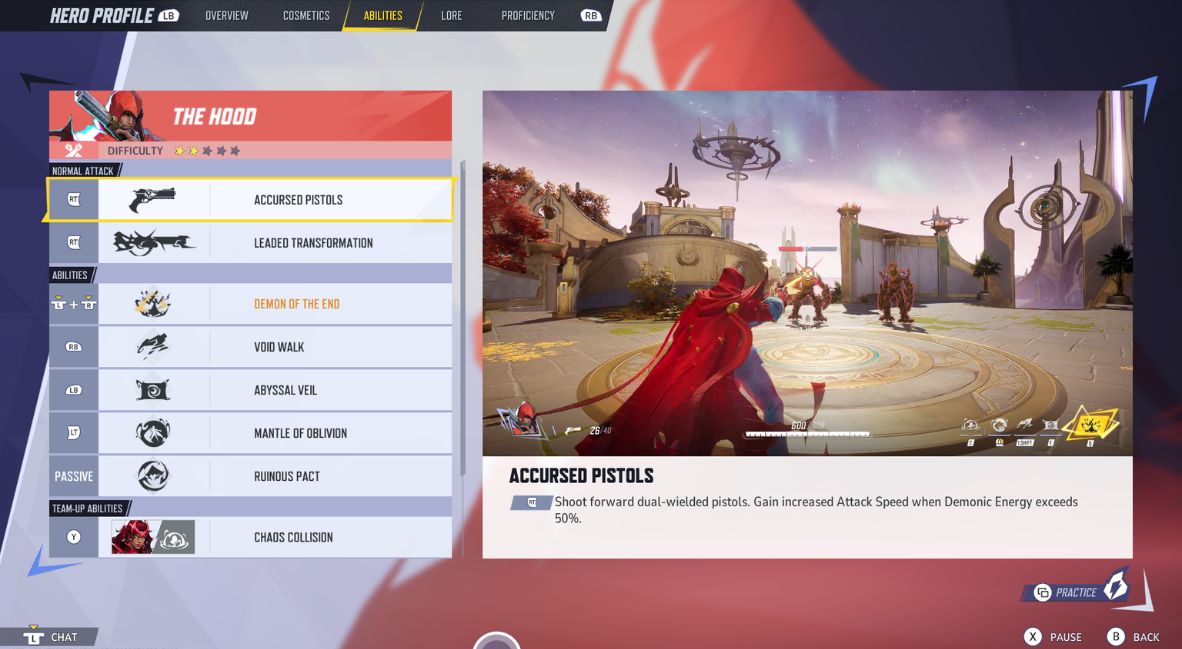
The demonic tank’s first ability is his Void Walk. Engaging a free-flight mode that lasts a few seconds, this provides a great means of escape or engagement. Immune to damage during the activation period, Robbins also gains a decaying speed boost when exiting the state, as well as deals a burst of damage to nearby enemies.
Mantle of Oblivion is The Hood’s next ability. When activated, he is surrounded by a crimson sphere of protection that prevents all incoming damage for a brief moment. This also protects allies that are close enough to be within the Mantle’s effect, with a greater area of coverage if enough Demonic Energy is present.
This ability can be game-deciding when used properly, but can also languish if over-hoarded. Its long 15-second cooldown means players won’t want to use it on a whim, but saving it exclusively for team-wiping ultimates undercuts one of the character’s best defensive options. So if you think an incoming threat could endanger your life, it’s probably best to pop it since dead men don’t fear ultimates.
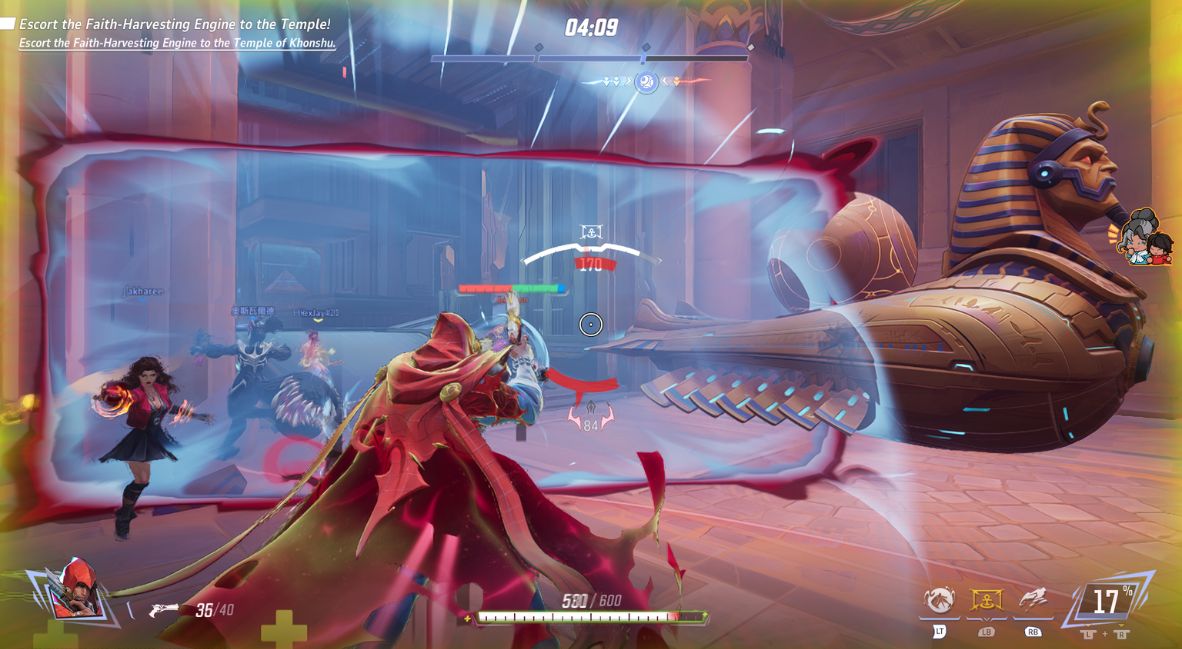
Parker Robbins’ last regular ability is his Abyssal Veil. Once deployed, the veil creates a 2-Dimensional rectangular box that lasts for several seconds. While up, enemy attacks that pass through it get their damage reduced, and enemies who pass through it take damage and are blinded.
The veil also provides buffs for The Hood’s attacks. When firing his normal primary, his hits gain extra Demonic Energy when they pass through the veil. When in his Leaded Transformation, his attacks gain increased life steal.
Rounding out the kit is the ultimate ability: Demon of the End. Undergoing a demonic transformation, the character becomes a stationary turret with six shots and a monster-sized health pool. The shots pierce both enemies and shields, with the final shot being even more powerful than the already impressive stopping power of the other five. Also, when the attacks hit enemies, both The Hood and nearby allies gain bonus health.
What makes this ability not only powerful but fun is the choice Netease made to allow the turret to be deployed anywhere. This includes in mid-air. A player can activate Void Walk, go straight up, and then deploy the turret. This grants them a bird’s-eye view of the battlefield as they lob shots at panicking foes below.
The Hood brings a solid damage-dealing presence to the tanks in Marvel Rivals.
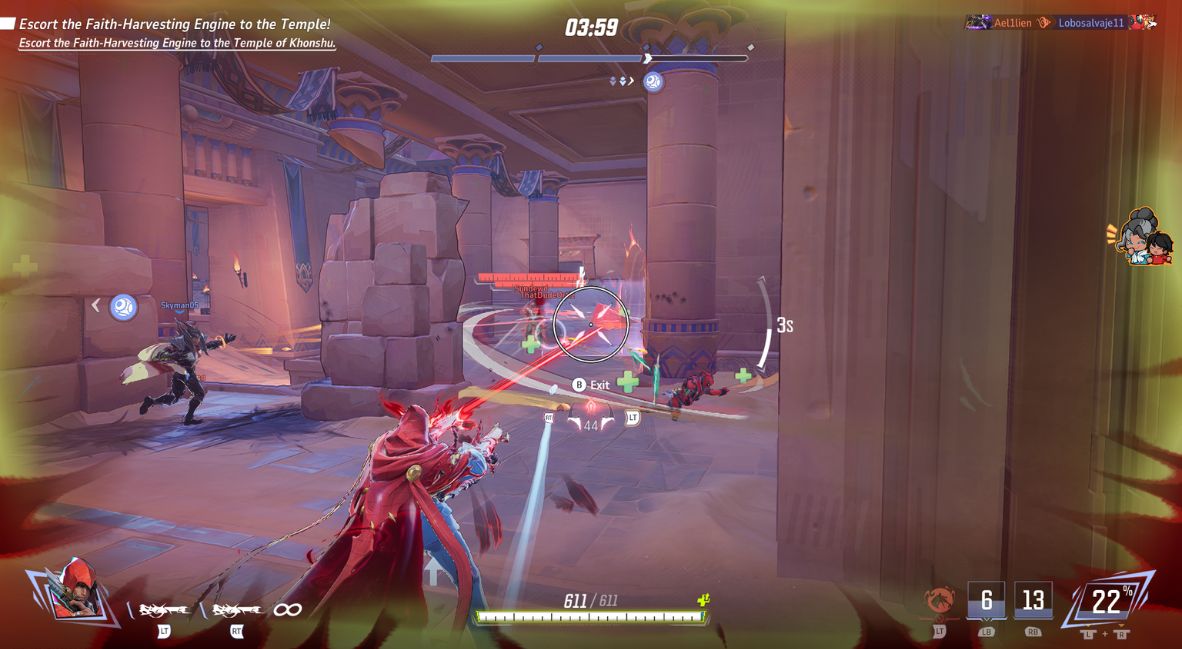
The character’s pair of team-ups either grant him a new power or improve part of his existing kit. His first pairs him with Scarlet Witch and gives him the ability to create an Arcane Zone that deals damage over time as well as stacking damage and healing reduction on enemies within it. When Wanda is on the team, The Hood can also teleport to the zone, dealing a burst of damage and launching nearby enemies towards himself upon arrival.
His second team-up is with Moon Knight. This team-up adds three hundred points of shields to the Abyssal Veil. Also, when the shield breaks, nearby enemies are dealt damage and gain healing and damage reductions. If Moon Knight is on the team, the shield value increases, and The Hood’s attacks that pass through the veil gain a bounce effect.
The Hood brings a strong damage-dealing presence to the tank role. His defensive options can come through in the clutch, but due to short activation windows, they require careful implementation, making him a solid secondary tank choice, though one that’ll struggle to anchor a team.
Marvel Rivals is available to play now on PC, PlayStation 5, and Xbox Series X|S.
Previous Character | Next Character