


Spirited Away, the fantasy adventure film from Studio Ghibli and acclaimed director Hayao Miyazaki (The Boy and the Heron, Kiki’s Delivery Service), enchanted audiences when it was first released back in 2001. While it dazzled with its visual presentation, it was the humanity at the core of this tale, filled with wonder and magic, that allowed it to leave such an enduring impression on the throngs of fans who witnessed the marvels the story presented. Marvels that shine now, a quarter century later.
While driving to their new home for the first time, Chihiro and her parents stumble across a strange structure in the middle of the woods. When they pass under a red arch, they unwittingly pass into the spirit world. After eating food they had no right to, Chihiro’s parents are transformed into pigs. With the help of a spirit boy named Haku, Chihiro escapes capture and begins her quest to save her parents and return to the human world.
The greatness of Spirited Away begins with Chihiro. Through this young protagonist, we get one of anime’s most authentic takes on childhood. When we first meet her, she is being obstinate and fussy, upset with her parents’ decision to move them to a new town. While this may not be the most flattering introduction to a character, it establishes from our first meeting with her that Chihiro is, first and foremost, a child, rather than one of the tiny adults anime often tries to pass off as children.
Chihiro is an all-time Studio Ghibli great because, in true Miyazaki ethos, the film lets her be a kid.
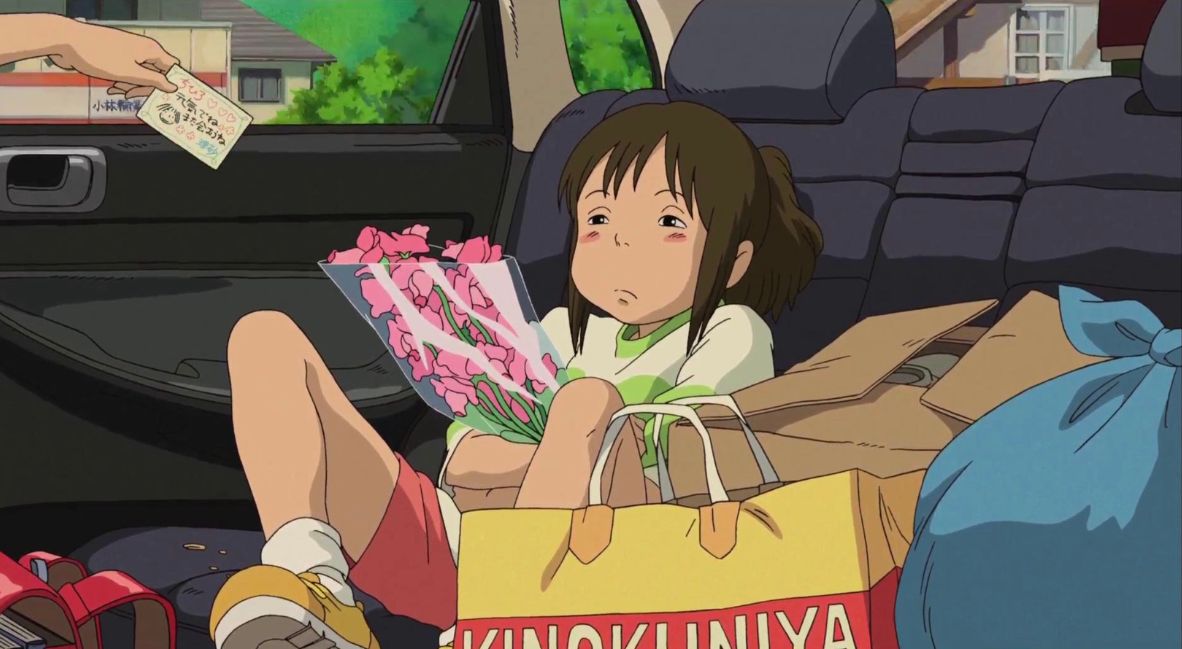
This realistic portrayal of her character persists as the situation comes apart for her. Her blind panic and sheer terror as the previously deserted structures begin to fill with spiritual creatures highlights how out of her depth she is. And how could she not be, she’s ten.
While the fear that overtakes her in the opening moments of her journey strikes hard, it is only once things quiet down as her first night at the bathhouse draws to a close that the character is allowed to truly express herself. As her new co-worker and friend Rin gets her set up with her own set of work clothes, Chihiro, finally finding a quiet moment where she isn’t faced with potentially life-threatening danger, curls into a ball at her feet and complains of not feeling good and crying.
She is truly overwhelmed. And it is this moment that makes her an incredibly relatable protagonist. And my personal favorite from the Ghibli stable.
Spirited Away finds its heart in a relatable and grounded protagonist.
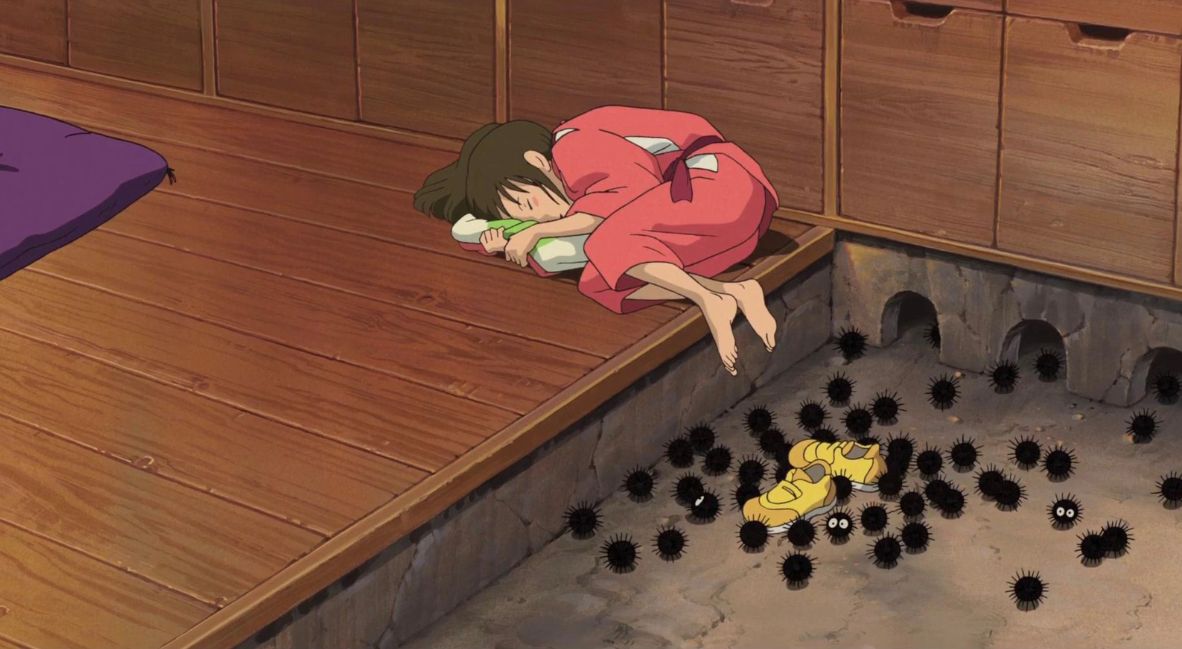
I have a terrible time managing stress. However, I can push through so long as there is an imminent problem that I must deal with. It is only when I must wait, or in the moments after a heated confrontation or a stressful moment has played out, and I can take a moment to breathe and fully appreciate all the ways a situation could’ve gone wrong, that I can completely come apart.
Despite being in my 20s when I first saw Spirited Away, this element instantly made me relate to a child that wasn’t even half my age. Seeing her crash out after the most terrifying day of her life made her relatable in a deeply human way. And someone I desperately needed to get through whatever the bathhouse would throw at her.
While the relatable human element at the center of Spirited Away begins with its lead, it doesn’t stop there. The story is able to infuse familiar elements within all of the bathhouse workers, creating an understandable world for its narrative, despite the fantastical setting.
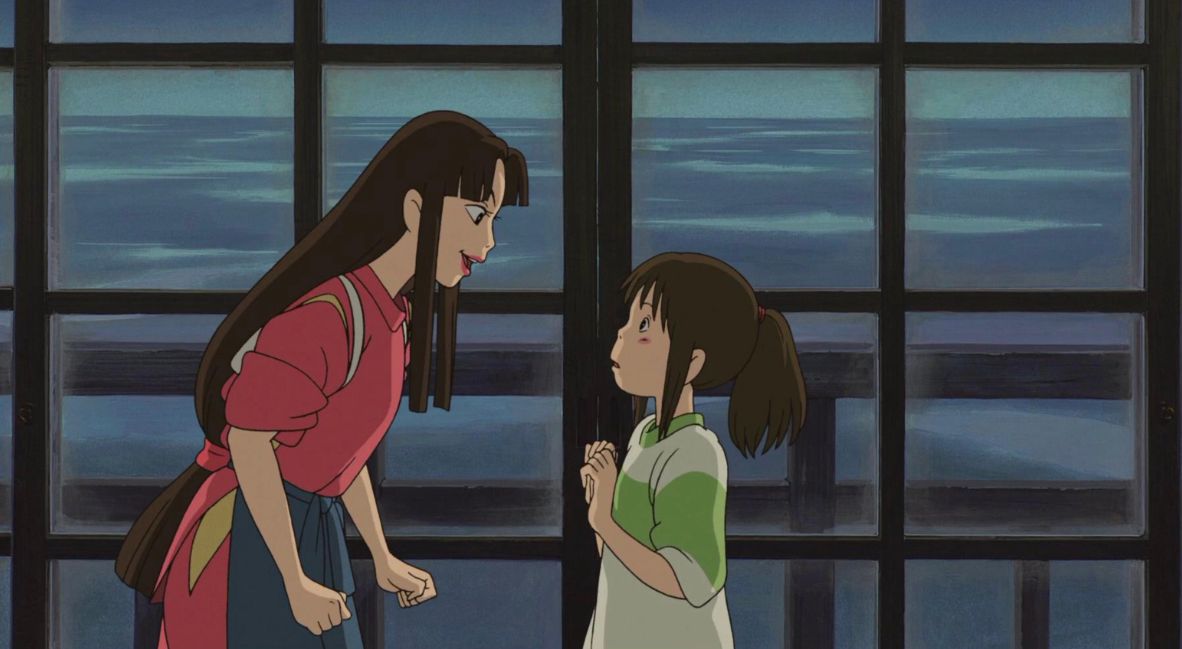
Rin’s compassion and support help guide Chihiro forward.
Seeing actions like a worker leaning out of a window to grab a quick smoke allows the viewer to feel like there is a base understanding that, despite their differing natures from Chihiro, they are all, at the end of the day just people.
Nowhere is this humanity more on display in Spirited Away than in Chihiro’s coworker Rin. At first meeting, Rin is annoyed that she has been saddled with the “new girl.” She has her own job to do and is just trying to get through the day. But she is very quickly shown to be an empathetic and caring big sister to Chihiro.
Always cheering her on and looking out for her, she provides a consistent support for the young girl in her struggles through the bathhouse. One she desperately needs, as her fragile child’s mind could never survive on its own.
Yubaba, in typical Hayao Miyazaki fashion, is a remarkably complex antagonist.
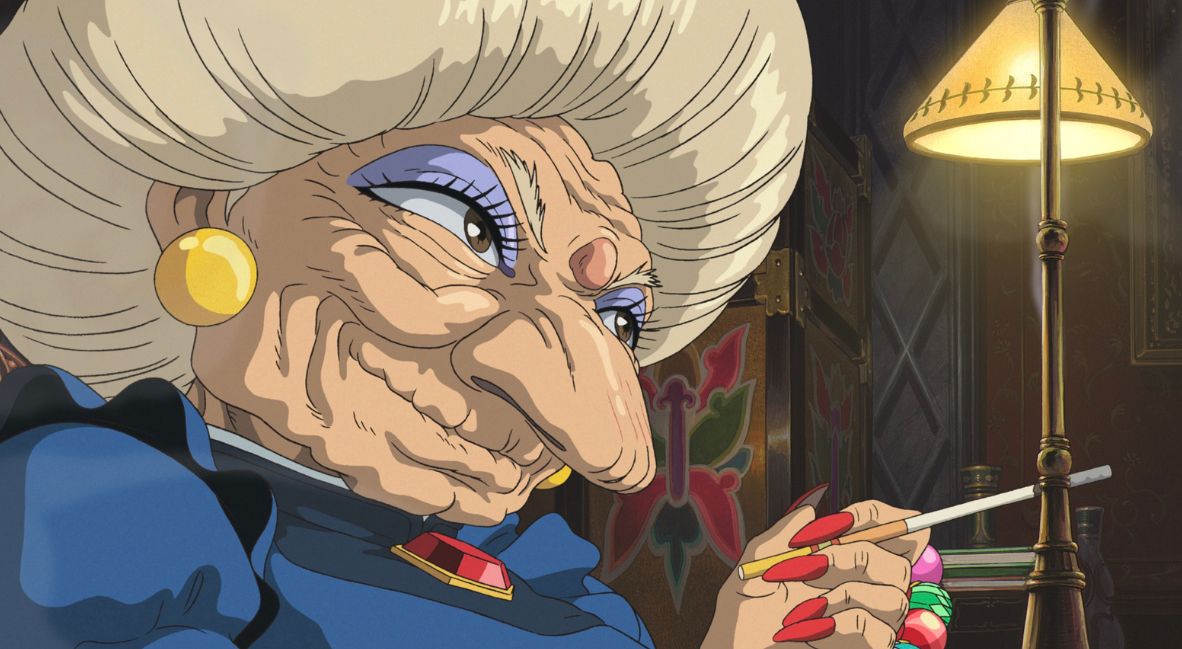
While there is friendship to be found at the bathhouse, there are also threats, specifically the bathhouse’s proprietress, Yubaba. Conceptually, this character is the perfect antagonist for Chihiro. A judgmental, intimidating old woman who is all too quick to write her off as a bratty child who lacks manners and is worth nothing. She provides a fantastic foil for Chihiro to overcome while also shining a light on a truth about spoiled children that is often overlooked by those who complain the most about them.
Shortly after meeting Yubaba, we are introduced to her oversized baby. This child is everything Yubaba claims Chihiro is and worse. Spoiled rotten, the child threatens violence if it doesn’t get its way and is unwilling to do anything but lie around in its room, fearing the outside world and the germs it contains. Spoiled children aren’t born; they are made. And despite Yubaba’s ranting about Chihiro, many points of which are clearly proven false, she seems to be intent on making a far worse example of all of her complaints.
While the relatable characters do a tremendous job of creating a grounded center for Spirited Away to build off of, it does just as phenomenal a job with its purely fantastical elements. The various magical displays throughout the film’s two-hour run-time create wonder and awe at every turn.
There’s magic and wonder in the film, but it doesn’t solve all of Chihiro’s problems.
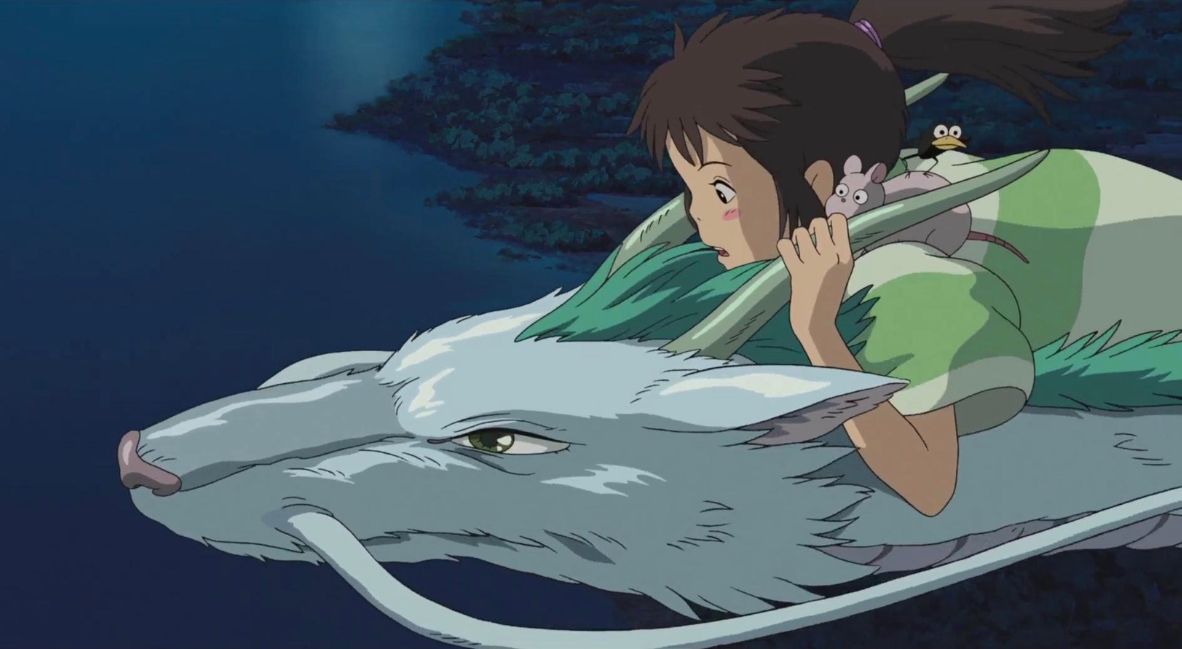
And while there is plenty of convenience in how magic often brings resolutions to individual plot points, they never cheapen these moments. Magic never comes to feel like a “get out of jail free” card. It only comes along after Chihiro or someone else has put in the effort to create a situation that magic can then help them get over the finish line, rather than having the indescribable power simply do it all for them.
The magic of the world in Spirited Away is also brought to life gorgeously thanks to the hallmark visuals that Studio Ghibli became famous for. Color, light, and emotion are all used to dazzle the viewer as they travel through the bathhouse with Chihiro.
The sheer scale of the world is always projected in every establishing shot, amplifying the awe brought by the world. This focus on scale is doubly effective in shots where we see the young and diminutive lead present, as the only thing that can make something grander or more intimidating is viewing it through the eyes of a child.
Spirited Away will endure as one of the medium’s finest achievements.
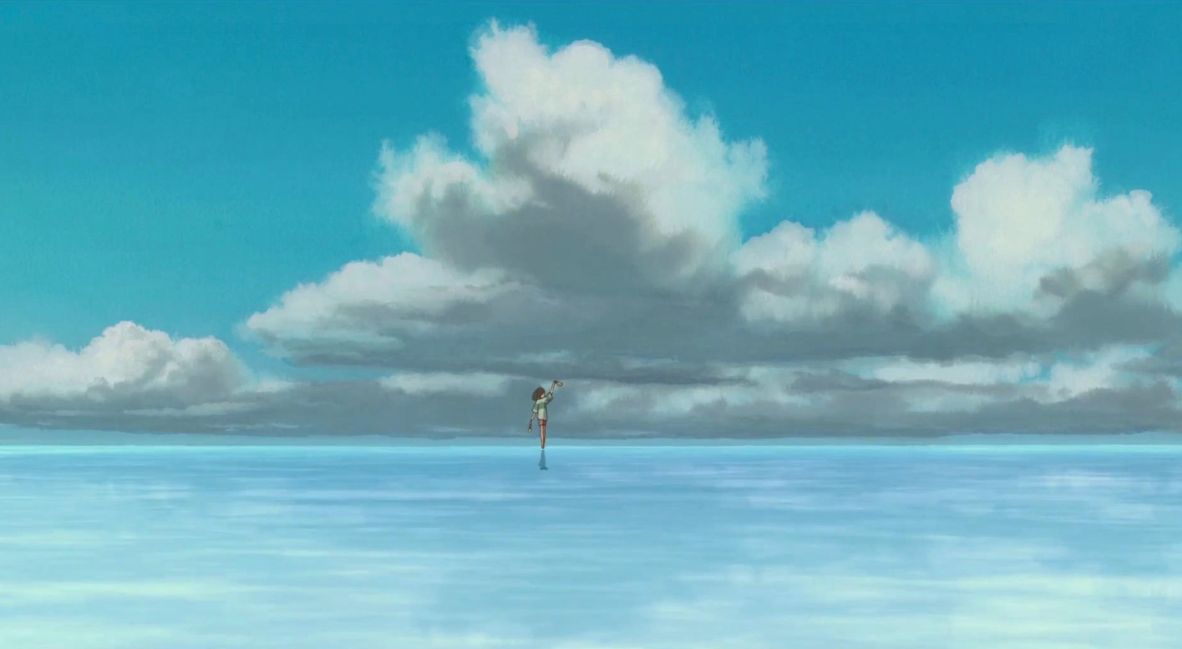
But while all of the visuals in Spirited Away dazzle, the single greatest element that takes the breath away whenever it is present is the film’s use of motion. There is a feeling of momentum and weight in every swift movement in the story. Whether soaring through the air on a dragon, or being pulled through corridors by magic, there is a feeling of force and momentum in this film’s movement that is rarely accomplished, but adds so much to its most riveting sequences.
Combing with all of the film’s narrative and visual elements is a soundtrack that perfectly accompanies every tonal shift and narrative beat. From its stunning main theme, “One Summer’s Day,” to the quietist bit of background music from composer Joe Hisaishi, every note and tune accentuates the onscreen events with uncanny precision. This is one of those movies you could watch without dialogue and still fully appreciate the emotional tone and sheer sense of scope and wonder.
Spirited Away delivers a phenomenal story that is grounded at its center and grandiose in its presentation. It fuses the relatable with the unimaginable in a holistic way that allows all it does to flow beautifully together, crafting an astounding story that has inspired fans for a quarter-century, and is likely to continue doing so for decades to come.
Spirited Away is available now to stream on HBO Max and returns to theaters October 2026.