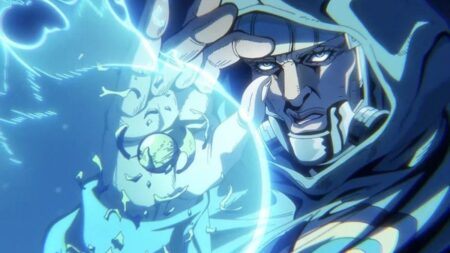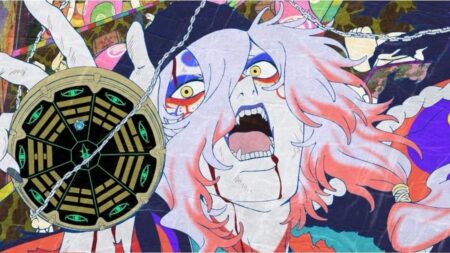


After waiting nearly two years for BLEACH: Thousand-Year Blood War to return, Thousand-Year Blood War Episode 41, “GOD OF THUNDER,” wastes absolutely no time reminding us why this continues to be one of anime’s greatest comeback stories. The final cour of the final arc has arrived; the battlefields are covered in bodies, and our Final Big Bad Yhwach (Takayuki Sugô / Richard Epcar) is no longer quite the same Quincy King we left behind.
The episode opens with an unsettling, foreshadowing glimpse into Yhwach’s dream before launching into an impressive continuous shot that sweeps across the various remaining battles. It’s a fantastic way to begin the end. There is no lengthy recap or unnecessary hand-holding to reorient audiences. Bleach simply drops us back into the middle of the war and knows fans will keep up.
The continued expansion of Uryu Ishida (Noriaki Sugiyama / Steve Prince) and Jugram Haschwalth’s (Yûichirô Umehara / Robbie Daymond) confrontation is a true highlight. This was already one of the areas where BLEACH: Thousand-Year Blood War needed more from its adaptation, and the anime continues to demonstrate that it isn’t simply checking boxes from Tite Kubo’s manga. Brand new sequences and additional character material have been giving this fight in particular considerably more weight.
After a 2-year wait, Thousand-Year Blood War Episode 41 doesn’t let you down.
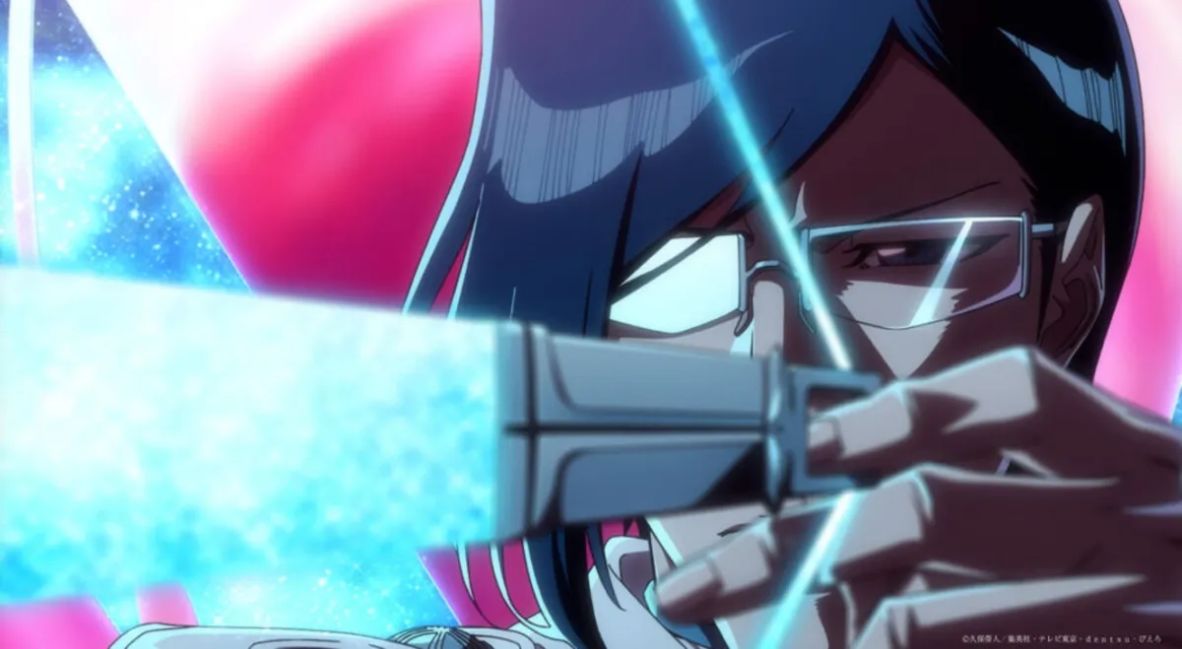
Haschwalth feels terrifyingly villainous here. There is an almost effortless quality to the way he handles Uryu, and the anime granting him a new eerie form only makes his overwhelming power more apparent. The anime continuing to be given the freedom to flesh out portions of this final arc – and these final fights especially that never had the opportunity to breathe in the original manga – proves to pay off over and over again.
The episode’s title comes from Yoruichi’s (Satsuki Yukino / Wendee Lee) ongoing battle with Askin Nakk Le Vaar (Shunsuke Takeuchi / Daman Mills), and it’s exactly the kind of stylish spectacle that makes Bleach so much fun. Yoruichi has always been one of Kubo’s coolest characters, and watching her unleash her Thunder God form thanks to the arrival of Kisuke Urahara (Shin’ichirô Miki / Doug Erholtz) is every bit as entertaining as longtime fans could have hoped – for better or worse.
The transformation is bizarrely crude and completely badass all at once, which, to its credit, can be oddly appropriate for a character who has always balanced overwhelming power with an enormous, albeit fanservice-y, personality.
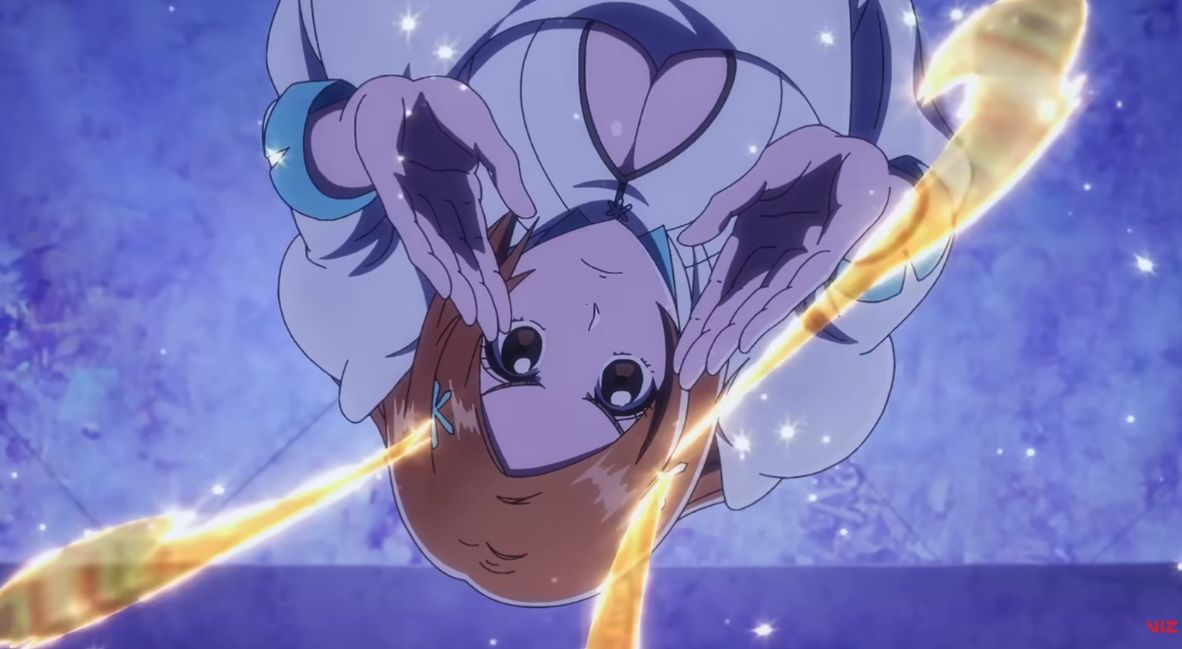
If “GOD OF THUNDER” reminded us how much fun BLEACH can be, “SON OF DARKNESS” starts reminding us just how terrifying this final battle is meant to be.
After all these years, BLEACH finally gives us yet another moment fans have been waiting for, and Kannonbiraki Benihime Aratame is every bit as strange and unsettling as a Urahara’s Bankai should be. The reveal itself is fantastic, but what really makes it work is how much the anime allows us to see Urahara actually use it.
Expanding on its all-too-brief appearance in the manga, this episode turns his Bankai into a genuinely inventive part of the fight, with its enormous puppet form allowing Urahara to restructure and manipulate whatever it touches while even using the seams of his Bankai to glide around the battlefield like a rollercoaster. It makes the entire fight feel like Urahara is finally allowed to stop holding back.

Of course, Askin is still as crafty as ever, and even Urahara’s Bankai isn’t enough to make this a straightforward victory. The battle ultimately becomes a desperate team effort, with Urahara creating an opening for none other than Grimmjow to deliver the finishing blow.
It is a wonderfully underhanded way for the fight to end, which feels completely appropriate for the constant schemer that is Urahara. And yet, the fight’s final moments don’t feel like a triumphant victory so much as a narrow escape that comes with a very ominous asterisk. After everything these characters have just survived, BLEACH refuses to let anyone breathe.
Meanwhile, Ichigo (Masakazu Morita / Johnny Yong Bosch) and Orihime (Yuki Matsuoka / Stephanie Sheh) stand side by side marching toward the strongest enemy they have and will ever face. I appreciate that the often mocked simultaneous offscreen battle between Chad and Ganju against random statues is indeed something that

Chad himself refers to as “unglamorous grunt work”. It feels like a solid acknowledgement of the underappreciated work that Chad, who by all accounts went from main cast member to discarded side character, has actually put in throughout the series.
“SON OF DARKNESS” may not have the same immediate crowd-pleasing fireworks as its predecessor, but the pieces are moving into place for the true final few episodes of the iconic anime, and the sense of hurtling towards impending doom or spectacular glory has never been stronger.
Then, there is Episode 43. It’s pretty surreal watching Ichigo Kurosaki enter what may be the final battle of his story after two decades of BLEACH. “BLOOD FOR MY BONE” hammers home the significance of that moment, and it never loses sight of what has always made Ichigo such a compelling protagonist: no matter how powerful he becomes, he’s still just a kid trying to protect the people he loves.

His fight against Yhwach is spectacular, but Orihime is rightfully the real star of the episode. Her presence here is immensely important. After spending so much of the series trying helplessly to protect her friends from the sidelines, watching her truly fight alongside Ichigo in this final confrontation feels like a culmination of everything the character has been through. She isn’t simply there to heal everyone after the fight. She’s an active part of it.
Watching her stand between an injured Ichigo and an almost godlike Yhwach is one of the most exciting and satisfying moments of Thousand-Year Blood War. Orihime isn’t suddenly transformed into an unstoppable warrior, either.
Her strength comes from her determination to protect Ichigo and reject Ywach’s unstoppable advance, and the anime gives her room to demonstrate just how powerful her abilities can be when she refuses to back down. Shiro Sagisu’s score is, once again, an extreme highlight, especially during this triumphant moment.
The arrival of Ichigo’s Horn of Salvation form at the end of the episode is also the kind of moment that BLEACH has been building toward for years, and the animation gives it the full treatment. But beneath all the spectacle is a much more unsettling revelation (or, for manga readers, clarification) concerning Ichibei’s (Naomi Kusumi / Aaron LaPlante) true motives concerning Ichigo and the future of the Soul Society.
As the premiere of the final BLEACH: Thousand-Year Blood War Cour, we’re reminded of the series’ impact.

The finale of this story isn’t simply about defeating Yhwach anymore. The fate of every world is tied to what happens next, and the possibility that Ichigo may be forced into a role he would never want or ask for adds another layer of tragedy to the conclusion.
These first three episodes of BLEACH’s final cour is a fantastic reminder of why BLEACH has endured and returned in as grand of a fashion as it has. It can deliver jaw-dropping transformations and impossibly powerful attacks while still grounding everything in characters we’ve spent years caring about.
Visually, BLEACH remains spectacular. The animation is stunning and fluid, the choreography is inventive and exciting, and Shiro Sagisu’s score continues to make every major moment feel enormous and operatic. Somehow, after all these years and countless imaginative battles across various worlds, it still feels like BLEACH has a few surprises left.
BLEACH: Thousand-Year Blood War is streaming now on Hulu and Disney+ with new episodes every Sunday.
BLEACH: Thousand-Year Blood War Episodes 41-43
-
Rating - 8/108/10
TL;DR
These first three episodes of BLEACH’s final cour is a fantastic reminder of why BLEACH has endured and returned in as grand of a fashion as it has.