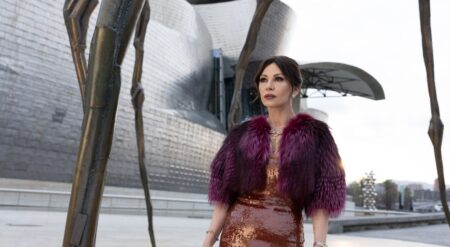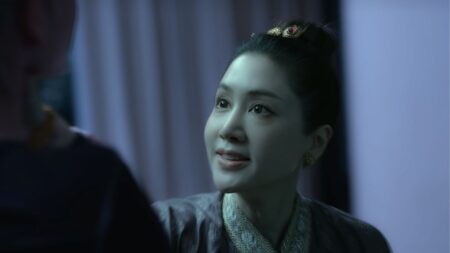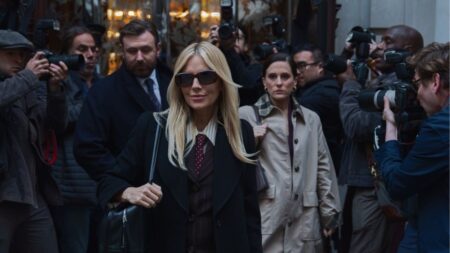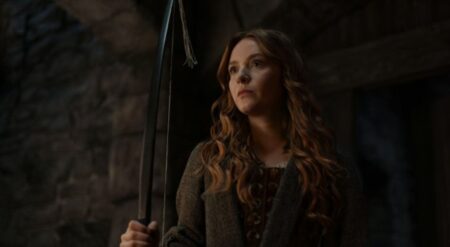


It is rare for me to hate something in the first episode, and even then, there is usually something redeemable by Episode 4 or 5. But then Prime Video released Elle: From the World of Legally Blonde, a middling attempt at a YA dramady and a vapid mess of a Legally Blonde prequel.
Everything about Legally Blonde, the cultural touchstone that taught us all to bend and snap, was about pushing the audience to understand that people are more than the first impression and that women do not need to erase their femininity to be capable and intelligent. And if you were a tomboy like me when it first released, she also taught you that maybe pink isn’t something you need to hate.
In the original film, Elle is the definition of a woman who is the smartest person in the room; only, she doesn’t fit the mostly sexist understanding of what that smartest person can look like. She talks like a valley girl, decks herself out in pink and bedazzled gems, and sees the world so deeply that it makes her a fantastic lawyer.
Decked out in pink, Elle forgets everything that made the titular character an icon.
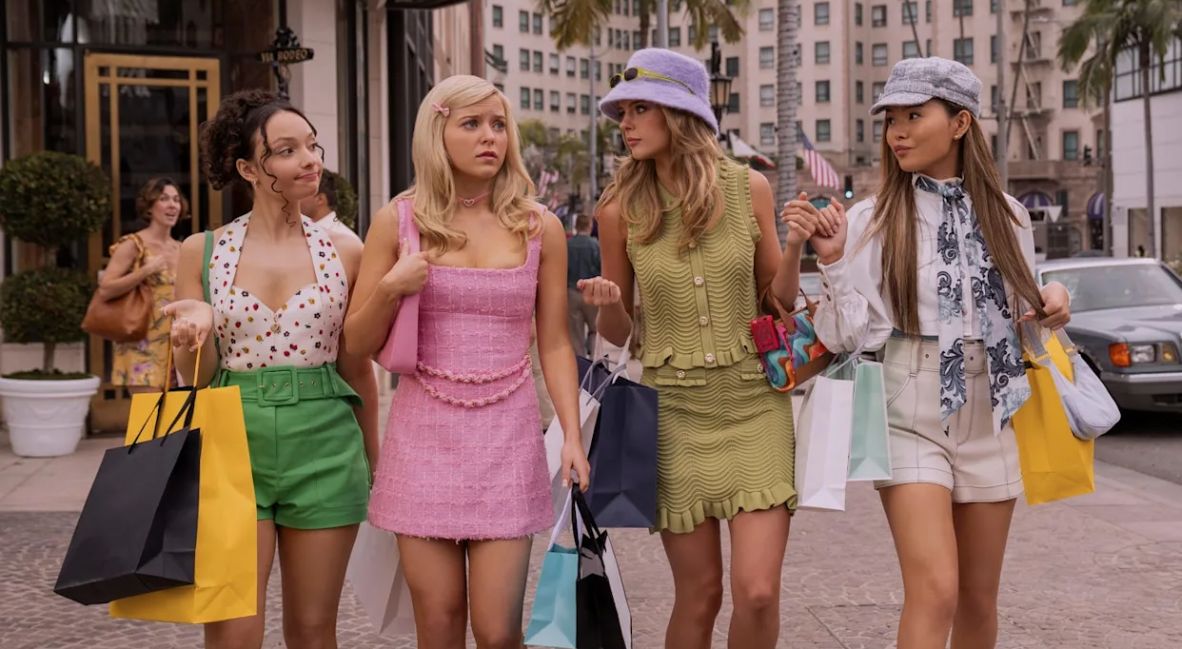
One would think that the streamer had learned a lesson from its abysmal remake of Cruel Intentions (which was already a remake of a century-old French novel). You would think that if Prime Video had to keep mining millennial nostalgia for more content, they would have done so by speaking to our current age with Elle Woods as an adult. That seems like kicking a ball into an empty net. Essentially, every girl, now woman, who loved Elle and what she stood for would tune in for 10 episodes of the now veteran attorney in the courtroom.
Instead, the titular series is a prequel to Legally Blonde that lacks the nuance, charm, and snark of its source material. Deeply designed for today’s television generation, subtext isn’t a thing here. ’90s jokes are overexplained, and, ultimately, everything about every character is deeply surface-level. Elle, both the show and the character, is coated in a thick girlypop lacquer that does enough to entice, with nothing underneath once you sand it off in the hopes of finding something endearing to latch onto.
Somehow, this Prime Video Original makes it easy to hate every character, whether it’s for their choices, dialogue, or costumes that are a deeply out-of-touch take on ’90s fashion. After one episode, the series was hard to drag myself through, catering to a WASP viewer who finds Elle’s exploration of Nirvana as edgy.
A bad 90s time capsule and a worst version of Clueless.
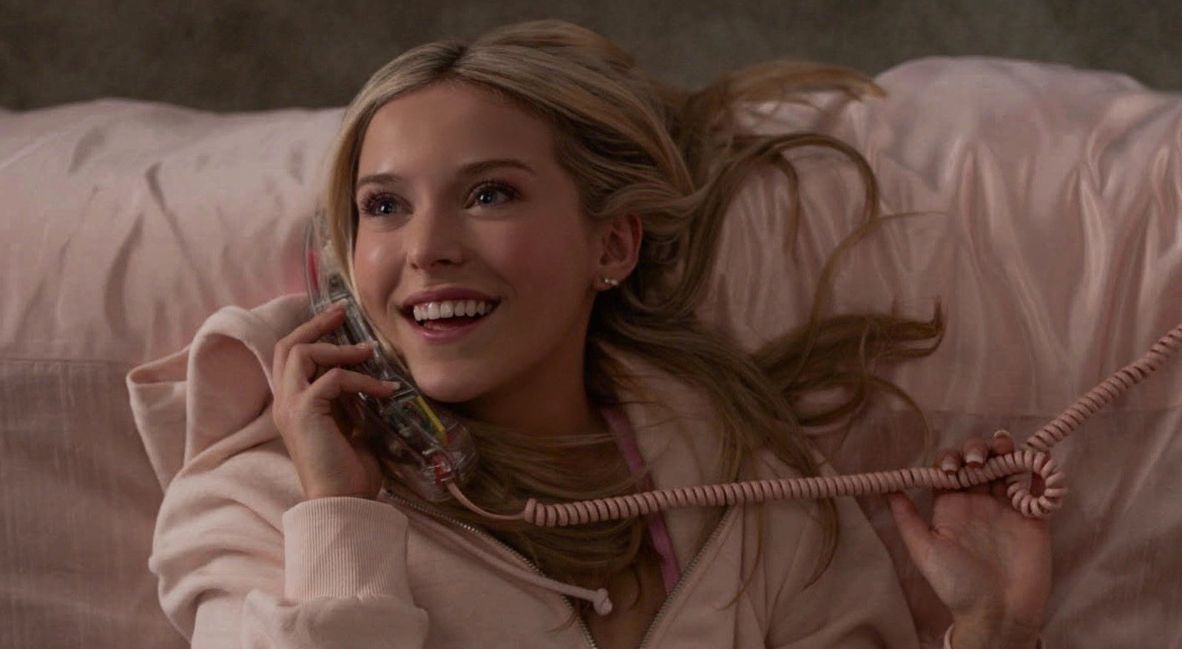
More importantly, my primary issues with Elle Woods’ exploration of self in Seattle, surrounded by grunge-loving teens, are how much it both vilifies the non-white characters at the school and the alt-culture in general. In one of the early episodes, Elle falls into a mosh pit, and no one but the guy she is crushing on helps her. Not to mention the series casts a diverse ensemble, only for them to become props in its “rich people have feelings too” agenda.
The reason this is an issue is that, despite the surface-level aggression you see, mosh pits are kind. Drop your glasses? A big guy will yell “glasses” and clear space for you to grab them. If someone falls, there are others to take care of them.
As much as this is a series about blasting through stereotypes, the writing tries to flip the mean girls script and turn grunge into the main culture of the school, and in doing so deals in all of the negative assumptions about grunge, goth, or generally alt style in a way that shows it’s no different than what the series’ message is critiquing.
This Elle Woods is selfish, and everyone has a valid reason to hate her.
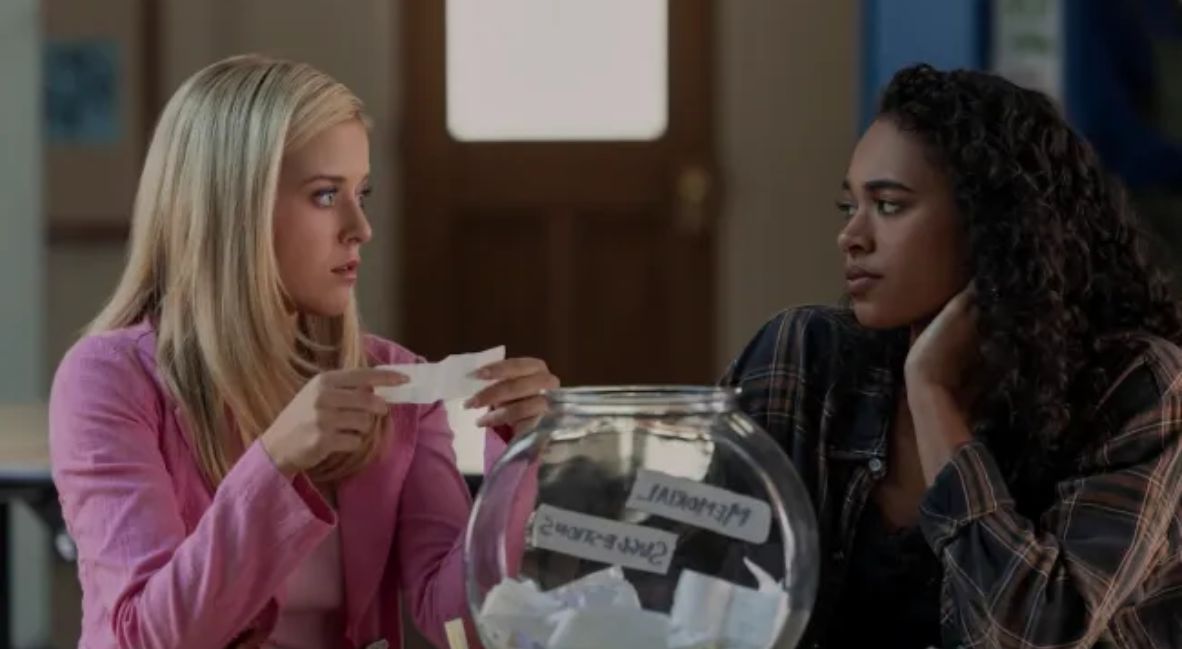
On top of that, Elle is a rich white girl from Los Angeles, and it’s the non-white middle-class students who are the bullies. Add in the fact that Elle’s primary issues for being bullied are getting the school’s favorite employee, who helped pay for students’ lunches when they couldn’t afford them, fired and having a crush on the boyfriend of the only person open to wanting to be friends with her.
Additionally, Elle doesn’t know anything about the city she is in, the way that students who aren’t rich act, and ultimately, there isn’t a single moment where Elle doesn’t turn something she is doing into something to help herself. The series’s class and racial dynamics could be explored, especially since Elle’s privilege does come up. Instead, the series actually aims for colorblind narrative-building that doesn’t fit the moment.
Oddly enough, the Prime Video Original uses racism and other-isms to speak to audiences today. There are enough throwaway lines and one-liners that call out the small acts of racism that just exist in the world, like a mascot called the Chiefs, but never engage with what Elle’s family brings to the school. What the series does point out are moments right for social media posts. It all paints a neoliberal vision of who had a hard time in high school.
Elle is on Prime Video, asking its audience to consider that rich people have feelings too.
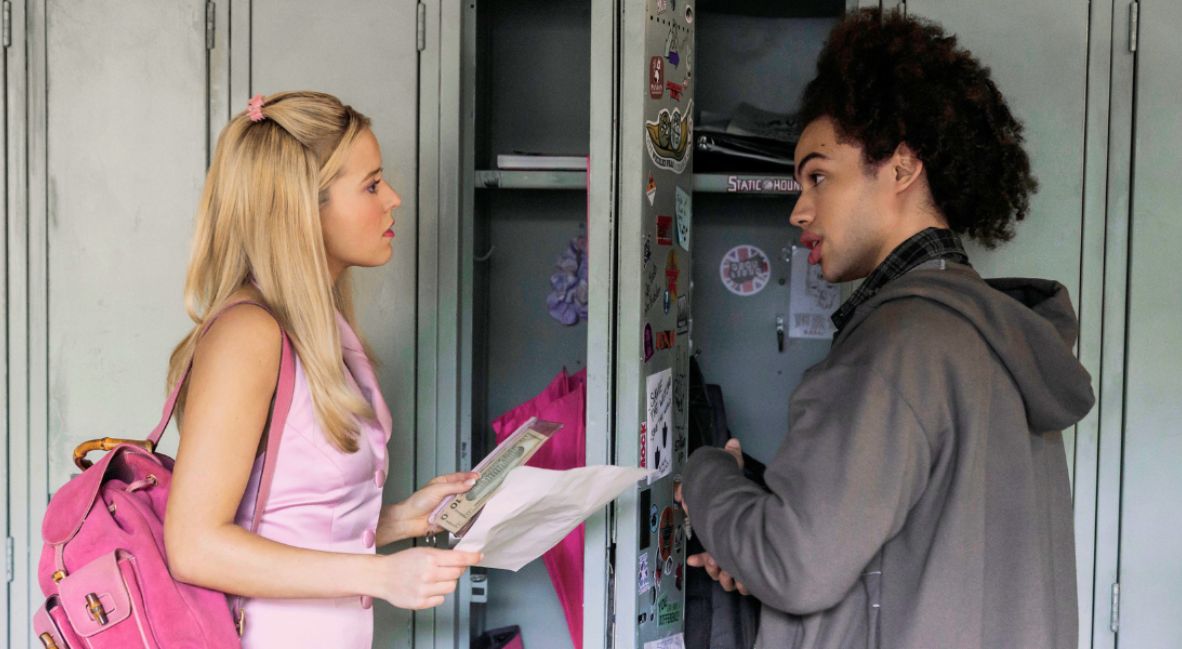
The only times it gets close to exploring any depth are when we see Elle and her mother disagree. Elle’s worries about life in Seattle are dismissed; her mother expects perfection, and ultimately, you understand why Elle is so superficial. But it doesn’t make for a better experience.
Additionally, in shielding Elle from all of the reasons that she makes others uncomfortable, whether it’s her mother who equates a nose job to discrimination or Elle’s Pollyanna attitude and refusal to accept her own mistakes, everything about this situation just feels awkward.
Here, a fish-out-of-water story is about a rich girl trying to fit in with more down-to-earth people, with superficial elements of life shown as needing space to thrive. Whether it’s characters being treated like they’re bad for not wanting a nose job or people asking for beer as a sin, it all just feels like forced elements that don’t make sense.
Elle’s growth isn’t about teaching others that she has value despite the superficial things she may love; it’s about Liz teaching her not to care. And that doesn’t have anywhere near the same power as the character’s original intent when Legally Blonde was released. Instead, this feels like a stab at reaching for Clueless love without understanding why that film itself became a cult classic. In fact, much of the character interactions and fashion nods hint at Clueless’ impact on the kind of story being told, but it lacks any and all heart or self-reflection.
There is nothing endearing about a character who refuses to make things not about herself.
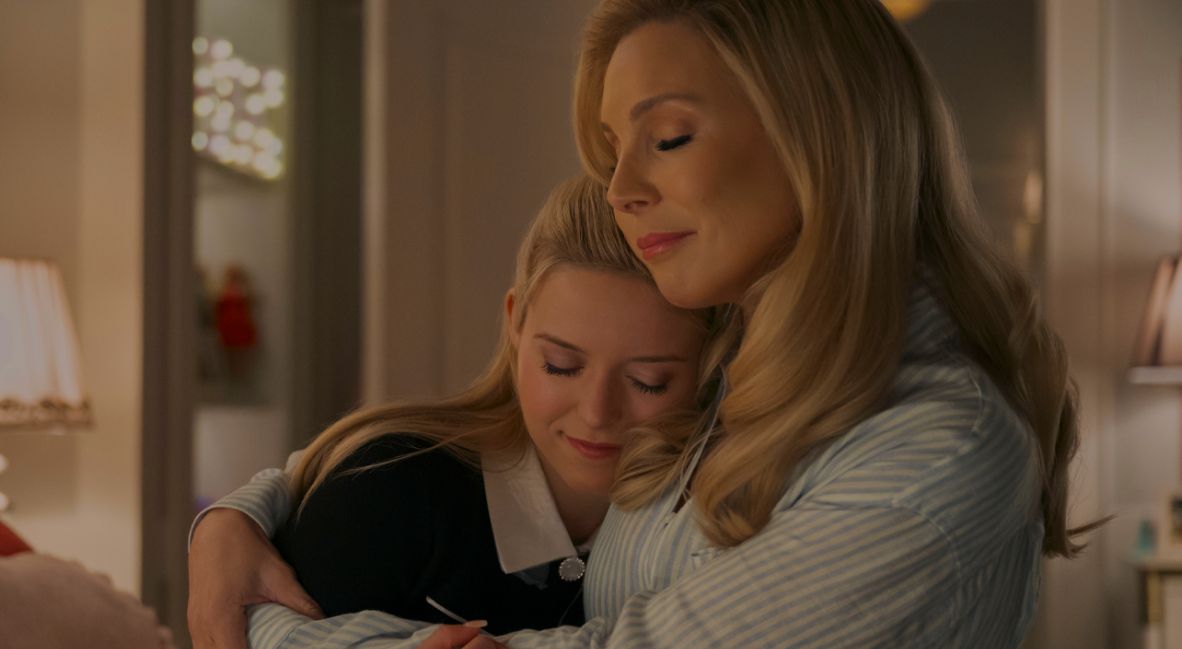
While the elements of race can and are sidestepped, the issues of class really can’t. From mother to daughter, both Woods women repeatedly flaunt wealth and name-drop, and while they learn to accommodate people outside their class bracket, they lack a real understanding of why flaunting their wealth is the problem to begin with. The series does allow both women to start leaving space for others and find connections, but the self-reflection is more “I should love who I am as I am,” not “Why do I keep making others feel uncomfortable?”
All of this makes the interactions between Elle and her bullies rarely make sense, and all roads lead back to: rich people, they’re just like you. Which, in this current climate, simply doesn’t make sense. Additionally, when Elle does get close to people like Shannon, Liz, or even Dustin, she does so on her terms and with deep worry about whether people like her or not. While she does begin to like herself, she is still highly dependent on other people.
Not only is this a hollow view of the ’90s, but it’s also a hollow understanding of how people interact. Because of that, there is nothing endearing here. It assumes that the community can only be made the way Elle decides to make it, and bends the other characters around her without making her confront the discomfort she brings.
The series could have been just fine on its own, but it’s not; it’s an abysmal Legally Blonde prequel instead.
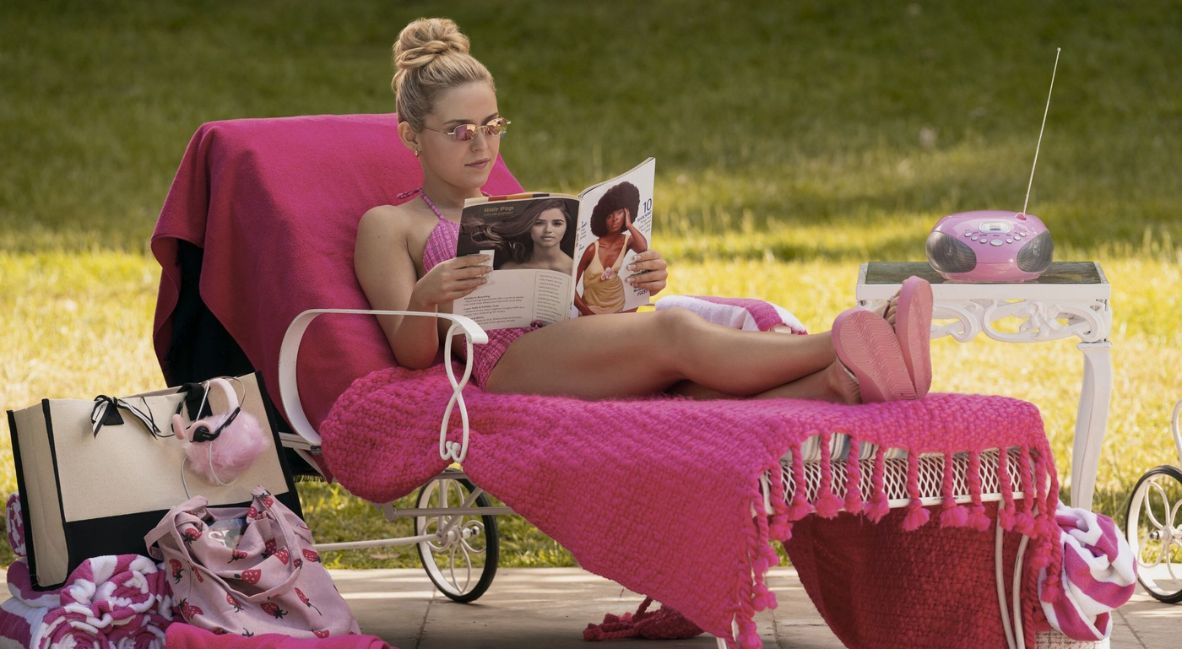
Worse, Elle’s detachment from those around her makes her so self-absorbed that everything she does feels like an empty gesture to herself. It’s a shame, since the original film told audiences that Elle was sincere, intelligent, and genuinely cared about others. Here, all of Elle’s kindness serves as a veneer for a self-absorbed girl. Everything she does is because she wants to feel better, and nothing really shows how much she wants to actually help people without getting something in return.
This Prime Video prequel is fine if you decouple it from Legally Blonde. The YA dramady is not bad in and of itself. Sure, it would be better if it moved the time period to one that the generation they’re reaching out to actually understands, rather than badly representing the 90s with just a few TV show catchphrases and landlines that are always conveniently accessible.
But it never can. This is an Elle Woods story, and that is the series’s biggest weakness. It’s a story “From the World of Legally Blonde,” and it’s a bad one at that, with some studio executive looking at the things we loved 20 years ago and stripping them of any depth or meaning to give the masses another braindead take on an IP.
Elle is streaming now, exclusively on Prime Video.
Elle Season 1
-
Rating - 4/104/10
TL;DR
It’s a story “From the World of Legally Blonde,” and it’s a bad one at that, with some studio executive looking at the things we loved 20 years ago and stripping them of any depth or meaning to give the masses another braindead take on an IP.