


Notes from the Last Row (Maen kkeutjul sonyeon) is one of those series that sneaks up on you. Based on the Spanish play El chico de la última fila by Juan Mayorga, with a screenplay written by Jang Myung-woo and directed by Kim Gyu-tae (The Trunk), this slowburn thriller takes its time to unravel, blurring the foundations of reality as a professor becomes hooked on his student’s writing. With each twist and turn of the story, questions begin to arise. How much of what we’re seeing is real, and what is actually just the product of a wild imagination?
At the center of it all is Professor Heo Mun-oh (Choi Min-sik), a university professor and failed novelist. The adage of ‘if you can’t write, then teach’ comes to mind, and at the start of Notes from the Last Row, he is disillusioned by his life, having long since abandoned writing after receiving criticism over his debut novel 20 years prior. He holds disdain for his students, none of whom care about taking his elective writing course. That is, until the paper of one of his students, Lee Kang (Choi Hyun-wook), catches his eye.
For the most part, Lee Kang is seemingly unimpressive. Quiet and unassuming, he flies under the radar. His words, however, are vibrant. His turn of phrase and ability to paint a scene are absolutely captivating to the professor, who has grown so accustomed to mediocrity that Lee Kang easily stands out as a diamond in the rough to Mun-oh. And so, Mun-oh offers to mentor the student and will not take no for an answer, going so far as to offer the student money to supplement the time missed from his part-time jobs.
Choi Min-sik does it again in Notes from the Last Row, crafting a complicated author riddled with insecurity.
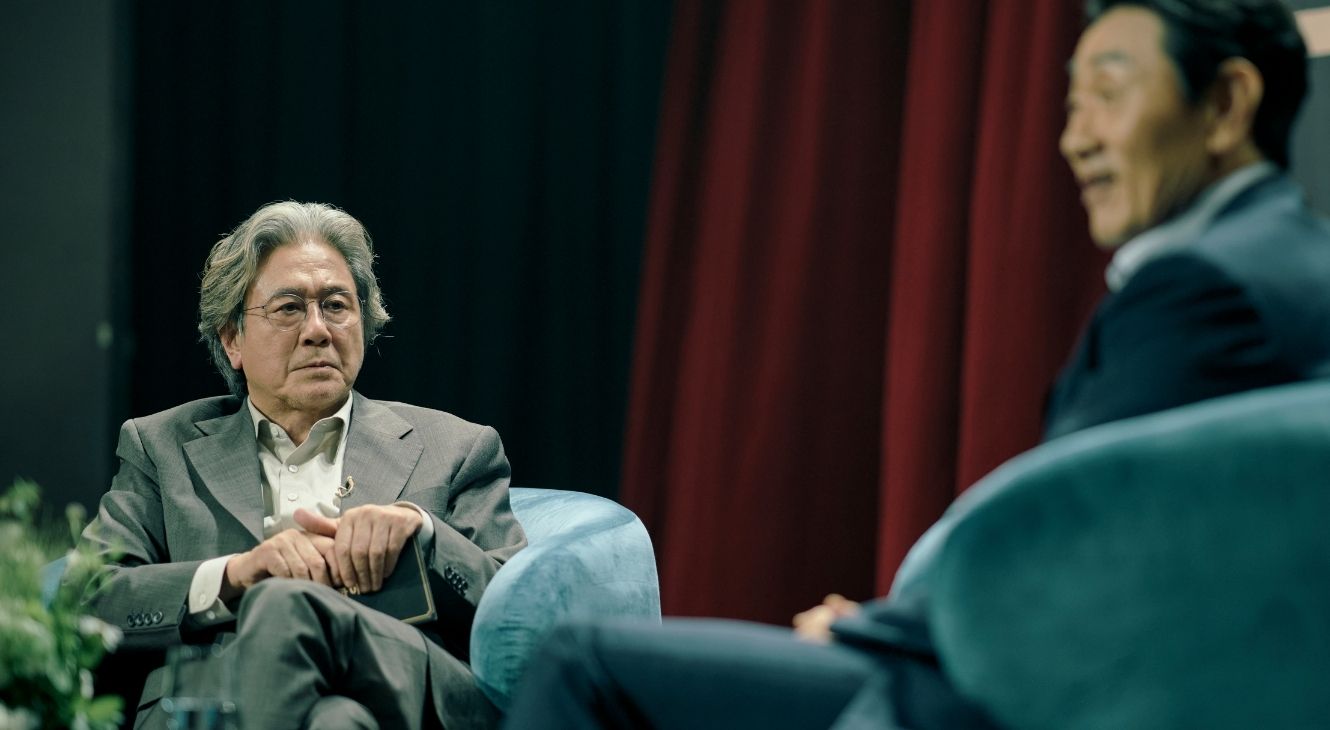
From the beginning of Notes from the Last Row, you never know where the story will take you. Choi Min-sik imbues Mun-oh with a blend of self-importance, insecurity, and bitterness, making him the ideal protagonist for a tragedy or a triumph. As Lee Kang’s assignments flesh out a different sort of reality, Min-sik plucks the threads of his character’s sanity with such devotion that it’s easy to question if what we are experiencing is actually happening or all part of a bigger picture scenario.
This also makes it all the more understandable that, as Notes from the Last Row progresses, Lee Kang mostly disappears as a character. He becomes a vehicle for Mun-oh to project his desires onto, leading to an erasure of self in the process. By the time the series reaches its conclusion, the quiet subtlety in which Choi Hyun-wook plays Lee Kang comes to a head, revealing not only Mun-oh’s remaining deficiencies as a person but also proving the saying ‘it’s always the quiet ones‘ right once more.
Through Mun-oh and Lee Kang’s relationship, Notes from the Last Row opens conversations about the narratives we weave in our daily lives. Each person has their own truth and perception of events, making each and every one an unreliable narrator by default. Mun-oh ‘s advice to Lee Kang helps blend fiction with reality and also opens pathways for viewers to see how easily they can project their wants and desires onto creative works. It is a warning that if we take these projections too far, evolving them into life-shattering obsessions with devastating consequences.
The pivots in the story’s perspectives help blur the lines of the reality we experience in Notes from the Last Row.
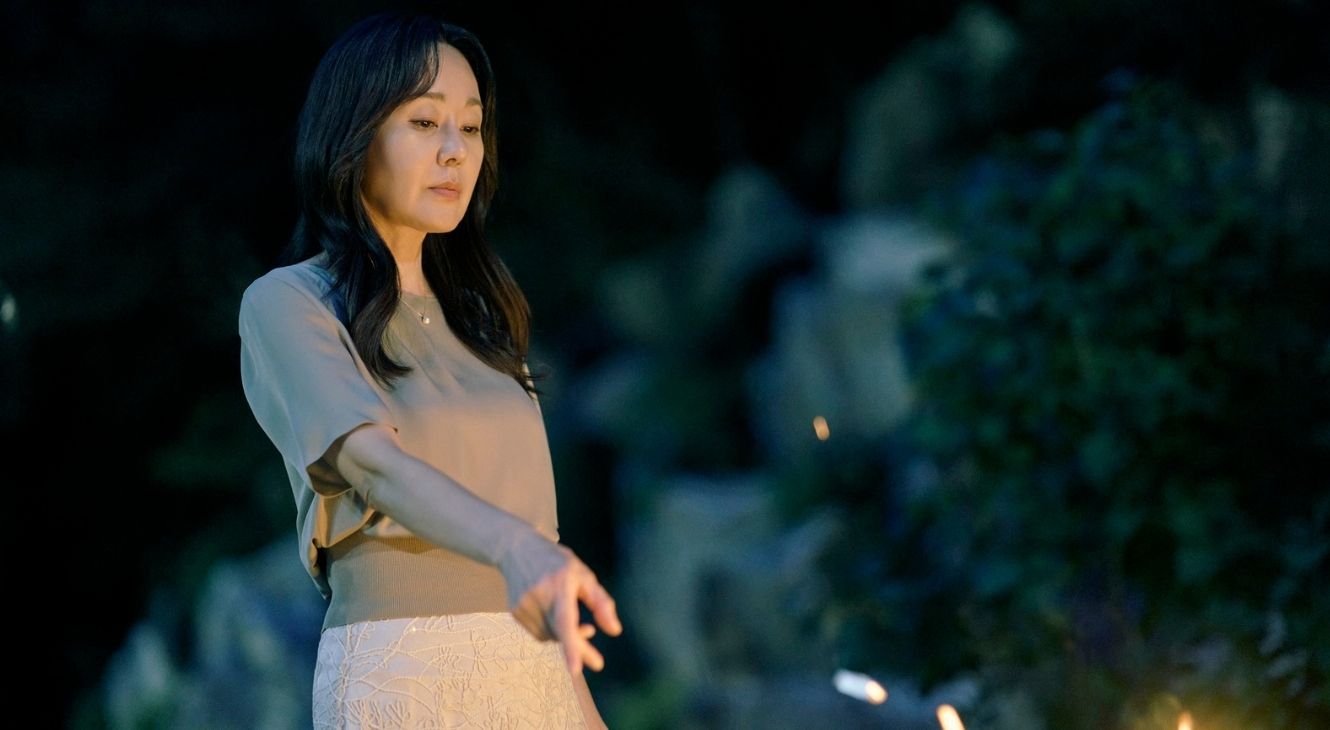
This is most true in how the other characters in this six-episode tableau move throughout the story. As the story’s perspectives shift to different characters, their motivations take centerstage, with the underlying cause rooted in some variation of obsession.
Whether it’s uncovering infidelity or theft, or rooting through the remains of potential loss, each has its part to play, and the ensemble plays its respective parts with aplomb. That is, until the shifts in narratives begin to fall apart by the end of the series.
One example of this falling apart comes in the conclusion of Jo Hyeon-suk’s (Jin Kyung) journey in Notes from the Last Row. With the story constantly shifting and twisting to serve the narrative at hand, Hyeon-suk ends up pushed to the periphery, usually by her husband. It’s no surprise, seeing how her journey then concludes. However, the convenience with which it comes across in the service of the overarching final twist leaves little to be desired and requires a surprising amount of suspension of disbelief to swallow.
The ending of Notes from the Last Row struggles with a final hour info dump.

Arguably, the weakest episode may be the last, and it mostly has to do with the final act exposition to fill in the blanks. With so much emphasis placed on Min-sik’s perspective, which undoubtedly makes his arc equal parts satisfying and bittersweet, the final hour explanation for Lee Kang’s motivation felt just that.
If more had been peppered in throughout the series to shape things out, there might not have been the need to dump it all in the end. However, without any sort of explanation, the final moments wouldn’t be so chilling.
From its many twists and turns to the astounding character study delivered by Choi Min-sik, Notes from the Last Row is a slowburn ride that will leave you guessing until the end. While the ending wobbles under the strain of closing explainers, there’s no doubt that what we’ve witnessed is a chilling masterclass in manipulation and obsession. With Mun-oh standing in as the perfect harbinger for this warning, it’s a simmering thriller to add to your watchlist.
Notes from the Last Row is streaming now, exclusively on Netflix.
Notes from the Last Row
-
Rating - 8.5/108.5/10
TL;DR
From its many twists and turns to the astounding character study delivered by Choi Min-sik, Notes from the Last Row is a slowburn ride that will leave you guessing until the end.