Dandelion (2026), produced by Naz, follows Misaki (Megumi Han, Oshi No Ko) and Tetsuo (Chikahiro Kobayashi, Megalo Box), Angels in the Dandelion Squad of the Send-Off Department of the Afterlife, who are tasked with helping Earthbound spirits move on. But when the powers that be demand greater efficiency from their department, the pair find themselves caught in a tug-of-war between humanity and productivity.
When one first stumbles into the ridiculous world this show presents, you quickly think you know what you are in for. Goofy characters, paired with often even goofier scenarios, create zany misadventures in the hopes that you will laugh at them. And you would be right about that, until you aren’t.
The first several entries in Dandelion establish the laid-back attitudes of its star characters and their approach towards their work with a light-hearted touch. The slapstick humor that permeates these early stories can bring a chuckle or two, but it never finds true laughter.
It takes a moment for Dandelion to successfully balance heart with silly antics.
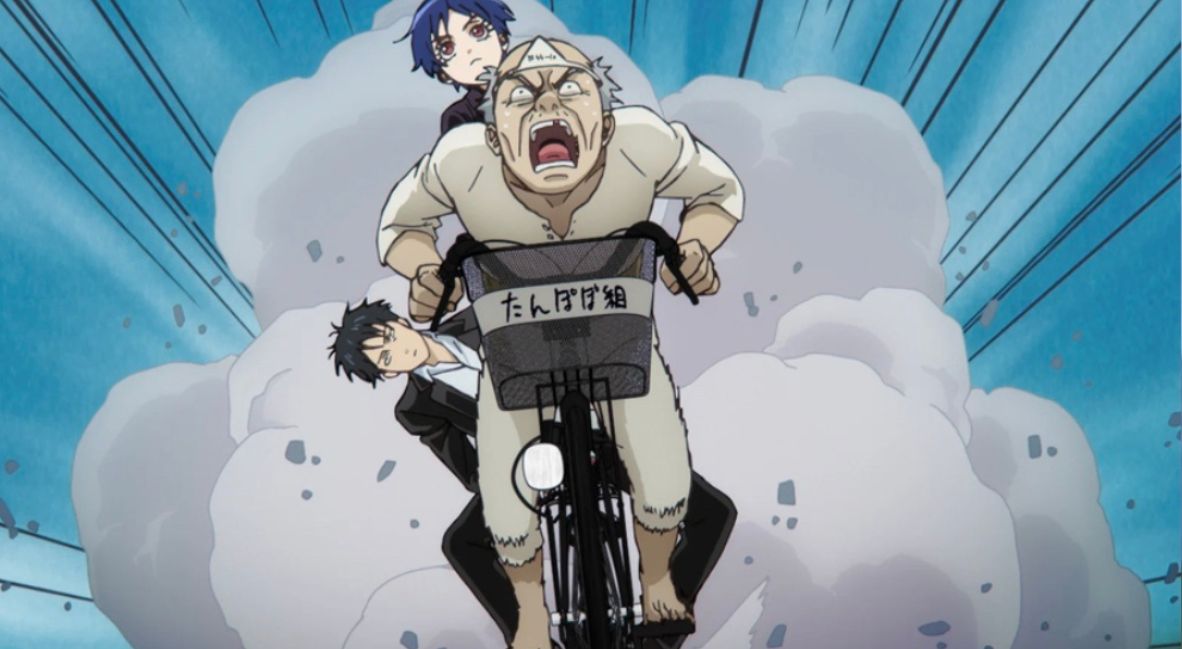
Along with the silly escapades, the show also tries to bring some heart in its early entries, with similar results. Several of the spirits the group encounters share sad backstories that never feel truly engaging. The divide between humor and heartache gets blurred far too frequently in the early episodes to manage a truly impactful landing. Except for one instance.
When Dandelion sets its sights on the young Misaki and her backstory, we get the only early hint of just how strong the writing can get. Her relationship with both Tetsuo and her mother crafts a delicate story that pulls at the heart, while also bringing an uplifting moment of closure for the character. It even delivers a bit of world-building, as elements of the show’s final arc are set up in these flashbacks.
While much of the heart of the early entries flounders when first viewed, they find greater significance in the later episodes. How these moments interact with later plot elements brings them more purpose, even if their implementation still falters a bit.
The Netflix series isn’t afraid of tackling heavier topics.

The change that takes place between episodes five and six is one of the more drastic tonal turns I’ve seen recently in anime. The final pair of stories dives headlong into a deeper plot about dignity, humanity, and what happens when both are made secondary to concepts like productivity and efficiency.
The commentary on late-stage capitalism and AI is clear and resounding. It shows how even seemingly helpful measures can be used to devalue humanity and compassion in the name of proficiency.
Layered into this deep examination is a story about generational trauma. A recent addition to the Dandelion Squad, Masaki (Mamoru Miyano, Clevatess), has been added to the team by his disapproving father to bring them up to standards. Misaki, abandoned and unwanted by the only parental figure he has left, is desperate for his father’s approval. This desperation takes the man in a tragic direction.
The animation in Dandelion is fine but far from exceptional.

Despite the relatively brief time Dandelion has to explore Masaki, the series does a great job of bringing the character’s trauma to life. His attempts to succeed, his fall from grace, and his redemption in the end hit each key note skillfully, allowing the character to feel fleshed out and culminating in a well-earned conclusion.
While the narrative eventually delivers something memorable, the visuals never manage to excel. While functionally fine, they fail to help bring the whole story together in any meaningful way. Though they never actively hurt it either.
Dandelion falters in some key areas, most notably its humor, but eventually finds its feet. The final pair of episodes is worth the journey, paying off some rough spots along the way with a memorable final arc that hits hard and speaks loudly with its messaging.
Dandelion is streaming now on Netflix.
Dandelion Season 1
-
Rating - 6/106/10
TL;DR
Dandelion falters in some key areas, most notably its humor, but eventually finds its feet.