Heavenly Delusion Season 1 refuses to suffer fools. Despite its tonal dissonance which ranges from morbid science fiction, grotesque body horror, to buddy comedy, the series retains a dense narrative throughline. Based on the manga written and illustrated by Masakazu Ishiguro, and written and directed by Hirotaka Mori, the series tugs on the thread of post-apocalyptic existentialism but refuses to wallow in it. Told in two opposing stories each with different characters who share different motivations, Heavenly Delusion revels in its grandiose visuals and a mountain of intrigue that refuses to handhold the viewers as we make our way through the plot’s murky waters.
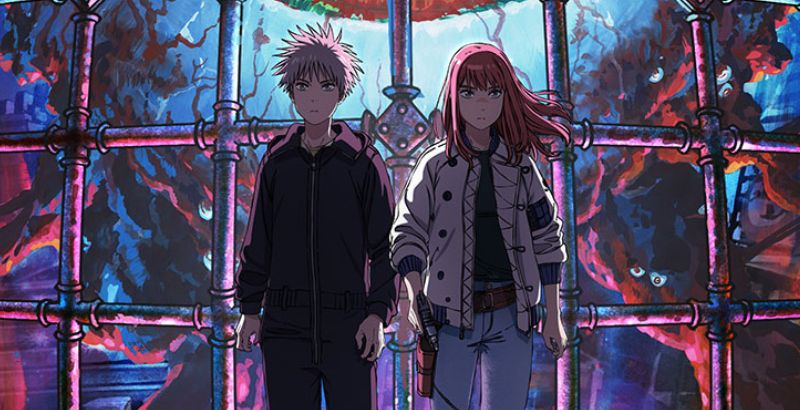
The two parts present themselves as simple enough. A 15-year-old boy, Maru, is being escorted across an apocalyptic Japan, with a mysterious woman, Kiriko, acting as his bodyguard. Their goal is to seek out paradise — heaven — where they’ll be safer from the man-eating monsters that roam the world beyond the guarded Tokyo.
The other half of the series focuses on a group of children born and raised in a high-tech facility removed and isolated from the outside world — a world, in which, the director of the school calls Hell. Tokio, a teenager who has been raised to know nothing about the outside world, gender, romance, and more, leading to dire consequences, begins seeking answers after her friend shares an odd premonition.
Only 15 years have passed since the disaster that wiped out modern civilization, meaning that while Maru has grown up in the real world, he’s never known what pre-devastated Japan looks like. It, along with him and Tokio sharing the same face, and the way we can’t trust anything we see within the walls of the facility, enrich the series as we’re seemingly always a constant step behind, trying to make sense of all the pieces of mystery left to untangle.
Halfway through the season, as yet another layer has been added, another monstrous act witnessed, and as the two plots continue to thread between themselves, confusing timelines and points of view, it becomes clear the best bet is to simply stop guessing. The mystery is no doubt intriguing and made more so as the writer asks viewers to decide for themselves which side is heaven, but it’s the journey there that makes it one of the stand-out series of the season.
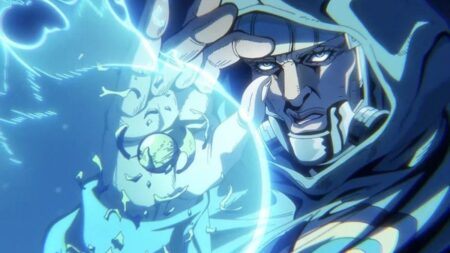
Production I.G. (Haikyu!, the upcoming Kaiju No.8) knocks it out of the park, assembling top-notch artists with an eye for textured landscapes that work in traditional and modern anime frameworks, and kinetic action sequences which possess a level of grounding realism. For instance, each punch connects, and each kick bruises. In the finale, our protagonist Maru hauls a man who has hurt someone close to him and corners him, his face deadpan, as he watches him scramble to find an exit.
The scene is deceptive in simplicity, but each time the man tries to run past Maru, he’s able to grab him by the scruff of the neck and throw him back, escalating the tension as we know this is a predator toying with his prey, trying to make him feel as powerless as Maru’s friend must’ve, and in doing so capture the snap and pull of him grabbing him each time. We feel the release as Maru tosses him back and we anticipate the violence that sits hovering at the ends of his fingertips.
The plot is considerably more muddled in the “heaven” where Tokio roams. The pristine architecture and aesthetic that leans heavily into sterile science fiction with the starch uniforms and clinical color palette make it so the moment of stomach-churning violence is all the more potent. These children have been so coddled from the world in a sense — though certainly not saved from the abuses inflicted on adults who believe they know better — that even pain is controlled.
Meaning, that when that pain tolerance is pushed, it’s done so in ways that curdle. The violence is no less shocking in Maru and Kiriko’s world, but there’s something deliberately insidious about the Tokio sections considering it’s meant to be what the outside world aspires to achieve.
One of the main themes of the series explores the characters and their appalling lack of bodily autonomy, as critical decisions are made without their consent, often being played off as being for their good. From a teenager giving birth and having her baby taken from her with no prior knowledge of sex or gender, to a brother’s brain being sewn into the body of his sister, to a woman being slowly immobilized over time, attached to wires, with her body torn apart to prolong an unhappy life due to the selfish love of her husband, people are seen as items to be used for the sake of some unmentioned greater good — they’re parts to be salvaged.
This aspect, more than the monsters who can cause physical and mental destruction, is what delivers the greatest, most profound sense of horror into a series dripping with it. As always, and something often explored in science fiction, it’s humans who are our greatest enemy. The greatest achievements made by any of these characters are the ones made when they find another person they can full-heartedly trust.
This is why Maru and Kiriko’s storyline — still often riddled with pain and suffering — allows for greater levity. They truly get along and enjoy one another’s company. They’re able to offer one another comfort by employing actual physical protection, laughter, or perspectives that challenge the others.
Heavenly Delusion Season 1 excels in combining dense storylines with astonishing visuals.
The major flaw of the show is an unnecessary scene depicting sexual assault in episode 11, something the series could’ve and should’ve done away with. The world was already so grim, and the people who surround our protagonists were already worthy of skepticism and distrust that there was no need to add this extra element.
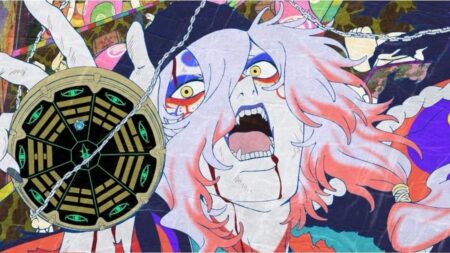
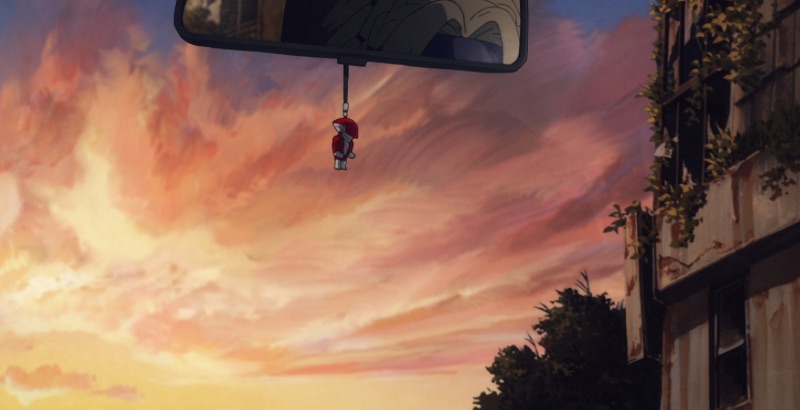
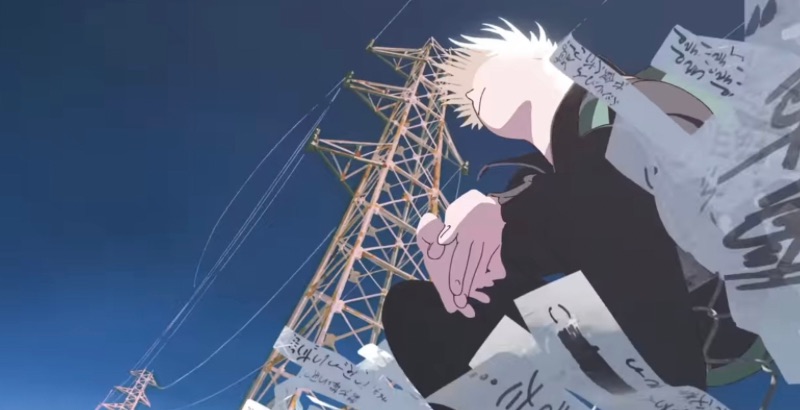
Aside from this sour note, Heavenly Delusion Season 1 excels in combining dense storylines with astonishing visuals. The unusual character design aids in the action that hits with weight and impact, and the contrast of the two against the watercolor, blended aesthetic of the rural backgrounds and decimated cityscapes create an eerie distinctiveness to the series. The lively direction that plays with screen ratios, perspectives, and lighting, energizes the series and gives it palpable color and personality.
The opening directed and storyboarded by Weilin Zhang captures the adrenaline rush-infused retrospection of the series. The characters in the opening and molded by their motions, capturing Maru’s ability to kill maneaters and Kiriko’s battle of selves as the camera captures her mid-run, her two selves literally pulling apart at the seams before rejoining again into someone whole.
The music by composer Kensuke Ushio (A Silent Voice, Devilman Crybaby) is another crucial component, crafting an atmosphere of unease that also manages to draw on the showrunner’s reverence for Akira. Something is startling and unnerving within the beauty of the score.
Heavenly Delusion Season 1, from the opening notes of BiSH’s OP to the introductions of our main characters, the continued exploration of a society’s fallout in response to worldwide annihilation, produces unnerving, invigorating, and stylized frames of superb animation. Possessing some of the finest animation of the year so far, Heavenly Delusion manages to deliver on a familiar premise with something delightfully, horrifyingly, new.
Heavenly Delusion Season 1 is available now on Hulu.
Heavenly Delusion Season 1
-
Rating - 8.5/108.5/10
TL;DR
Heavenly Delusion Season 1, from the opening notes of BiSH’s OP to the introductions of our main characters, the continued exploration of a society’s fallout in response to worldwide annihilation, produces unnerving, invigorating, and stylized frames of superb animation.