

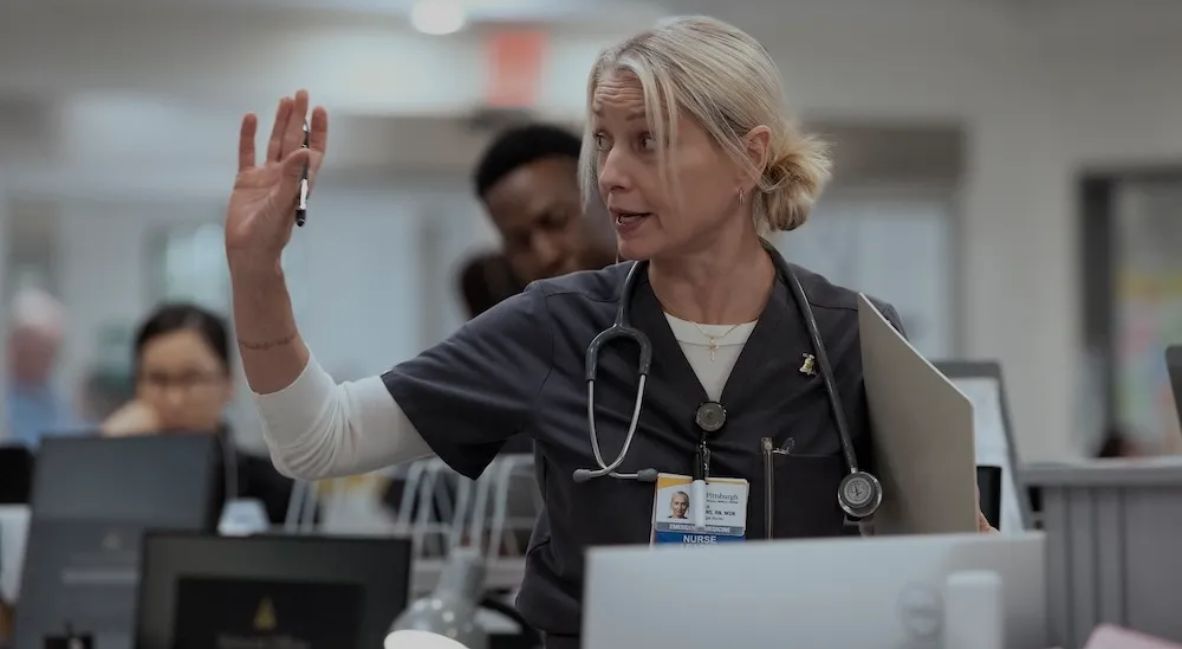
I really try not to be someone who believes that a television show alone can move the needle. But HBO’s The Pitt Season 2 has been making me double-think that stance.
The Pitt Season 1, audiences were taken into the heart of a mass-casualty event and given a holistic look at what happens in such situations. It explained why you wait for so long to know if your loved one is safe, the fear the doctors and nurses work through on the floor, and it also captured the intricacies of the choices medical staff have to make to save the many.
I spent most of my childhood in hospitals. Whether it was my grandmother or brother, the sterile halls of hospitals were home, and that all came down to the nurses. The Pitt has already been lauded for its accurate representation of medicine, and as the series has continued, it’s doubled down on showcasing the heart of a hospital: the nurses.
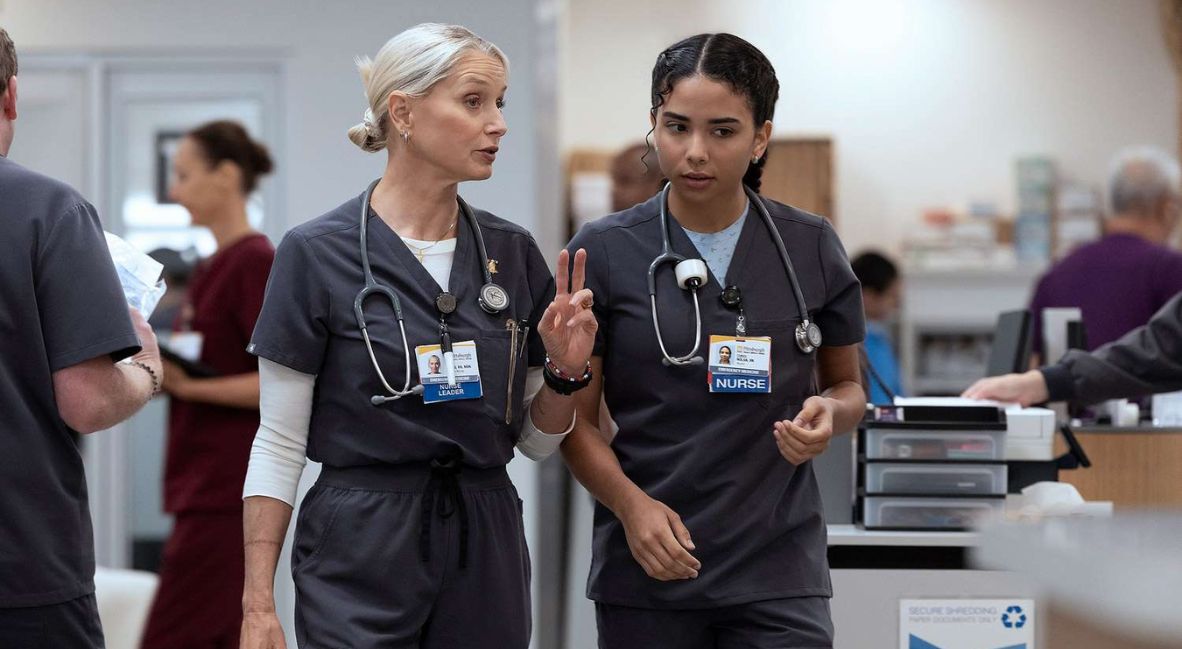
While Season 1 tightly focused on the students and attendees, The Pitt Season 2 hands the spotlight to the nurses. When an ER-regular, Louie (Ernest Harden Jr.), dies, we see Dana (Katherine LaNasa) walk the new nurse, Emma (Laetitia Hollard), through the process of preparing a body.
The nurses are the best representation of the small acts that make an ER whole.
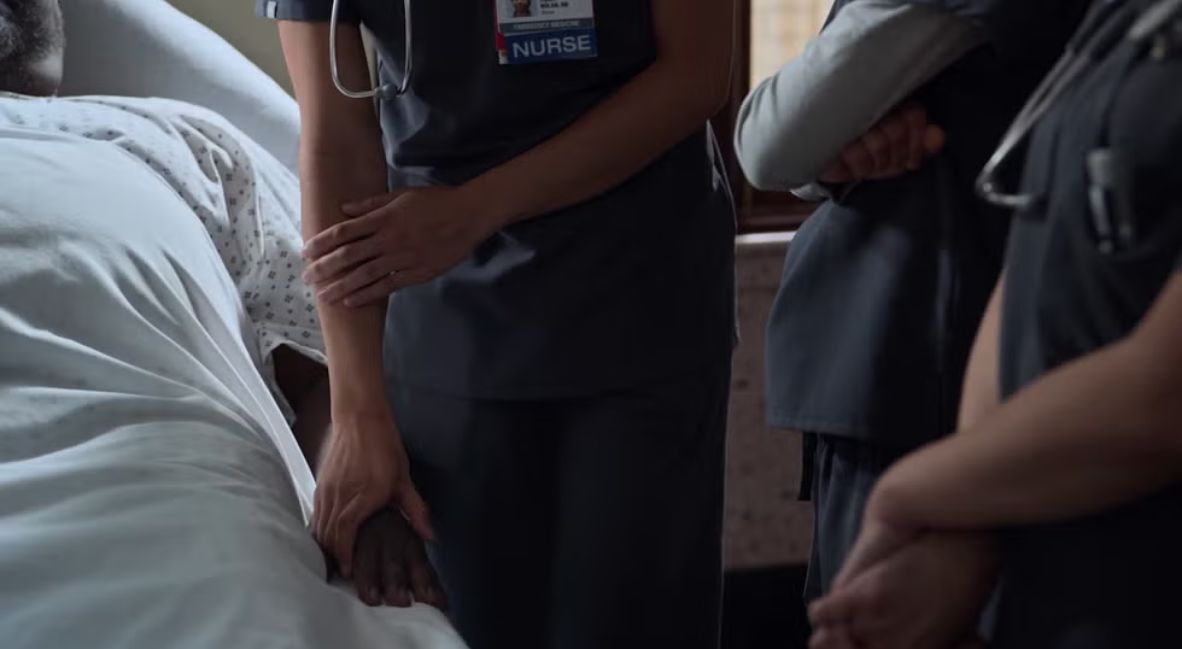
This isn’t some voyeuristic look at death in a hospital, but a respectful microscope that shows how nurses are trained to restore the dignity of a patient as they prepare them for friends and family to say their goodbyes. Tenderness flows throughout the nursing staff of The Pitt, even when their outward demeanor is not about mincing words, and they’re not afraid to question Attendees.
Dana’s status as the Charge Nurse puts her in charge, and throughout both seasons of the series, she is an immovable object, even in the face of violence. However, what she is teaching Emma is compassion and respect for every patient, especially when doctors are not providing it. The Pitt Season 2 is doing good work; it’s teaching the audience compassion while Dana teaches Emma.
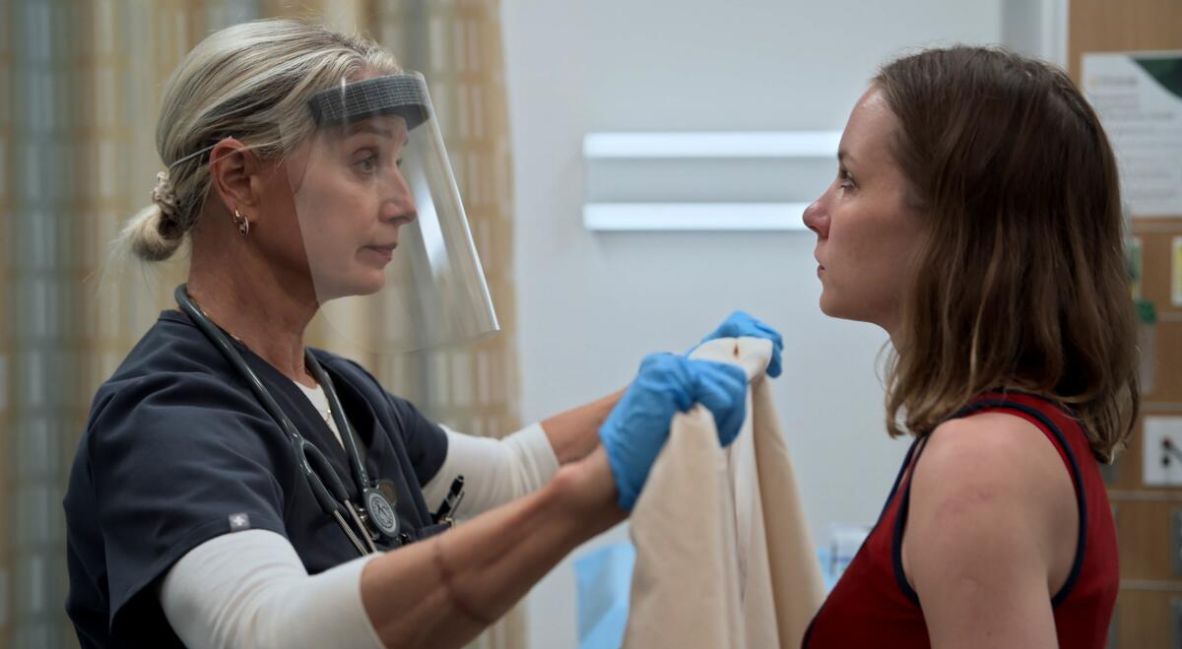
The Pitt Season 2 goes one step further when it brings audiences behind the closed doors of a rape kit. Over the course of a few episodes, we see Dana and Emma help a woman on the worst day of her life. But more importantly, we see, for the first time on television, just how retraumatizing and how long the process of agreeing to a rape kit is.
While other shows have shown pieces of it, often montaging the survivor undressing and their injuries being photographed, The Pitt Season 2, shows everything. It shows how humiliating it can feel to the survivor, and it sets the expectations that it isn’t a quick two-minute montage but an hour-long process that requires a nurse to give her patient the agency that was taken from her. And how hard that is to do.
Rape is an underreported crime. It’s also one that is hard to have a court even pursue. And much of that comes from the survivors being too scared to come forward, to have their bodies in the hands of someone else to complete a rape kit, and even more, the lack of police processing.
It’s this last element that The Pitt Season 2 uses to cap off the section of the season. Dana and Emma have done everything right. They’ve been compassionate, and they’ve taken as much time as their patient has needed. And for the patient, she’s chosen to stay, even after trying to leave.
But when Dana goes to put the rape kit into the locker needed to maintain the integrity of the evidence, she’s pissed. A rape kit is sitting there, and it has been for weeks, despite the need to pick them up within 72-hours of completion. It’s a stark reminder of reality and how little the police think of arresting rapists.
The Pitt Season 2 won’t directly change medicine or the police. But its audience can. The series shows audiences what happens, their rights, and educates them about situations they may not understand or know how to navigate. This is particularly true when it comes to something wide-reaching as the completion of rape kits. If the spotlight can make more survivors feel comfortable with having one completed or can help them process that trauma by knowing what to expect, then it’s clear that The Pitt is doing good.
The Pitt Season 2 shows compassion for people on the worst days of their lives, and the series doesn’t shy away from even the harder aspects.
This is why it’s important to remember that it isn’t the job of television to teach us something, and going into media with that expectation can be a fool’s errand. Moreso, by assigning good and bad to characters, much like the fandom has tried to do, we lose the topic at hand.
And if a show can escape the call of a “a very special episode” to put in all of its messaging in one go, there is something special about that. You can do good without meaning to, but somewhere in the choices that the show makes, I do think it’s the hope.
Without a score and without melodrama, The Pitt is confronting the reality of an emergency room, but more importantly, our fears about them. Sometimes, they show the reality behind that fear, like when ICE enters the ER and detains a nurse who attempted to protect his patient. We see it when a deaf patient can’t get assistance because of a lack of translators.
But knowledge is power, and understanding that our fears can be real while also giving us heroes in the form of nurses and doctors who want to help us navigate them is actively helping make the healthcare system more manageable. It’s not the representation that matters in The Pitt, it’s the reality it’s putting on screen and asking its audience to understand, and the knowledge it’s giving us about our own healthcare that we can use on the worst day of our lives.