
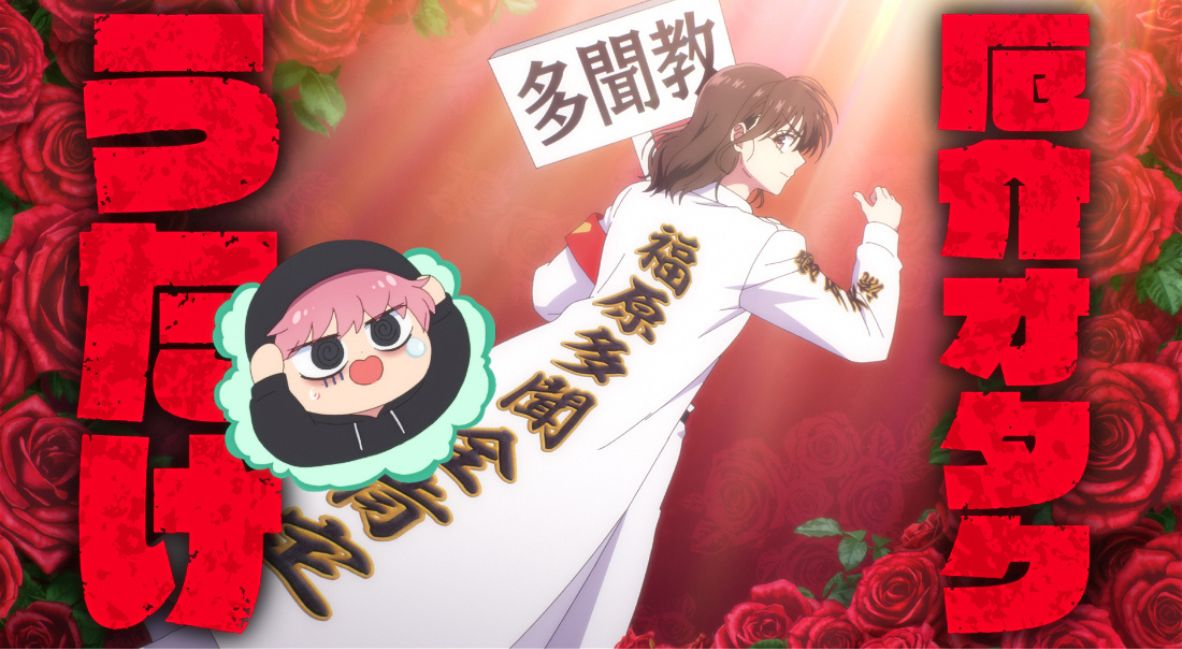
Tamon’s B-Side Season 1 is the perfect entry point for the current bliss that is our shojo anime renaissance. Written and illustrated by Yuki Shiwasu and adapted by J.C. Staff, the quality of the production is clear from Episode 1, with an influx of colorful characters, staticky, textured animation, and a sly silliness that both undercuts some of the more heightened moments while establishing a specific tone and energy of its own.
Romance is alive and well in the world of Tamon’s B-Side. Or, at the very least, 16-year-old Utage Kinoshita’s (Saori Hayami) undying adoration for her oshi (fan-favorite), the idol Tamon Fukuhara (Kakeru Hatano), burns bright. Tamon is a member of the increasingly popular idol group F/ACE, and Utage does everything in her might to shower her idol with love and affection from afar. From her room adorned with placards of his face to pilgrimages to where his journey first began and concerts to support him, she is a committed fangirl.
And, as a fangirl, she needs funds. It’s when she’s working as a housekeeper to save money to purchase more merchandise and tickets that she, unbeknownst to her, finds herself working as the housekeeper for Tamon. But Tamon’s offstage demeanor is very different from his onstage persona. While his idol appearances paint him as a hot, confident center who sweeps any fan off their feet, the reality is that he’s an anxiety-ridden 18-year-old whose insecurities dictate his every thought.
Tamon’s B-Side Season 1 will charm you immediately.
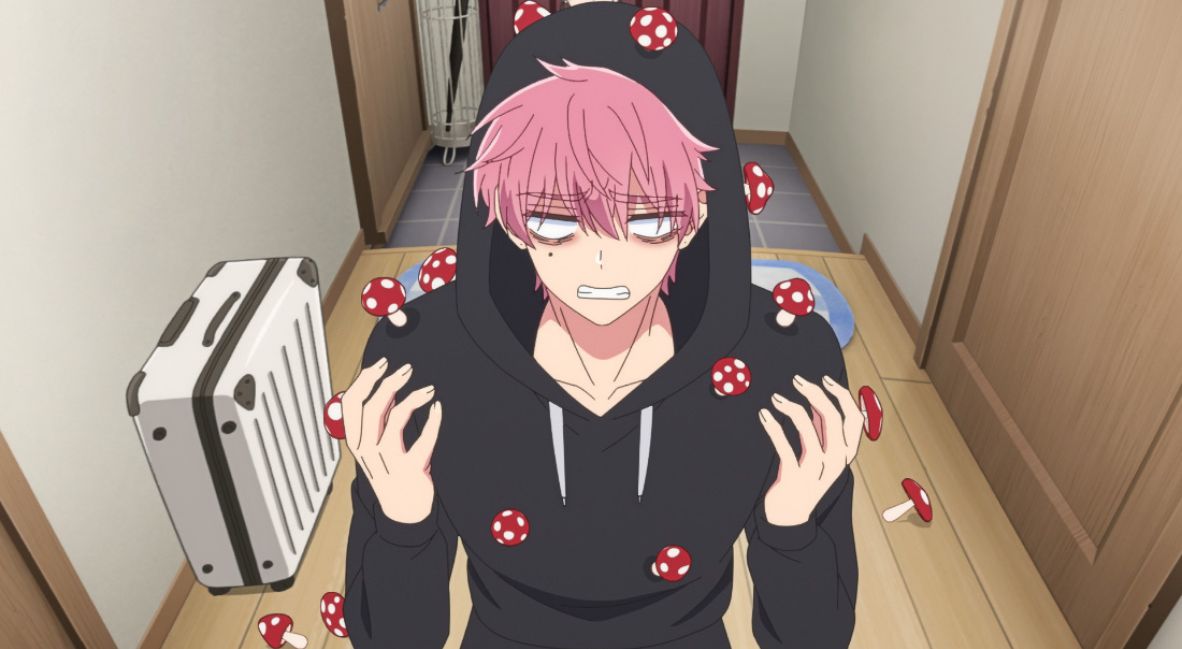
While little time needs to pass before the charm of Tamon’s B-Side Season 1 is evident, it’s strengthened by the introduction of the real Tamon, soon to be dubbed “Gloomyhara.” And not just because this twist opens up greater potential for hilarity as his and Utage’s dynamic shifts. More than anything, it shines a light on the elasticity of the production where each character (aside from Utage’s reliable, steadfast personality) is drawn with different intentions—different shapes—based on what version of themselves they currently are.
And with Tamon, so much of that is rendered in a near-constant slouch. The mushrooms that line his apartment and sprout from his body and head when he’s in his deeper depressive spirals are a funny detail, especially as they seem actually to exist in the corporeal world (one of the best gags involves Utage having to bag them all up post-breakdowns). Still, it’s the character design that is truly inspired. The difference in how he presents himself as an idol and as Gloomyhara shifts the character’s look and understanding without any stark differences.
Instead, his faux-confidence pulls him taut, and when he lets go of that persona, his whole body slips into a mental slump, manifesting physically too. So many of his interactions with Utage involve him being nearly eye level because of his inability to keep his posture. It might seem like a minor detail, but given how much of the series focuses on how these exact shifts in details reveal the true personalities behind the idols, they add up to a significant component.
There’s more to the band than meets the eye.
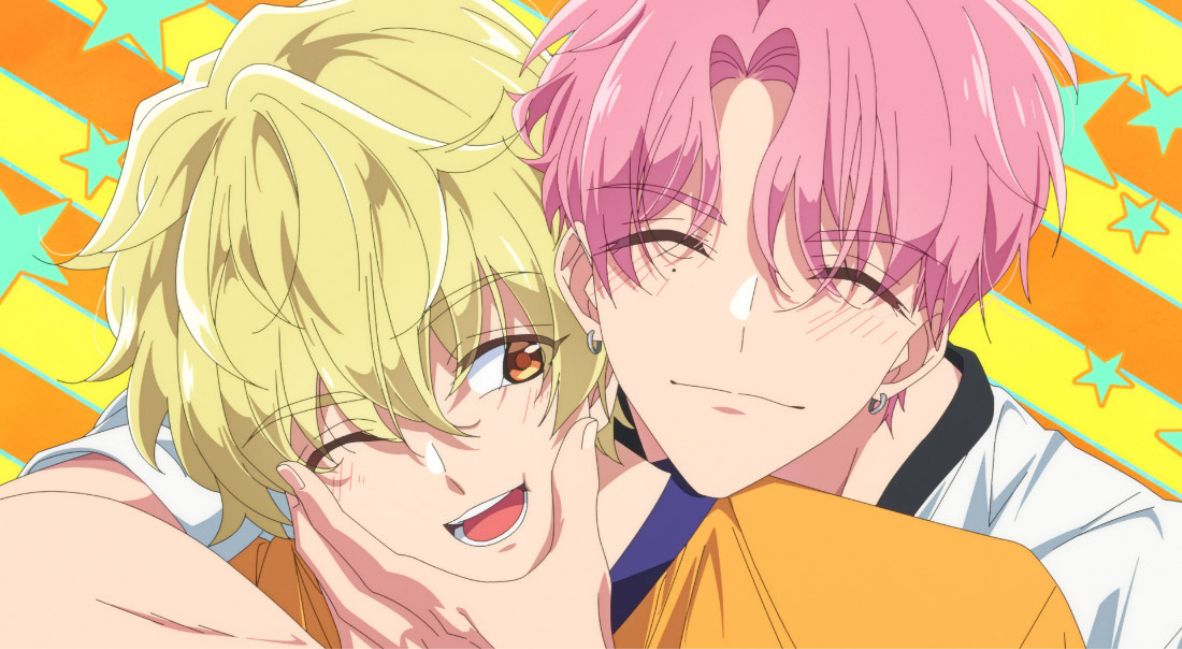
As Utage begins to work for Tamon, she learns the truth about the band, its inner workings, and how none of them is as she expected. From Ori (Shōya Chiba), the youngest, exhibiting boorish behavior that acts against his princely facade, to the eldest, Keito (Tasuku Hatanaka), being money-conscious and cheap, and skeptical of their fans, in contrast to his kindly and protective image. But it’s the sweet-faced Natsuki (Kōhei Amasaki) who mines some of the biggest laughs, as we learn that the “cute” member is also a habitual smoker who drinks too much and has baggage with an estranged ex.
None of the five members is who they appear to be on the surface, and that’s part of the series’ genuine cleverness. Tamon’s B-Side gets to have fun at the expense of idol culture without it being at the expense of the fans who build them up. It would be so easy to have the fangirls be the punchline (as they so often are, because god forbid women enjoy anything), but instead, the series treads in different waters. More than anything, it’s about looking at the pageantry that comes with being an idol and the severity of the expectations to fit into very specific, highly curated boxes.
Where the series finds humor in the fangirl experience is through Utage as she wrestles with what it means to work for Tamon while also being a fan and, much to her distress, a friend. Someone who appreciates his gloomy side, where he struggles to take care of himself as much as his sparkly, idol persona. Some of the funniest moments are when she lays into Tamon for being mean to Tamon. She is the ultimate cheerleader, ready and armed to go to bat against anyone who has anything negative to say about her oshi, even if it’s the man himself.
The romance blooms at an ultimate slow burn in Season 1 of Tamon’s B-Side.
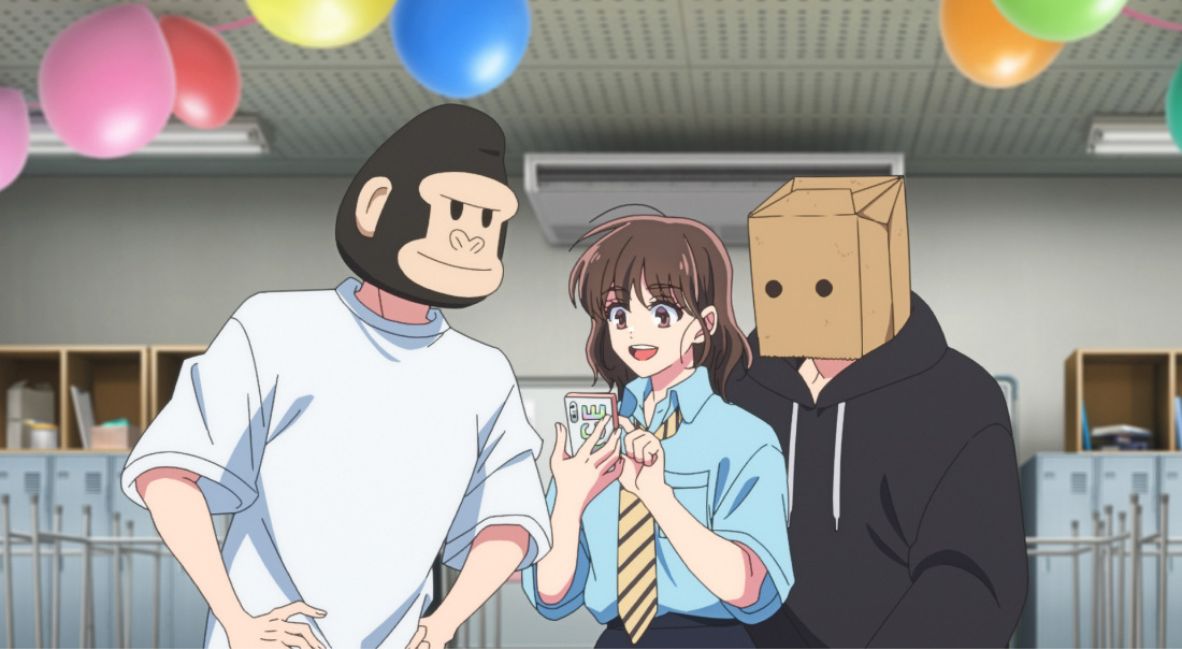
Romance is clearly burgeoning between them, even if neither can articulate it just yet. Tamon because an inferiority complex plagues him, and Utage because she can’t reconcile it as a fan. The give-and-take is an ultimate slow burn, as both have to try to learn more about themselves, slowly stepping into friend territory first.
Tamon’s B-Side doesn’t just navigate their relationship, though it’s the main appeal. Ori too is beginning to develop feelings for Utage, much to his chagrin. And it’s fun to see how the hostile work environment shifts as Utage comes to know the members, and to see that, despite his fears, Tamon is well taken care of by his older bandmates.
We don’t get nearly enough of the penny-pinching Keito, but his characterization is strong despite its brevity. Natsuki gets the most out of his side storyline, and his backstory with Utage’s teacher, Asuka (Misato Matsuoka), is genuinely moving.
But, again, this is Utage and Tamon’s show. Utage is an infectious character, and the leaps she takes to maintain a steady balance are admirable. Her fandom is a key part of her personality and drives so much about what makes her tick. And watching her slowly help unravel Tamon’s life, offering kindness and encouragement when he needs it, is a lovely way to show how being a fan informs her approach to him.
Saori Hayami and Kakeru Hatano are absolutely superb as Utage and Tamon.
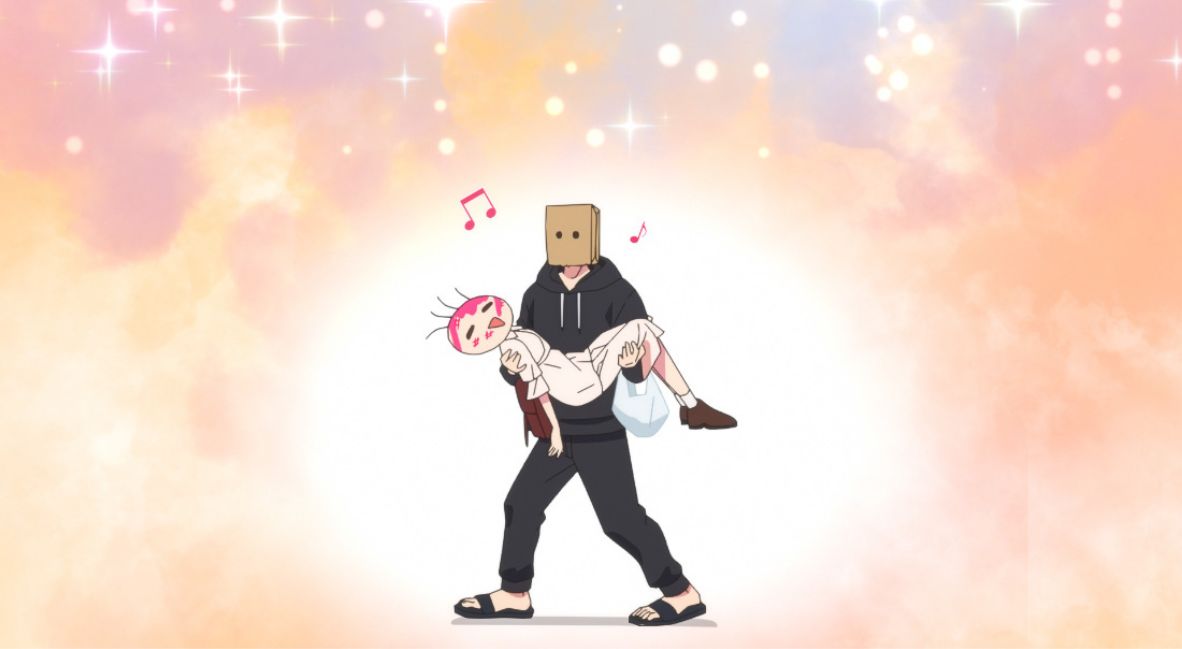
Tamon, on the other hand, is a disaster human, found in the fetal position as often as not. The image of him running around in public in a paper bag is one of the easiest yet best comedic bits of the series. And, more than anything, he’s deeply flawed. He’s not perfect and makes mistakes as he tries to maintain his dynamic with Utage. And he grows increasingly likable as the other characters appear to help balance his neuroses.
Saori Hayami and Kakeru Hatano are a large part of why the two characters work so well. Hayami is well known, often playing more roles with softer tones. As Utage, she gets to let loose, moving from said tones to more abrasive ones, growling and shouting as she stands up for her idol. Hatano, meanwhile, is relatively new on the scene with only a few credits under his belt.
And yet, the flip between idol Tamon—deep, gruff, and assertive—and gloomy Tamon—soft-spoken, tripping, and boyish—is so rich in differences that it would be easy to wonder if it were two different actors (a reminder of the vitality of the voice acting profession, thanks.)
Tamon’s B-Side Season 1 doesn’t slouch on the music numbers either, from the charming OP to the F/ACE performances. While not all of the 3D integrates well, there’s a clear effort in how the dance choreography is rendered, another detailed element that further brings these characters and their popularity to life. But the 3D does work when contrasted with the stripped-down simplicity of certain frames used as visual punchlines. That versatility drives the visual story forward even in more stagnant moments.
Tamon’s B-Side Season 1 makes it seem easy. But there’s a clear, painstaking effort.
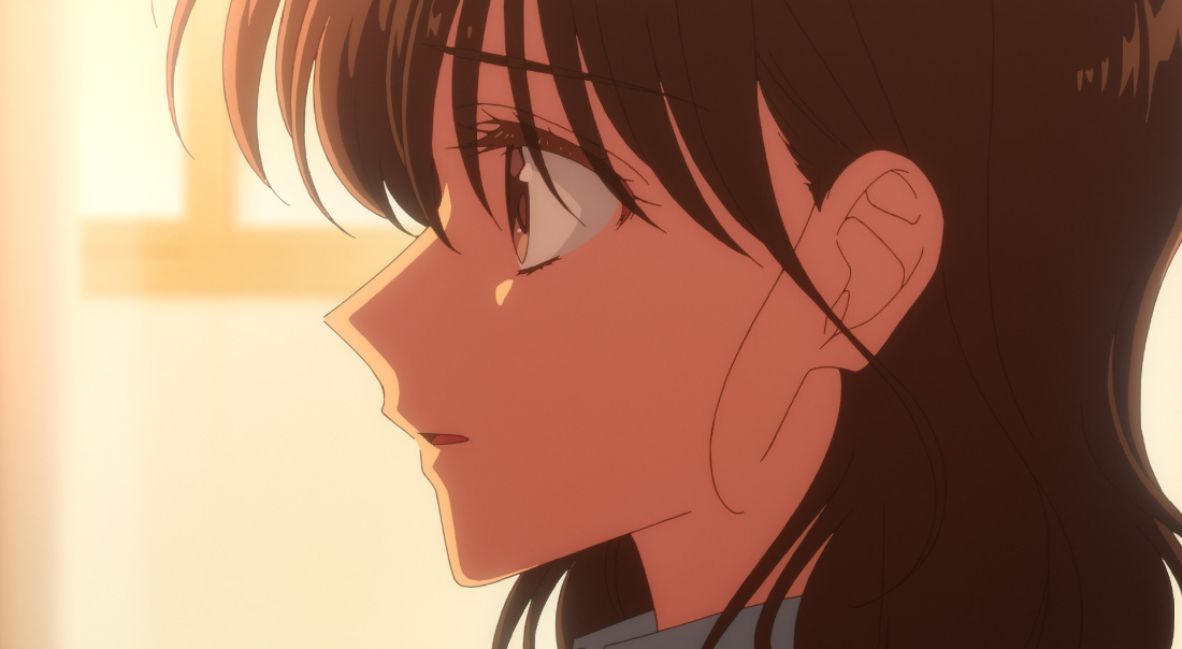
Tamon’s B-Side, like seasonal counterparts Journal with Witch and You and I Are Polar Opposites, is so good it seems effortless, which can make it easy to overlook some of its greatest attributes. From the slight ’90s-inspired design of the characters (specifically the band), the abundant use of color that seeps into each crevice of the frame, well-deployed lighting, and the deliberate, personality-fueled character acting that adds to every dynamic, the series is a clear labor of love.
And it’s evident from Episode 1, as Utage sprints back to Tamon’s apartment. There’s a sense of movement and life to the bustling world around them, even as Utage and Tamon are the main focus. There’s no empty space or hollow backgrounds. Instead, the world bursts with color and barely controlled internal mayhem.
And this doesn’t even touch on the specificity of humor in the details of fandom or the wink at practices like fanservice between band members. For a show with such a thin premise where a fan gets to self-insert herself into her favorite idol’s life, the adaptation doesn’t treat it like it’s shallow because it isn’t.
Yes, the humor drives the narrative, and it is a deeply funny show. But it’s funny without sacrificing depth of character, the visual integrity, or performance. Tamon’s B-Side Season 1 embraces the overt, physical comedy while maintaining a wholesome core. A romance between two unlikely people who, slowly and surely, are learning how to meet in the middle and the necessity of compromise. Albeit at a snail’s pace and with a lot of self-deprecating remarks along the way.
Tamon’s B-Side Season 1 is streaming now on Crunchyroll.
Tamon's B-Side Season 1
-
Rating - 8.5/108.5/10
TL;DR
Tamon’s B-Side Season 1 embraces the overt, physical comedy while maintaining a wholesome core. A romance between two unlikely people who, slowly and surely, are learning how to meet in the middle and the necessity of compromise.