Director Christian Petzold (Afire) likes to deal in whispers of fairytales, making us active participants the moment things begin to ring false in his latest, Miroirs No. 3. Contemplative but breezy, the film, reuniting him with the superb Paula Beer, understands planted and imagined falsehoods as a means to cope, grieve, and, ultimately, move on.
Beer plays Laura, a piano player attending university, who’s on a weekend trip with her musician boyfriend. As we see them on the drive to the venue where he’ll be showing his music to a producer, the tension between them becomes evident. This is not a happy couple. The discontent increases when, suddenly, Laura asks to leave, and the two make the trek back along the road they’d just traveled, past the house with half a painted fence and a woman who glowers as they drive by.
And then, a car crash. Laura survives while her boyfriend dies, and the same woman they drove past, Betty (Barbara Auer), finds her and allows her to stay at her home as she takes the time to heal. Neither of them has met before, yet Betty is oddly receptive to Laura’s request. While Laura’s motives remain relatively vague, we soon begin to piece together Betty’s reasoning as her husband, Richard (Matthias Brandt), and adult son, Max (Enno Trebs), process Laura’s abrupt inclusion in their lives.
Miroirs No. 3 lingers on quiet hauntings of grief.

Laura is running from an unnamed something, an inarticulate pain, while Betty knows exactly what pain she’s attempting to smother. Miroirs No. 3 refuses any easy or glib answers. This isn’t a film deriving purpose or meaning from anything specific. Like most of Petzold’s films, it offers a cinematic tone poem, a wandering character study that extrapolates details through the minutiae of day-to-day life or thematic undercurrents.
Aside from the main inciting incident, Miroirs No. 3, at first glance, lacks big moments. There’s a lot of lead-up where we keep expecting something big or confrontational to happen, but the film instead patiently lets it all play out. Laura and Betty share meals, and then chores. Laura meets Betty’s family and reveals that she doesn’t feel sad about the loss of her former boyfriend. Richard fixes up an old bike that was clearly someone else’s for Laura to watch, while a man comes to tune the piano for Laura to play, which was clearly someone else’s before.
Miroirs No. 3 is a ghost story about the hauntings of grief. Petzold has made a habit of infusing his worlds with surrealism, so we expect his latest to follow suit. That there’s something nefarious about Betty, and that’s why so many people come to stare at her in her imposed isolation. Or that Laura really did die, and this is now some form of cohabitated purgatory—an in-between location for souls not ready to move forward.
There’s an effective minimalism to Christian Petzold’s latest.
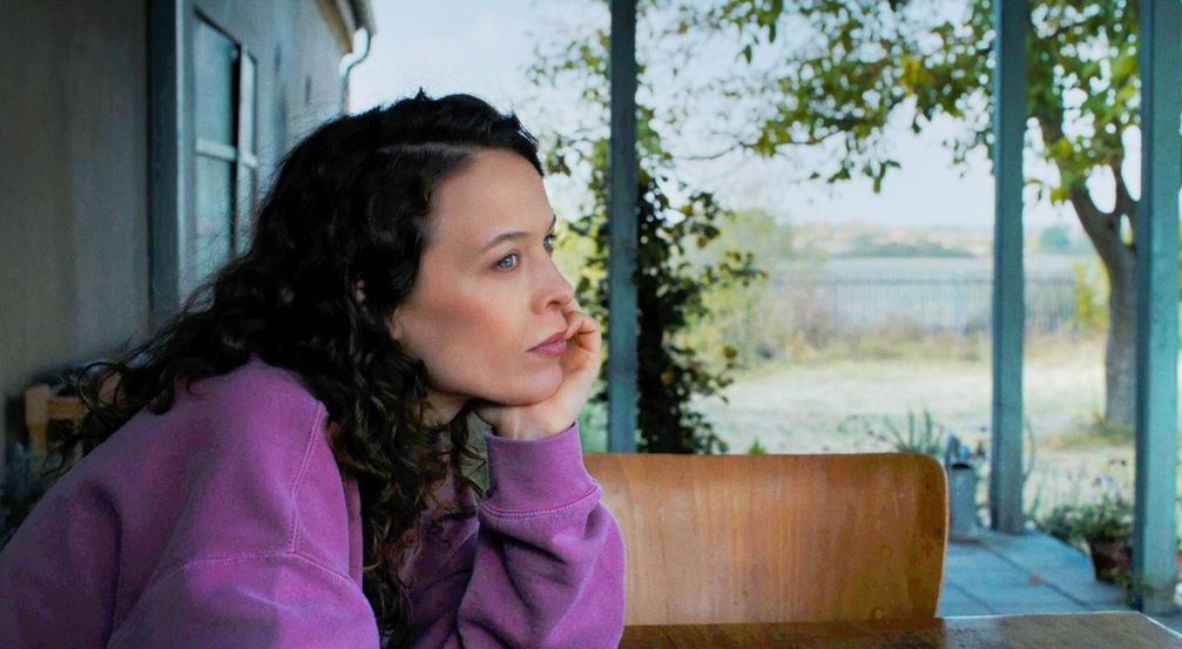
Ultimately, it’s worth trusting the title. Named after the third movement of the piano suite Miroirs by Maurice Ravel, the number in question mimics the flow of ocean currents. Laura is left rudderless after the accident, stuck in a limbo that allows her a moment to breathe before having to continue with a life that, in some areas, appeared suffocating, coasting on the oddly motivated kindness of this family. The relentless tides of grief pull this family under.
Or that’s taking it all too literally; really, the film is about going through the motions until it’s the right time to move on, be it to something you’ve been putting off or from all-consuming grief. Miroirs No. 3, despite hints of deeper topics, is breezily minimalist in both its narrative structure and its aesthetics. The natural beauty of the countryside does a lot of the heavy lifting, the rustling wind so crisp and tangible you could pocket it.
Beer remains a charismatic and impish screen presence, while Auer lets Betty’s pain surface at moments when the character is clearly trying to withhold it. Even the emotional moments take on that minimalism, so much of the performance is in a state of reaction rather than forward-propulsive movement. The film is at its best when it simply lets them act against one another, better still in the early stages when we’re more curious about why Laura asks to stay, rather than the last act, when the film pivots to why Betty would let her.
As Laura both haunts and lights up Betty’s home, the film finds curious narrative passageways about the complications of grief and loss before packing it away into something ambiguous and low-key. Miroirs No. 3 might not reach the heights of Christian Petzold’s greatest hits, but it’s a lovely, understated rumination on the inner conflicts that drive our decision-making.
Miroirs No. 3 is out now in select theaters.
Miroirs No. 3
-
Rating - 7.5/107.5/10
TL;DR
Miroirs No. 3 might not reach the heights of Christian Petzold’s greatest hits, but it’s a lovely, understated rumination on the inner conflicts that drive our decision-making.