Disney and Pixar’s Hoppers (2026) is a solid step forward for the storied animation studio in its history of original children’s animated movies. Directed by Daniel Chong and written from a screenplay by Jesse Andrews, there’s enough of a twist on both the talking animals and misfit kids formulas to set Hoppers apart while it pulls off a fun time with heart and humor.
Mabel (Piper Curda) grows up with her grandma (Karen Huie) as a role model, and when she discovers that the glade behind her home is the perfect place to calm an angry, misunderstood little kid. While the opening sequence may raise some hackles for longtime Pixar moviegoers, the course of Mabel’s growing up quickly dispels any similarities to other Pixar protagonists or the type of early emotional manipulation Pixar employed in the 2000s.
Instead, the introduction launches Hoppers into the present day, having set Mabel up as a headstrong, self-assured college student who is deeply passionate about animals and the environment, even if she’s a bit of a loner. Her fervor for protecting the environment puts her at odds with Jerry (Jon Hamm), the mayor of Beaverton. Jerry is a beloved community leader whose seemingly pointless Beaverton Beltway construction project requires building a raised highway straight through her glade.
The whole movie jumps back and forth between humor and sincerity.
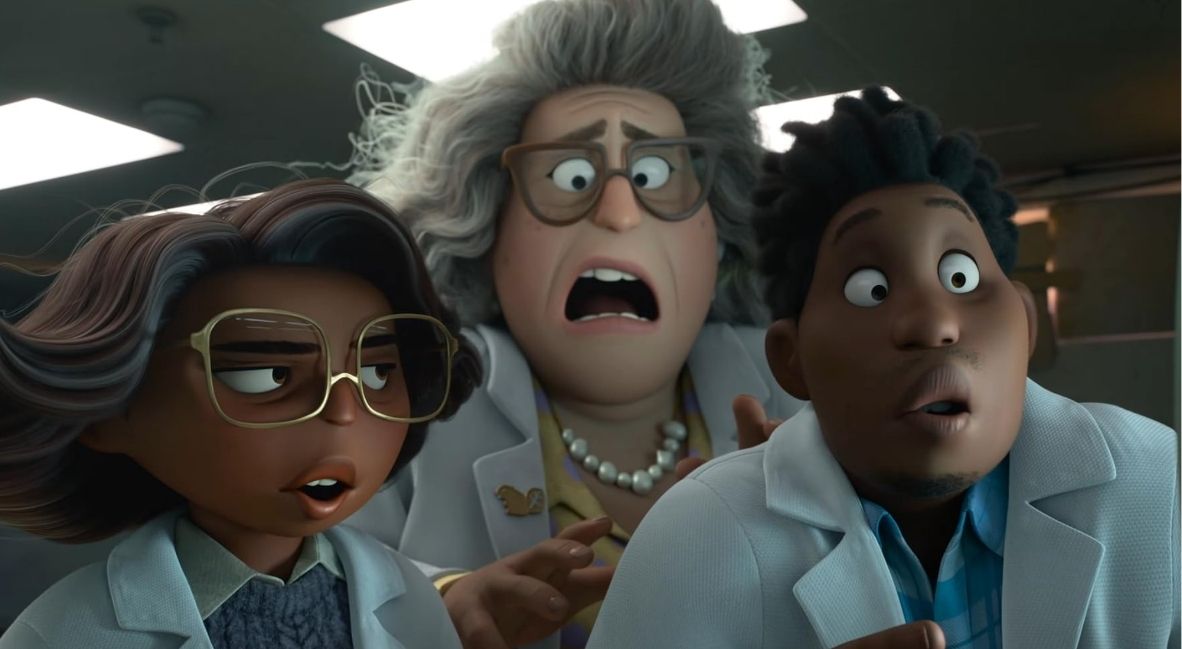
It is while protesting and working to protect the glade, which has dried out and is void of any animal life since construction began, that Mabel discovers a secret experiment at Beaverton University to study animal behavior by transferring one’s consciousness into life-like animal robots.
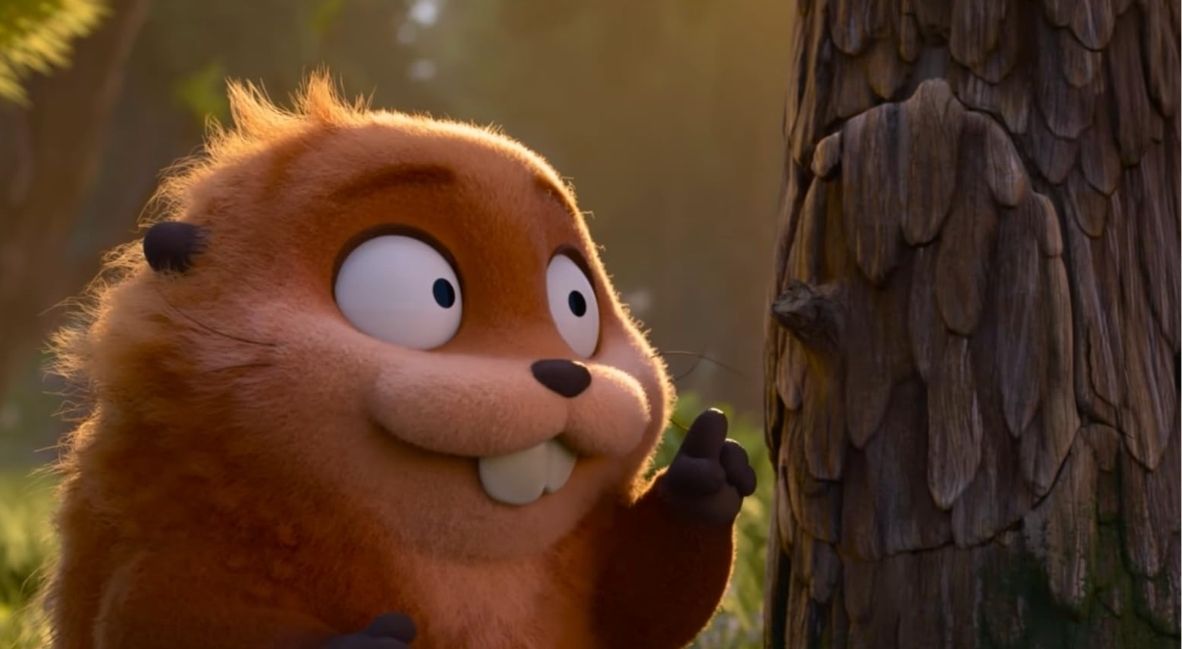
Mabel wants to use this technology to help find real beavers and bring them back to the glade, even though it goes against scientific ethics to interfere with animals’ natural behavior. She hops into a beaver b0t anyway and journeys into the hidden world of animals to save the glade.
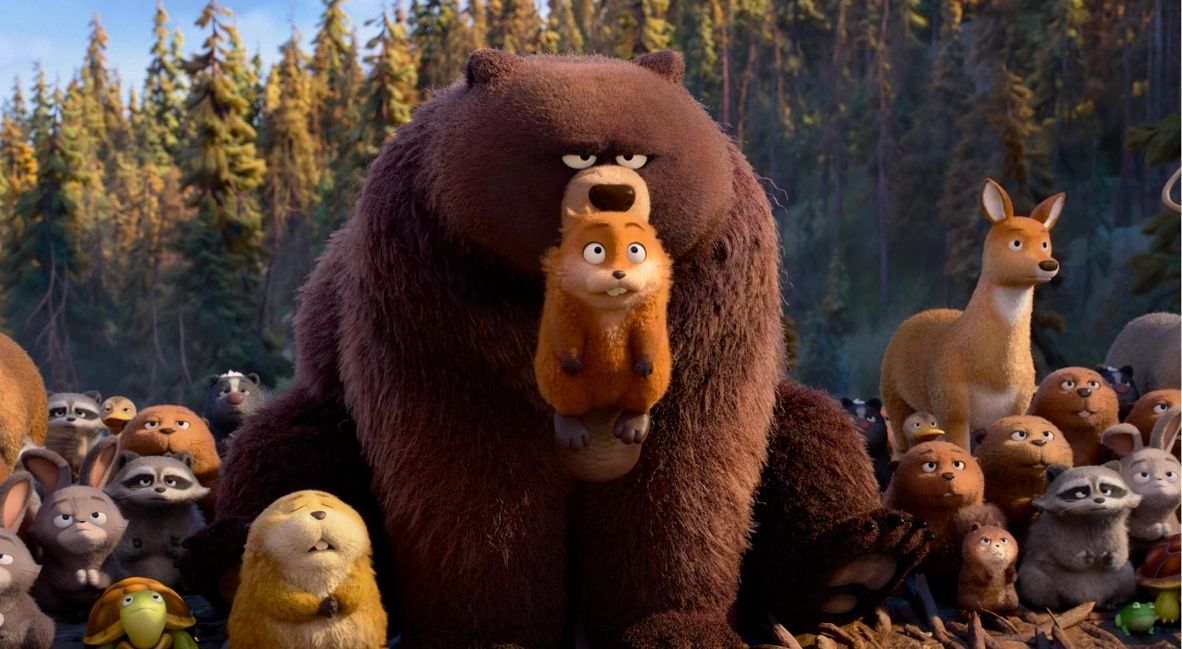
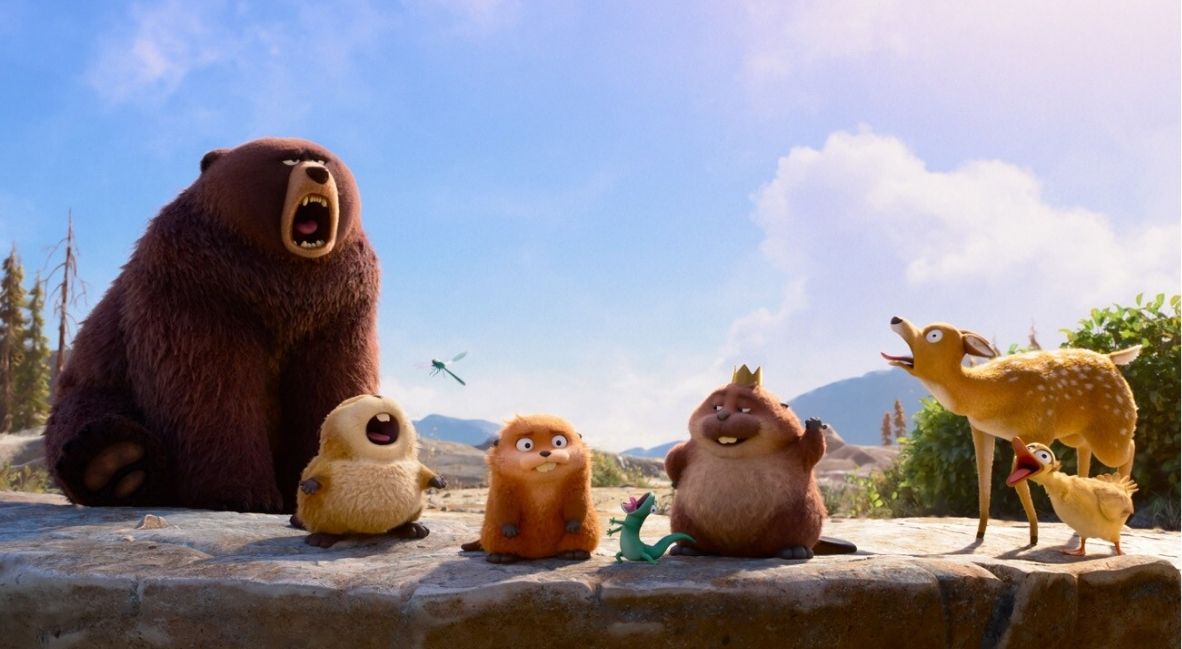
Even if that sounds like a complicated description, Hoppers does a great job simplifying the entire premise with a few good jokes and some quick suspension of disbelief. The whole movie jumps back and forth between on-the-nose humor, built on stating the obvious and playing it for laughs, and leveraging complete sincerity for equal parts humor and heart. It starts when Mabel accidentally disrupts the “Pond Rules” between her soon-to-be friends Loaf (Eduardo Franco), a lazy beaver, and Ellen (Melissa Villaseñor), a very large bear.
The world Hoppers builds is excellent.
Their interaction quickly turns the wild, scary parts of nature into something that is so matter-of-fact that you can’t help but laugh and be moved by it all at the same time. It’s different from other animal movies. It’s not an anthropomorphized society like in Zootopia, so the animals still act mostly like animals.
But it doesn’t strive for realism either, like in The Lion King. The animals in Hoppers live in a society with its own made-up rules, where the lines of reality are drawn arbitrarily to make things make sense and seem cool, rather than reflecting actuality.
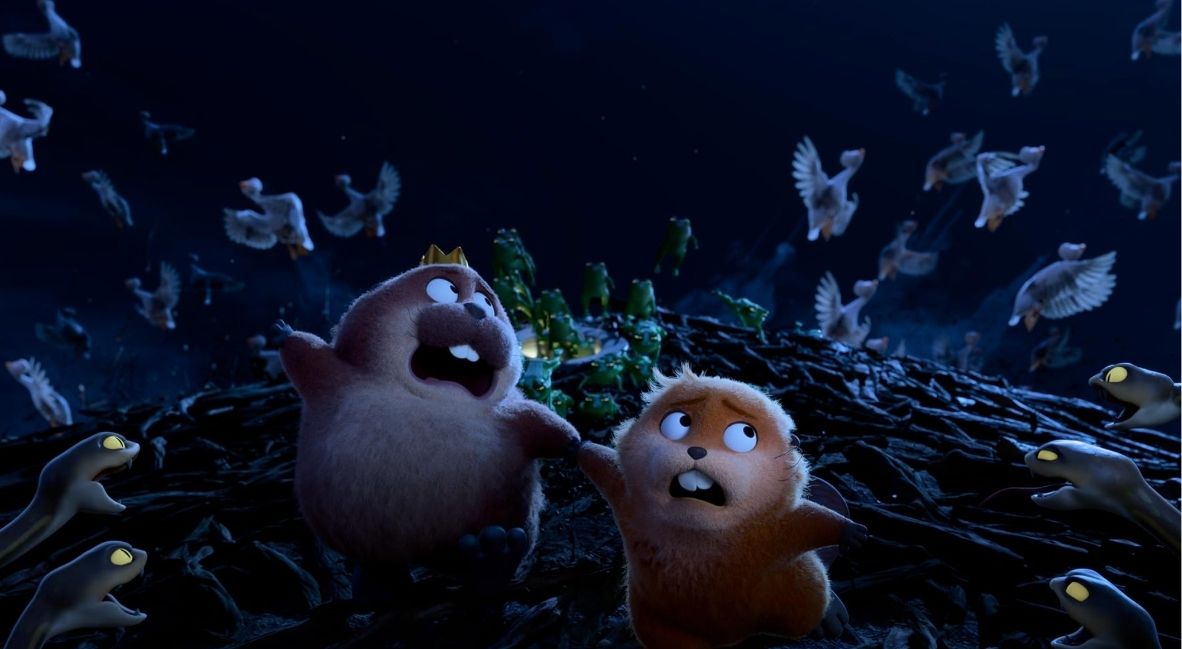
The world Hoppers builds is excellent. After breaking the “Pond Rules,” Mabel is taken to meet King George (Bobby Moynihan), a genuinely kind and loyal friend to everyone. He stands starkly against Jerry, somebody who uses niceness as a tool for power, instead of for its own sake, like with George. When Mabel explains to George why she’s come looking for help with her glade, George jumps right into action with his friends and subjects to try and help.
Hoppers has impressively nuanced politics.
As George and Mabel try to solve the problem, the immediate world constantly expands through little character bits and visual gags, as does the whole animal world. The kings and queens of every class in the animal kingdom join the fray with complete spectacle. It’s visually thrilling and introduces so many fun questions about how this animal world might work—few of which Hoppers has any intention of answering. This is for the better, it makes the world feel fun and big without bogging it down in too much minutia.
As for the environmental issue at hand, Hoppers approaches the politics and ethics of the situation with deft skill. The situation is treated with a pretty shocking level of importance. It’s not just a kid’s pipedream of saving the forest. Hoppers is very clear that the fate of this glade and its animal residents is intimately bound with the fate of the humans that live next door in Beaverton. Letting the animals leave and the glade wither has a devastating impact on the humans, too.
And the solution to the problem is just as nuanced. It’s not as simple as one brave college student fixing everything, or even a band of unlikely animal and human friends teaming up to convince Jerry to stop the construction. Mabel has to learn throughout the movie that her assumptions about other people are sometimes unfair and that her tactics are not always well thought through.
Hoppers puts together a fun world and a meaningful plot.
It’s not that Hoppers wants to slow her down and wait for a better solution to come about, since by then, it would be too late. Rather, she has to learn which adversaries deserve her empathy and which do not before she can offer solutions that will be sustainable in the long term. These are lessons that many young activists like Mabel ought to learn so they can fix the world’s urgent problems without creating new downstream issues while they do so.
Hoppers puts together a fun world and a meaningful plot. While it doesn’t quite reach the levels of exceptional from Pixar’s heyday, it is easily their best original effort in a long time.
Hoppers is in theaters everywhere March 5th.
Hoppers (2026)
-
Rating - 8/108/10
TL;DR
Hoppers puts together a fun world and a meaningful plot. While it doesn’t quite reach the levels of exceptional of Pixar’s heyday, it is easily their best original effort in a long time.