

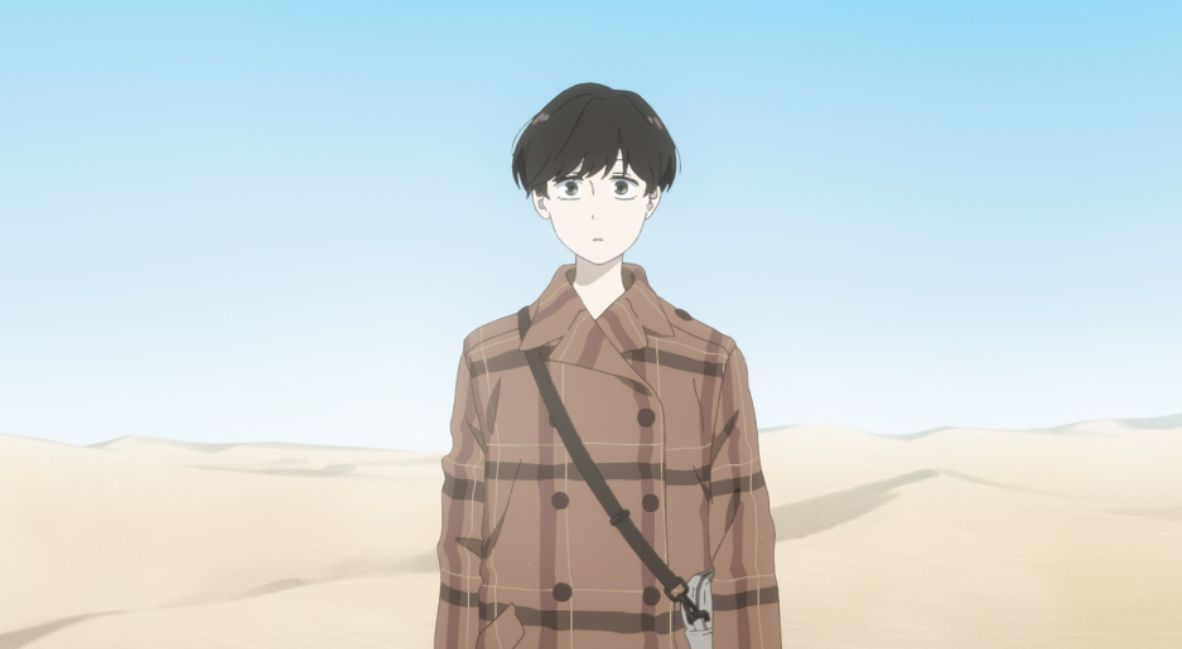
It’s easy to be effusive about a series such as Journal with Witch that astounds with its contemplative writing and gorgeous, understated adaptation. This is, without question, the best new anime of the year. And it is, again without question, a stunning and detailed introspective look at the ever-changing complexities of what it means to be human.
Possessing a wealth of personable compassion and deep-rooted understanding of the messiest intricacies of life, it takes little time for Journal with Witch to establish its baseline excellence. Of all the anime series airing this year, only Frieren: Beyond Journey’s End threatens to supersede its capacity for generous humanity. Based on the manga written and illustrated by Tomoko Yamashita and produced by the studio Shuka, the series evokes a deluge of emotions by committing itself to the tireless, worthwhile act of empathetic storytelling.
Journal with Witch follows Asa (Fuko Mori), a 15-year-old girl who has been recently orphaned, her parents killed in a sudden car accident. Her aunt, the 35-year-old writer, Makio (Miyuki Sawashiro), offers her an unlikely lifeline. While Makio feels no grief over her sister’s passing, the two having been estranged for many years, she doesn’t like the idea of Asa being cast aside and unable to secure her own future. So, she reaches out a hand, offers as much space as she can, both physically and emotionally, and opens up her home, however Asa will take it.
Makio offers Asa a necessary lifeline in Tomoko Yamashita’s vital work.
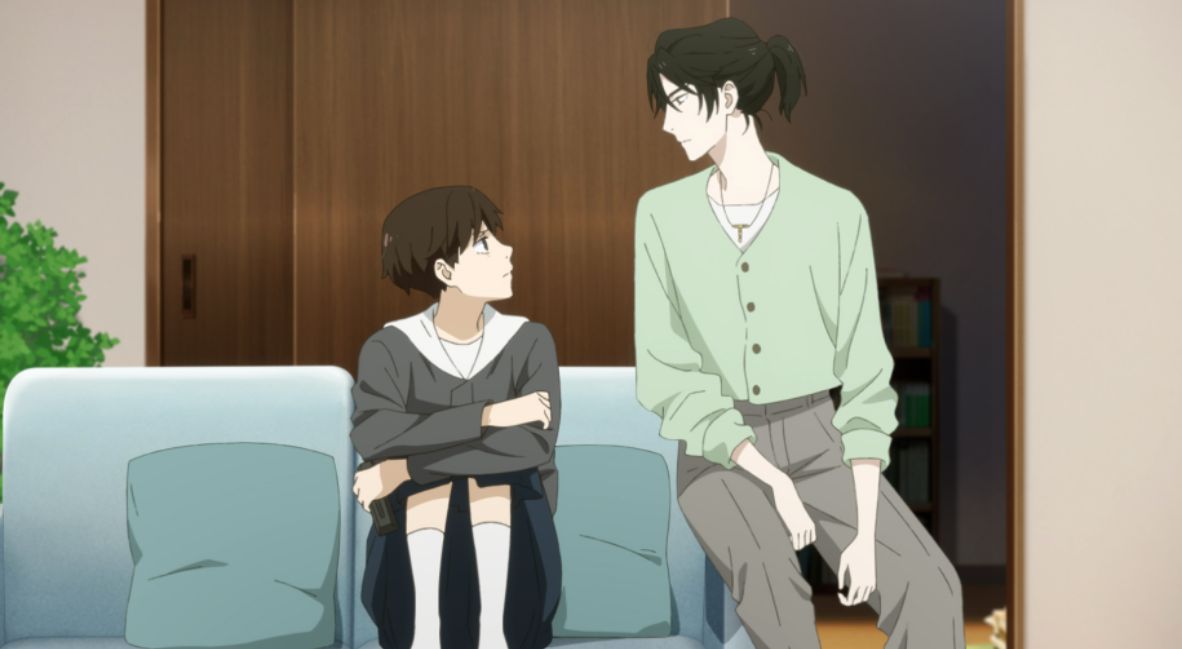
From there, the series observes the two as they traverse their abruptly changed lifestyles. While Asa is used to a certain level of parental oversight, Makio is disengaged. She cares about Asa’s happiness but isn’t one to attend stricter, socially expected events. She isn’t there for Asa’s middle school graduation, nor does she attend her high school entrance ceremony. She even forgets Asa’s birthday. But none of these moments elicit forced drama. Instead, it speaks to what she prioritizes.
Birthdays and events might pass Makio by, and there are deeply relatable moments where she forgoes pleasantries and meals for the sake of meeting deadlines, hunched over and perpetually in leisure wear until the satisfying click of the send button. But she listens. She provides Asa with the solace of a journal in which she can write anything and everything she wants, be it impossible truths or half-truths, blatant lies, or asides that hold no meaning because she understands that Asa is lonely, but can’t understand her exact feelings of loneliness. So she offers her a refuge.
Plus good meals, good company, and the right to exist in the same space. She comforts a heartbroken Asa when, after a prolonged stage of anger, she breaks down, fully reconciling with the fact that her parents are gone and never returning. Journal with Witch achieves the near-impossible feat of demonstrating the seismic shifts in the universe that are imperceptible. Because there are changes and shifts in our lives that we feel, rather than see.
Journal with Witch understands the incremental nature of change.
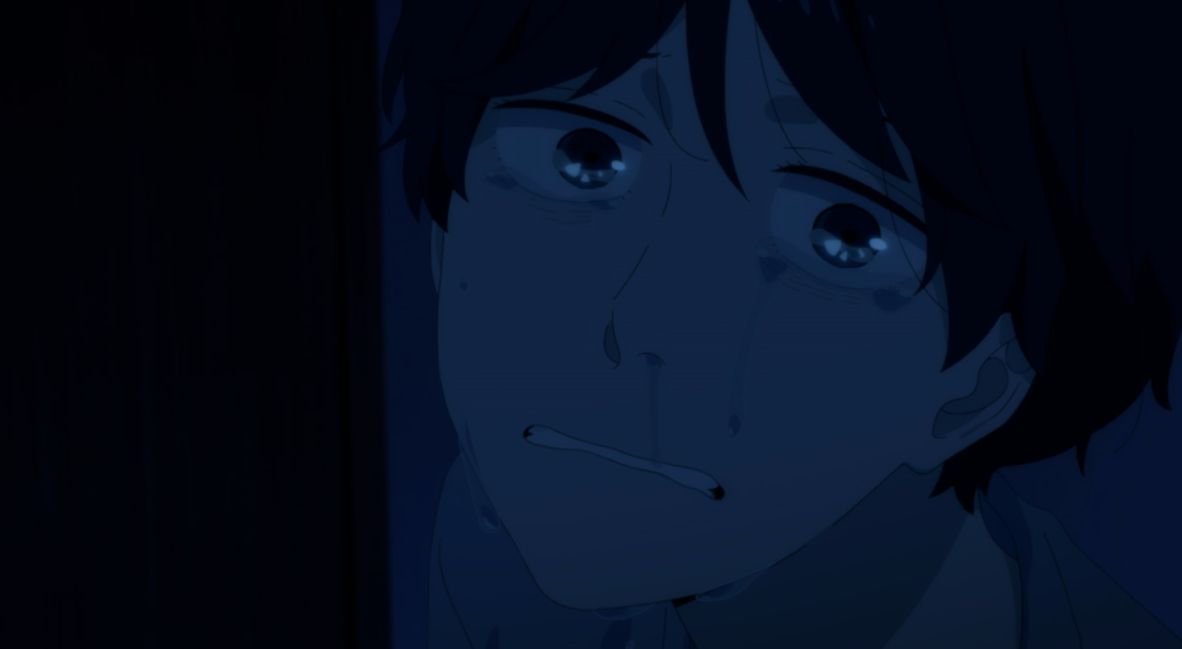
We know the moments that change us, even if there’s no loud declaration or quintessential heroes journey we wander. Sometimes it’s as easy as a compassionate ear or soaking in the diverse personalities that surround you. Other times, as plainly profound as the right note at the right time, tucked between the pages of a magazine, encouraging me to write. As depicted in the series, these moments come after prolonged periods in vast deserts of emotional drought and isolation, before encountering a staggering moment of commonality. Of being a person who, in some indefinable way, manages to shift the course of someone else’s life, be it monumental or slight.
At its very core, Journal with Witch walks the same path as so many other stories, written to display how we are changed by the company we keep. And yet, it sets itself apart through its adult ruminations on empathy, its limits, and its practical applications. We can all feel for others and, to a degree, understand the pain they undergo. We have all lost someone and will lose someone again because to love is to accept absence. The series goes beyond that, though, admitting, in a feat of humanistic, relatable writing, that, for all we can empathize, that often isn’t enough to be a conduit for change.
Asa is on her own journey, parallel to others, and converging for significant steps along the way. We see this most in the very last episode, with her interaction with Chise Morimoto, a girl left disillusioned and furious when she realizes her desire to be a doctor and attend a top University is stymied by generational, systemic sexism. After a brief interaction, Chise watches Asa sing in the school’s courtyard and, in her own words, “witnesses her.” There’s a duality to the declaration. Both that she witnesses her effort, her truth, so to speak, but also she sees Asa as a means to inspire her to charge ahead.
Talents such as composer Kensuke Ushio elevate an already superb adaptation.
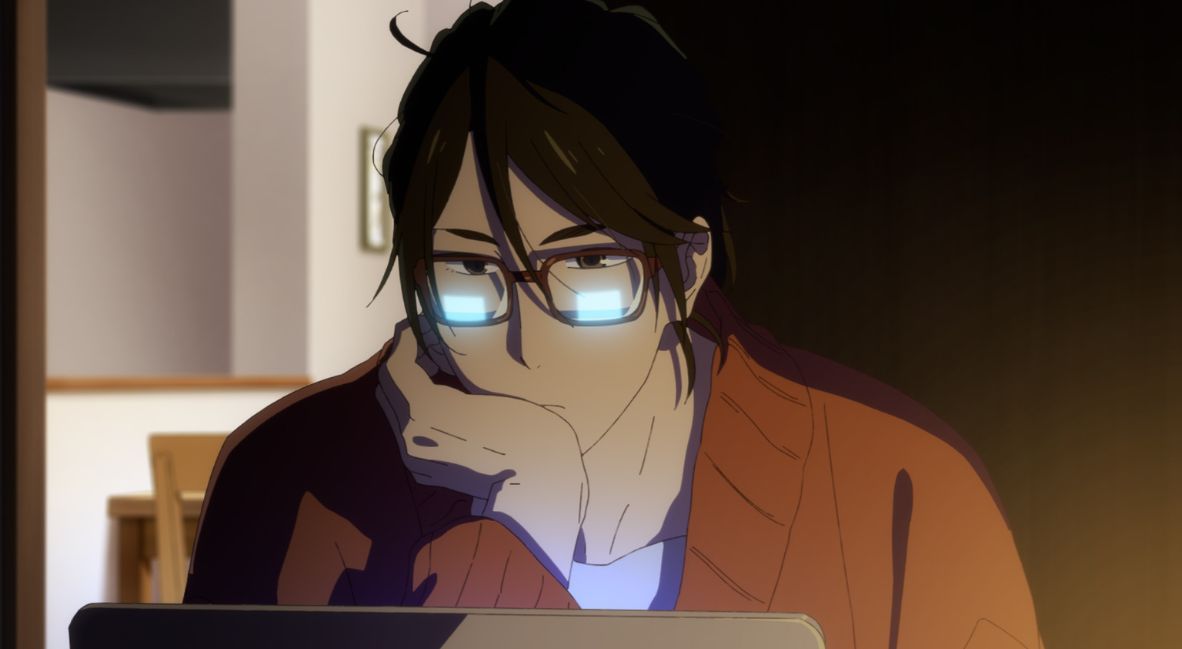
There’s a deceptive simplicity to Journal with Witch, a plainness, almost, that makes the tireless work the studio and team of artists put into it seem effortless. And yet there’s so much going on despite the lack of action or vibrancy. Between director Miyuki Oshiro, screenwriter Kōhei Kiyasu (who adapted the phenomenal Run with the Wind), character designer Kenji Hayama, and composer extraordinaire Kensuke Ushio (Devilman Crybaby, The Colors Within, DanDaDan), the foundation the series is built on is laden with singular talents who bring specificity to each project they work on.
The clutter of Makio and Asa’s apartment, the detail (but not hyper-realism) in the food they eat, the subdued color palettes of their wardrobes, and androgynous silhouettes all build to create something pointed and deliberate. Makio is emotionally intelligent but struggles with day-to-day details. They come together and bond over shared meals. The earthy greens and browns of their clothes, to the mourning grays, spell out a story towards healing, and how they dress signals a confident disregard for society’s expectations. They are who they are.
Ushio, so synonymous at this point with the works of Science Saru and filmmakers such as Naoka Yamada, once again demonstrates his ear for bridging haunting melancholy with sparkling, euphoric hope. It adds to the give-and-take of the narrative as Asa practices the song she’ll sing in her performance at school (the song that plays over the end credits) with increasing jubilant defiance. A moment that, in hindsight, further enriches the overall story, as she sings about reaching for new mornings (a play on her own name, “Asa”), seeking resolution and possibilities all at once. Morning comes, a new day arrives, and now what?
With only 12-episodes, Shuka gives every pivotal character a moment to shine.
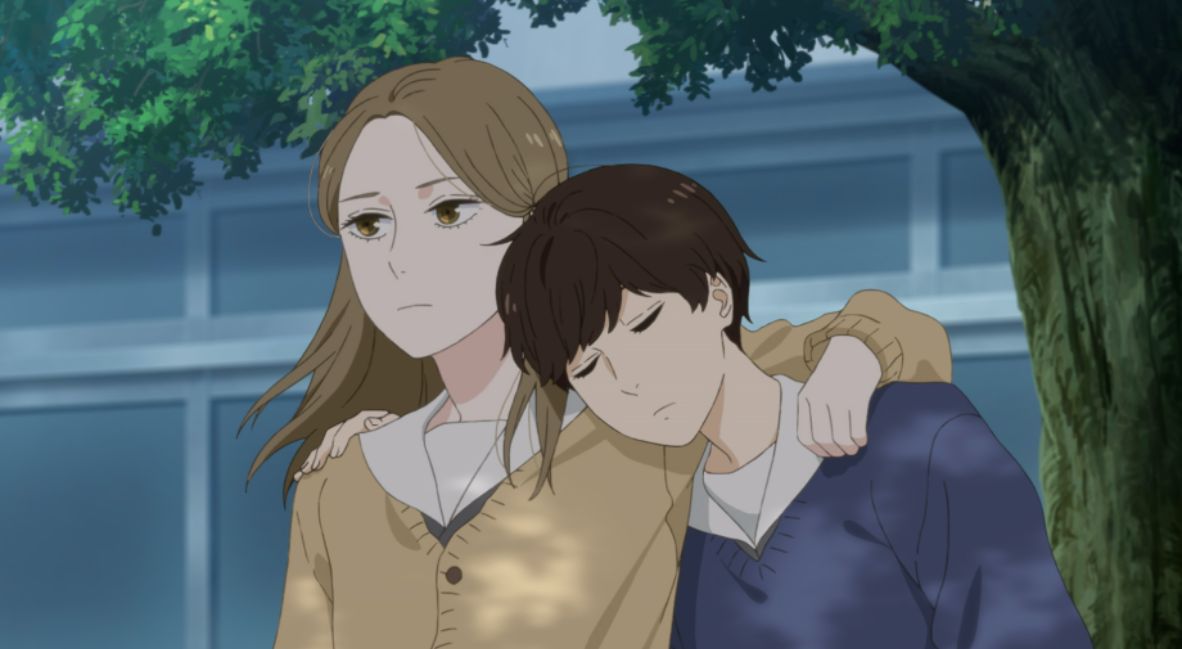
While Journal with Witch doesn’t get to adapt every chapter of the original manga, it does a commendable job streamlining the story, weaving together all the character arcs, and showing how they interact and reflect on each other. Asa’s best friend, Emiri Nara (Sumire Morohoshi), is on her own, solo trajectory, removed from Asa’s grief but sharing in the shock of the loss. And all the while, she’s grappling with her burgeoning sexuality and the fact that she likes girls, and the pressure that comes from societal expectation. From Asa to her parents and a boy who has a crush on her, she’s constantly staving off inquiries about her love life.
It makes the quiet moments where she sits with a girl she likes, as they both cautiously express their mutual affection, all the more touching because it’s a slow-burn effort, despite what others might expect, and an understated queer coming-of-age story in a series that revels in quiet inclusivity yet no less impactful progressive ideals.
We see this with Makio’s ex-boyfriend and current label-less relationship with Shingo Kasamachi (Junichi Suwabe). Shingo is, in many ways, one of the most interesting characters in the series for how often he bucks expectations. First, in his acceptance and appreciation for the idiosyncrasies that make Makio who she is. But, more profoundly, in how he deals with depression and toxic masculinity.
Characters such as Shingo, Emiri, and Asa are influenced by Makio’s individualism.
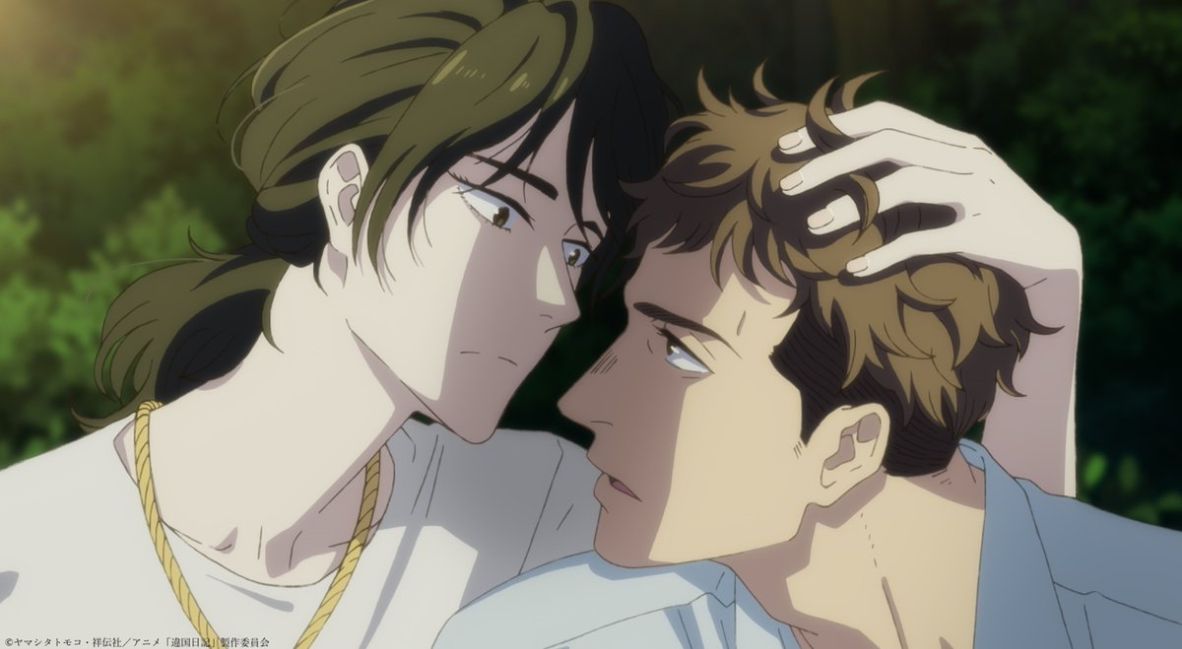
Shingo has three crucial interactions throughout the Journal with Witch. The first is the wonderfully steamy moment of intimacy with Makio, where they both admit their faults while still fostering an emotional and physical relationship, unencumbered by others’ projections and happier because of it. In the second, he speaks with Makio’s best friend, Nana Daigo (Eriko Matsui), about how he fell into a depression, waking up crying and having to grapple with what that meant for him and his own dated preconceptions of what it means to “be a man.”
And, lastly, while conversing with Kazunari Tōno (Takashi Kondō), Asa’s legal representative. Yamashita’s insightful writing shines, as Shingo rebuffs Kazunari’s assumption that he’s always cool and collected. If he seems that way, Shingo believes it’s because he “hopped off the bandwagon” ages ago, no longer drawn in by male-centric rituals that encouraged dangerous behavior, objectifying women, and enduring pain without expressive discomfort or sadness. Despite it being the only crowd he knew, he realized that, without it, his potential was endless. By admitting that he “didn’t realize that game of chicken was no real measure of my value,” he gave himself a better future.
And it just shows how this toxicity, this pervasive, unrelenting sexism, hurts everyone. And why someone like Makio, who has never felt beholden to any societal expectation, is such a figure of refuge for people like Shingo, Asa, and Emiri, who, at different points in their lives, desired spaces in which to express themselves and live freely. For all that the story uses images of desserts to highlight a character’s isolated plight, Makio remains a fixed oasis.
Miyuki Sawashiro imbues Makio with effective naturalism.
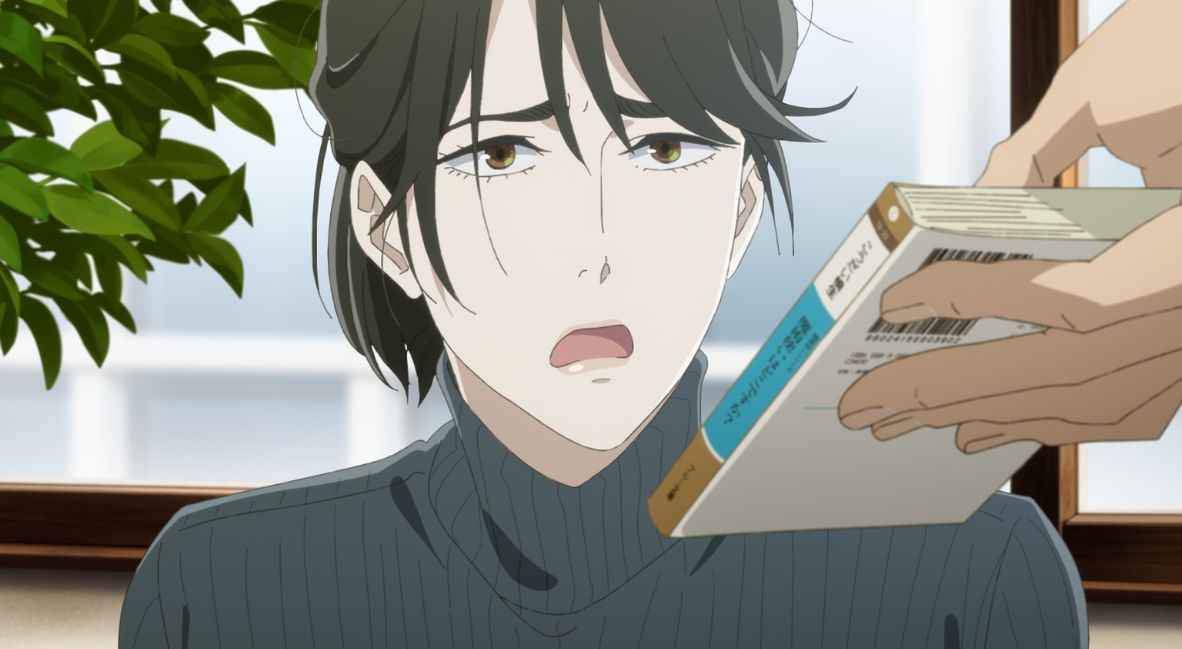
Makio is a revelation as a character, and Miyuki Sawashiro imbues her with a refreshing naturalism that begets the series as a whole. She’s so wonderfully complex yet reliably prone to relatable mistakes. Given how inundated anime adaptations are with younger protagonists across all genres, it’s so refreshing to see a 35-year-old character who doesn’t just exist to guide a teenager.
She has her own interiority and flaws that are solely about herself. She might be more inclined to express her intentions and innermost desires, but she’s far from perfect. She is, like so many of us, a chronic work in progress, an over-thinker, and prone to wordy explanations when short and sweet would suffice.
The characters feel real. Asa is frustrating because being a teenager is frustrating. And Makio’s messy apartment isn’t seen as a failure but a byproduct of how her mind works. Emiri wants distance between her and Asa, but not in a way that cuts through her friendship, just enough to deal with her own emotions. Kazunari doesn’t like movies, and Shingo has to deal with a difficult relationship with his traditional father. They’re all dealing with missteps, misgivings, and the ways life forces us to adapt.
Journal with Witch is refreshing in its honesty and an instant all-timer.
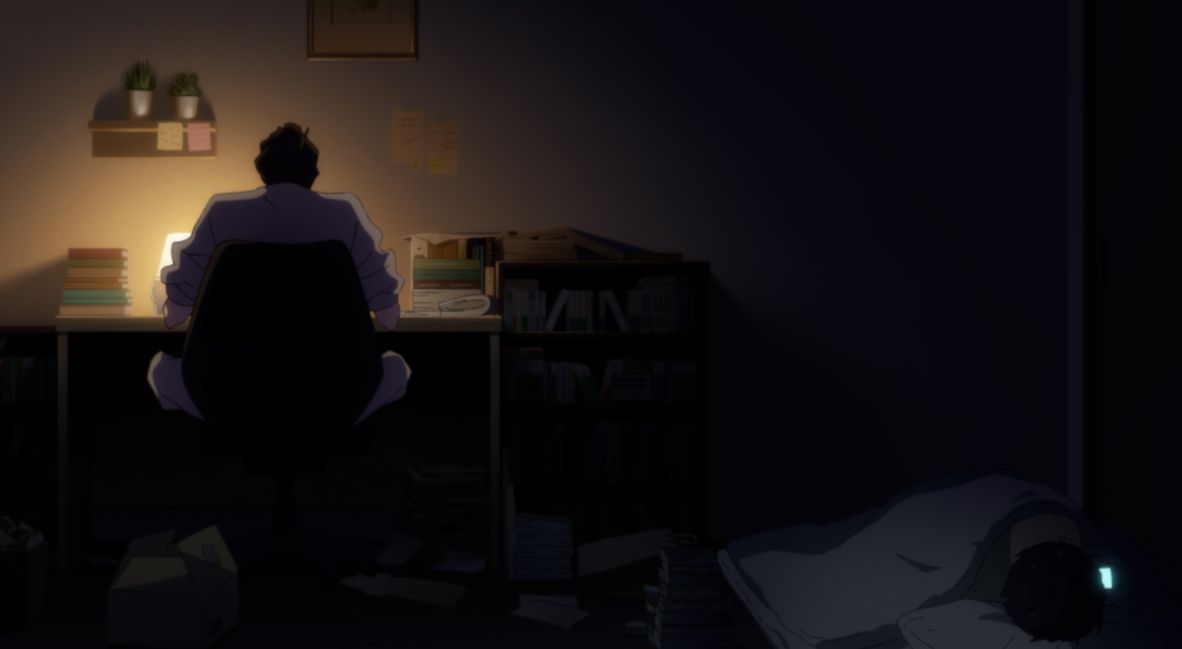
Like an orchestral suite, the series unfolds in a series of movements, utilizing narrative leitmotifs to return to events and interactions that create moments that stick with Asa long enough to outlast her (rightful) self-centered grief. The series loves to cycle through them, flashes to faces and lines that Asa can’t shake. Moments that stick to her and shape who she is becoming, someone who seeks freedom and flight, awake and present.
Journal with Witch made me want to write even more. More and more and more. It gets to the core truth of the human condition and does it with humor and visual flair and a shocking amount of heart that speaks to the personal triumphs and tragedies we experience. The finale looks to the immediate future, as we see Makio through Asa’s eyes and then, in a longer jump ahead, Emiri.
A pivotal, subtle moment, where she no longer needs to be so internal, so self-reflective, now able to take in the world and those she holds dear at face value and as they are, no longer just markers for an undistinguishable period of pain. Instead, people who fill out our self-dictated stories, be they told, written, or sung.
With expressive, intoxicating honesty and thoughtful explorations of healing and self-discovery, Journal With Witch refuses to engage with easy solutions. Instead, it embraces the complexities of life, both in the plaintive days and in the unexpected, small joys. Relishing in subtlety and the realistic realities of connection, Shuka has delivered an all-timer adaptation, one that transforms as it progresses, becoming a piece of storytelling unbeholden to any one medium. This is for everyone.
Journal with Witch is available now on Crunchyroll.
Journal with Witch
-
Rating - 10/1010/10
TL;DR
With expressive, intoxicating honesty and thoughtful explorations of healing and self-discovery, Journal With Witch refuses to engage with easy solutions. Shuka has delivered an all-timer adaptation, one that transforms as it progresses, becoming a piece of storytelling unbeholden to any one medium.