
Couples on the brink of implosion is not new cinematic territory. That said, The Drama, written and directed by Kristoffer Borgli (Dream Scenario), takes particular glee in dismantling the emotional stability of his central couple piece by piece, euphorically disrupting their pre-marital bliss. However, despite the savagely wicked intent to bully audiences into addressing their own barometers of awful, Borgli’s film works best as an exercise rather than a complete execution. There’s intrigue here, but the intent – like seeing my cat before he jumps out at me, or a man about to tell me how I’m wrong – is too obvious. Borgli is stirring shit without probing beyond the rage-bait veneer.
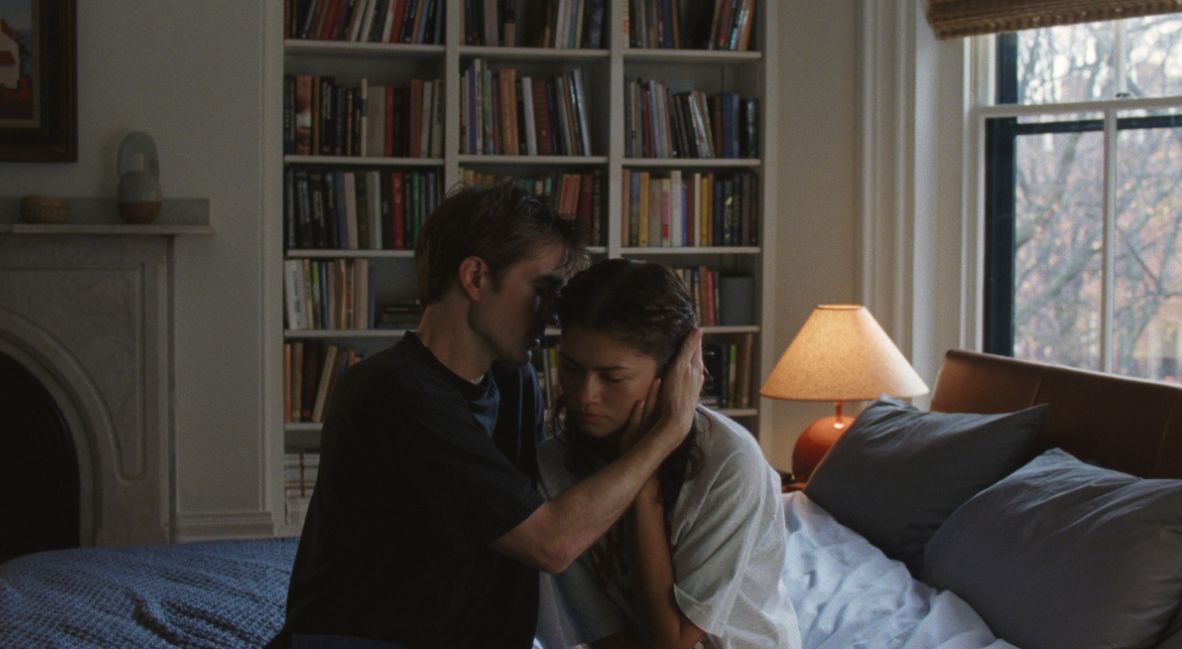
An increasingly rumpled and inarticulate Robert Pattinson and Zendaya (in her best performance to date) star in The Drama as a picture-perfect couple. Their covetable Boston-based apartment is immaculate, expertly curated with its spiral staircase and enviable stuffed bookshelves. The aesthetics paint a picture of a bookish, successful, and stylish couple, idealized and living the dream. And, in the opening moments, it’s what Charlie (Pattinson) is trying to convey while writing the speech he’ll recite at his wedding.
It’s clearly effective, as his best friend, Mike (Mamoudou Athie), tears up while listening to Charlie talk about Emma’s (Zendaya) obnoxious but adorable laugh and her capacity for kindness and empathy. Of what Charlie likes to call their “meet cute.” But, in one of the film’s best sequences and the most telling, it’s the opening that truly clues us in on who this couple is, who Charlie is, and the flimsy foundation their love story is built on before the script refuses to entangle itself further into what made them tick before blowing it all up.
The Drama introduces a picture-perfect couple and immediately tears them down.
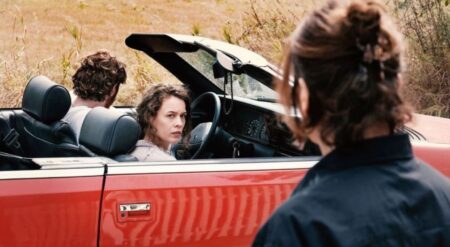
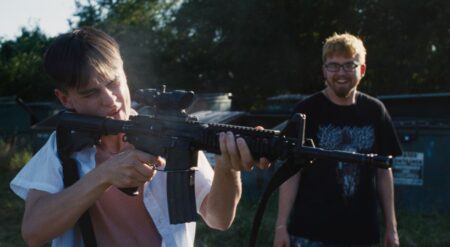
For those not in the know, the general conceit of The Drama spins itself around one drunken night out at a menu tasting (a scene already poised to make every single character unlikable as they’re all terrible to the waitstaff) where Charlie, Emma, Mike and his wife, Rachel (a deliberate and putridly unlikable turn from Alana Haim) play a game of the worst thing they’ve ever done. Charlie thinks he maybe cyber bullied someone when he was 14, while Mike avoided a dog attacking him by using his partner as a human shield (mind you, she was kicking the dog away from her)
Both are tepid, however, in contrast to what Rachel and Emma reveal. And it’s in this dynamic where the film might’ve dug deeper to really examine the tertiary plot it is setting up, one that looks at gender and racial dynamics and our own perspectives of who perpetuates violence and who are the victims.
Both women admit to truly heinous acts, with Rachel actually committing hers while Emma’s was just a plan (albeit a truly horrific one). And yet Rachel gets to lash out with vitriolic fury and self-righteous outrage, while Emma remains taut, tired, and on the defensive for the remainder of the film.
All of which would be very interesting if The Drama cared about the more engaging, thought-provoking film it was setting up. Instead, Borgli’s script rests on shock value, inexplicable decision-making by the characters, and implicative imagery that doesn’t so much startle as it nauseates.
Kristoffer Borgli introduces ideas and shocking reveals but the effect is shallow.
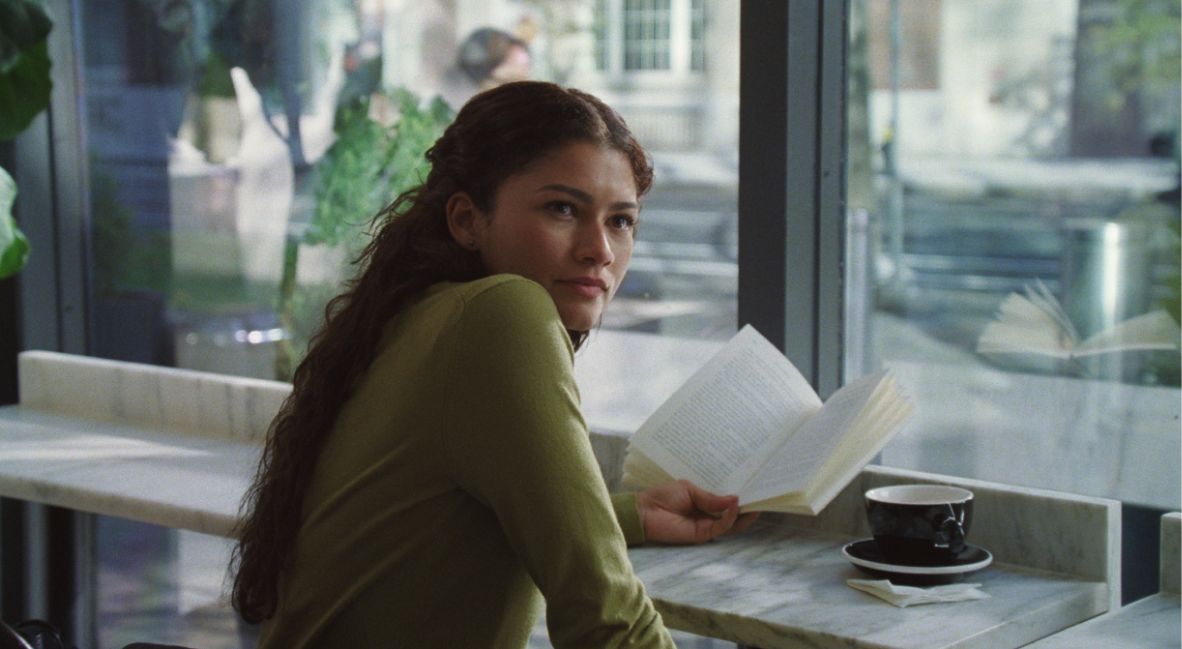
It’s why the best moments are the opening sequences when we first meet the couple and the way it is edited by Joshua Raymond Lee. Because the opening shows its hand so beautifully that it sets up the film in a way in which we’re posed to question every reveal and every decision that the characters – mainly Charlie – make.
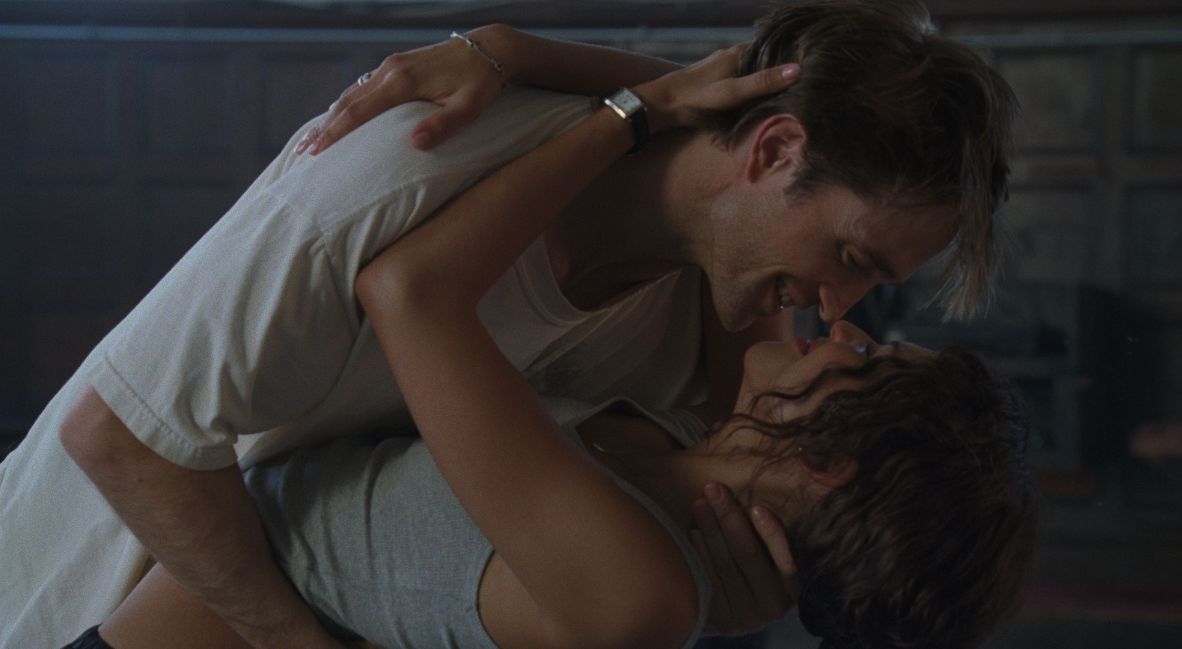
In the first scene, we watch as Charlie prowls around a local coffee shop, sets his sights on Emma, and meanders about to think of a way to catch her eye. The editing effectively depicts this not as Charlie’s meet-cute, but as a man scheming his way into an interaction with someone with Zendaya-level poise and beauty. The editing jumps back and forth, integrating scenes of his own paranoia, perceiving baristas with judgmental scowls, to imagined first words. He takes a photo of her book, ultimately, when she leaves her window spot, to force a conversation.
Their first meeting? A fumbled scheme that Emma rescues, offering him the chance to do it again. Their first date reveals a lie; their first kiss sets off literal alarm bells. It’s one red flag after another. The most emotionally raw moment occurs when Charlie whispers sweet nothings into the ear she’s deaf in. This couple was always hurtling towards destruction and emotional vacancy, and the film is all too happy to let that vacancy dictate the tone and momentum.
Because even if we can see that the relationship is a sham, that most of the friendships are awful (never befriend a Rachel), we should at the very least understand why Charlie and Emma might fool themselves into near-nuptials.
Emma’s big reveal is the inciting moment, but The Drama fails to interrogate it.
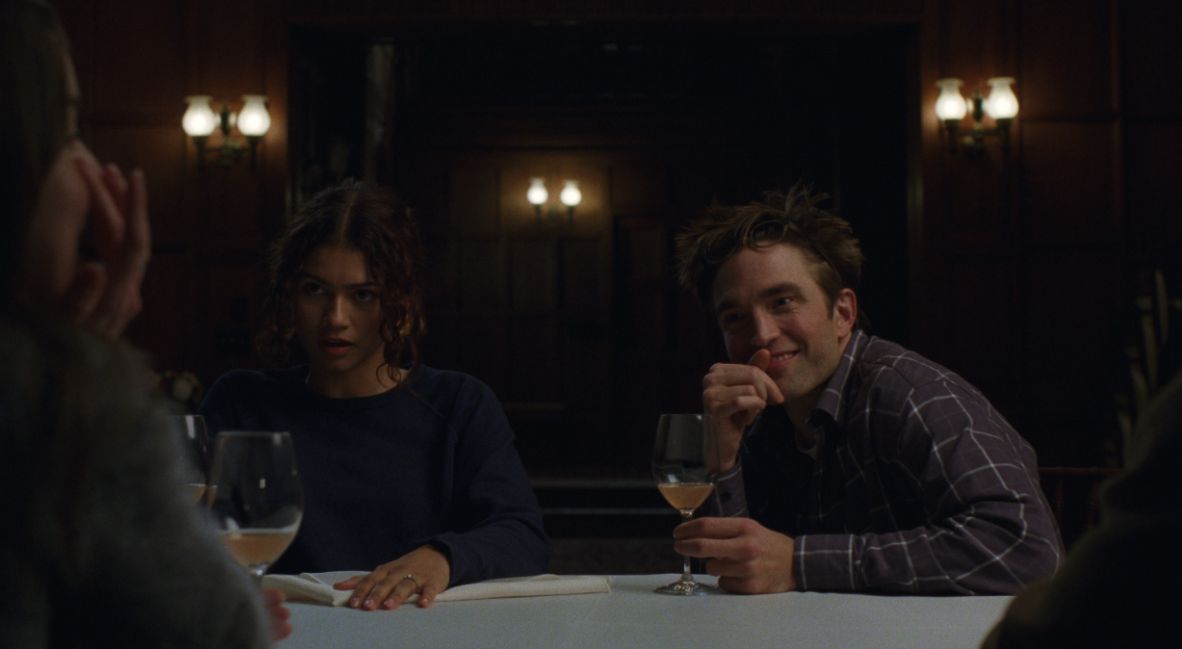
But so much of the story hinges on that major, jaw-dropping reveal, poised for think pieces, heated discussion, and a whole lot of irritating online discourse. And yet it doesn’t really interrogate it beyond whether or not Charlie can accept it and move forward with their marriage. The script doesn’t really care, beyond watching the slow internal implosion Charlie undergoes as he unravels at the seams, realizing that his picture-perfect life with his picture-perfect fiancé is no longer what it appeared to be.
There are just some weird and unexplored threads regarding Emma’s revelation and how it engages with the reality of who is often the real face of the crimes her character nearly committed. It’s refreshing to have a film like The Drama so eager to explore original ideas with adult characters and their complicated dynamics at the forefront. But it often feels as if Borgli bit off more than he could explore.
All of that said, there are a lot of strengths to The Drama, which makes the clumsy script all the more frustrating. It’s gorgeous to look at, for one, and not just because many of us would leap at the chance to live in that apartment. Technical elements, such as the score by composer Daniel Pemberton (Project Hail Mary, Eddington), set the stage for the tension-riddled story, with off-kilter musical motifs that create a destabilizing discord. It’s an early suggestion that all is not right.
The Drama is at its best when it succumbs to the brewing and noxious anxiety.
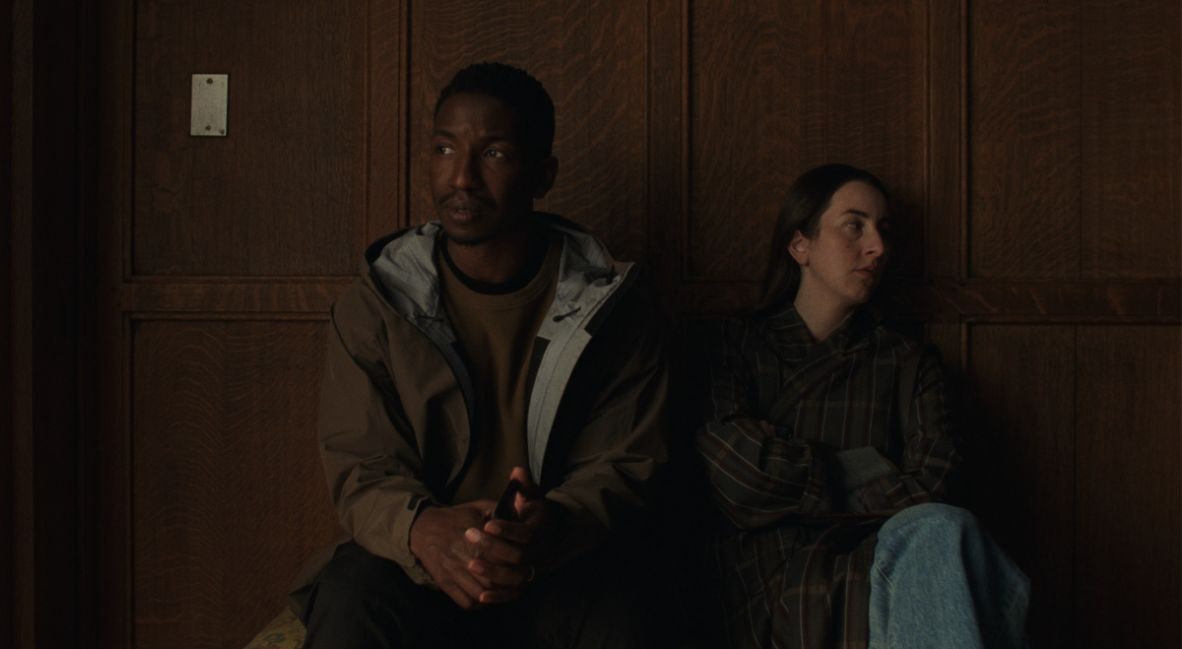
Similarly, the camerawork is sublime. We ricochet between snippets of time, jumping ahead and back as the story assembles itself, Charlie’s anxiety-addled psyche desperate to piece together what he wants without any easy clarity.
Between the editing, direction, and cinematography by Arseni Khachaturan, The Drama better engages with the agitated atmosphere. A zoom-in shot is a perfect visual nod to Charlie’s mounting panic. And the way the camera holds on to Zendaya’s face in a pivotal moment highlights her own internal battles.
The cast, too, is fantastic. Zendaya, despite having a genuine It factor, can sometimes struggle to convey a lived-in authenticity in her work. And while The Drama never believably convinces us that her character would almost do what she did, Zendaya does fine work in capturing Emma’s blend of humiliation at spilling the beans, defensiveness over how her fiancé and friends reacted, and palpable sadness at the slowly rotting romance she’d believed in. It is, however, odd that the script never allows her a moment to feel remorse. But again, the script isn’t interested in layered interiority; rather, it’s more interested in the mess of impulsive decision-making.
Zendaya delivers her best performance while Robert Pattinson reaffirms his range of talents.
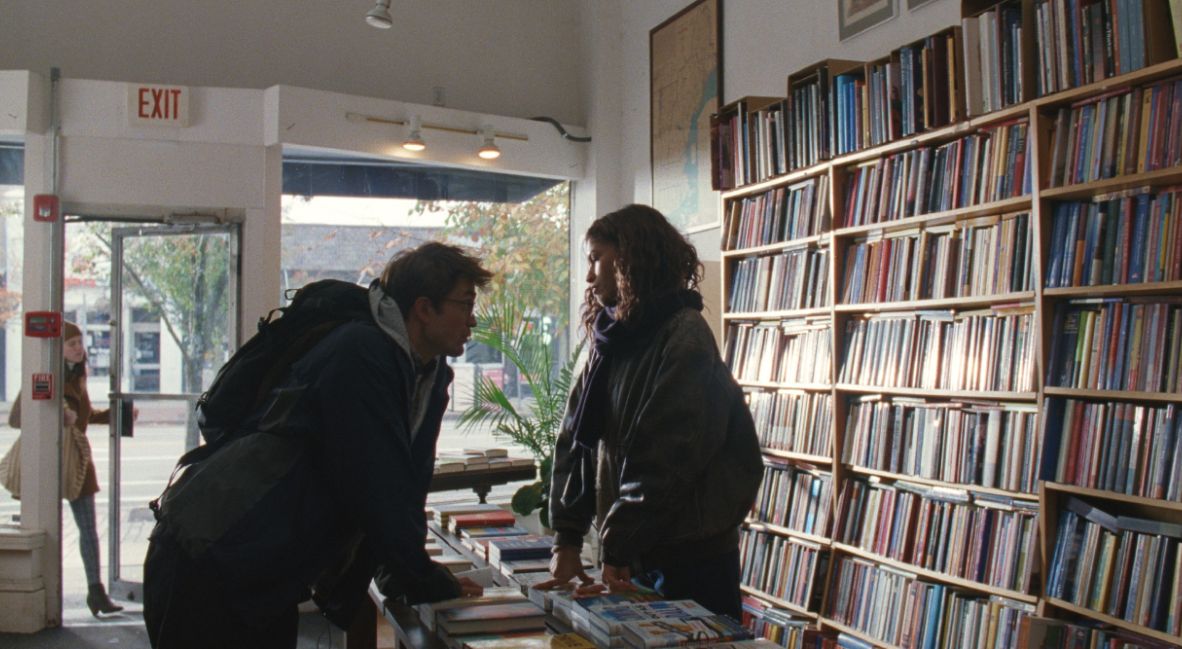
Pattinson side-steps expectations as always, bringing his wily, wild-eyed energy to a character who chases calm and often disrupts his own idealized peace. He’s fantastic and makes a meal of a character who seems intent on making each bad moment a little worse, while, for the most part, happy to assume the role of victim, which makes his increased worry over Emma’s perceived anger and hostility all the more contemptible, playing into archaic stereotypes. Who hasn’t raised a fist in anger at a car that nearly hits us mid-crosswalk?
The supporting cast is uniformly strong, from Haim’s enraging vitriol to Zoë Winters delivering yet another scene-stealing performance in an anti-rom-com. The Drama allows the actors to flourish, giving them room to breathe, even if the script itself fails to enrich the characters they’re playing beyond beat-to-beat moments. The most revealing interactions are the beginning and end. The first, a moment of deceptive introductions, and the ending, without giving too much away, is a meeting of two people at their most honest.
The Drama is often a frustrating test of patience. Its greatest strength is also its greatest weakness, possessing an inability to settle down. The result is a thrumming, unsettled atmosphere that creates the cinematic tension pulsating behind the most heated interactions and most cringe-inducing moments. But it also means that the script can’t maintain a point of view, can’t commit to an angle, and instead adopts a manic tone that presents unflinching narrative hooks without caring enough to ask why.
The Drama is out now in theaters.
The Drama
-
Rating - 6/106/10
TL;DR
The Drama is often a frustrating test of patience. Its greatest strength is also its greatest weakness, possessing an inability to settle down.