
Saros, the upcoming action game developed by Housemarque and published by Sony Interactive Entertainment, is pure adrenaline. Built on the foundation of Housemarque’s previous games, Saros aims to be familiar yet new at the same time. PlayStation Canada invited me to play the game from the beginning, and if those three hours are anything to go by, Saros is set to be another incredible and stressful experience from Housemarque.
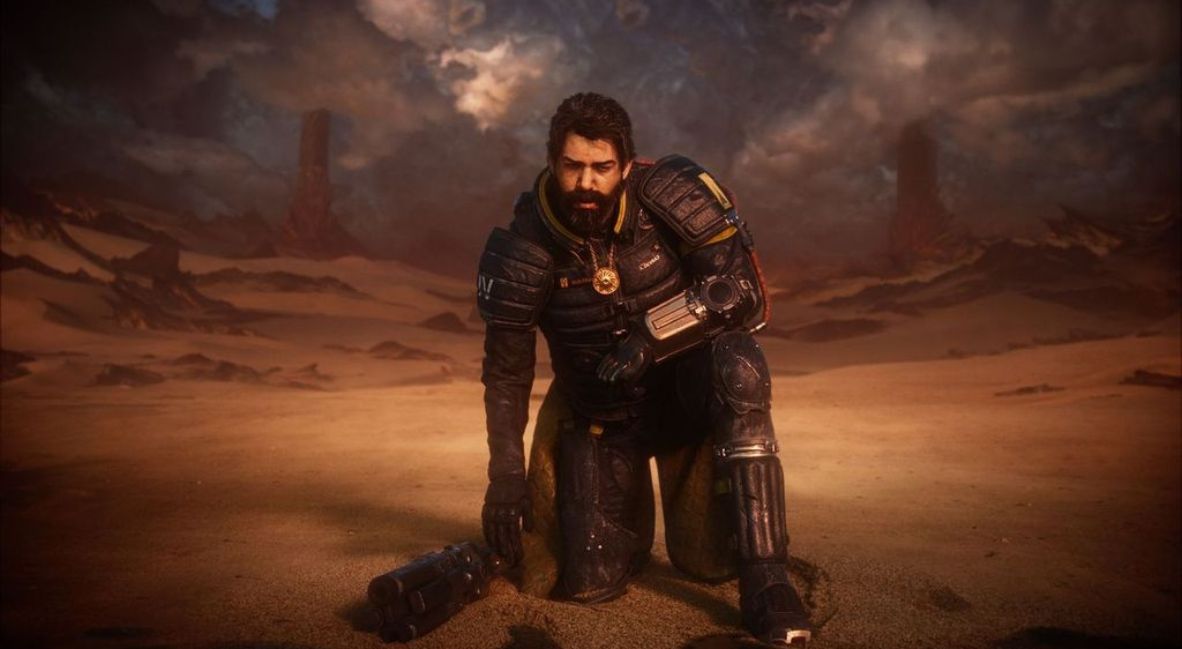
Saros brings in Midnight Mass‘ Rahul Kohli as Arjun Devraj, a Soltari Enforcer fighting across the alien planet Carcosa. The narrative bits across the preview are tantalizing, offering glimpses at why Arjun is there in the first place.
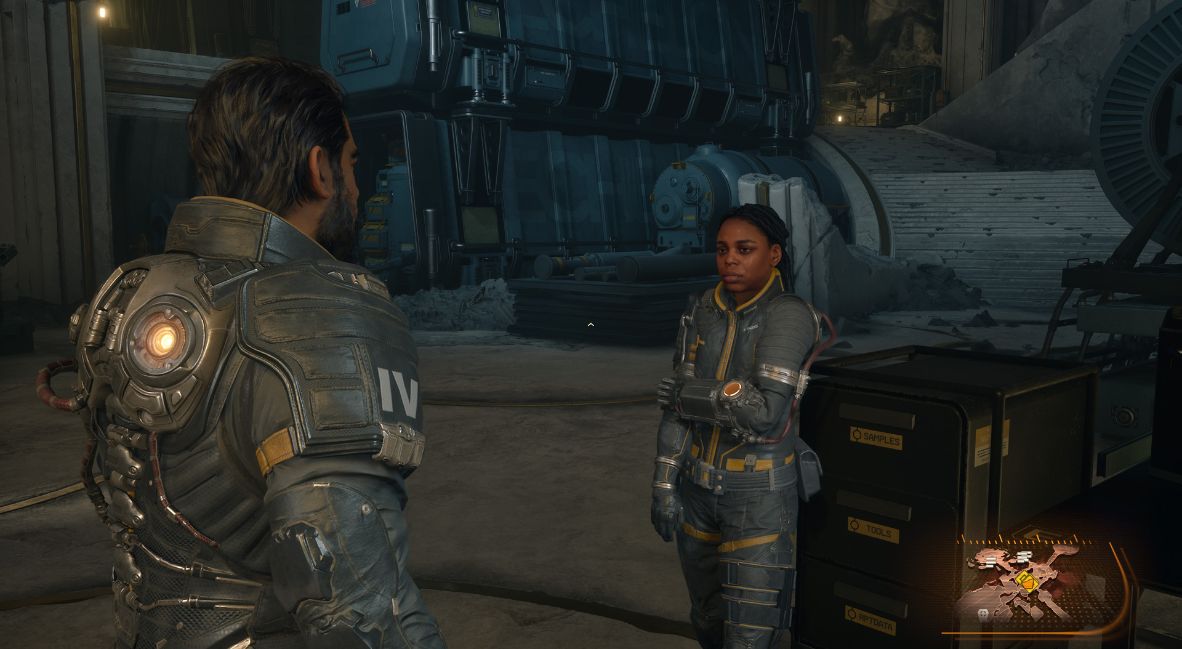
While Housemarque’s last game, Returnal, was a solitary and lonely experience, Saros, so far, is anything but. Arjun isn’t alone on Carcosa, sharing the horrors with a crew of other survivors. Rahul is fantastic in the early hours, his gravely voice imbued with gravitas and necessary pain.
I don’t want to spoil the reasons why Arjun and company are there, but they’re looking for something. The world keeps changing, and for whatever reason, Arjun keeps coming back after every death.
They’re all stuck at the whims of an Eclipse, which seems to change the planet constantly. New bits of conversation and story poured out with every new text log found and every run. While it doesn’t feel as lonely as Returnal, it doesn’t feel any less harrowing, with Arjun and the crew struggling to figure out the truth Carcosa is eager to hide.
Saros continues Housemarque’s tradition of offering lightning-fast action.
Saros continues Housemarque’s tradition of offering lightning-fast action. The bullets and projectiles fly at a mile a minute, and death will come quickly and easily with one misstep. Returnal lived in all the trappings of a bullet hell shooter, where dodging wasn’t just recommended, but essential. Saros aims to change the approach, with Housemarque calling it a bullet ballet rather than a bullet hell.
Saros gives Arjun the usual weapons, like pistols and assault rifles, but it also gives him power weapons and a shield. Using R1 brings a shield up around Arjun, absorbing projectiles to use as ammo for the power weapons. The default power shot is akin to a rocket launcher, blowing up and dealing damage to anyone nearby. In the second biome, I found another that launched a ton of small bullets that would swarm enemies.
Because the ammo for the power weapons comes from enemy projectiles, Saros actually makes you run towards incoming projectiles. Each combat encounter becomes a dance, one where dodging beams is essential, but other projectiles offer up critical refills of powerful parts of your combat kit.
You may step into one shot while avoiding another, even leaving some enemies untouched that offer more predictable shots that can recharge shots. The focus isn’t just getting away anymore, but instead making sure to use the shield appropriately.
Everything in Saros changes and is flipped on its head when the Eclipse rolls in.
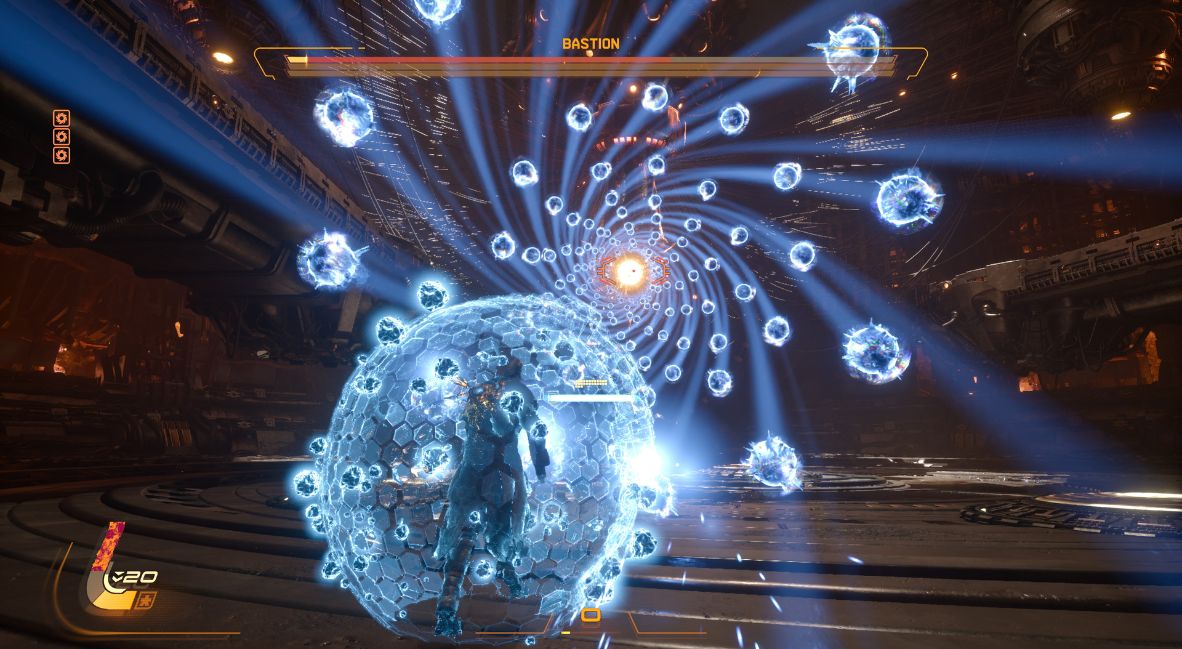
The addition of a shield may raise concerns about difficulty, but those worries are entirely unfounded. Saros kicked my ass a few times over the three hours, and the two bosses I went up against were a genuine challenge. My Returnal muscle memory definitely kicked in quickly enough, but even then, some deaths were a reminder to learn and adapt. Each run is a lesson learned, a shortcut opened, or a boss taken down, meaning there’s always something that helps you on the next run.
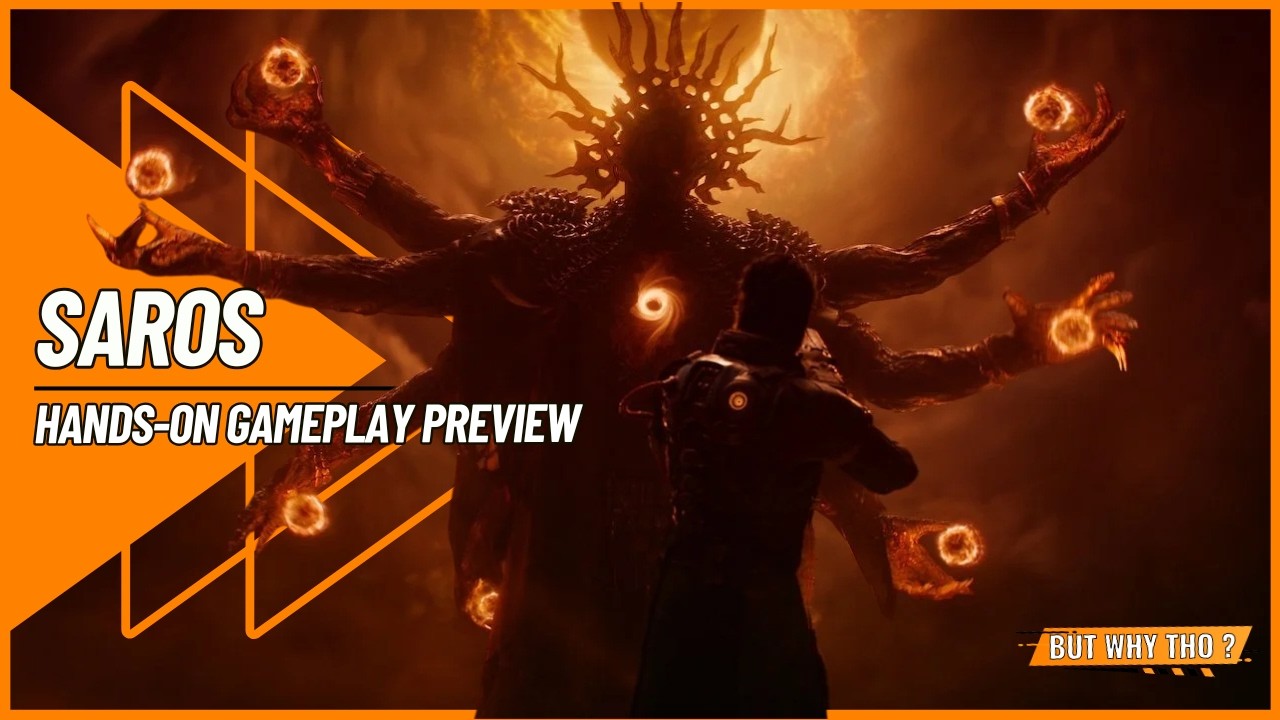
Everything changes when the Eclipse rolls in. Once you hit a certain point in a biome, you activate the Eclipse, turning the blues and greys of Carcosa into the red tendrils of Arjun’s personal hell. Everything washes over and changes, tentacles growing from rock.
Enemies hit harder, projectiles become corrupted that your shield can’t help with, resources get more lucrative – the Eclipse flips everything on its head. It’s a fantastic mechanic that I’m curious to see more of, whether it’s future dangers or possible saving graces that help address them.
The bosses are an early highlight, with the first boss being a massive wooden creature. Shooting out the spots that open up around the arena opens it up to damage, with the core being the weak spot. It doesn’t just do nothing; it sends out wave after wave of projectiles, not just on the ground but flying all over the place.
It’s classic Housemarque, with fantastic design blending with tight, responsive action. It takes three phases to go down, with the final phase turning into a claustrophobic hallway, limiting your dodge area to almost nothing.
Saros also introduces permanent progression, where Arjun gets more powerful as you collect resources called lucenite. I didn’t get too far down the progression path, with most of the early upgrades focused on increasing Arjun’s Resilience (health), command (shields), and drive (lucenite collection). Some nodes require specific collectibles found in the world. Most chests you find in a run offer a choice between a new gun, modifiers that make Arjun stronger, or resources.
The Dualsense also feels fantastic, with the haptics rattling away in different ways.
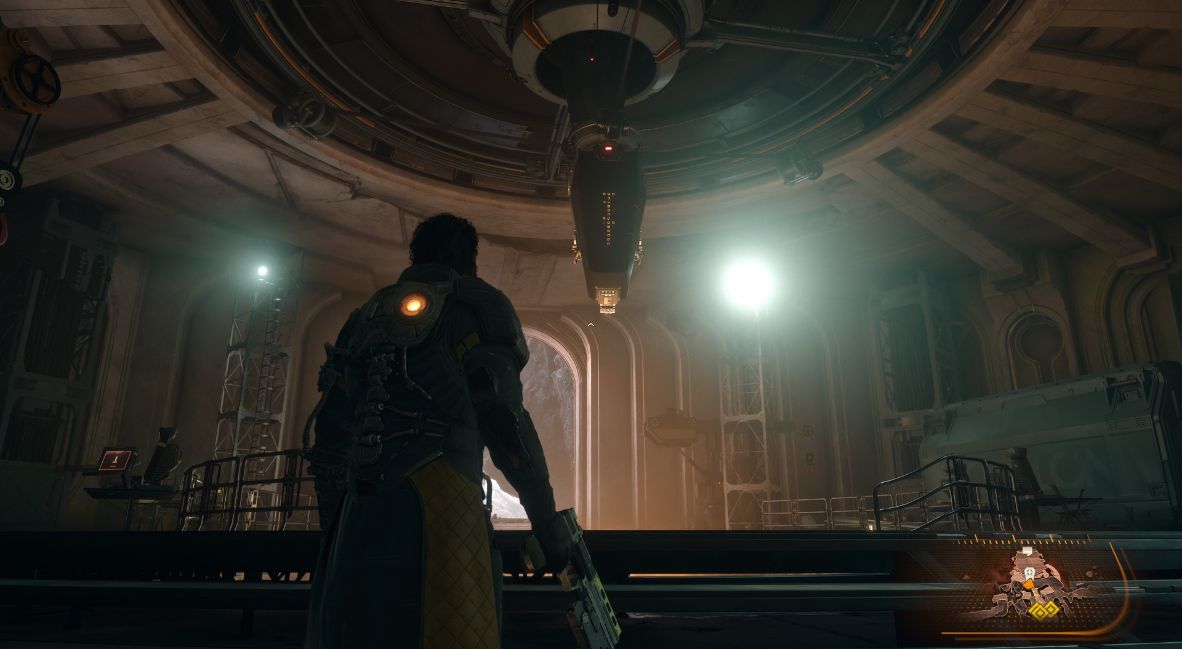
The Dualsense also feels fantastic, with the haptics rattling away in different ways depending on the gun type. Pulling down L2 halfway changes to secondary fire, turning an assault rifle into a single, more powerful shot. It’s another early highlight, bringing you closer to the experience than before.
So far, Saros is everything Housemarque in the best way. It’s an evolution of their tried-and-true action combat, with new twists in the form of the Eclipse and the shield. The bullet ballet philosophy changes how you interact with the combat sandbox at every moment, countering the natural urge to run from bullets.
Between the tight and responsive combat, the narrative teases, and that one more run feeling burning in the back of my mind, the wait for Saros is going to feel like a long one. Thankfully, it’s just a few weeks left before Carcosa becomes a battleground.
Saros launches on PS5 on April 30, 2026.