

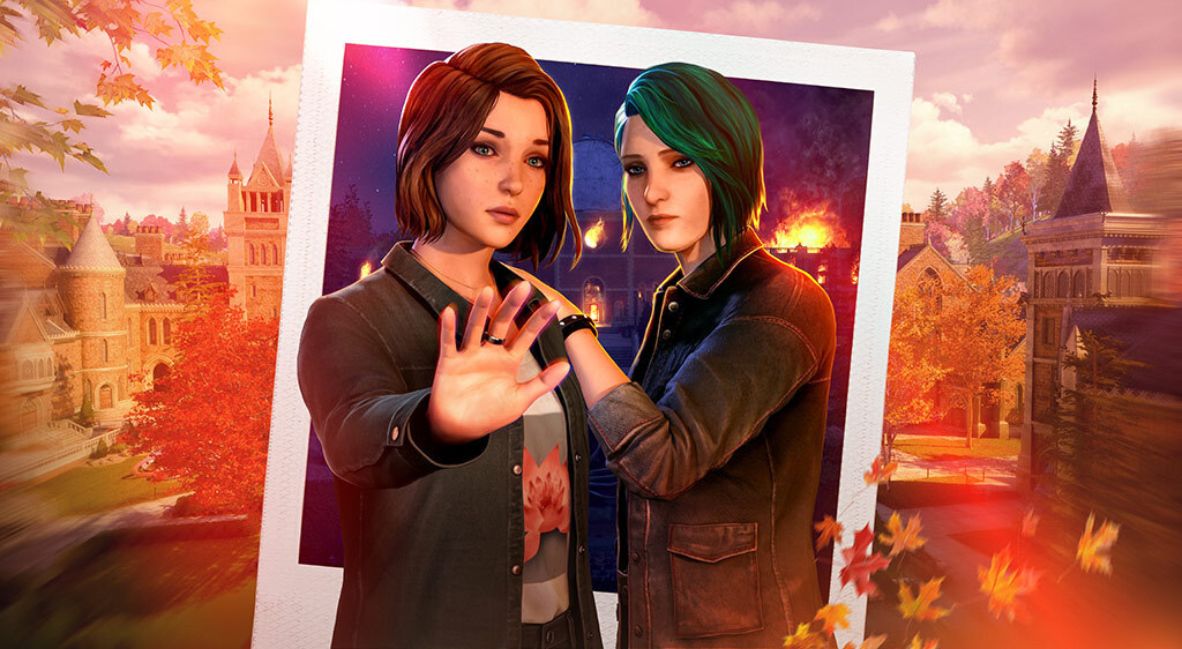
Life Is Strange Reunion is a choice-driven narrative adventure game developed by Deck Nine Games and published by Square Enix. The game follows series protagonist Max Caulfield (Hannah Telle) as she tries to save her home from a deadly blaze, with the help of her returned love, Chloe (Rhianna DeVries).
There were a thousand different ways this game could go wrong. Between the highly questionable final moments of the previous entry and the shocking announcement that Chloe would return, this final installment seemed poised to not so much deliver the final chapter of a beloved franchise but be the final nail in its coffin. However, against all odds, Life Is Strange Reunion manages to land the vast majority of its elements, crafting a truly special tale worthy of the franchise’s best.
Standing at the heart of this story are, of course, Max and Chloe. How the pair is reunited and how the story weaves Chloe’s reappearance into the main narrative is masterfully done. It builds on concepts from Double Exposure, strengthening the events of that narrative, while also cleverly tying it in with the events of the original game as well. But while Chloe’s return is a masterstroke of science fiction writing, even more skillfully handled are her interactions with Max. This is often accomplished by giving players a new level of narrative control over how the duo responds to each other.
Life Is Strange Reunion allows complete control over the central relationship.
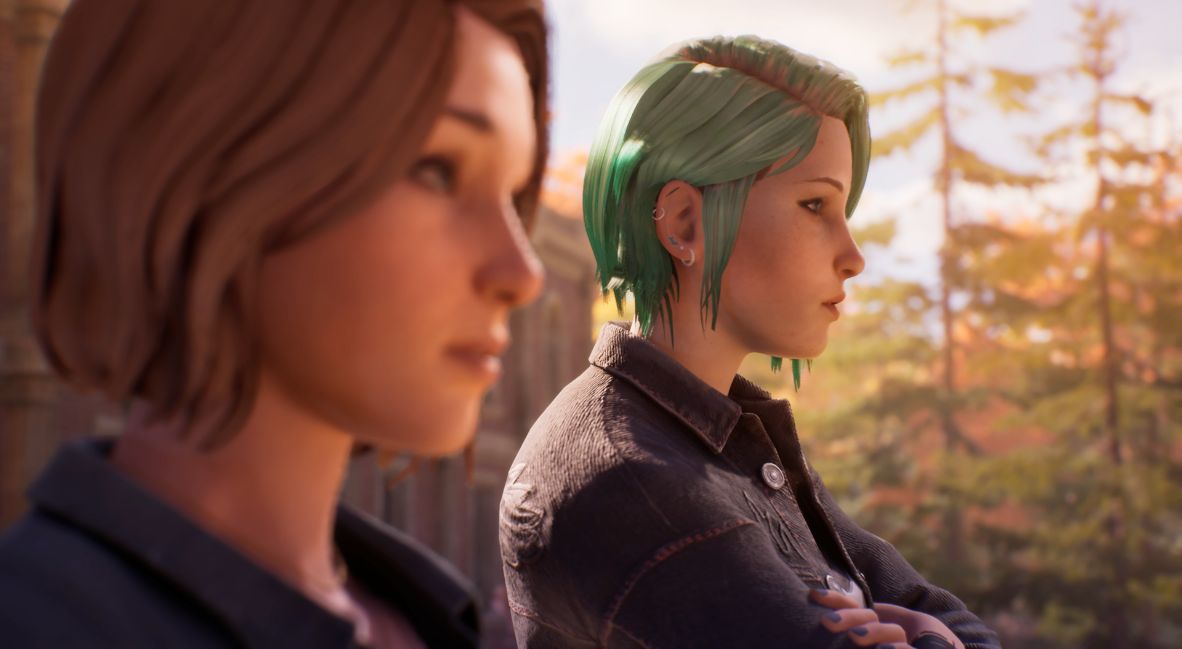
The leading pair takes on dual protagonist roles, as players swap between controlling one or the other. This gives the player a deep understanding of both characters. To maintain player agency at all times, players continue to control both characters during their dialogue scenes. This allows complete control over these moments, so players can ensure no comment is misinterpreted.
While some may argue that the level of control Life Is Strange Reunion gives players in these moments robs the game of gameplay elements, since there is no “failing” a conversation if you control both sides of it, I think many more will agree that the loss of gameplay is worth it. Max and Chloe mean a lot to many people. Knowing you can at least guarantee their conversations will go in the desired direction, no matter how the rest of the narrative plays out, ensures that this key element of the game’s story ends up where you want it to.
If you choose to have Chloe and Max rekindle their love, you are in for one of the best-written romances in gaming. The beautiful way the pair can support, cherish, and love each other is excellently handled, both through the writing and voice work. They are genuine in their voices, and Deck Nine allows each to be who they feel like they should be, while the other always loves them for it.
The rekindling romance between Chloe and Max adds authenticity to the world.
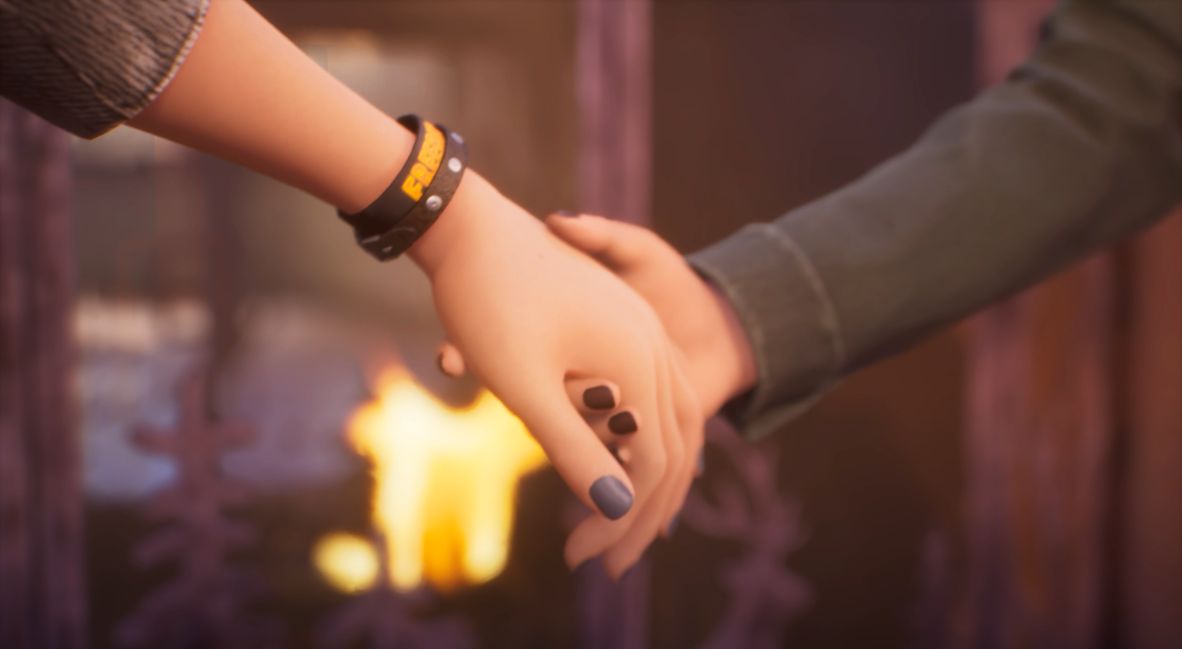
The pacing and build-up to the critical moments in the pair’s arc are also elegantly handled. The perfect amount of teasing is allowed before giving the player the option to see the final moment play out. One incredibly clever scene even works Max’s powers into it, with incredibly charming results.
The deep authenticity found here extends beyond the leading couple’s interactions. Every character has a well-implemented personality that feels consistent and true. This enables players to get a strong feel for how best to approach characters throughout the game.
The final way Life Is Strange Reunion enhances the world’s authenticity is through its portrayal of Chloe’s personality. As someone who has spent their life dealing with rougher personalities, Chloe’s attitude can be more forthright and unforgiving than Max’s. If players wish to roleplay Chloe as she is presented, they may end up taking some rather expletive-heavy dialogue options at times. And oftentimes, it’ll work.
Deck Nine Games refuses to soften Chloe’s edges. That’s a good thing.
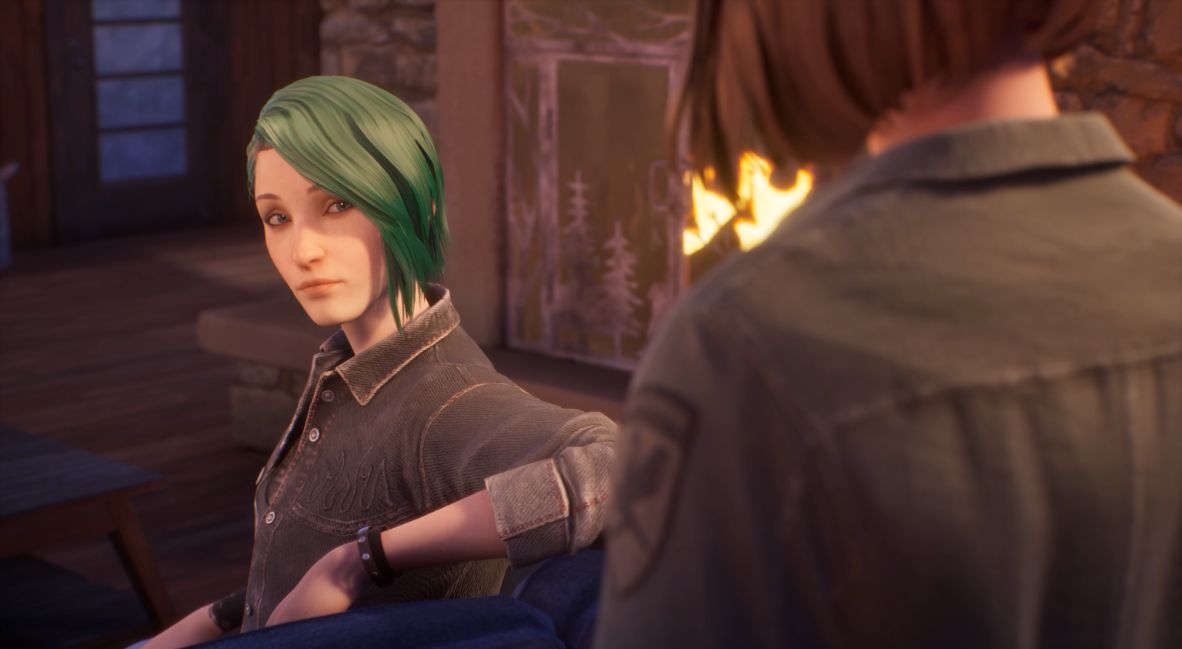
In my experience playing choice-driven games, it is nearly a surefire bet that telling someone to pull their head out of their butt will lead to a sub-optimum ending to a conversation. But there are times when this should be the right answer. And it is definitely the answer that Chloe would give. Rather than undercutting the protagonist’s natural voice, Deck Nine allows her aggressive approach to often be the right path. This lets the character be who she is, while also being a ton of fun to play, as she gets to say things many of us would sincerely love to.
The only place where the sincere, authentic character writing causes problems is in the resolution of the central plot in Life Is Strange Reunion. After coming home from a trip, Max returns to Caledon College to find it in flames. Using her recently returned time manipulation powers, she jumps back to before she left so she can prevent the inferno that will consume her new home.
How the narrative explores the motivations and circumstances that create the building tension surrounding the elite college and the town that hosts it is engaging and nuanced. All sides feel like they have fair grievances, leading to a complicated mess of turmoil.
The main misstep is the reveal about the fire at Caledon College.
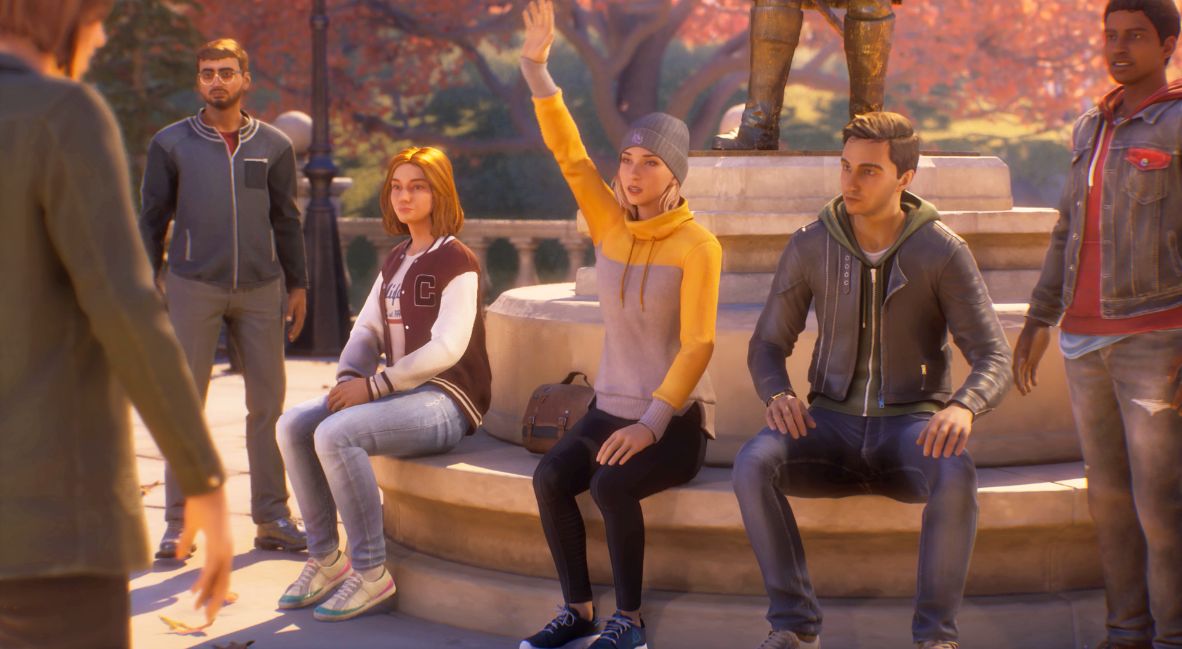
However, the eventual reveal of who is ultimately behind the fire is hard to believe. Rather than feeling true to the characters, as the rest of the story is, Life Is Strange Reunion‘s antagonists ultimately feel like they were chosen solely for their potential as plot twists. Surprising twists like this usually work in mysteries, but given how effectively the game writes its cast, it would’ve been better to have a more obvious result that fits the tone.
Melding in perfectly with the game’s story are the gameplay mechanics. Max’s time-manipulation abilities play well into investigations. Using them to discover key elements of a conversation, you can rewind time to do the conversation with new options, thanks to the knowledge you’ve gained.
The time manipulation also heightens some of the most tense moments of danger. Since Max maintains items she picks up when she rewinds time, a couple of key moments task the player with doing things that are initially impossible, but through rewinds eventually become doable. These moments are accompanied by excellently implemented music and rumble support, creating growing dread and keying the player in on when they need to initiate a rewind.
Life is Strange Reunion is a fantastic and emotional experience for fans.
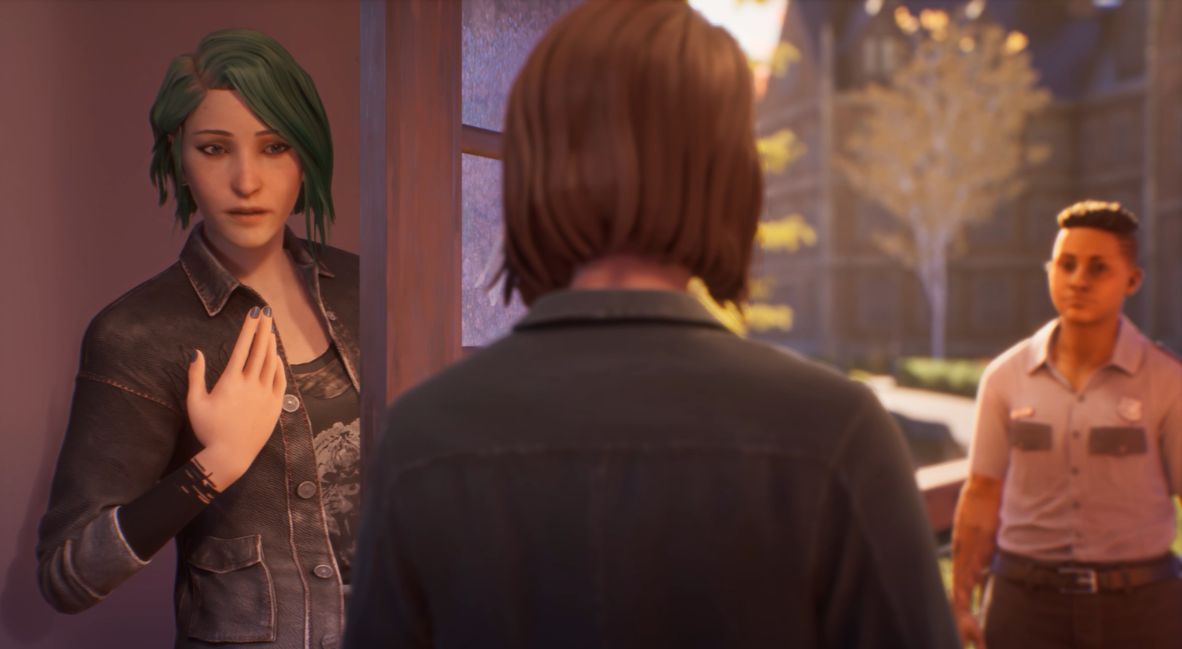
The visual design remains largely unchanged from its predecessor. The grounds of Calledon College are instantly familiar to those who walked them in Double Exposure. The game’s trippier sequences are skillfully crafted, infusing the narrative with truly unsettling moments through their surreal elements.
While the game’s visual design is well done, its implementation at times faltered. Visual glitches occurred now and then, most frequently a strange tendency to turn characters’ hair white for no apparent reason being the most notable. There are also times when facial expressions fail to convey character emotions properly, leading to a couple of off-looking moments.
Life Is Strange Reunion isn’t perfect, but it hits the most important notes. Getting to see Max and Chloe together again is a phenomenally emotional experience. Thanks to great writing and voice work, these two get to lead a fantastically realized cast on a journey that feels like a wonderful send-off for them, even if it falls short of perfection.
Life Is Strange: Reunion is available now on Xbox X/S, PC, and PlayStation 5.
Life Is Strange: Reunion
-
Rating - 8.5/108.5/10
TL;DR
Life Is Strange Reunion isn’t perfect, but it hits the most important notes. Getting to see Max and Chloe together again is a phenomenally emotional experience.