The breakout game from House House, Untitled Goose Game, was a fan and critical favorite. The chaos of being a goose tapped into the comedy that players can create. Now, their latest title, Big Walk, is offering a co-op experience that puts simplicity, creativity, and play first.
The game’s synopsis sets the stage for what to expect. “Set out with your friends through a wide-open world full of challenges, puzzles, and discoveries. You’ll need to work together to find your way around, stay in contact using an assortment of tools and toys, and figure out new ways to communicate when you suddenly find yourself speechless.”
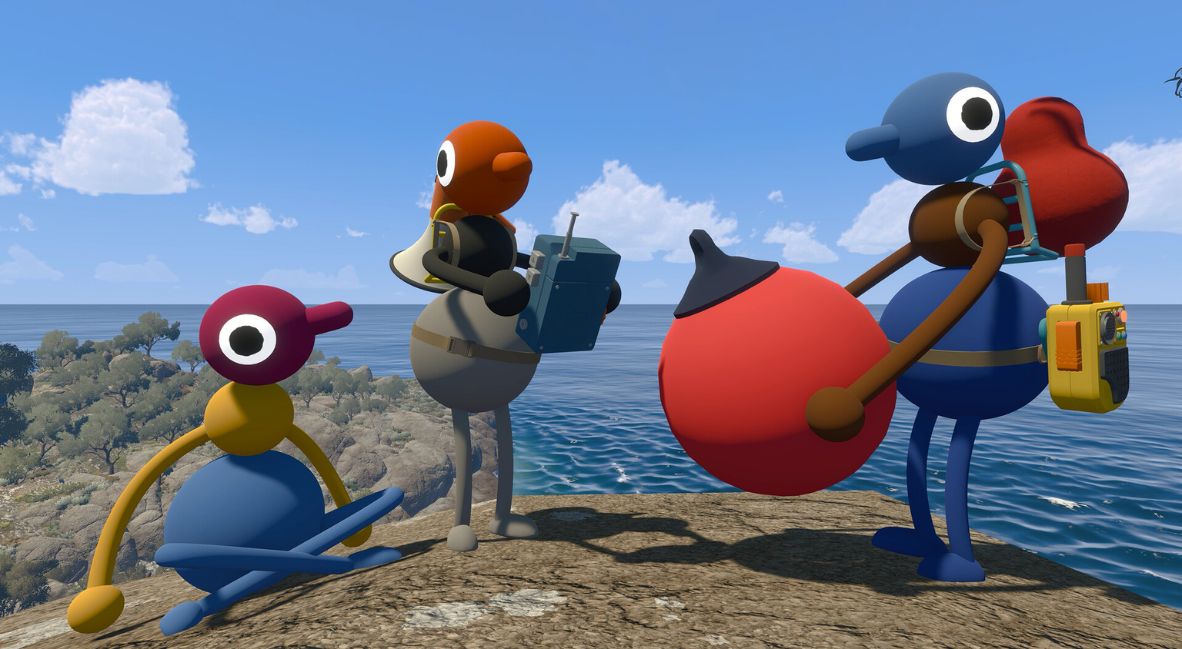
Designed for play with others, Big Walk places players into a world where they solve puzzles together. The environment itself is lush and realistic, with a day-and-night cycle that facilitates different kinds of teamwork. However, in that environment, vibrantly colored objects and structures denote the parts of the world you can interact with.
Whimsical in nature, the colors and harsh shapes serve as an immediate visual signal to the player that something can or should be interacted with. However, once you’re in the world and out of the tutorial zone, the game becomes what you make it. And by that, I mean, spatial voice chat is how you communicate, and with no instructions for puzzles, it’s up to you to teach your co-op partners and succeed.
Even character customization becomes a communal act.
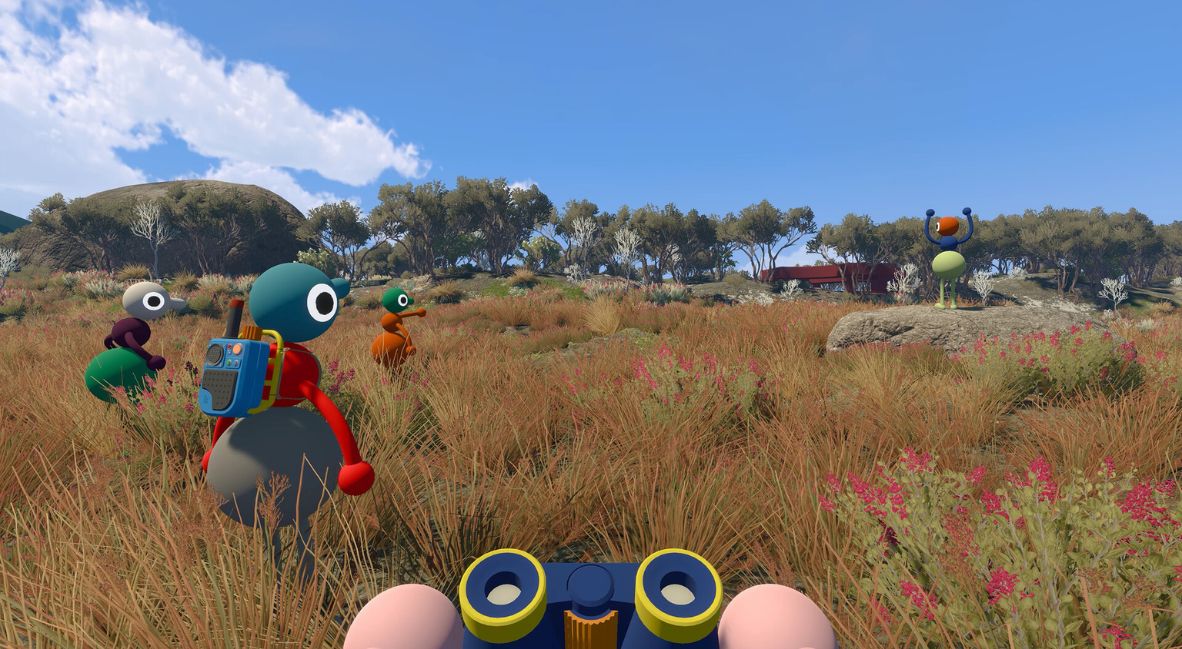
For my hands-on preview, I went on the titular “big walk” with Mike (Six One Indie) and Jill (The Indie Informer). We loaded in as these oddly shaped characters that look like a kid drew circles and then gave them legs. I say this with love.
The simplicity of our characters made our actions all the more entertaining. We didn’t have mouths, so the circles on our heads, which can best be described as noses, moved hilariously with our voices. In these simple forms, we could pick each other up, sit down, slide down certain inclined areas, and run in the most adorable way.
However, the coolest part is that the first-person perspective means you can’t see what you look like. While you can see your partners, you can’t see yourself. That is, aside from the one area we dubbed the salon, which had a mirror. Still, the point of perspective is that it forces you to make even character customization a communal act.
Relearning how to communicate is a fun function of the co-op experience.
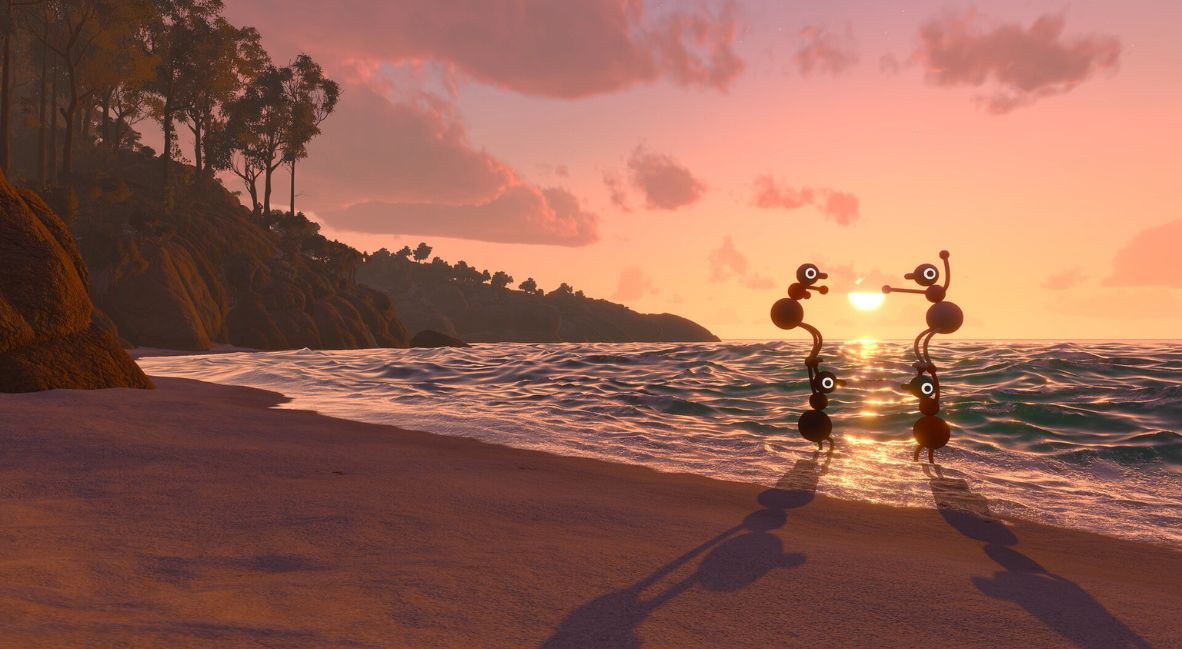
Using a paintbrush, a player picks a color from the wall of colors and paints the three parts of their body—bottom, middle, and head. The act of describing different blues and pinks was the first moment when it became clear that communication was key. I couldn’t just ask for pink, I had to describe the pink. When I said “hot pink,” I had to correct myself to magenta, and so on.
Big Walk isn’t about just one person understanding something, but about communicating your thoughts to someone else. While we are technically more connected than ever before, Big Walk highlights how little we truly communicate with each other. It even highlights how my creativity in conversation and in giving instructions has almost atrophied.
As we played, I found myself inherently wanting to stay with the group so I could hear them, not just to complete puzzles, but to be a part of something. While we only spent an hour in the game during our hands-on preview, I wanted to stay longer and do more. It took until after the fact and while writing this preview to realize it’s because it emboldened a sense of creativity that’s been missing. But it also made me feel truly connected to others.
Teamwork is essential in the latest from House House.
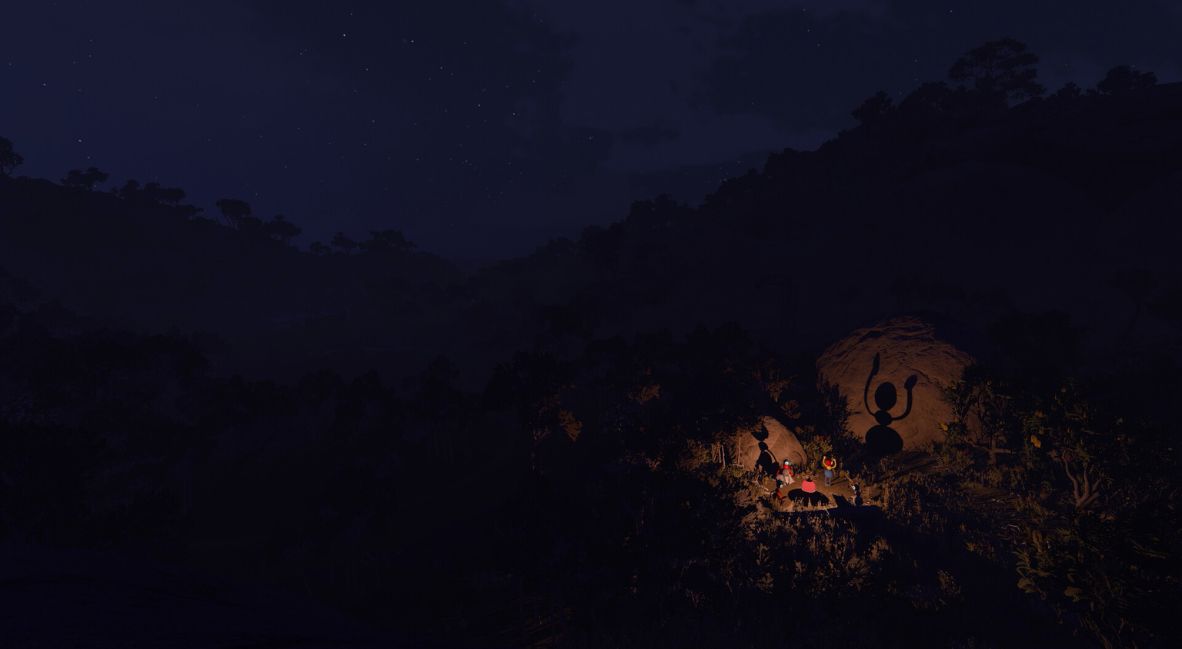
The standout element of the sophomore title from House House is that the whimsical elements erupt from the world so starkly that they force the players to engage creatively. The first puzzle we cleared involved finding four objects hidden in the area, bringing them back, and placing them in cases to begin the next stage.
Hunting for these oddly shaped objects, which our group has just started calling gourds, brought us several challenges. Some were just following a flashing light in the distance; another involved us pressing a button in sync with each other (which, of course, prompted the classic “on three or after three” question); then we had to stand on top of each other to hit a button. But the one that stood out required one person to stand in a room with the door closed to instruct someone outside.
In this last one, Jill stood in the room and described several doodles to me. Those doodles needed to be arranged in the correct order to unlock the gourd (seriously, I don’t know what the items are called, but gourd fits). In doing so, calling something a swirl had to be more specific. Was it oval or circular? In this case, it was described like a cinnamon bun.
Teamwork is paramount in Big Walk. Because of this it immediately becomes a game that I want to experience with others in my life. Even now, it feels weird to describe the communal experience Big Walk creates.
Big Walk makes you feel like a kid again.
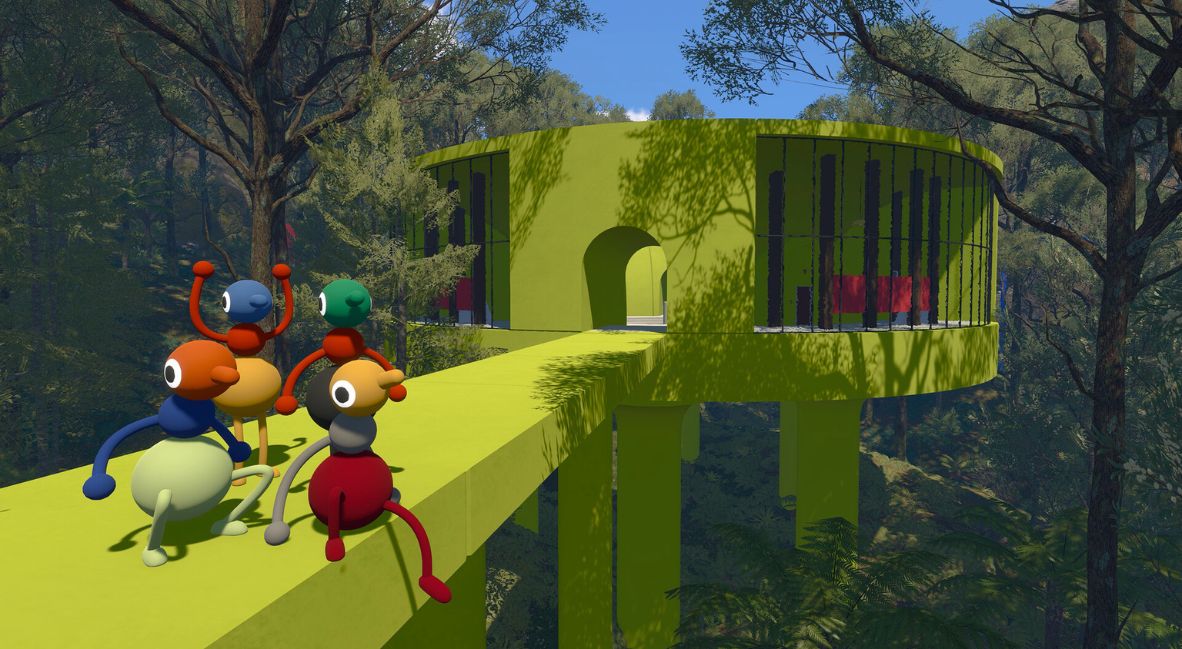
Big Walk taps into something so elementary about play. Not elementary in a derogatory sense, but that in only presenting you with images, shapes, or simple items, the act of play isn’t just pressing buttons. Here, we see play on display in its basest of forms, and that’s what makes it so fun as a participant.
At the same time, by stripping everything back and dropping players into a big world with no clear descriptions and the simplest controls, House House pushes players to be creative. I have not had an experience that so closely resembled a playground as Big Walk.
In its simplicity, House House took me back to childhood and put the adventure and comedy into our team’s hands. With co-op support, even a group of ten has an experience unlike anything I’ve experienced before in the best ways. It made me feel like a kid again, and right now, it was just what I needed.