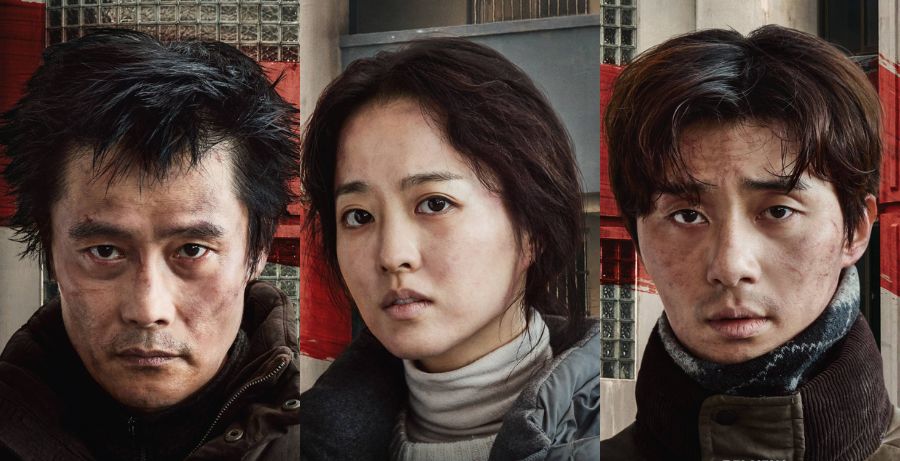
Concrete Utopia is a disaster movie based on a webtoon that director Um Tae-hwa has used to tell a generational story about class, real estate, and the moral complexities of survival. Having its United States debut at Fantastic Fest, we got the chance to talk with Um Tae-hwa about the film, adapting WEBTOONS, and the lasting message he hopes audiences will take away from Concrete Utopia.
This interview was conducted via translator and was edited for clarity.
BUT WHY THO: There are a lot of webtoon adaptations in film and TV right now. As a director who has done his own adaptation, what do you think it is about the webtoon medium that makes them such good stories to adapt?
UM TAE-HWA: I think overall, there’s probably an exhaustion of material in all mediums but also for webtoons. I guess there are very few limitations to your imagination when it comes to webtoons and when you dramatize [them]. So there are various stories and I think that’s why the dramas or the movies are probably excited to work with these storylines.
BUT WHY THO: And what drew you to Pleasant Bullying as a story, and why did you choose the angle you did with Concrete Utopia, which focuses on a very specific part of the story?
UM TAE-HWA: I’ve always liked the disaster genre, so I really enjoyed reading the original work. But also getting to use the apartment as a background, which is a very unique context in Korean society. I myself was born and grew up in an apartment, and there’s probably more than 50% of Koreans actually live in apartments. It’s the residence type that a lot of Korean people actually live in which makes it very easy for Koreans to identify or be immersed in [the story]. Historically, culturally, socially, and politically, [the apatment] is an intense representation of Korean society in that way.
In addition to the explanation I just gave you, after the Korean War, there were a lot of economic developments in Korea. At first, the government was led to build these apartments as the preferred residential type. But now it has turned into “brand apartments” that are invisibly dividing Korean people into social classes. It’s creating this unseen social problem. So, instead of adding social value as a residential place, it’s sort of flipping the main reason for apartments. I wanted to [show] those social aspects in this film as well.
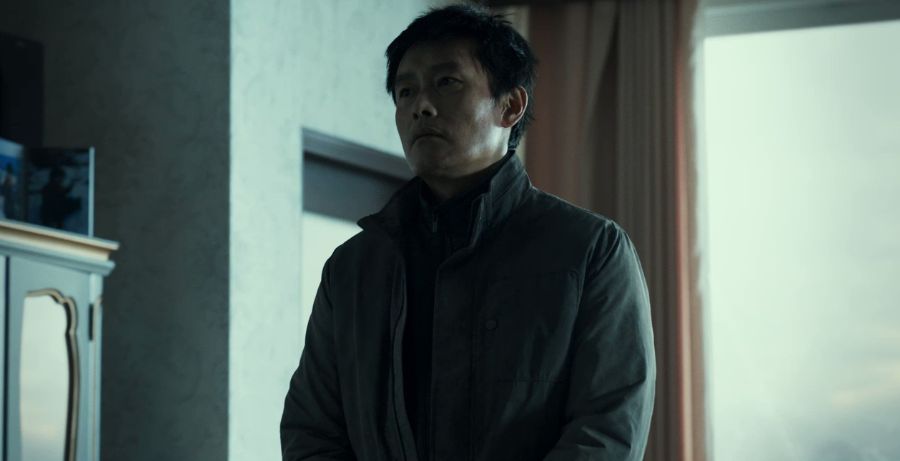
BUT WHY THO: One of the things I love about Concrete Utopia is how detailed every scene is. It feels like if you go a different direction than the characters, you’ll be able to find a whole new element of the world of story. How did you balance these detailed environments with the characters in the story?
UM TAE-HWA: I didn’t really think about [the world and characters] separately. But with the original work being the webtoon, instead of bringing that sort of the comic tone into the film, I was focusing on the fact that what if this disaster actually happened in Korea tonight then what would actually happen because of the disaster? I focused on the reality of what could happen for the tone of the film.
For this realistic tone, the very Korean-realistic tone, would bring out a lot of black comedy elements to the film as the satirical tone throughout the film. For example, in the party scene where the people are singing and dancing, I thought maybe in real life even if that actually happens Korean people will dance and sing and have a party. That’s what I thought maybe [this scene] is so detailed and realistic that maybe the Korean audience when they watch this will have to just laugh because it’s so realistic. That is the type of tone and realism that I was trying to have as a base
There are a lot of a lot of things that I did to put a lot of details into this film. Not only the main the leading characters, the extras, and other minor characters, I gave them very, very detailed backgrounds. I told them what unit they lived what career they had before the disaster, their family relationships, or who had survived a disaster, and things like that. I gave [the actors] a history of each and every character and then just let them sort of move within the setting that I gave them.
Visually, for the CGI as well, I tried to recreate almost identical imagery in the film of places that actually exist in Korea, and then we tried to destroy it. We are even the signs we are using on the ground are real so we could put as much detail as possible. I took a lot of pictures and I actually scouted a lot of locations myself, so that the audience can actually guess where they are when they’re looking at these images. That’s the type of effort that I put into this film.
BUT WHY THO: Lee Byung-hun who plays Young-tak and Park Seo-joon who plays Min-sung, are really well known for their acting, being leading men.
In the film, I noticed that visually, they both change. It’s a small detail, but Young-tak moves from looking disheveled to looking so alive and more like the leading man we see Lee Byung-hun usually play. For Min-sung, by the end his lips have no color, his face is injured, and he just looks broken. Why did you choose to parallel these two characters that way?
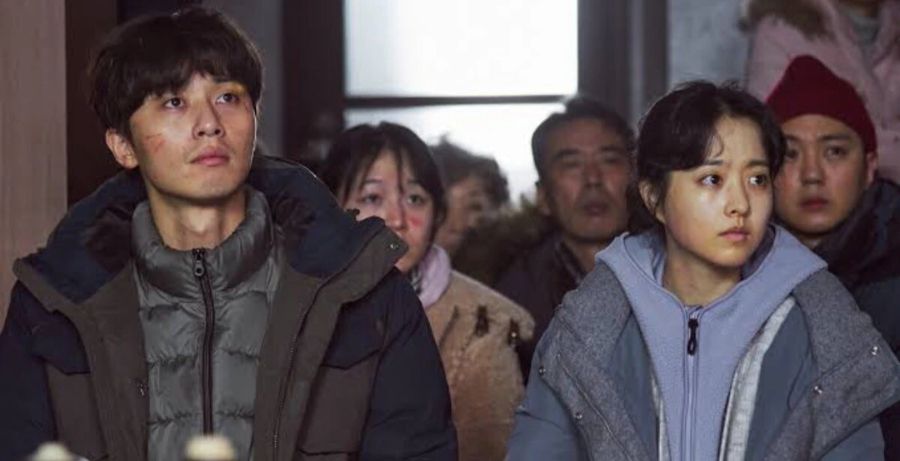
UM TAE-HW: So I’m not sure if that actually answers the questions. But I thought [Concrete Utopia] was also sort of a generational story as well as a disaster or class one. In Korea during an economic bubble period, there were a lot of apartments being built, and a lot of development was happening where the generation before us lived.
They very much believe that the male has to be the head of the household and think “I raised my family” and “I’m responsible for my family.” And these are the generations that work hard because they lived in that period. Then in the story, the previous generation is sort of represented by the character Young-Tak, and the next generation is represented by Min-sung, and it sort of creates sort of a father-son relationship.
The previous generation has a different mentality than Min-sung, who represents our current generation. When he’s forced to accept the values from the previous generation, he is confused and conflicted with his own thoughts. I wanted a he’s sort of a character to represent that idea of [generational tension].
Young-yak’s main thing is to think about survival as the central value and his life, and Myung-hwa, [Min-sung’s wife], on the other hand, thinks that survival is important but also human dignity is the most important thing that you carry on. So this means Min-sung is in between those values that he’s he’s a character who’s expressing that confusion, but between the two values
BUT WHY THO: What do you want people to think about once the film’s credits roll?
UM TAE-HWA: To continue what I mentioned before, I thought that you can’t really decide what’s more important between human dignity and survival. But I want it to move to ask the audience that question. During the resident meeting, when people were talking about evicting all of the outsiders, Myung-hwa suggested: How about we think about how to survive together with these people?
That question was just completely ignored. But I think that the act of asking that question is very important. We have to have those people to ask these kinds of questions. I think that that will bring the balance to these two different values across generations. I want the audience to ask themselves these questions too, and see how they interpret the ending of the film and then take that home.
Concrete Utopia is available now on Rakuten Viki VOD.