

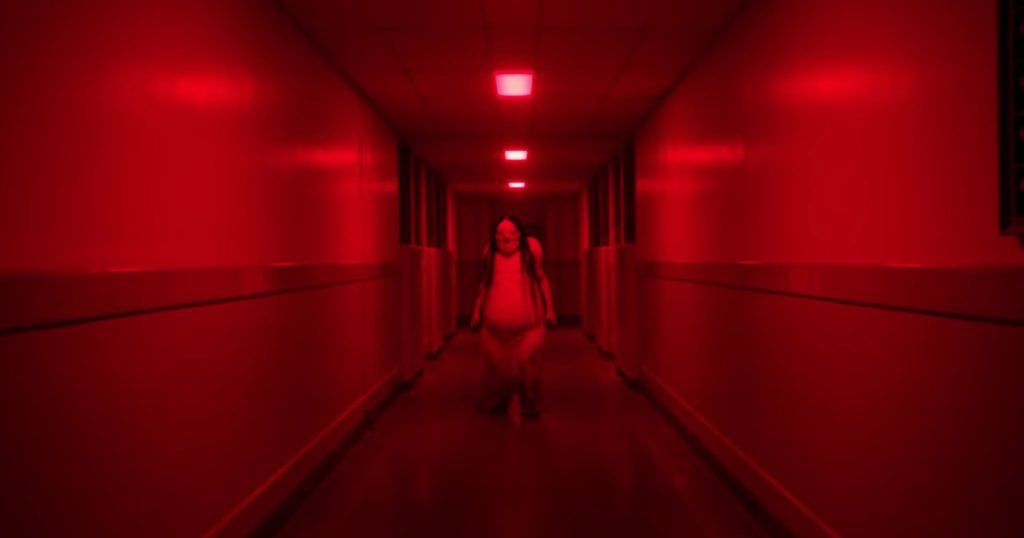
Stories are more than just entertainment: they influence us, change us, and ultimately get us ready to face the world. The first fairytales were horror stories. They aimed to teach children how to behave and stay safe in a world ready to eat them up. For some of us, scary stories have been constant since childhood. For me, those stories were folktales that my grandma carried with her, and her mother before her, and hers before her, and as far back as we could trace it. Tales of La Llorona or La Mano Peluda kept me up at night, kept me behaved, and the cucuy kept me from playing in the room where my grandpa stored his hunting gear.
When Alvin Schwartz wrote Scary Stories to Tell in the Dark, he introduced a whole generation of children to stories that were morbid, insightful, and of course scary. Many parents and adults try to protect kids from real-life horrors. As a result, they assume kids don’t understand a lot while growing up. But children see things. They feel the same grief as adults, the same fear of death as adults. All they lack is the words to explain themselves. Or, they are kept from finding the vocabulary altogether.
In my family, and in my culture, we know death from a young age. We celebrate Dia de Muertos yearly and confront death with celebration and not fear. We place pictures of our dead loved ones on alters and offer them food and drink while we paint our faces to make them feel comfortable around us. We open our homes to the dead, and for those who believe, the dead enter. This culture is helped along by exposure to stories like the ones I was told as a kid. For me, Schwartz’s folktales added to this education. They spelled out death, its imminence, and its reality.
While Scary Stories to Tell in the Dark wasn’t the first in all-ages and children’s horror, Schwarz offered a different view of the genre. With Stephen Gammell illustrating haunting images to accompany the tales, we got to see decay, and if you were like me, it got you to ask questions.
In the new film, of the same name, we see director André Øvredal and executive producer Guillermo del Toro’s take on Schwartz’s work, ushering new horror fans into the fold with their take on the stories that chilled us as kids. Horror works similarly across all age groups by instilling ideas of cultural fears and examining why we hold them. For younger audiences especially though, horror can be a vital source of finding out why they’re scared and help them confront it.
This is especially true for children who experience the death of someone around them or, like it was in my case, the violence of bad neighborhood. Parents want to protect their kids from the world, but in doing so can sweep the answers to a child’s experiences under the rug, leaving them to handle their confusion on their own. Horror helps children explore those questions safely. The genre often focuses on death, inspection of humanity, grief, and trauma. Whether in the form of a book or in a movie, kids can learn life lessons from horror.
Spoilers for Scary Stories to Tell in the Dark below the image.
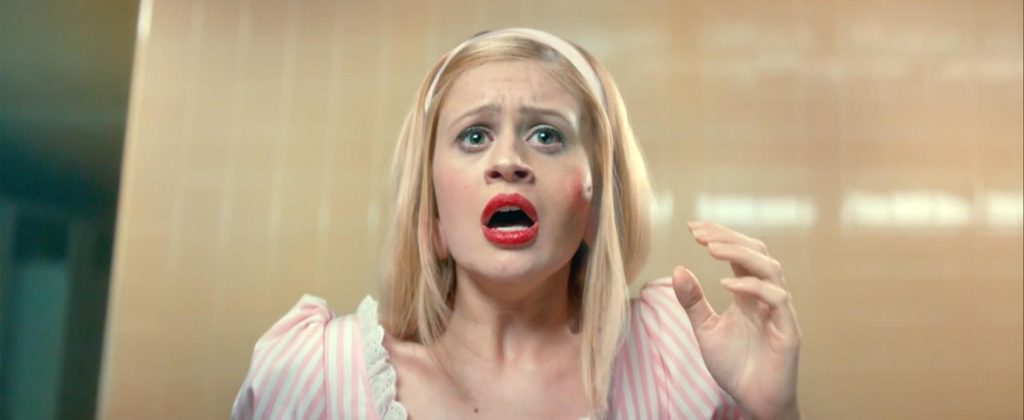
For being an all-ages film, Øverdal’s Scary Stories to Tell in the Dark offers up some adult scares. While ghosts are there, the film lives in body horror and uses it as a tool to explore the fears of the characters. This is most notable with Ruth’s (Natalie Ganzhorn) vanity and the spiders her cheek becomes home to, as well as Ramón’s (Michael Garza) fear of being seen as a coward and the Jangly man coming to collect. For Ruth, her face and her image are as paramount as her popularity. When the “Red Spot” appears as a pimple on the night of the school play she is devastated. When others laugh at her, she is humiliated. When the nest of spiders bursts from her cheek, leaving a gaping wound, she is near death.
As for Ramón, Scary Stories to Tell in the Dark takes place in the 1960s, with the Vietnam War going on and draft notices being sent out. In the last act of the film, as the Jangly Man falls through the chimney of the police station (a mash-up of three distinct Scary Stories) we learn that the monster coming for him is rooted in his fear of becoming like his brother: sent to fight and returning in pieces. While some may see this as a narrative device, the backdrop of the war also serves to highlight the injustices that Ramón faces.
While the overt racism Ramón faces from Tommy is on the surface to see, there are other elements that explore real-world fears through Ramón. While it is not a common stat, estimations put Mexican-American and Latino casualties at close to double their share of the U.S. population during the Vietnam War. This is a narrative that is often erased from the stories about Vietnam. The deliberate choice to showcase Ramón and his fear of war wasn’t about making him a coward. Rather, it was to explore the fear of being a young Mexican man called to war and sure that he wouldn’t make it home.
Horror works because it shows us what we fear. It builds empathy with the characters we see experience those fears and ultimately teaches us that sometimes the horror isn’t a boogeyman. Often, the horror is those who attack us based on our identity. In the film adaptation of Scary Stories to Tell in the Dark, the wonderfully executed jump scares and monsters work as a way to explore the fears of each of the characters put in the crosshairs, but through Ramón, it shows that there is more to fear than just the Jangly Man.
As a Mexican-American, Ramón is called a wetback by the film’s human antagonist Tommy (Austin Abrams). This is the first time I’ve heard that slur used to describe Mexicans and Mexican-Americans in a film in quite some time. A racist and a bully, Tommy later vandalizes Ramón’s car, painting the word across its hood and trunk. The first time I was called a wetback was when I was in first grade. Another child called me it and when I came home to ask my mom what it meant I saw her heart sink. That was her fear, that I would be subjected to the same abuse she was when she was in school. The true horror for her was of being the mother of a brown Latina who would always be singled out.

Ramón is also one of the very few representations of a lead Latinx character in horror that doesn’t pass for anything but Latino, and he doesn’t die. He’s a brown teen who in the opening of the film is forced into a situation with the police in a small town that left me scared. Ramón is approached out of nowhere, and as he reads a map by his car, the officer asks him his business, to which Ramón responds, “I’m following the harvest.” As a grandkid of migrant farmworkers, this line hit hard, and given that it was Ramón’s only out from a cop who was close to taking him in, it’s telling. While I was scared because of the amazing creature designs, the only moments I wasn’t scared for Ramón alone with Stella (Zoe Margaret Colletti), the lead character of the film and the only one in the film who doesn’t treat him badly or differently.
While this is more a subplot of the film, presenting the very real fear around being hurt because of your difference is presented in the plainest of terms. Learning early on that real monsters like Tommy live among us and not just in books is something that teaches us to begin confronting them, and can ultimately keep us from becoming them. Horror has always highlighted that sometimes fear is not instilled by and neither is evil done by just the paranormal.
Many times, and in the real world, it’s what we do to each other that is horrible. Recent years have seen a resurgence of social horrors like Get Out and a rise of historical horror like Chernobyl or The Terror. Films and series like these bring stories to wide audiences that put them into the fears that would likely never experience. In horror, we root for our protagonists to survive, when you do that, there is an empathetic bond built with them allowing for more understanding of experiences that aren’t our own.
Finally, in the film Scary Stories to Tell in the Dark, the truth in the face of harm is the most important theme. As the film opens we hear Stella narrating, “Stories can heal. Stories can hurt.” Ultimately, the film uses the opening scenes to drive the message that stories, when repeated enough can become real. While we may think a lie, a stereotype, or a story is inconsequential, if it’s repeated over and over it begins to take root. It begins to hurt. When we start speaking the truth we begin to use stories to heal.
In order to end the deaths and stop Sarah Bellows from writing more stories, Stella must tell the truth and correct the lies that the Bellows family crafted to shift blame for the death of children in the town from their company to Sarah alone. All ages must learn to intervene, to get uncomfortable and to tell the truth in situations when harmful stereotypes and stories are being told. For those who are targeted, that truth is sharing the stories inside themselves. For those who are not, it’s following Sarah’s lead and halting assumptions and spreading the truth. The message of Scary Stories to Tell in the Dark is that the stories we pass on the impact those around us and those who they are about and it couldn’t come at a better time, for horror fans new and old.