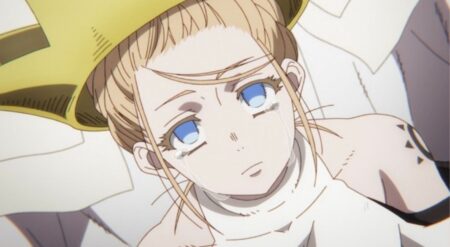

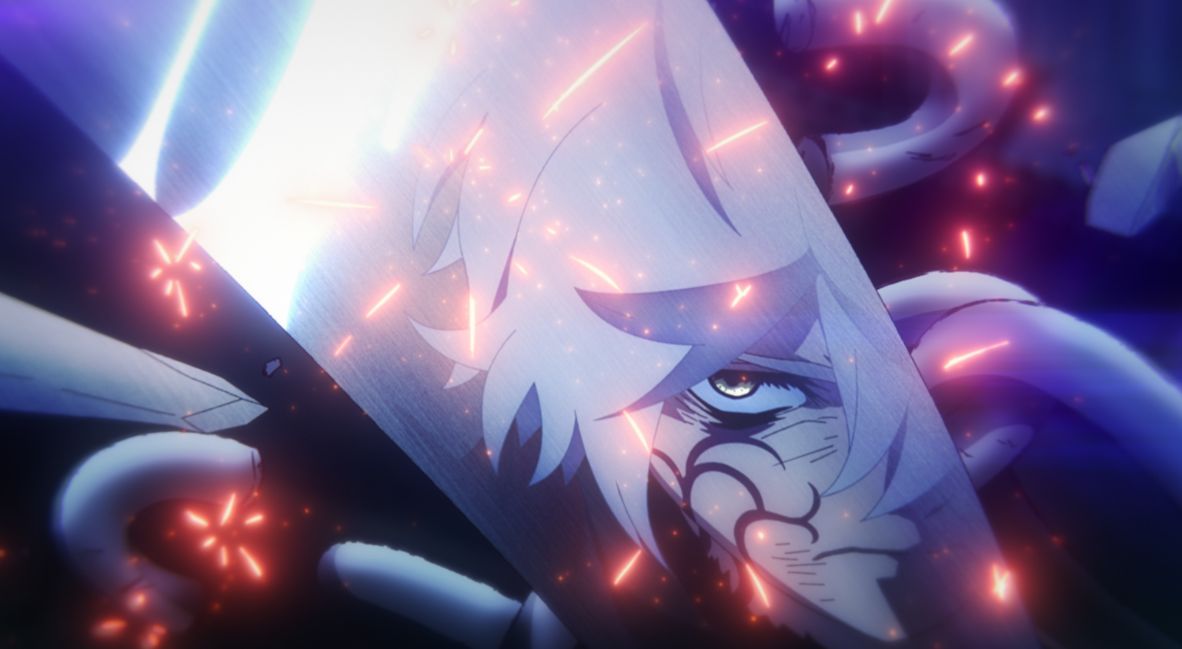
When standing against its major MAPPA contemporary, the juggernaut that is Jujutsu Kaisen, it’s easy to view Hell’s Paradise Season 2 as somewhat lesser. Because, despite both stemming from MAPPA, only one of the two shonen series sought to invigorate the source material with incentivized, innovative animation that took ambitious leaps beyond what the manga managed. Visually, Jujutsu Kaisen Season 3 stands out from other anime adaptations. But only visually. Meanwhile, Hell’s Paradise Season 2 succeeds not only because of its energetic, fluid animation but also, most notably, because of strong writing for the entire ensemble.
One of the main reasons that Hell’s Paradise Season 2 works so well is because of the work done to ensure that the supporting characters outside of Gabimaru (Chiaki Kobayashi) and Sagiri (Yumiri Hanamori) are fleshed out. And we spend a lot of time with these characters, as Gabimaru, Sagiri, Mei (Konomi Kohara), Fuchi (Aoi Ichikawa), Chōbei (Ryōhei Kimura), Tōma (Kensho Ono), and Gantetsusai (Tetsu Inada), Yuzuriha (Rie Takahashi), Nurugai (Makoto Koichi), and Shion (Chikahiro Kobayashi) work together to find a way off the island, Shinsenkyo.
After Season 1 forcibly split them apart, through death, forced amnesia, and transformative circumstance, Hell’s Paradise Season 2 works, albeit clumsily at first, to bring them all back together. And it’s once they do that the series hits its high point because the eclectic cast of characters, a blend of Asaemon executioners and convicts sentenced to death unless they find the so-called Elixir of Life, are layered and intriguing. It’s not just them as individuals – though certainly Gabimaru is a fun enough character on his own – but the work they do together.
Hell’s Paradise Season 2 shows how the characters balance one another out.
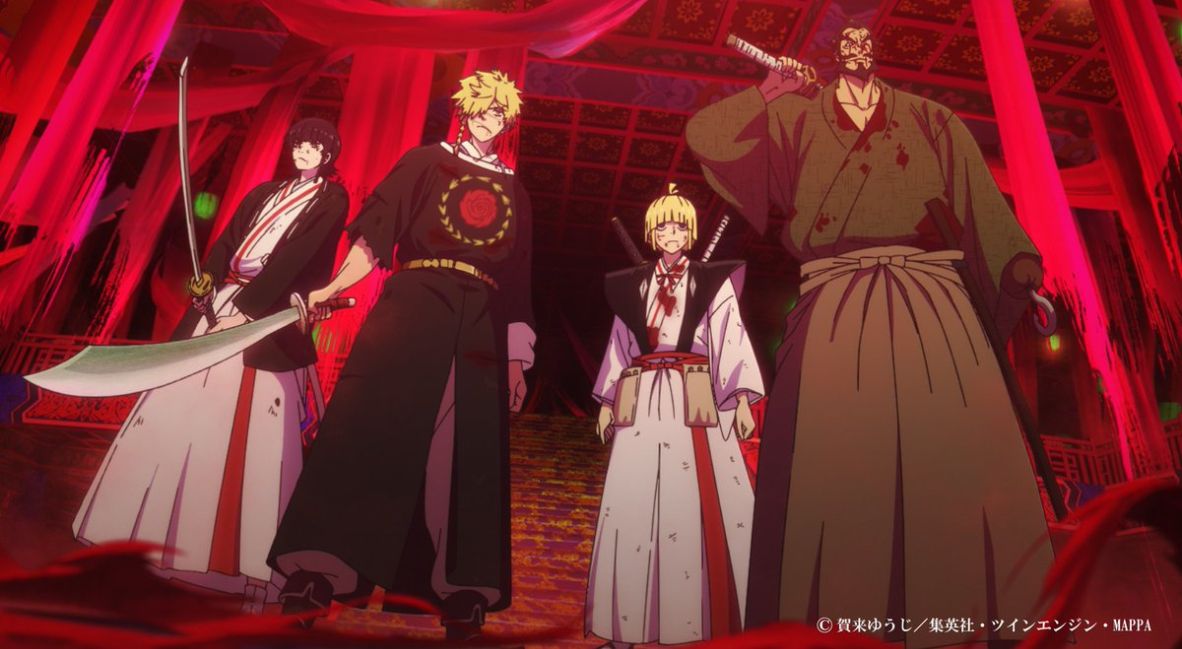
More than anything, based on the very virtue of the show, it’s how they all balance one another out. We saw it first in Season 1, between Gabimaru and Sagiri, and through hints about the other pairings. But it’s greater here because the series deconstructs the nature of balance, showing that it isn’t just light and dark, good and bad. Instead, it’s about how achieving a certain balance can propel you forward, hinder your strengths, or embolden your strikes. It’s about how being surrounded by the right compositions of elements or the right people can change the tide of your life.
In some instances, this is more evident than others, such as the brothers Chōbei and Tōma or the doomed Tensen (Junichi Suwabe/Yūko Kaida), Tao Fa, and Ju Fa. But it’s characters such as Fuchi and Gantetsusai, and Gabimaru and Yuzuriha, who make the biggest impact by showing how different types of lifestyles and focuses can converge to create engaging dynamics.
The former because their differences converge into something strikingly similar. In that both are so invested in getting the most out of life, be it pure adrenaline-induced thrill or knowledge of how the mind and body work, they both exude a similar level of enthusiasm for the fights before them. They both want to know and see more.
Gabimaru and Yuzuriha deliver some of the more emotional moments in the series.
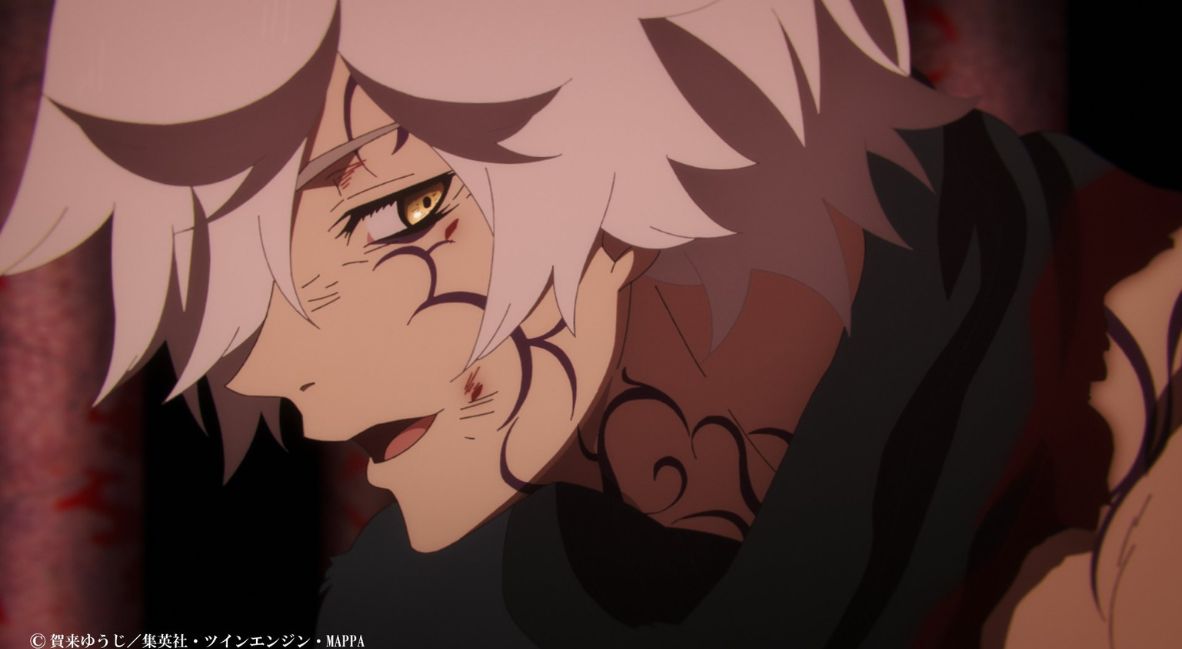
In terms of Gabimaru and Yuzuriha, it’s about how their similarities stem from differing backstories. Gabimaru, who was stolen from the promised warmth of his marriage, lived for the sake of returning to his wife. And then, in a somber reveal, Yuzuriha, whose sister died, and for whom she now lives. Both are living for another, and it emboldens both, at first, to choose themselves first over the rest of their party. But, because of the influence of his wife and her sister, they can’t help but be moved by the other to the point of action, actively putting themselves in harm’s way.
Their edges have been softened. And Hell’s Paradise Season 2 earns the moment where both sacrifice themselves for the other, even if they both bounce back a little too quickly. Because the character work is so well done, so intricately woven into the DNA of the series, that we don’t question their motives. We believe that, at their core, they’re fundamentally well-intentioned, even if they’ve struggled to maintain their humanity. Even Gabimaru’s act of “throwing away his humanity” by injecting himself with one of the island’s flowers is an embrace of it, because he’s doing it all to live another day and see his wife again.
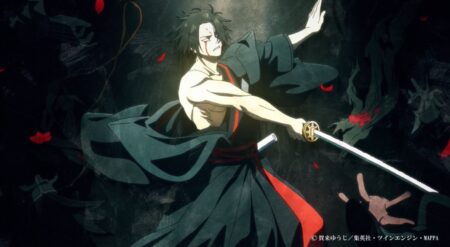
Gabimaru works so well as a character because, from the start, we know exactly what motivates him and why he became the cold and detached shinobi we first met him as. But he’s never just been cool or detached. Through flashbacks, we watch as his defenses crumble as he speaks with Yui. And we know that the shinobi clan he was in was relentless and cruel. But so too were members of the Asaemon, such as the newly introduced antagonist, Shugen (Ryōta Suzuki). It’s just whose actions were seen as justice versus whose were seen as criminal.
Hell’s Paradise Season 2 argues it’s not about who is strictly good or bad.
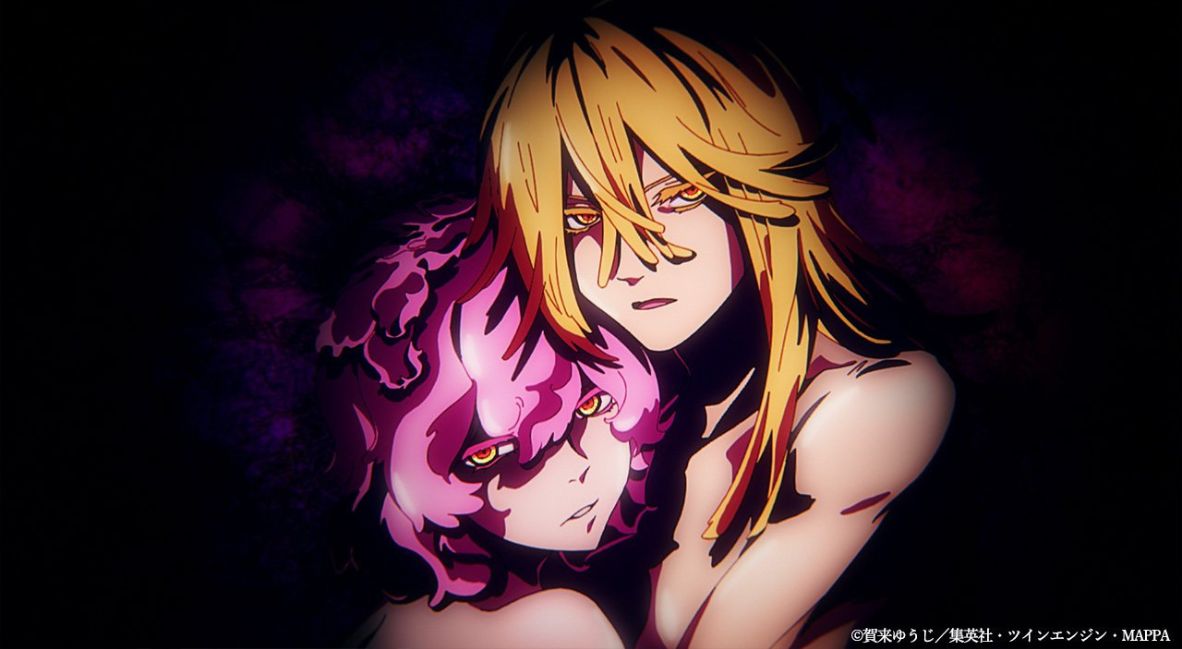
It’s where the idea of balance returns, thematically poignant and deliberate throughout the story. Because who truly is a victim and a hero in the world of Hell’s Paradise? The answer isn’t so easy. Because the balance, again, doesn’t come from good versus bad. Instead, it’s about nature versus nurture, circumstance versus meticulous planning, and the varying attempts to achieve a desired life.
Shugen works for the world’s version of the law, yet it’s undeniably cruel, impulsive, and violent. Ju Fa and Tao Fa are murderers, yet also victims of Tensen’s warped reality, born to be broken. Who, really, is the victim here? And who do we sympathize with? Because while Shugen’s tears spell only a sense of self-righteous rage, Ju Fa’s tears as he dies elicit pity. These are the ideas that speak to the magnetic quality of the story and the murky depths it probes, existing in a pool of gray as each character must grapple with what they’re willing to do to survive.
For all of its immense worldbuilding, Hell’s Paradise Season 2 struggles at times with overwrought exposition to explain the power systems of the world. But it doesn’t linger in them; instead, it uses visual tools to guide our understanding. And despite the thematic crescendo the series reaches, it struggles at the start, taking a couple of episodes to fully immerse us in the overarching tension the story has wrought.
New characters such as Shugen and Shija drum up significant tension.
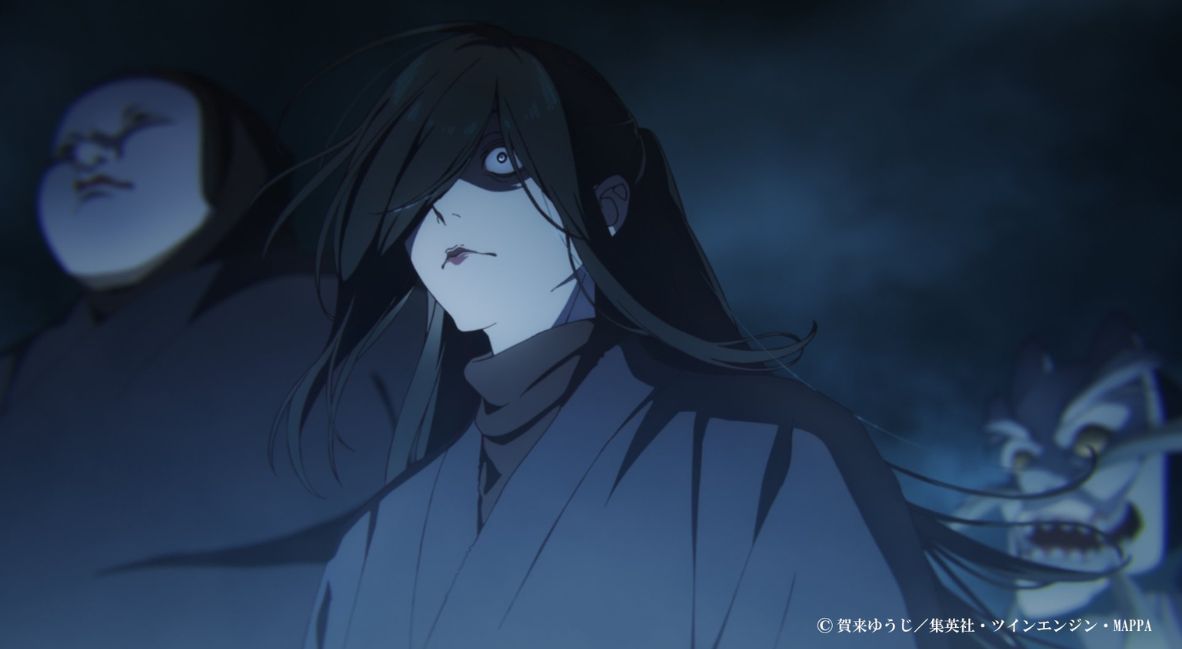
The tension in question is no joke, as the characters band together for a speed-run training sequence before splitting up to infiltrate the Tensen palace. And while one would imagine that the main threat to them is the Tensen themselves, as the audience we also know that Shugen and his crew are on the way, along with Gabimaru’s former shinobi clan, the leader, Shijia (Ayumu Murase), who has been instructed to kill him. They are surrounded, and that’s before Sagiri learns that there’s a plan to unleash infected butterflies onto the mainland, which will turn humans into Waitanhua flowers.
As Rien pulls strings in the background and Shugen pursues our heroes in a furious blaze, Hell’s Paradise Season 2 might overwhelm itself with a sense of dread. And the imagery certainly heightens the stakes, using Tensen’s transformations into Kishikai to deliver haunting, apocalyptic visions of doom as their great power looms over the protagonists, unwavering and monstrous.
But the series maintains a necessary level of levity so that we and the characters don’t suffocate in suspense. Those lighter moments, or the whispers of camaraderies between unlikely sources, help keep the story afloat. There’s a lot of charm in watching the diminutive Gabimaru hold up the only slightly more diminutive Mei so that the latter can explain power structures to the others.
MAPPA dazzles with strong, colorful production.
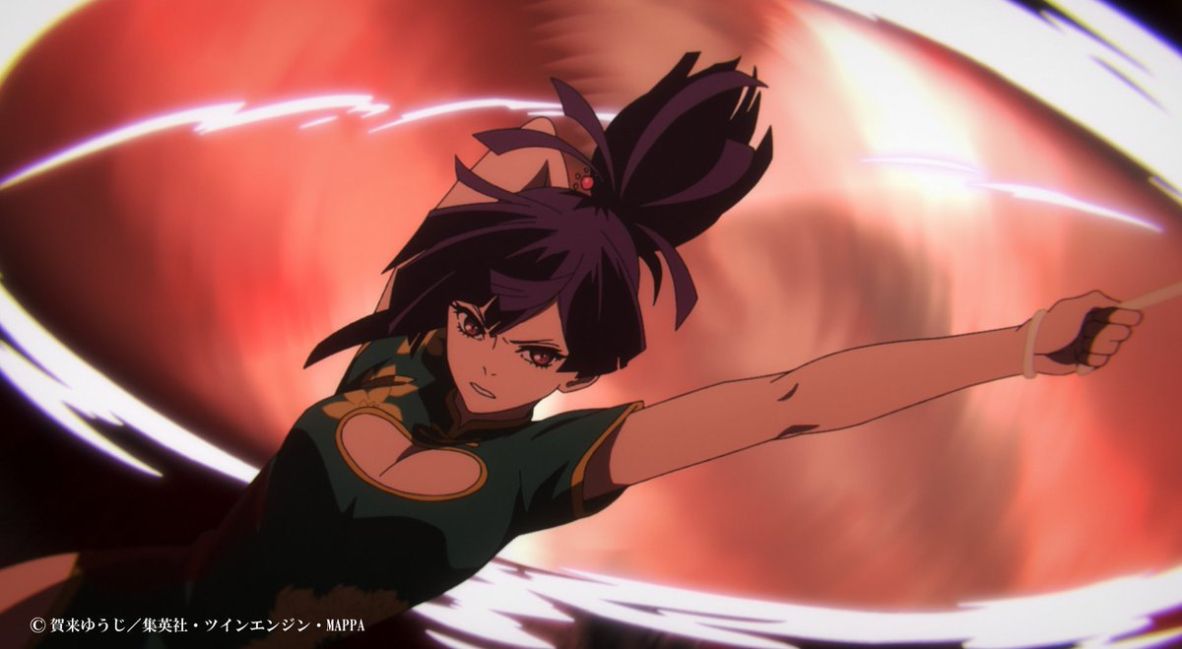
The production is gorgeous throughout (aside from, again, the premiere) and improves as the season progresses. From an onslaught of softer, sunset colors, with light dusty pinks and lighting used in moments of reflection or bonding, to the feverish hellscape of the Tensen domain, there’s a distinct infected nature to the production. Visually, no matter how pretty, the series reminds us that the island is sickly and overwrought with the ill designs of Rien. Nothing is as it seems, and their desire for perfect immortality poisons everything.
The fight sequences also excel, with Episode 8, “Chrysanthemums and Peaches,” being the signature standout. Emboldened by kinetic action and static, overdrawn line work, the episode delivers emotional physicality with great impact. It’s an example of marrying character work with action, culminating in something staggering. The effect is immediate, overflowing with depth and personality, and featuring some inventive choreography that builds on the opening, quieter moments. The fights with Gabimaru and Yuzuriha are similarly effective, trading out brute force for balletic, no less damaging, grace.
Hell’s Paradise Season 2 might struggle in the beginning, but it more than makes up for it by sticking the landing. Between the gravitas of the characters’ desperate plights and the sheer visual spectacle of the group reaching their final battleground, Hell’s Paradise Season 2 delivers an impactful, wildly entertaining story that promises even greater threats to our protagonists. And with that, greater tension and anticipation as we patiently (enough) wait for Season 3.
Hell’s Paradise Season 2 is available now on Crunchyroll.
Hell's Paradise Season 2
-
Rating - 8/108/10
TL;DR
Between the gravitas of the characters’ desperate plights and the sheer visual spectacle as the group reaches their final fighting grounds, Hell’s Paradise Season 2 delivers an impactful, wildly entertaining story that promises even greater threats to our protagonists.