
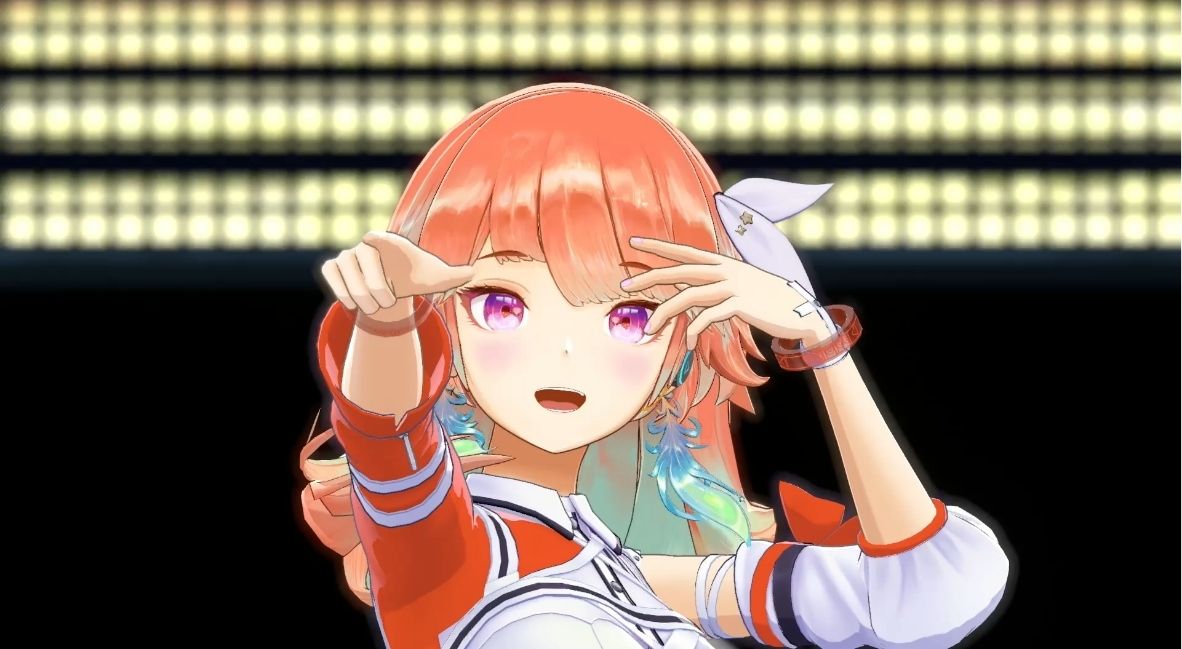
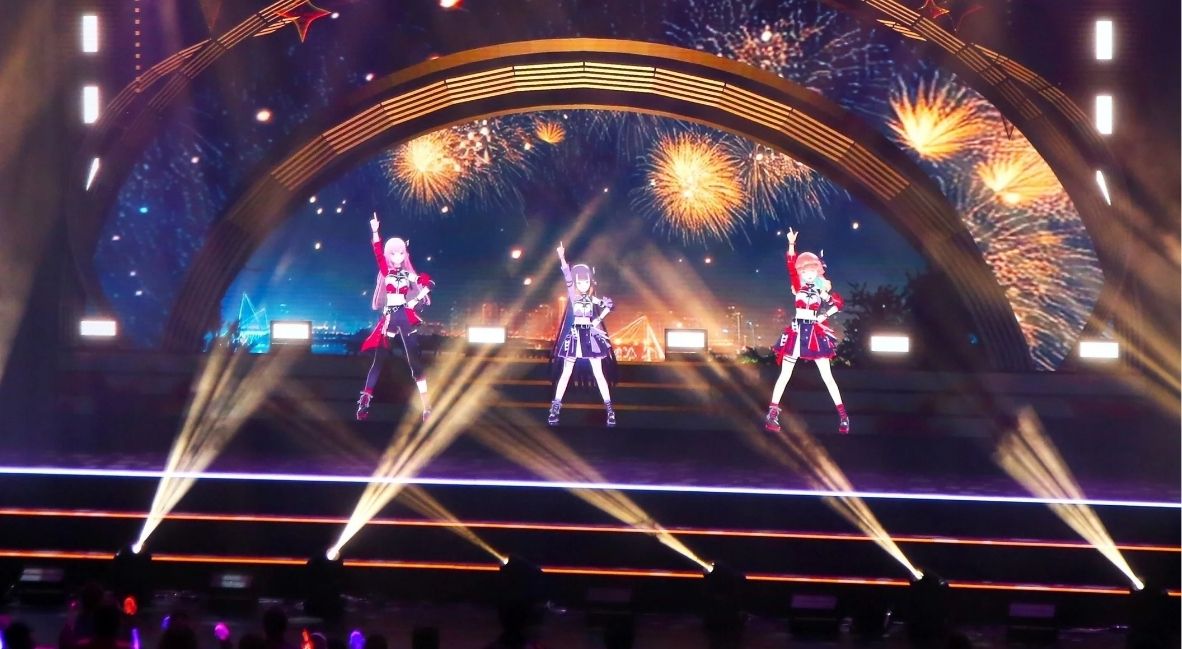
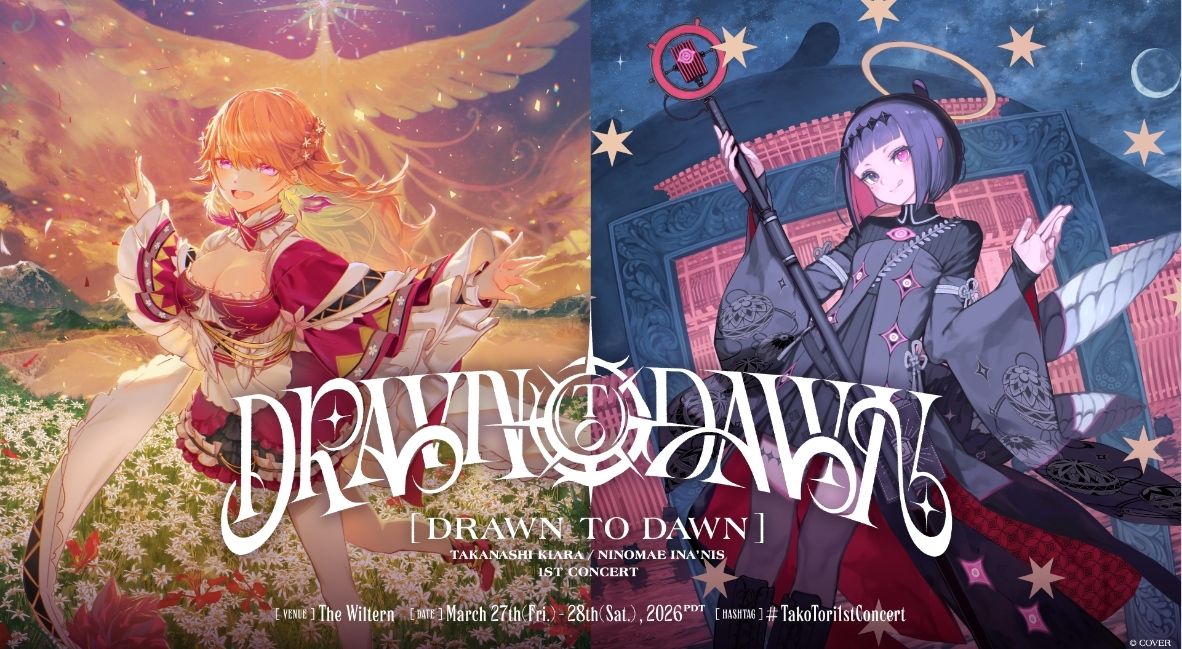
Takanashi Kiara has never waited for the stage to come to her; she’s spent years chasing it. As part of hololive English’s first generation, she helped bring VTubing to a global audience while building herself into a performer in real time. With “Drawn to Dawn,” her first duo concert alongside Ninomae Ina’nis, she returns to Los Angeles for a performance that feels as reflective as it does ambitious.
In “Drawn to Dawn,” Takanashi Kiara is stepping onto the stage for a full-circle moment.
For Kiara, this moment isn’t just about headlining a show; it’s about the setbacks, the growth, and the push to become the performer she’s always envisioned. That vision has always been grounded in the idols she grew up watching and the standards they set. In “Drawn to Dawn,” she’s stepping onto the stage with both her own journey and that legacy behind her.
BUT WHY THO: The first hololive English concert was in LA three years ago. What does it mean to return there for your first duo concert and have that full-circle moment?
Takanashi Kiara: It really is a bit mysterious and nostalgic. It’s so long ago. We will also come back with the next hololive EN concert, which feels even more full circle to be honest. Because back then, it was a hololive EN concert too. Some people may wish for different locations, and I understand that, but Los Angeles is a hot spot for all kinds of things and has many great venues. Maybe after this full-circle moment, we can move on, though.
BUT WHY THO: You’ve spent years pushing yourself toward bigger and bigger stages. Now that you’re here, what does success actually look like to you when you walk offstage? Has there been a moment recently where you finally let yourself recognize how far you’ve come?
Takanashi Kiara: Having concerts in different countries all over the world, being featured as guests in anime conventions (again, all over the world), and having collaborations with big companies, be it gaming-related or not, is all really mind-blowing.
Even my friends were, and still are, fans of hololive production, so becoming part of it is really surreal. Even when I see how big and ambitious many of my colleagues, especially within the hololive JP branch, it makes me very proud to be part of this whole thing.
Like “Hey, that girl? Yeah, she’s my colleague, and I can hang out with her anytime. Actually, I even stand on stage with her often.” Being able to support myself and my family financially, too, was a huge change in my life. That’s certainly a big result of the success.
BUT WHY THO: You’ve spoken before about wanting to be seen as a great performer, not just judged by one part of the craft. How has your definition of performance changed over the last five years?
Takanashi Kiara: Honestly, not much. I have had experience personally with performing in the past, and have followed Japanese and Korean idols’ journeys for my whole life. My definition of performance has always been inspired by that, and my standards and values come from there.
In terms of execution, though, leading up to “Drawn to Dawn,” I’ve been training really hard to improve my stamina. I took this opportunity quite seriously and wanted to make sure I can be the best version of myself. Let’s hope it works out!
BUT WHY THO: As someone who has had to bridge languages, audiences, and expectations for years, do you feel that role has become part of who you are creatively, or is it something you still consciously carry?
Takanashi Kiara: I definitely still feel that strongly. I always felt that within hololive EN, I had to take some leading role in making collabs happen, planning projects, and even in conversations, deciding the direction and making great moments for others to shine too. Regarding the cultural exchange among hololive JP, EN, and Indonesia, too.
In the beginning, when we only had Myth, I was the most fluent in Japanese out of all hololive EN, so I tried to make something out of it. I did many collabs with hololive JP members, and also involved hololive EN members in it, often translating between them. Sometimes I would feel like that’s all I’ve become, and I’m not being appreciated as an entertainer, because I would really just be there for translating. But anyway, I wanted to help, and I continued to do so over the years.
Now, certainly, we have many strong Japanese speakers, so it’s not all on me, and if anything, I haven’t been so focused anymore on my program, Holotalk. That was built around that translation skill, creating some distance and making space for myself to grow and focus on other things. But coincidentally, I just started a new program where the translation comes in handy: HoloEN REWIND.
It’s like a news show that shares deeper insights into the memes, dynamics, and fun stories of EN members with a JP audience. I’ve been wanting to do this for a while, and I feel motivated again to use my skill because the JP viewers have been very appreciative of me doing this.
Let’s see where it goes!
BUT WHY THO: You’ve talked about the freedom and stress that come with having strong creative ownership. When does being hands-on feel empowering, and when does it start to feel heavy?
Takanashi Kiara: It’s great because I can decide when I want to make an album or a single, what genre it should be, who makes it, how much I want to invest, all that kind of stuff. But on the other hand, I struggle because I can’t pay for proper PR, like radio, TV, or outdoor advertising, and I can’t think of much more of a “free” way to campaign my creations than on Twitter and YouTube.
It’s a lot to be the single brain to handle all my tasks, and I wonder how far I could go if I had more support in that regard. Could I jump out of the bubble I am in? Could I break out of the niche and have my music become more mainstream?
For now, I am continuing to do what I can with the tools I am given. I am already very proud of myself for coming so far and for reaching so many people. I do hope that there is still potential for growth.
BUT WHY THO: You’ve helped shape how parts of your audience engage with concerts and live performance culture. Do you think about the crowd as part of the show you’re building, too?
Takanashi Kiara: Definitely. I used to go to a lot of J-pop idol concerts in Japan when I lived there. It was always the most fun I could ever imagine. The chants were easy and had a recognizable pattern. Even when hearing a song for the first time, it was intuitive, because J-pop idol songs have a rhythm pattern that always makes the same chants apply, especially within the same idol agency group. Along with the chants, I would learn the choreography and dance along in the crowd. And so each concert was the highlight of my week.
I was hoping to bring this style of enjoying performances to our Western audiences. Together with the JP fans and the concerts we give there, more and more the EN audience is soaking it up like a sponge and enjoying it, seemingly.
I am a bit more particular about chants than other EN members, though, so I also like to make guides for them to learn them. Seeing them practice them before concerts in gatherings is always so satisfying. Please keep on doing it, because the sense of unity it creates is such a joy for both me and the fans.
BUT WHY THO: At this stage in your career, what kind of challenge still excites you the most: A vocal challenge, a staging challenge, a storytelling challenge, or something else entirely?
A health challenge.
I think I have been neglecting myself for so long, especially since I joined hololive… I don’t know if I ever can get to a point where I can say I am both mentally and physically 100% healthy, but I unfortunately might be very far from it at the moment.
I am still not gonna let that stop me, though, so don’t worry, KFP.
Five years in, Takanashi Kiara is no longer just chasing the stage. She’s part of the standard she once looked up to. “Drawn to Dawn” may feel like a full-circle moment, but for Kiara, it’s not about closing that loop. It’s about stepping into it fully, carrying everything she’s learned, and continuing to push what that stage can be.