


Spoilers for all of Avatar Aang: The Last Airbender follow.
The Avatar Legends franchise has never shied away from difficult geopolitical questions. Indeed, that is foundational to its ethos in its storytelling, teaching us about the horrors of imperialism, fascism, extremism, and extraction of the resources and political manipulation of innocent populations.
But with the new film, Avatar Aang: The Last Airbender, we see Avatar Aang (Eric Nam) deal with those tough questions and what they mean for him and his nearly extinct Air Nomad society and culture. Namely, would Aang, along with the newfound ancient airbender Tagah (Dave Bautista), go to extreme lengths to save the Air Nomads?
Would he indulge Tagah’s thirst for vengeance against the world for what happened to their people, and align with his aspirations to establish Air Nation power that would dominate over non-Air Nation members? Namely, would Aang join Tagah in supporting Air Nation supremacy? This is something we observe too much in our own world: the scourge of ethnonationalism. By ethnonationalism, we mean the structuring of a state apparatus that has the rights and liberties of one ethnic, religious, or cultural group as precedent over others.
While it is a root cause of a great abundance of horrors we see in our own world, we see those reflected in Avatar: The Last Airbender from its very start. And in its array of constructive messages, the show and its various offshoots, especially this film, show us that tolerance and embracing of one another for our differences strengthens us, and moves us further towards peace, justice, and freedom for all.
In the original animated series, we see it with the colonialist and genocidal crimes of the Fire Nation, and Kuvira’s ethnonationalist (as demonstrated by the showcasing of ethnic cleansing) and fascist Earth Empire in The Legend of Korra. Through the long history of the Four Nations, we see the violent cycles of ethnonationalism inflict their horrors on the world, and then the Avatar is always there to protect the innocent and strive for balance once again.
Avatar Legends, as a franchise, has never shied away from real-world commentary.
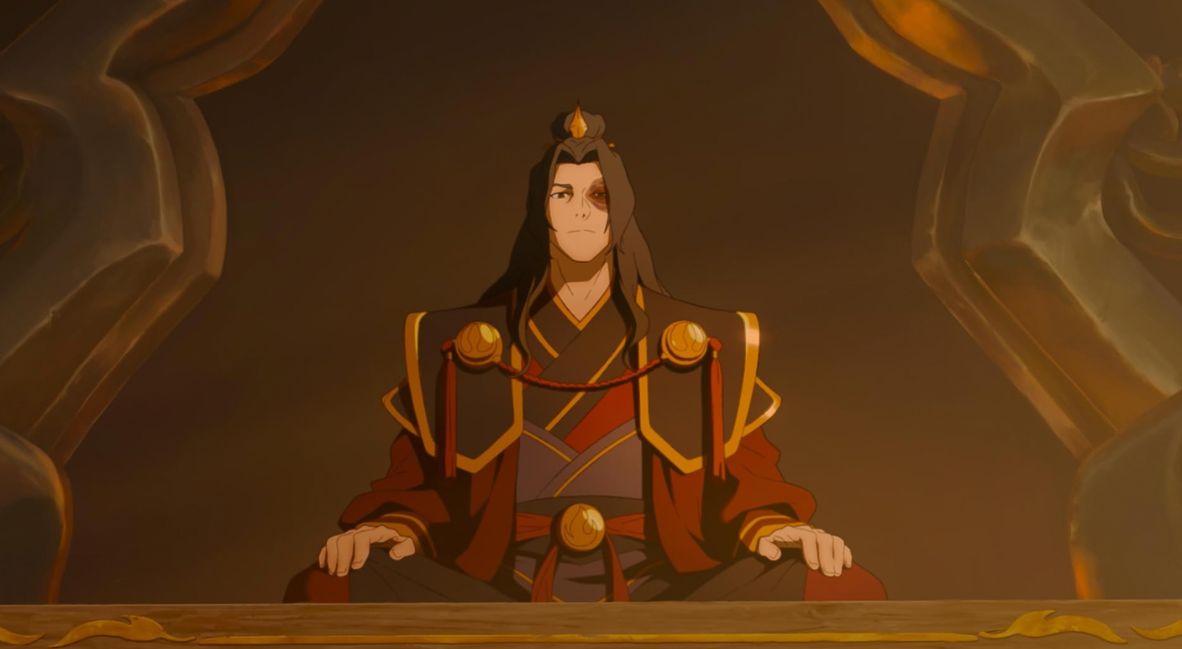
While it may be easy to write off the Four Nations as already being ethnostates, the truth is far more nuanced and complex. The modern Earth Kingdom is huge and diverse with an array of cultures and peoples. The Water Tribes are indigenous tribes at the North and South Poles, with cultural ties to one another and no record of enacting laws or policies against non-Water Tribe members.
The Fire Nation certainly has been a colonial and genocidal ethnostate through the One Hundred Year War, but is making active reparations and moves for restorative justice under Fire Lord Zuko’s (Steven Yeun) rule. And of course, the Air Nomads are just that: nomads across the world who simply have four temples whose identity is marked by their immense spirituality and love and respect of the world over anything unique about themselves.
The film reveals that Tagah seeks revenge for the crimes of the newly discovered (5,000 years ago) Earth Kingdom. But the revenge is ultimately an attempt to unleash Air Nation supremacy upon the world, using Avatar Sonam’s (Freida Pinto) Air Nomad followers and her powerful staff as tools to achieve it.
Of course, this is entirely antithetical to the ethos of the peaceful Air Nomads. Still, Tagah presents a real threat to the world with the power he gained from the staff. As such, Sonam seals him away until Aang releases him 5,000 years later.
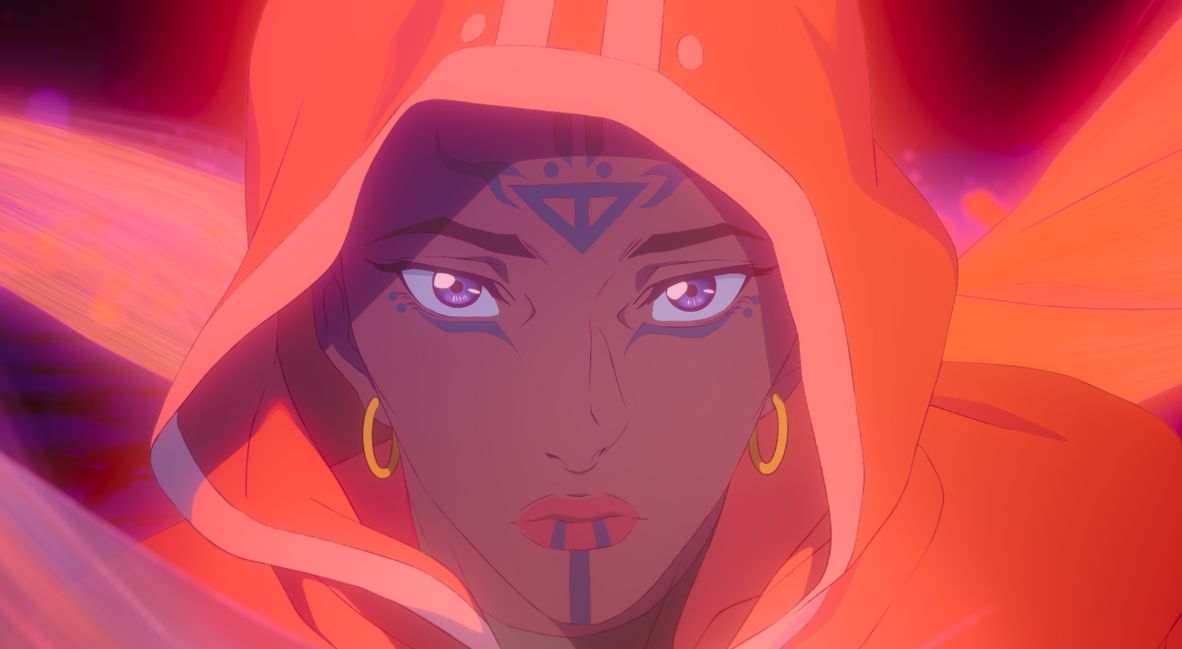
Tagah’s goals in the modern day are to use Sonam’s staff to come from a place of legitimate trauma, having seen his Air Nomad compatriots murdered by Earth Kingdom soldiers in the war. Anyone would reasonably want justice and a guarantee that Air Nomads would be safe, but it is possible to go too far.
Like in real life, where ethnonationalism has and continues to ensnare too many into its manipulative grasp. His solution was to build an Air Empire and wipe out or subjugate all non-Air Nomads for his warped sense of “security” for his people before Sonam stopped him.
Aang, so happy and eager to find Tagah in the present day and find the staff to give the power of Airbending to new Air Nomads, did not delve sufficiently into Tagah’s motivations before taking him and his friends on the journey. That’s the film’s central conflict, and Aang must rectify his mistakes by the film’s end.
To be sure, the series has not always dealt with these subjects in the most ideal way. In The Promise comic series, for example, which explores the origins of Republic City from Fire Nation colonies in the Earth Kingdom, an attempt is made to rationalize the presence of Fire Nation citizens in the Earth Kingdom because some of them have intermarried with Earth citizens and made families with them.
To be abundantly clear, indigeneity never denotes a homogeneous population (a key argument against the falsehoods of ethnonationalism). A group can simply migrate somewhere and live in harmony with the other peoples and the land, making them de facto indigenous. However, The Promise does not sufficiently tackle the fact that they are still colonizers who are not indigenous to the land and have not made sufficient reparations to the Earth Kingdom.
“Your oppression will not save you.”
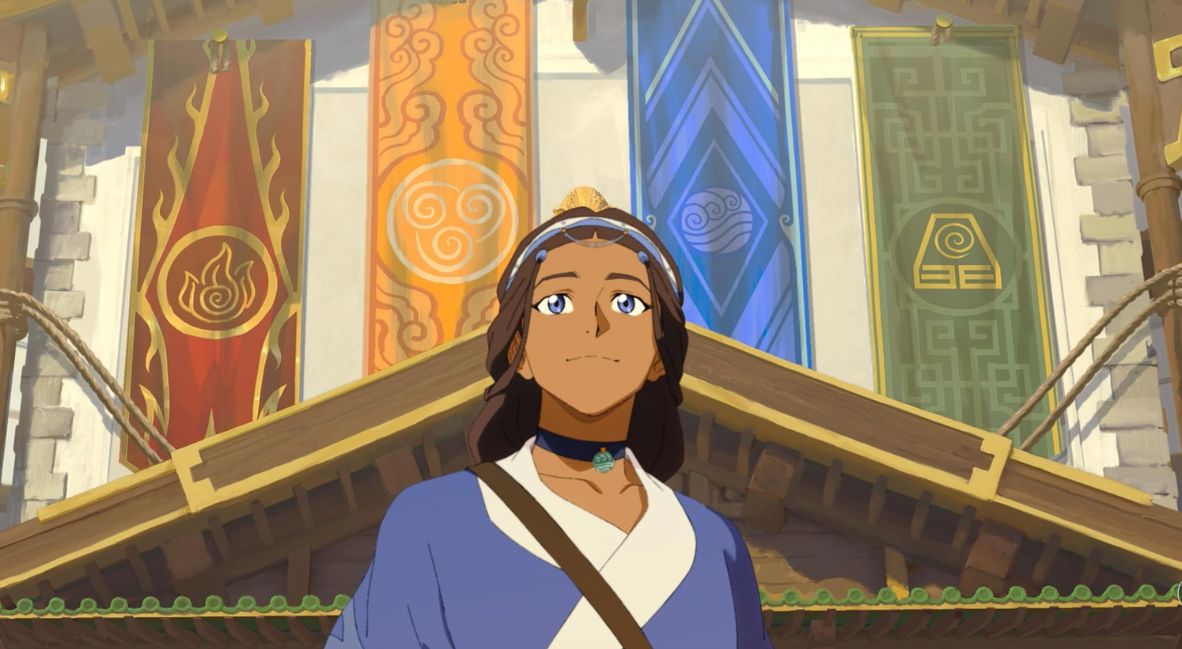
It is deeply unfortunate that the origins of the multi-ethnic and diverse Republic City do not delve sufficiently into the colonial power dynamics at play and the need for reparations for the colonized. However, there is at least enough room for headcanon that those reparations and truth & reconciliation were made in the interim before Avatar Aang: The Last Airbender, thereby strengthening the message of peaceful and equitable plurality in the newly founded city.
We should never have the presumption that any oppressed group will resort to oppression themselves. But it does unfortunately happen in the real world at times. Whether it was in Rwanda where Hutu ethnonationalism led to the Tutsi Genocide, the Silent Genocide of Indigenous Maya in Guatemala to reframe the country’s national identity away from indigeneity, or the ongoing genocide of Palestinians by the Israeli Occupation, there sadly is no shortage of examples.
As Ta-Nehisi Coates says in his nonfiction book about his time in conflict zones, The Message, “Your oppression will not save you.” This means that your own oppression will never justify inflicting equal crimes onto others, lest we repeat the violent ethnonationalist cycle.
Tagah continues the cycle with his actions, feeling bolstered in his arguments when he finds out the horrors of the recent Air Nomad genocide by Fire Lord Sozin, questioning how Aang could be friends with Zuko and Toph (Dionne Quan), both members of nations that had, however long ago, committed crimes against theirs. This is where the key difference between vengeance and restorative justice comes into view.
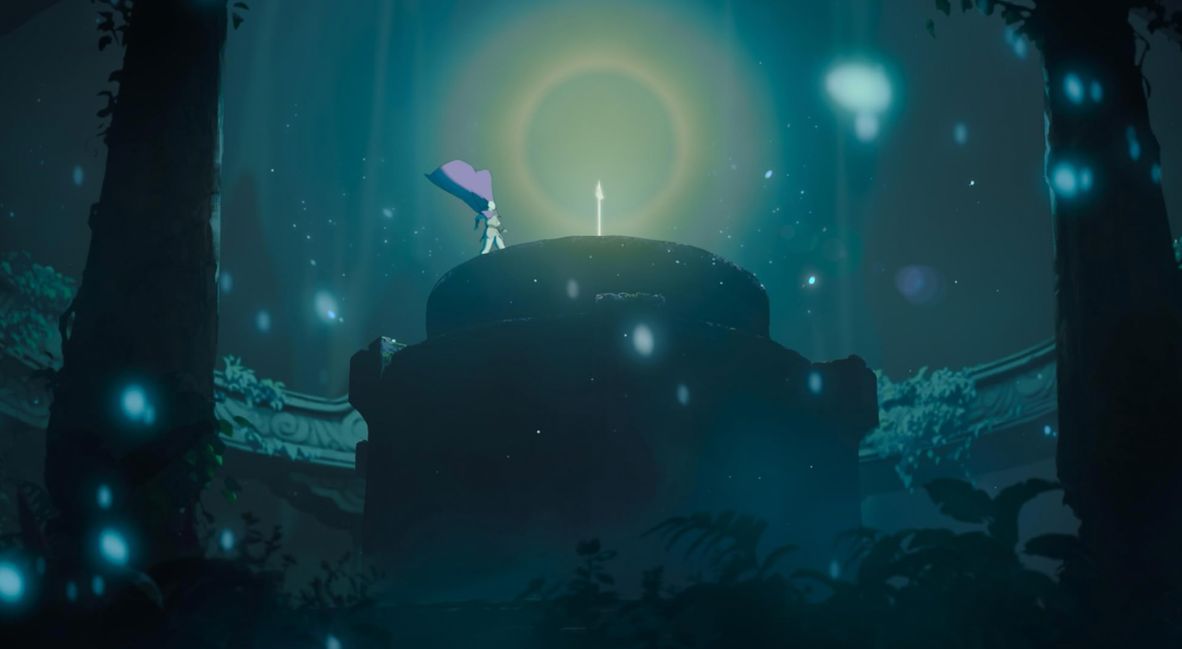
Restorative justice is what Fire Lord Zuko has committed himself to, paying reparations and making up for the crimes of his nation, and for which we see him continue to bear great remorse. Aang, as the Avatar and on a personal note, learns and knows that repetitive cycles of violence on whole populations only lead to more death and destruction, making Tagah’s ways not only wrong, but fruitless.
Ethnonationalism presents an inherently self-destructive “solution” to gaining security for yourself and your people: simply be violent to others not part of your group. Stating that your nation is for one people only is violence. Giving precedence in law and policy to one people over another is violence. Enforcing your culture and society on others different from you and taking over their land is violence. Forcefully “spreading peace” with your “cultural values” is violence.
This type of nation-building cloaks itself as a warped version of asserting indigenous sovereignty when it is anything but. It separates us out from our fellow human beings, belies that we are diverse internally and externally in our heritage and cultural influences, and is a tool of power-hungry dictators and colonists to divide and conquer indigenous populations before ever actually helping them. While not delving into all of these aspects, Avatar Aang: The Last Airbender makes a strong stand against it nonetheless.
Ethnonationalism is the foundation of rising fascism, and every message against it matters.
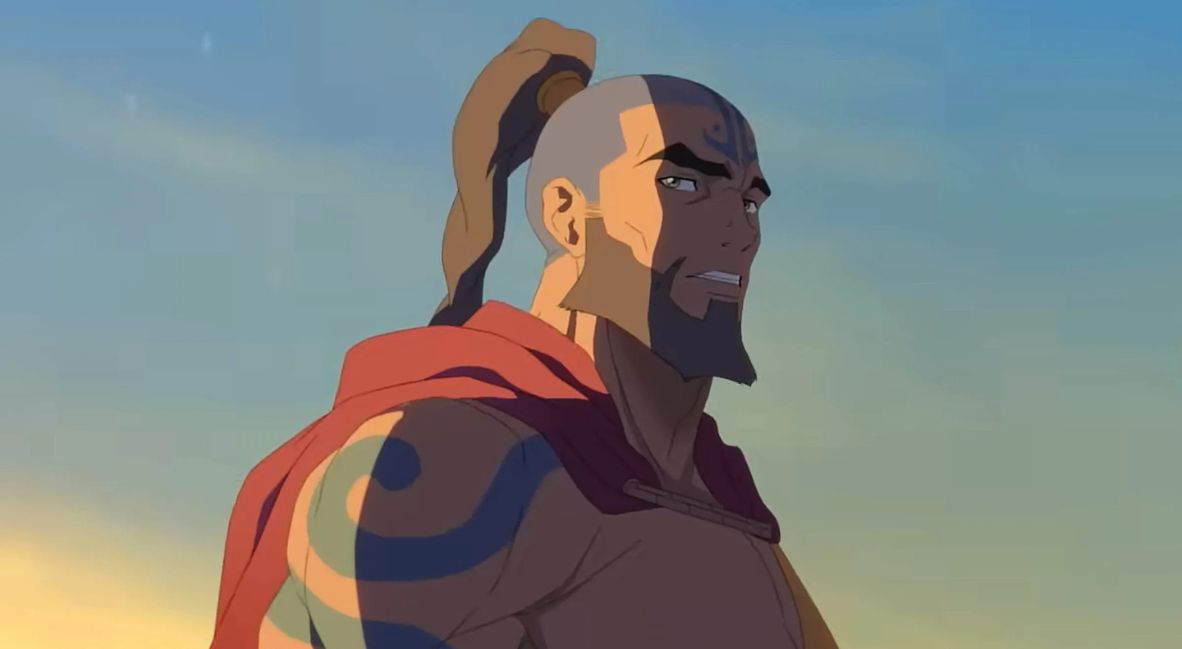
The film beautifully expounds Aang’s psyche by delving deeper into his grief over the loss of his nation. The film presents him with a conflict in which he must resist Tagah’s corrupt goals.
By the end, the staff and Tagah’s twisted thoughts have corrupted him into a monstrous spirit form, symbolizing the self-destructiveness of his ethnonationalistic ideology. With Aang’s trademark moral center, he, of course, succeeds in resisting and defeating Tagah and regaining the staff, but the film pivots at the end to his resistance of the urge within himself as the power threatens to corrupt him.
Aang blames Tagah for ruining his dream of restoring the Air Nomads. His immense grief, shame, and drunkenness on spiritual power begin to corrupt him into a monstrous form. This more likely than not would have taken Aang down a path similar to Tagah’s, in which the ends would justify the means to restore the Air Nomads. But Aang, thankfully realizing this, chooses to break the staff instead, taking the bending away from Tagah’s new acolytes and Tagah himself, who releases his spirit back to the universe, finally at peace.

Aang’s act to break the staff represents a willful breaking of the ethnonationalist cycle that has divided and decimated too many peoples who lived in peace without it. Instead, he wisely focuses his efforts on promoting and maintaining peaceful pluralism in Republic City.
While Aang sadly does not live to see the Air Nomads reconstituted in the time of his successor Avatar Korra, he does embrace the Air Acolytes and invite them into his culture. And in turn, finds a hidden herd of Air Bison, helping restore the population of the original Airbenders and ensuring longevity of Air Nomad culture.
With this, the film leaves a beautiful, imparting message that one’s culture never truly dies. It is ever-present in societies through cultural diffusion and the nature from which it originated, making it far more resilient than any ideology could impose on others. Once we dismantle the destructive systems of ethnonationalism in our own world, we too can move towards that hopeful future.
What are your thoughts on the themes of Avatar Aang: The Last Airbender? Let us know on Bluesky at @butwhytho.net.