


Trial of Lotus, a social deduction game from Vineblade Studios, challenges 6-12 players to take on the role of Jade Lotus and other forest spirits as they try to purify their home of a deadly corruption. However, some of the spirits gathered are not who they seem. Black Fox and some of their followers have infiltrated the ritual, seeking to undermine Jade Lotus’ work. Now the players must deduce who is evil and who is good as they pursue their goals in a realm inspired by Chinese Mythology.
Over the course of six trials, players will seek to achieve their group’s (good/evil) objective through subterfuge and cunning. During each trial, players are split into smaller groups, who secretly vote to purify or corrupt the forest, with the results determining whether the game proceeds.
One thing that stands out to me about Trial of Lotus‘ gameplay is the varied ways it can end. If the votes all go towards good or evil for the first four trials, everything stops, and the game is over. There are also opportunities between trials four and five for special abilities to play out that can end or prolong the game. These potential break points look like excellent tools to keep tension throughout the game, rather than just at the end with the final vote.
Trial of Lotus games can end a number of ways.
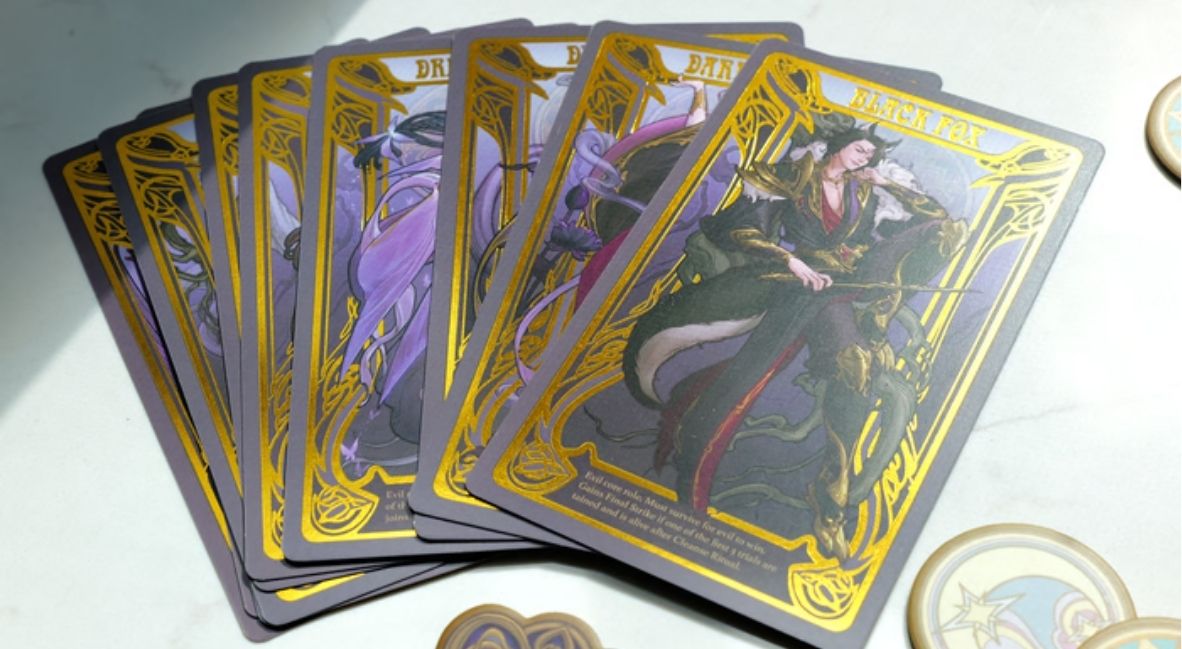
Within the randomly dealt roles are several options that bear special abilities. Some, like Jade Lotus and Black Fox, must always be present, while others are optional. These abilities frequently present themselves as carefully crafted double-edged swords. The noble Kirin Ward can win the game during the Reflection Twilight stage (between trials four and five) if they kill Black Fox, but it will be embarrassing if they slay Jade Lotus by mistake.
The tension and drama within Trial of Lotus feel further amplified through the game’s presentation of its scenario. During each game, a moderator reads the instructions aloud to guide play. The text flows with a flowery air, building a sense that noble spirits and mythological creatures are participating in a task of significant importance.
As someone who doesn’t always jive with the social deduction gameplay style, I love the inclusion of this role. I have known many people who love these games, and getting to take part without the stress of trying to deduce who’s lying or not would be great. Though it is important to note that if no one wants to play the moderator, an audio file will be available on the game’s website to fill the role.
Trial of Lotus’s character cards and rulebook make stepping in so inviting.
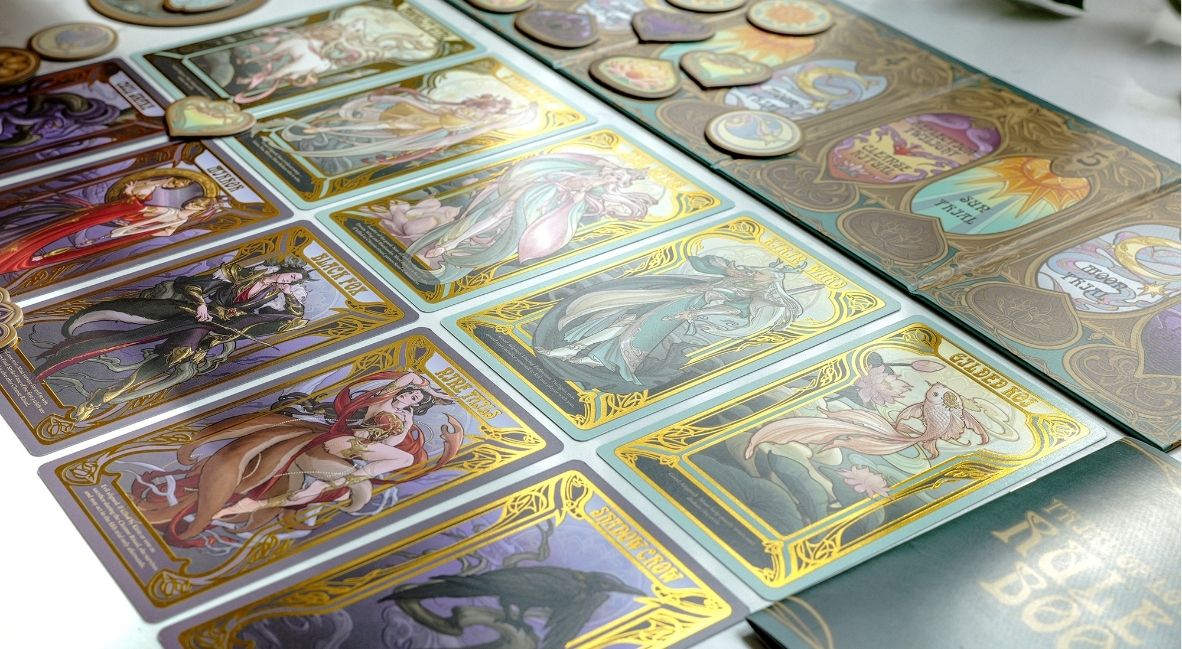
Further drawing out its mythological inspirations is the game’s gorgeous art. Game creator Yangtian Li is an accomplished artist whose striking style breathes elegance and beauty into the game’s presentation. From the ornately designed box and game pieces to the lavishly designed character cards, everything here is a treat for the eyes.
An often-overlooked element of game design that deserves note here is the rulebook. Like many social deduction games, there is a lot of nuance and complexity to how roles should be played and the dangers of being too apparent with your goals during a game.
The rulebook is littered with pointers and clarifications to help new players have the smoothest onboarding possible. Though some concepts will still undoubtedly be learned purely through trial and error.
Through its unique setting, gorgeous style, and nuanced gameplay, Trial of Lotus looks to carve its own space in the social deduction scene.
Head over to Kickstarter to back Trial of Lotus now.