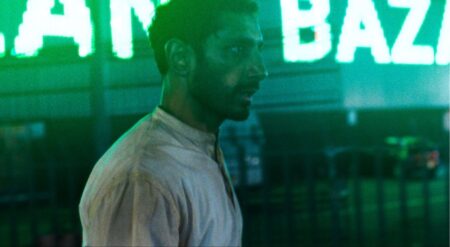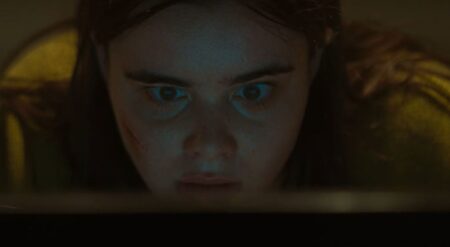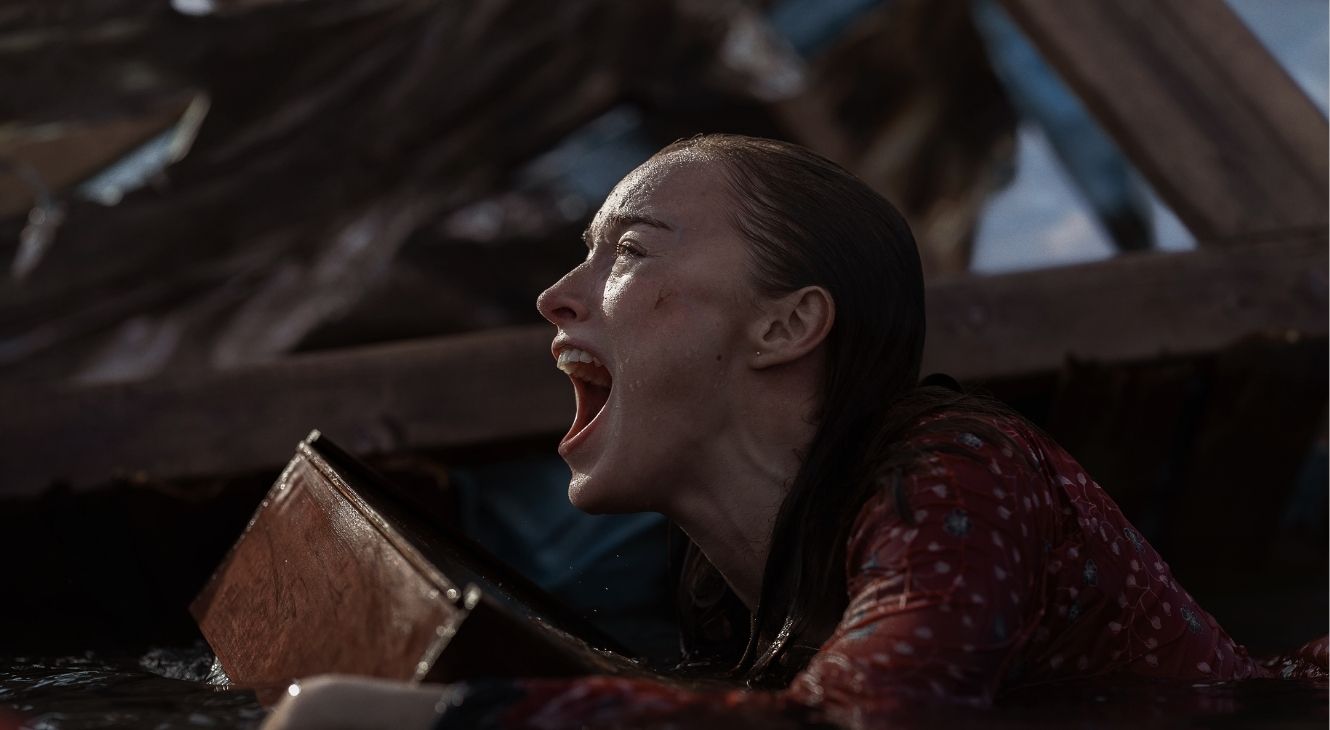
Thrash (2026) from writer/director Tommy Wirkola (Violent Night) is a Netflix Original shark thriller that goes down easy. When a monumental hurricane decimates a coastal town, flooding it completely, the few survivors who couldn’t (or wouldn’t) leave for higher ground are left to contend with a bevy of hungry sharks.
There’s Dakota (Whitney Peak), an agoraphobe whose badass shark expert uncle Dr. Dale Edwards (Djimon Hounsou) is her only lifeline, the pregnant Lisa (Phoebe Dynevor), whose horrible bosses kept her from leaving work in time, and a trio of sibblings, Ron (Stacy Clausen), Dee (Alyla Browne), and Will Olsen (Dante Ubaldi), whose foster parents are taking advantage of them for government checks. The storm comes in fast and heavy, endangering everyone all on its own. But when the sharks attack? Things become all but hopeless.
For a CGI hellscape-era streaming movie, Thrash (2026) is pretty decently crafted. Much of the movie, especially in the earlier segments, takes place in real sets. The fear and hopelessness are constricted by the small houses or cars the characters are trapped in. The dialogue leaves something to be desired. The opening lines in the movie are as cheap as it gets when it comes to exposition dumping about Dakota’s recently deceased mother, or the Olsen siblings’ no-good foster parents.
Thrash (2026) has some holes, but it stays afloat.
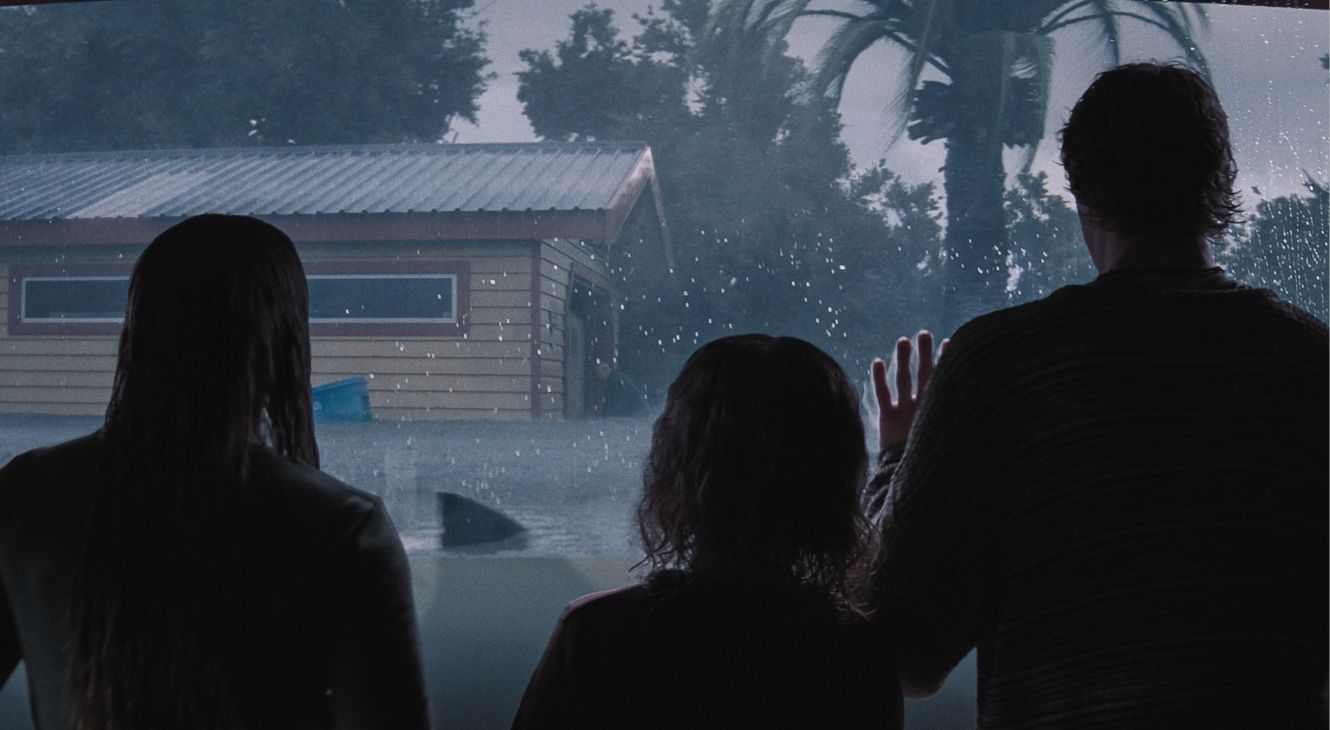
The foster parent trope is not ideal. Sure, it creates some obvious tension and relief throughout the movie, but it does perpetuate a dangerous trope about poor families who foster and abuse children just for the government checks. There is also an awkward moment for the eagle-eared viewer where a newscaster refers to “The I-17,” a nomenclature that only people on the West Coast of the United States would use for their highways.
While the real I-17 does reside in Arizona, a place where maybe people would describe it that way, no such I-17 would exist in a small East Coast town. It’s a small snafu, but it’s the kind that can be distracting when a little more research could have prevented it.
But in a movie where the dialogue is minimal, and the action speaks for itself, it’s more forgivable than not. Plus, there are a couple of little zingers towards the end. Too many, perhaps, and some that feel like you’ve heard them in a shark movie already. But nonetheless, you might get a chuckle or two out of them once the movie turns from pure thriller into pure action towards the end.
Perfect pacing and a short runtime make for a fun experience.
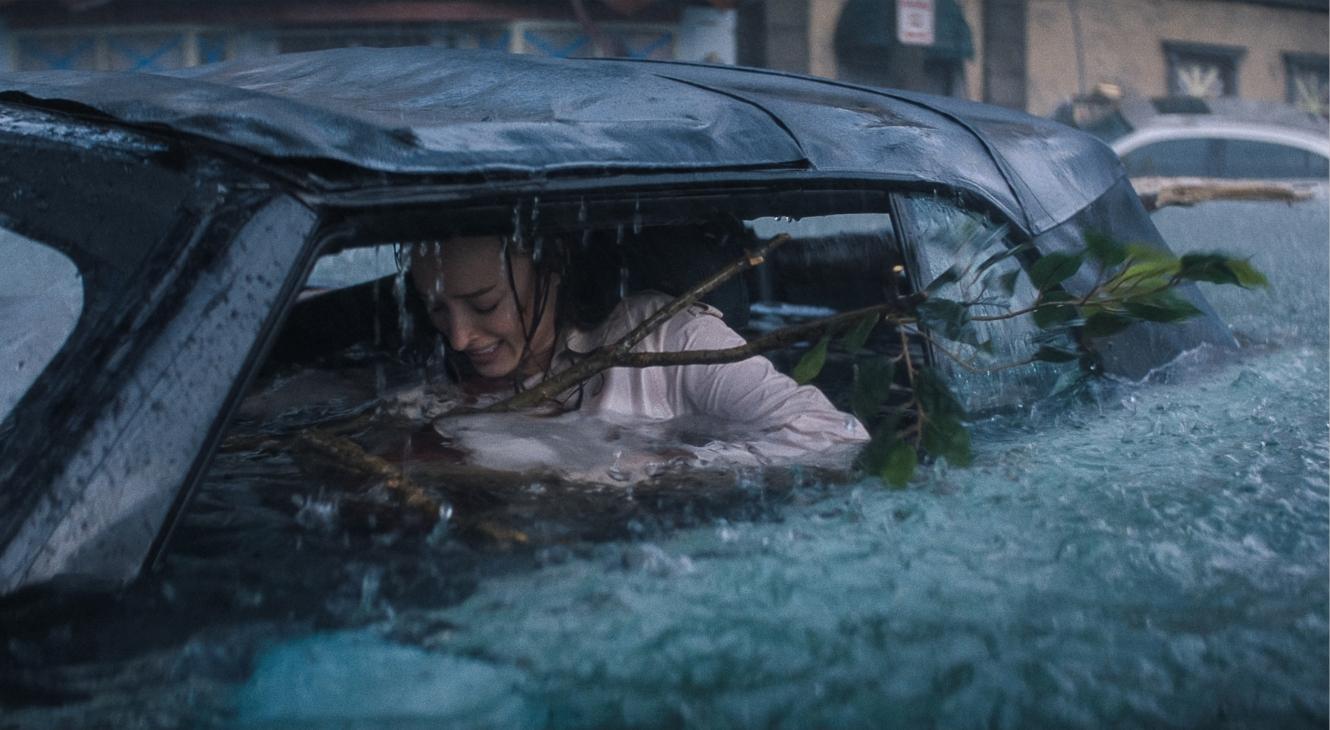
Overall, the movie is perfectly paced. The storm is clearly coming from minute one, and you know there’s going to be sharks in the water. But they don’t show up until 30 minutes into the movie, and plenty of other neat disaster scenarios take place before you even start seeing fins or blood in the water. But even as the sharks start biting everyone they meet, the movie remains propulsive at all times.
This is a feature of being short and of having two entirely separate mini-plots happening at once, without ever interacting with one another. Lisa and Dakota never once interact with the Olsens, and that is a good thing, because it would likely have drawn the movie out too far.
Once Dr. Edwards makes it into the fray, though, the movie switches completely from a thriller to all-out action. This is where the CGI starts to take a beating. The sharks look pretty good up until this point, because they are hardly seen in full, and are usually only seen very briefly. By the end, there are several full-on shots of giant killer sharks and giant CGI canvases of flooded backgrounds.
The sound design is the actual hero of Thrash (2026).
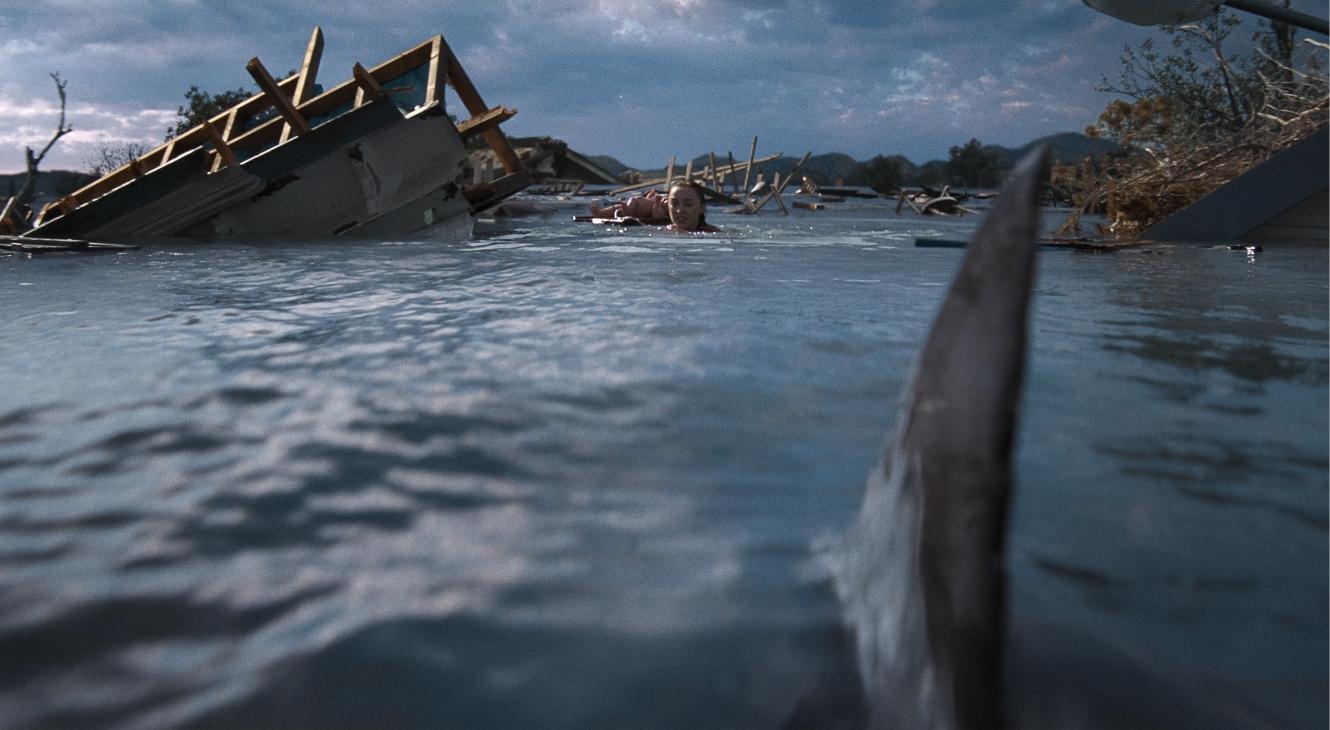
This looks cool in theory, but it breaks some of the immersion that the rest of the film built with its claustrophobic sets. The action is fun, though, and there’s one particularly nice top-down shot of circling sharks towards the end. Even if it’s a bit over-the-top, it’s hard not to relish in the multiple pieces of comeuppance Thrash provides.
The sound design is actually the hero, though. The crunching of shark teeth on human flesh, the constant patter of rain during the hurricane, and the sploshing of floodwaters all at once create an impressive soundscape that turns an otherwise tried-and-true subgenre into something worth the gloriously less-than-an-hour-and-a-half runtime. Plus, Thrash waits until the very end to use any needle drops, and the big one is pretty effective, as well as the song that plays in the credits.
Thrash is pretty simple as far as thrillers go, even with its hybrid plot and complete genre switch. It looks pretty decent most of the way through, the character dynamics keep things interesting, and the short runtime makes the pace relentless. It’s fun to completely switch gears when the rain stops, and even some of the cornier aspects are forgiven since the movie moves so quickly.
Thrash (2026) is streaming now, exclusively on Netflix.
Trash (2026)
-
Rating - 6.5/106.5/10
TL;DR
Thrash is pretty simple as far as thrillers go, even with its hybrid plot and complete genre switch.