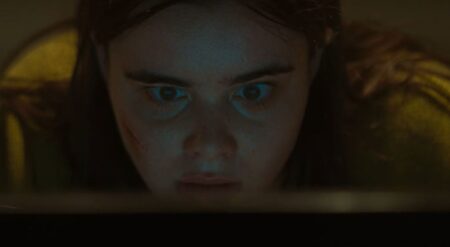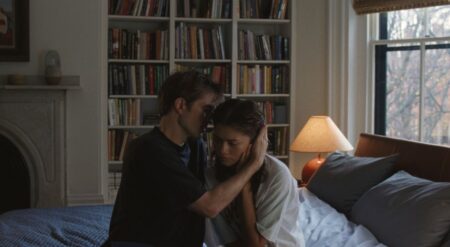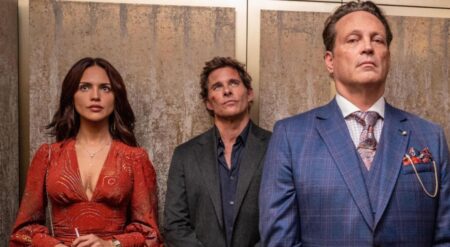

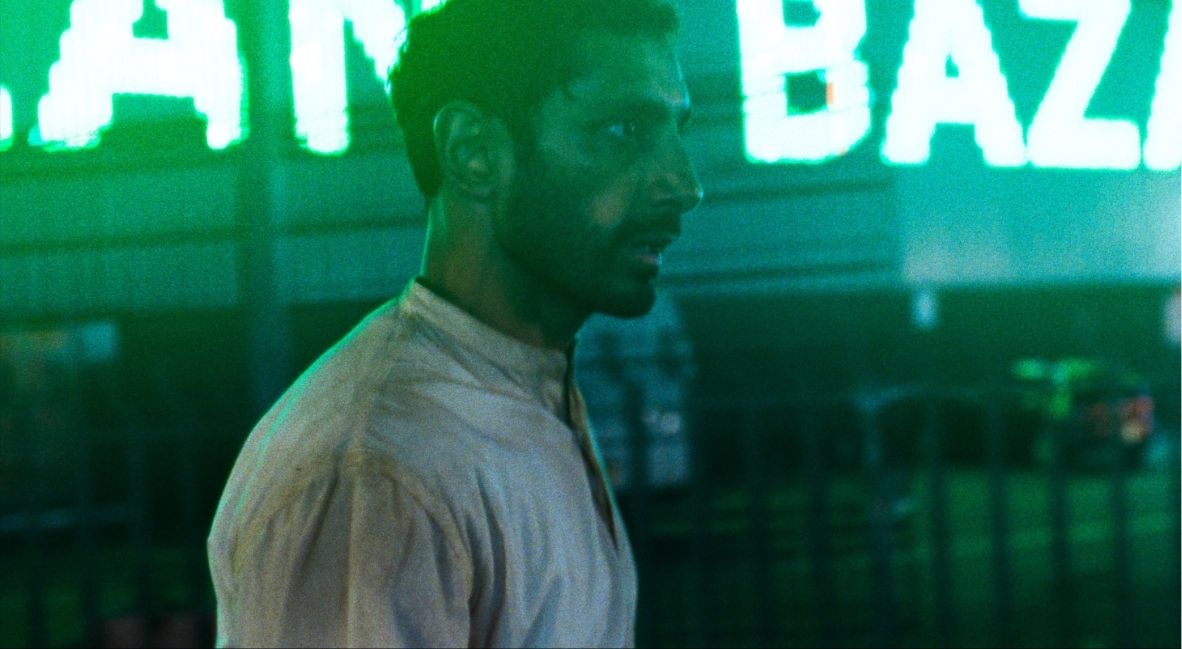
Directed by Aneil Karia and written by Michael Lesslie, Hamlet (2025) is a bland modern adaptation of one of Shakespeare’s most celebrated works. Riz Ahmed stars as the titular prince, transported to modern London. The son of a powerful businessman (Avijit Dutt), whose recent passing is relayed by his father’s ghost to have been a foul murder, Hamlet rages against his mother, Gertrude (Sheeba Chaddha), remarrying his uncle, the new “king,” Claudius (Art Malik). Meanwhile, Hamlet vies for the hand of Ophelia (Morfydd Clark), the daughter of Claudius’s advisor, Polonius (Timothy Spall).
From the very concept, Hamlet (2025) has a steep hill to climb. Shakespeare adaptations with modern settings and the original language must offer a reason for those choices. That reason can be complete and utter camp, or it can be grounded in an interesting take on the material.
In general, Hamlet (2025) fails to offer a convincing reason. Instead, it’s a truncated version of the story that captures nothing interesting in either its cultural specificity or the world of powerful businessmen.
Hamlet (2025) rearranges the sequence of scenes and reinvents the play’s dialogue.
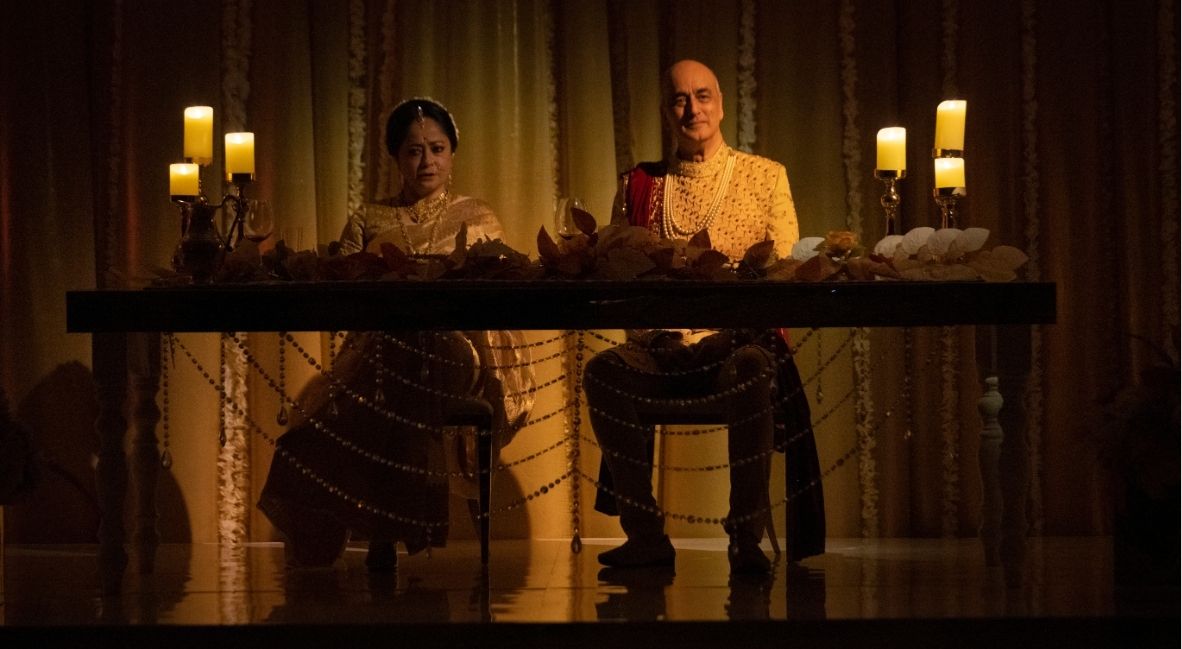
Despite the premise of a modern business underworld, the movie is too narrowly set within the frame of Hamlet to explore much about the characters around him or the world they inhabit. And while there are instances of Hindu culture, religion, and language throughout the film, they almost all serve as interstitials between dialogue scenes, set in plain rooms. If anything, it starts to feel odd when everyone keeps referring to Hamlet as “prince,” since the royalty he supposedly enjoys is never demonstrated on-screen.
Moreover, the movie rearranges the sequence of scenes and reinvents the play’s dialogue. Moving scenes around is not out of the ordinary for Shakespeare adaptations. It’s the author’s right of the adapters to use different scenes at different points to add the dramatic emphasis they intend to.
In this version, Hamlet admonishes Ophelia to get herself to a nunnery before giving a haphazard rendition of the “To be, or not to be” speech. This is a reversal of order that helps depict Hamlet’s descent into madness before becoming esoteric about life itself.
The biggest speech in the play is altered for no apparent reason.

What makes no sense is why the soliloquy and much of the rest of the dialogue are changed arbitrarily. This is one of the most famous monologues in all of literature. The change from “The proud man’s contumely” to “The proud man’s insolence” is not only jarring to anybody who knows the speech by heart, but it further necessitates, apparently, the removal altogether of “The insolence of office” from the diatribe.
What reason could there be to make such a change to the dialogue? If it’s because the word ‘contumely’ is too complex, then why not just remove the whole clause and keep the simpler “insolence of office” retort? But, is an audience that chooses to watch an adaptation of Hamlet not likely already familiar with the original language? Or at least mature enough to carry on through words they’re not familiar with? Hamlet (2025) is littered with small language changes like this, whether purely stylistic or completely making up new lines.
Similarly, the lighting is horrible. Every scene is meaninglessly dark, often to the point where there is basically nothing to even look at. The constant use of a shaky cam is equally distracting. While it may intend to represent Hamlet’s descent into madness, it just feels like a dizzying gimmick.
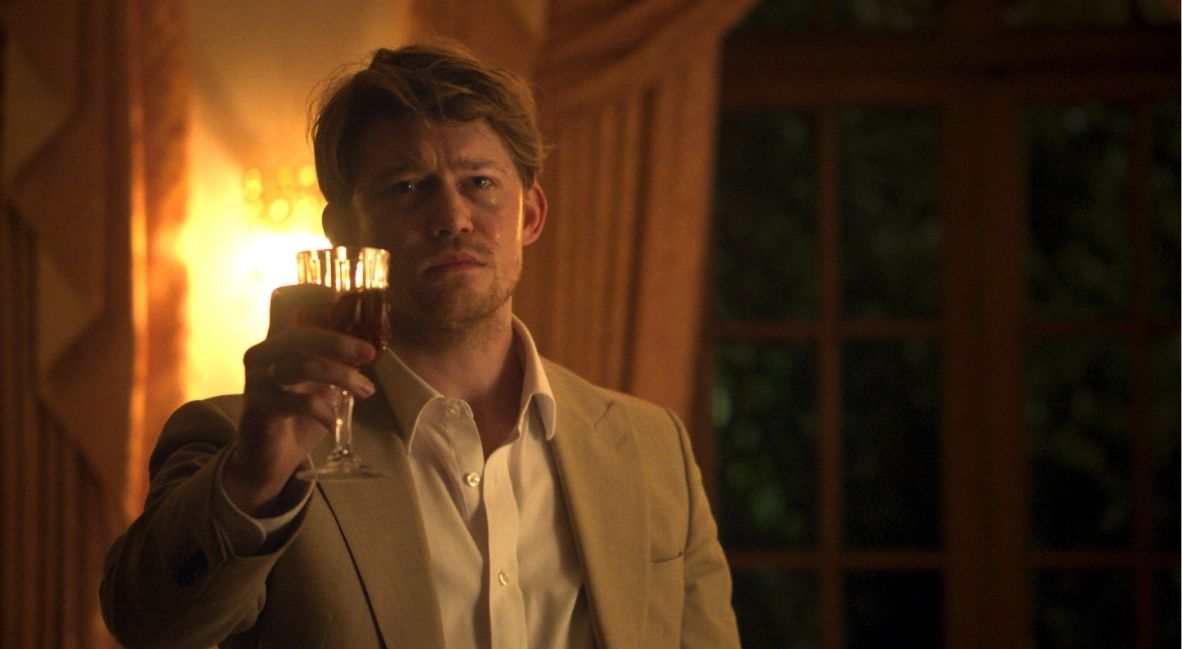
Joe Alwyn as Laertes is the one clear hat tip for Hamlet (205)
It doesn’t help either that Ahmed swallows most of his words. Articulation is essential to understanding Shakespearean language, especially when no subtitles are available and it is spoken in a strong accent.
Otherwise, Ahmed does a decent job portraying the prince, especially as the emotions begin to flare up and the opportunities to showcase physicality complement mixed line readings. But the sound mixing is tough, with the music sometimes so loud that the dialogue is hard to hear.
The one unadulterated hat tip for Hamlet (2025) is casting Joe Alwyn as Laertes. He is perfect for the role. He’s sweet and innocent as the film begins, and even gets a little more screen time than in the source material. But when the explosive conclusion arrives, he offers an excellent performance. It’s ruined, however, by the fact that you almost cannot see the ending at all, because it is so dark.
The craftwork behind the film is as troubled as its dramaturgy.
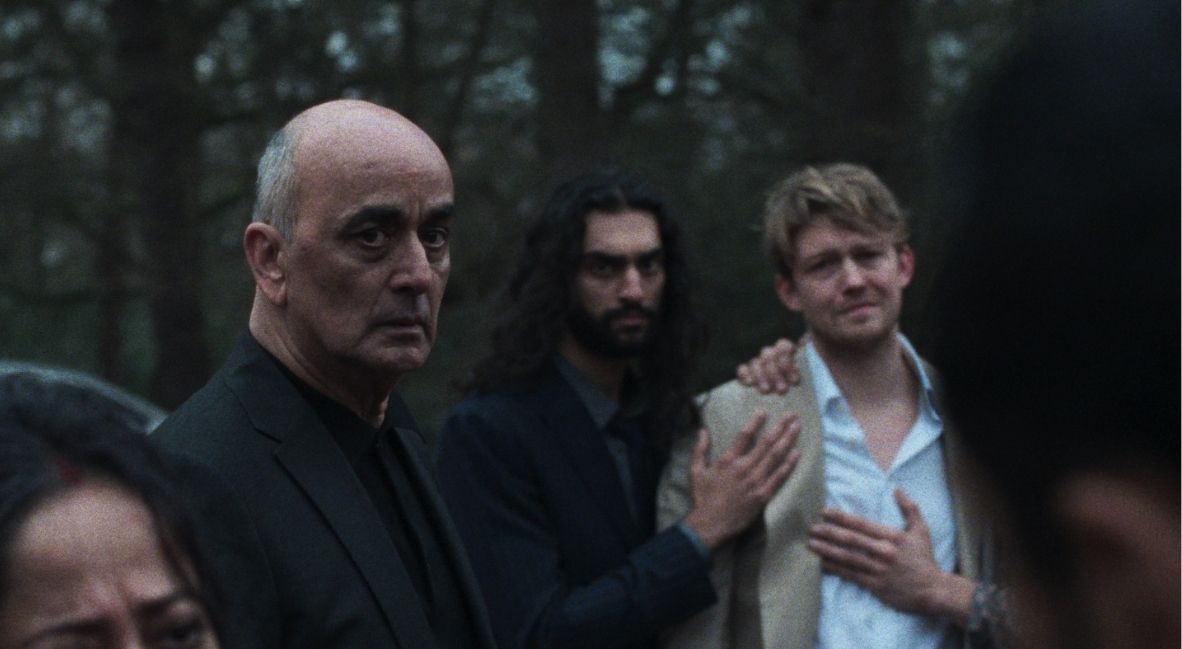
There are some fine choices. Setting “To be, or not to be” in a speeding car is a bit obvious, but it works. Only, the sound of the speeding vehicle is overbearing against Ahmed’s voice, and it’s too dark to see anything.
The play Hamlet has put on to out Claudius for his brother’s murder is decently staged as a culturally significant dance performance. But again, the room is poorly lit, and Hamlet’s skulking about is distracting.
Hamlet (2025) can’t justify its dramaturgical decisions or win us back with strong enough craft or performances. While the Bard’s plays deserve to be reworked again and again under new creative interpretations, this one is not successful.
Hamlet (2025) is now playing in select theaters.
Hamlet (2025)
-
Rating - 4/104/10
TL;DR
Hamlet (2025) can’t justify its dramaturgical decisions or win us back with strong enough craft or performances.