
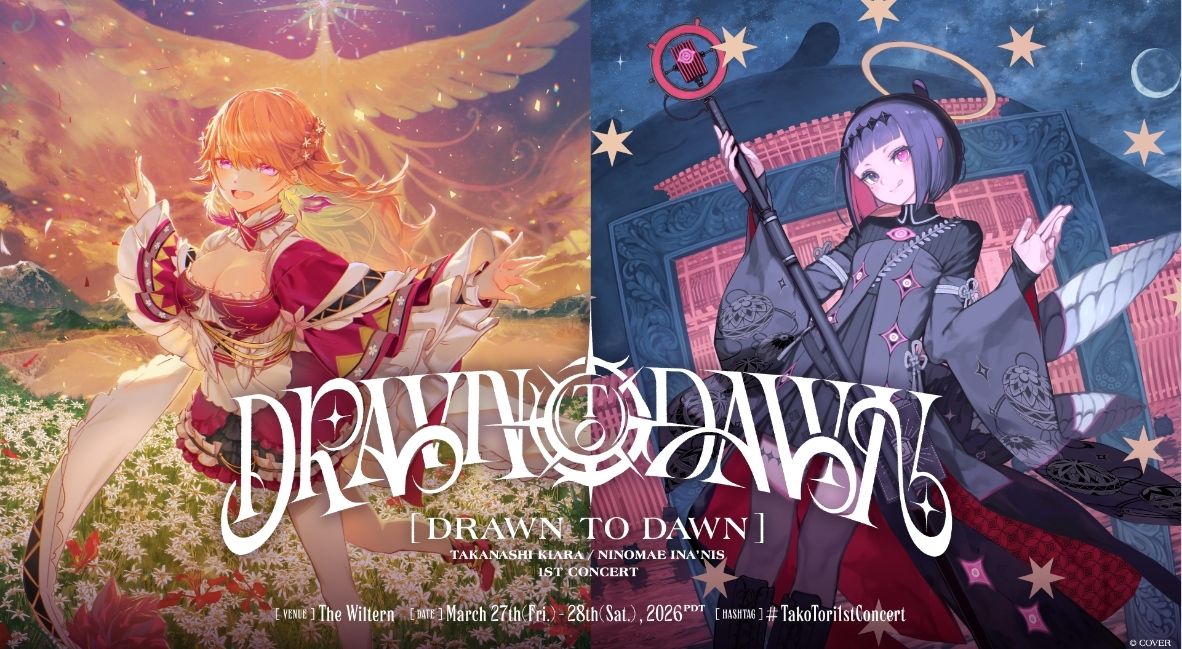
Ninomae Ina’nis has never needed to be the loudest presence on stage; she’s spent years building one that speaks for itself. As part of hololive English’s first generation, she helped shape VTubing for a global audience while growing into a performer on her own terms. In her first duo concert with Takanashi Kiara, “Drawn to Dawn,” she returns to Los Angeles for a performance that feels as personal as it is expansive.
Ninomae Ina’nis turns a global stage into something not just seen, but felt with “Drawn to Dawn.”
For Ina, this moment isn’t just about stepping onto a bigger stage; it’s about the confidence she’s built along the way and the creative voice she’s learned to trust. That voice has always been rooted in feeling; how music, visuals, and atmosphere come together to create something people can experience. With “Drawn to Dawn,” she looks to bring that perspective to life, turning a global stage into something not just seen, but felt.
BUT WHY THO: The first hololive English concert was in LA three years ago. What does it mean to return there for your first duo concert and have that full-circle moment?
NINOMAE INA’NIS: It’s good to be back! It feels a bit lonely without the other girls, but I’m excited to meet the fans on stage again in LA.
BUT WHY THO: A lot of your work feels rooted in atmosphere, emotion, and visual storytelling. When you imagine a live performance, what usually comes to you first: the feeling, the image, the music, or the story?
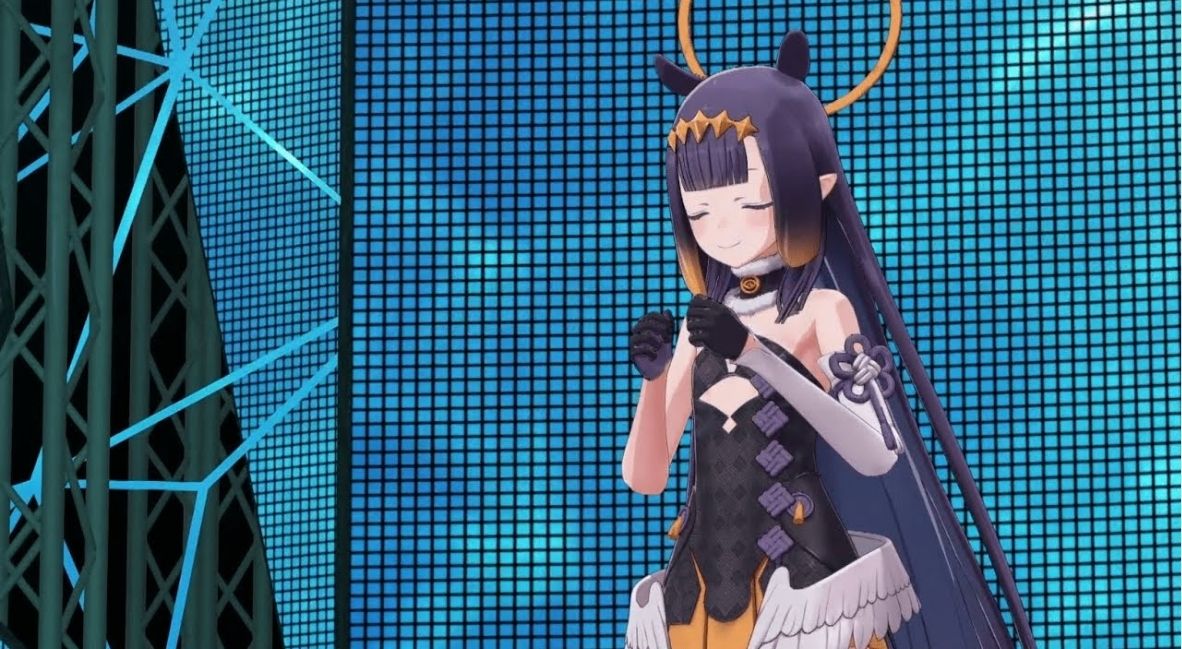
NINOMAE INA’NIS: I believe that songs have a different impact depending on how you enjoy it, but at a live concert, it would have to be the feeling. I think you can physically feel the music through the resounding bass or the crowd cheering and singing along, so the performances become an interactive experience.
BUT WHY THO: You’ve spoken before about how shy you were early on, especially around singing. How has your relationship with being seen changed now that performance is such a visible part of your career?
NINOMAE INA’NIS: I think I definitely gained a lot of confidence during my time at hololive. I used to be a lot more self-conscious about how I had to behave around people, or be shy about people seeing me sing and dance, but being around other members who love performing, on top of the endless support my fans have shown me, I think I overcame that wall, and now I have a lot of fun on stage.
BUT WHY THO: As your confidence as a performer has grown, has that changed the way you approach your creative work behind the scenes, too?
NINOMAE INA’NIS: Now that I have more experience and knowledge about how things are done, I am able to cooperate with others much more smoothly in order to make my vision come to life.
I think that confidence really helped me go from “let’s create something that works” to “let’s create something that I want to create, and we’ll make it work,” if that makes sense.
BUT WHY THO: You’ve described music as a storytelling tool, especially when paired with visuals. What can a stage performance communicate for you that a stream, illustration, or song release cannot? Does performing live make that expression feel easier, or more vulnerable?
NINOMAE INA’NIS: As I mentioned in the previous question, I think a concert is a place where you can experience the song physically, so there are certain emotions and impact songs could have when you get to hear them live.
I think there are certain songs you can lean back and enjoy, like VIOLET, whereas there are songs like TAKO∞TAKOVER where you can sing along with everyone else in the crowd and be involved in the song! When it comes to slower or calmer songs, I always worry that it might take away from the overall energy of the concert, but I’ve come to realize you sometimes need those slower songs to create an even stronger contrast to the more energetic songs in the setlist.
BUT WHY THO: You and Kiara complement each other in a way that fans immediately recognize. What does working with someone that different from you unlock creatively?
NINOMAE INA’NIS: I think working with Kiara definitely opens up different perspectives to how I approach things. Our strengths and skills lie in different fields, where Kiara is stronger with the performative arts, and I’m stronger with the visual arts, so we are able to approach different problems with different perspectives, and we end up coming up with solutions that I alone couldn’t have come up with.
BUT WHY THO: A lot of artists talk about pre-show nerves, but not always what comes after. Once a concert ends, what does the emotional aftercare look like for you?
NINOMAE INA’NIS: For a little while, I would like to go and see what the fans thought and what they thought of the concert. I like to enjoy the moment, but I soon go into work mode, taking notes on what the fans liked and what could have been better, or what I would like to do from here on. I think the entire industry moves very quickly, so I always like to learn from each opportunity as much as possible.
BUT WHY THO: As hololive and VTubing continue to grow globally, what do you hope does not get lost as the industry gets bigger?
NINOMAE INA’NIS: I really appreciate the fans who have supported me all these years, and I always want to prioritize my fans’ happiness before growth.
As one famous uncle once said, “With great power comes great responsibility”. With growth and broadening your sphere, there will be more opportunities, but there are downsides as well. I want to be able to have a solid foundation and keep true to what I like and want to create so that I won’t topple when these opportunities arrive.
BUT WHY THO: When you think about the version of yourself who first stepped into this space, what do you hope she would understand now about the kind of artist you’ve become?
NINOMAE INA’NIS: I think that I am, to some extent, still the same as I was back then, where I keep doubting everything I do. I can’t completely say to not doubt yourself, but I hope she understands that the choices she made along the way was the best choice she could have chosen at that instance, and that it’s okay to feel happy about what she’s achieved.
BUT WHY THO: As members of hololive English’s first generation, you’re often seen as trailblazers for the talents who came after you. With three more generations now part of EN’s story, what do you hope your performances inspire in your kouhai?
NINOMAE INA’NIS: Myth may be seen as the trailblazers for the EN side, but to me, the true trailblazers were the senpais who paved the way for us to exist.
Way before my debut, I had described my life back then as monochrome, where I just existed without knowing where I should be going in life and letting time fly by without a purpose. Then, I learned about VTubers and hololive.
I still remember watching hololive 1st Fes. “Nonstop Story” in my dimly lit bedroom and crying, wanting nothing but to support their dreams. I think seeing them on stage lit a small, colorful flame in my heart that eventually led to where I am today. They inspired me to break out of my sphere and step into a more colorful life every day.
It would make me feel more than honored if I became or could become that small flame that would inspire those who came after us, too.
For Ninomae Ina’nis, growth hasn’t come from trying to be someone else on stage, but from becoming more comfortable being herself on it. Over time, that quiet confidence has turned into something that can carry a performance. And even now, she’s still figuring out what that looks like: one step at a time.