
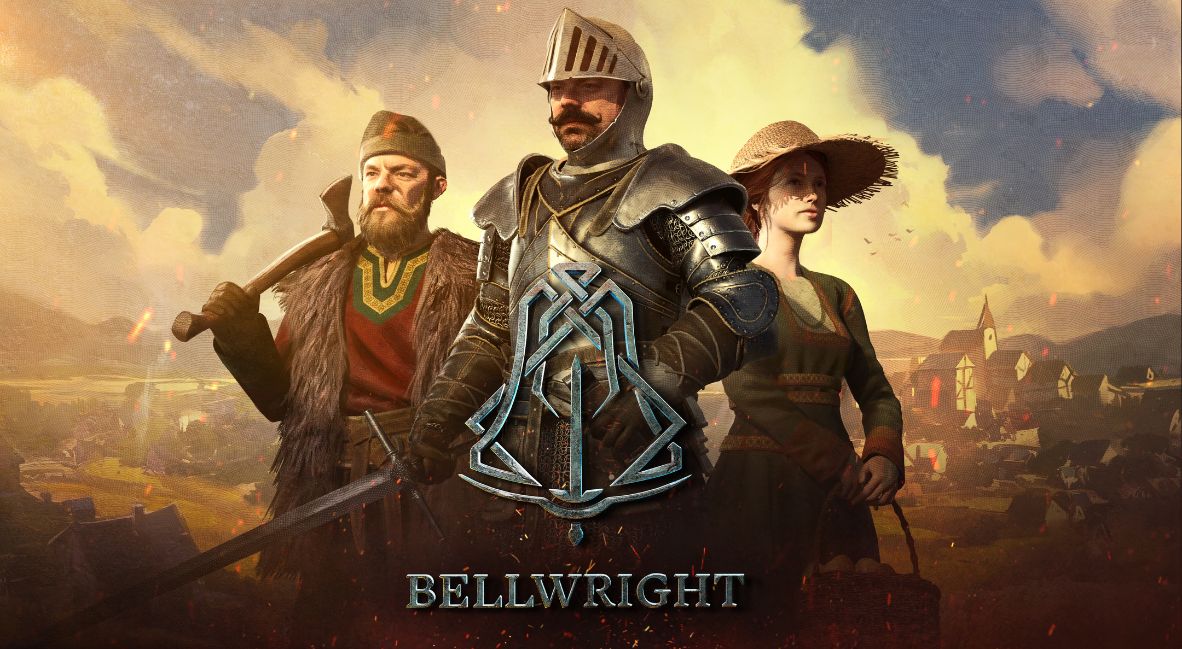
Published by Snail Games and developed by Donkey Crew, Donkey Crew Sp. Z O.o., Bellwright is an interesting take on a management sim, in that, well, it’s third-person. In the game, you are framed for the murder of the Prince and sentenced to death by the Crown. Now, you’re living in the shadows ever since. When you survive an attempt on your life, you must head back to the place you left and try to find answers, all while leading a rebellion against your homeland’s oppressive Sovereign to victory.
At GDC 2026, we spoke with Lead Gameplay Developer Sergii Gerben about Bellwright’s approach to storytelling and how management games serve as its foundation despite starting as a survival title. In the game, you work to establish and expand settlements while liberating the land and its villagers. You command forces, recruit people, and all of the mechanics around that feel like something you would only get from a top-down experience. But Bellwright is different.
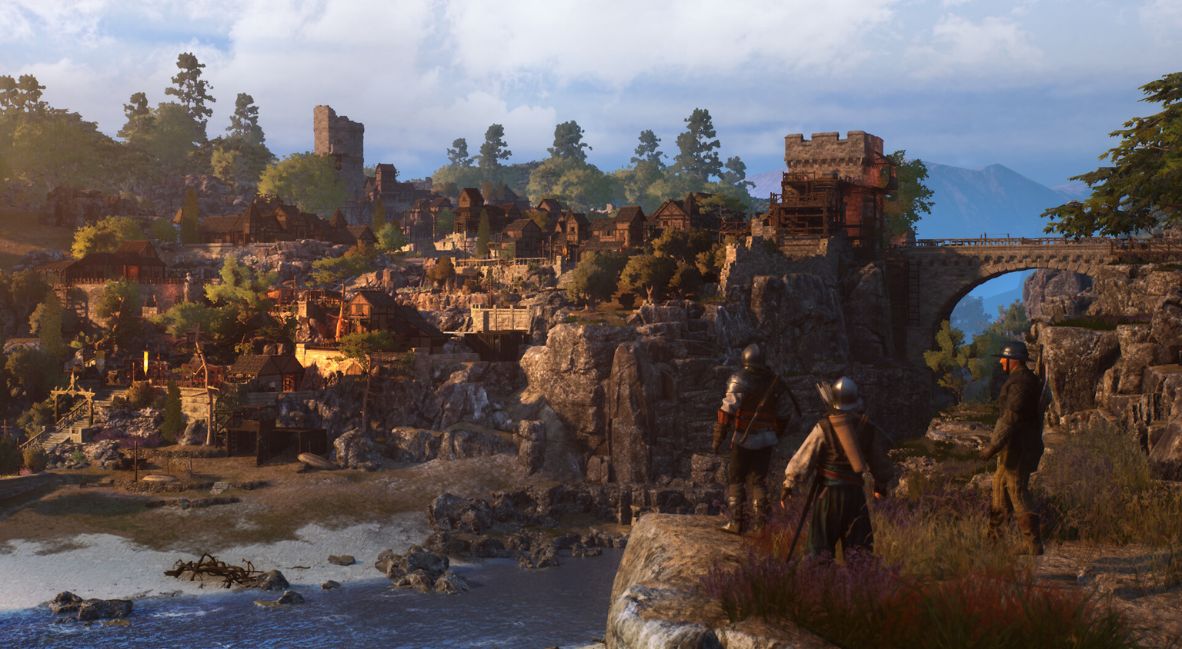
Sergii Gerben opened the conversation by describing the development team’s inspirations and how they approached bridging genres. “Initially, our idea was to make a rather simple game. We didn’t want to be too ambitious. We wanted to make a survival game, combine it with a town builder, and then also add some Kingdom management in the late game,” he said.
Continuing, “And that didn’t really go according to plan, simply because as we started doing it, we started testing early prototypes and realized that that’s just not good enough for us. We were not happy with the results. The game worked, but it was not that fun, it was not that inspiring, and it also didn’t really stand out from other projects on the market.
As Sergii Gerben expanded on the game’s path, the story and the NPCs are just as important as the settlement building and management. “We started adding different elements, and we added narrative. We had a dialogue system. We added a proper storyline, which was not initially planned. The full sandbox… we realized that’s not really the way to go for us. And then we also moved into simulating NPCs’ behavior, where every NPC follows the same logic and rules as the player, especially for survival elements, such as harvesting wood by cutting down trees, for example, as a player.”
Expanding the game into a Colony simulator gave the team the freedom to invest in story but also expand on the management mechanics of the game, and adjusting NPC logic was key to that.
“And now NPCs would also have to follow exactly the same rules for collecting trees, for example, getting eggs and finding them, etc, pulling them back, which made logistics much more important. And overall, in terms, again, from just town builder, move into some kind of Colony simulator where you build a community, and where every individual person you have in this community is actually important,” he said.
Bellwright’s Early Access period is helping refine the game and build it larger.
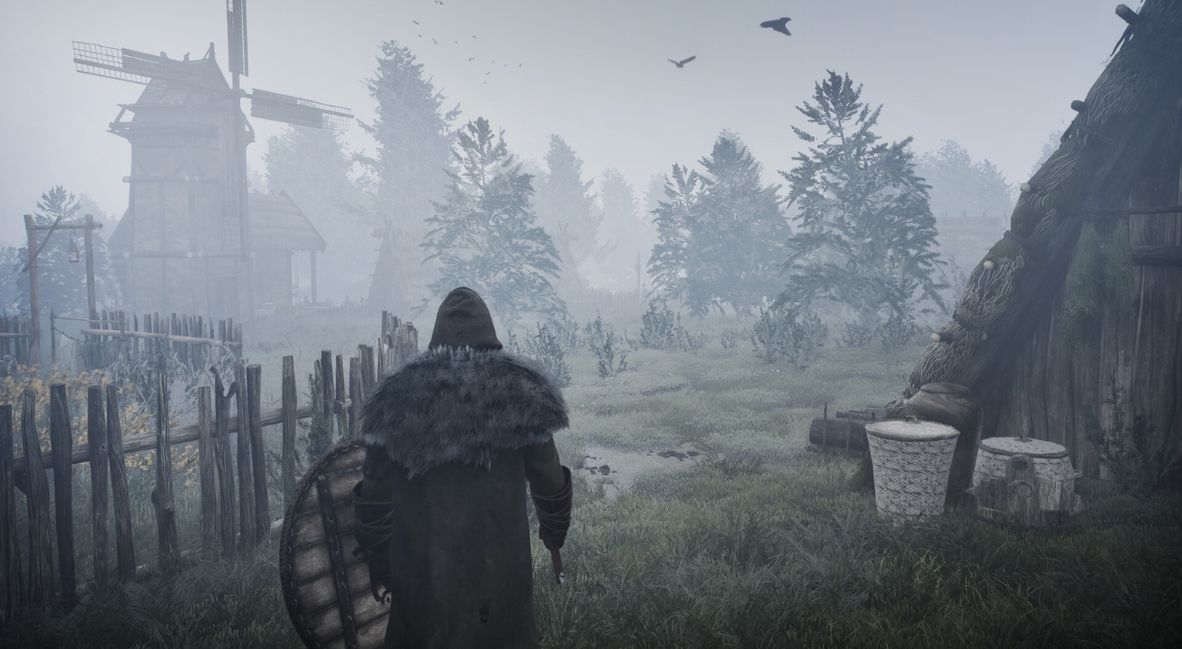
But Bellwright’s journey wasn’t just a single launch; it was also how the development team refined the game through Early Access. Gerben explained, “As we went through early access, we improved the game in pretty much all areas. And we also lean more towards world simulation, aiming to create worlds that live by their own rules, where players just experience them and can affect them, but it doesn’t all revolve around the player.
“We also lean more into creating a medieval leader simulator, where, in the late game, it will be more about managing your kingdom, building relations with other kingdoms and futures around you, and exploring and expanding in different ways.”
While both survival games and management sims push the player to manage their resources through multiple systems, bridging the two into a coherent game isn’t necessarily easy. But the important element is to look at each iteration as adding, not taking away from one, Sergii Gerben explained:
“All those [survival] elements are still in the game. The game starts as a survival. You build your own first settlement, pretty much alone, with just the help of one single companion. And that’s one of the beautiful parts of the game, because in the beginning, you have a lot of chores, you need to take care of yourself.
“The more NPCs, the more followers you get, the more you delegate to others, and now you are not really someone who cuts down trees. You are someone who decides which trees need to be cut down. Yeah, this transition is really one of the defining experiences, at least in the early game development.”
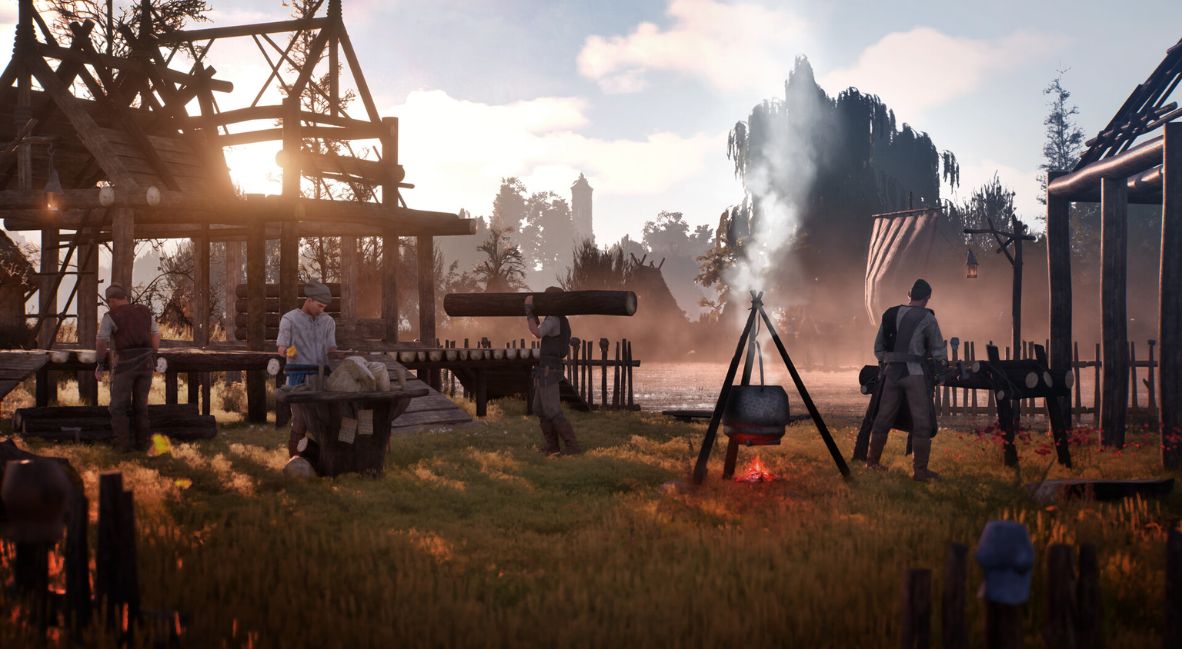
In addition, leaning into the sim aspect of Bellwright, Early Access was vital for responding to the community around the game and refining it. About what the team learned, Gerben said:
“We always work very closely with the community, especially when preparing updates. We always test some of this with the community on our preview branch, basically a public test where we not just collect feedback, we also really interact with the community very closely by chatting, by trying to ask questions, because for us, it’s extremely important to understand why the player feels this or that way about what we do.
“As far as going through early access, we are really expanding in all ways. The game looks very different right now than how it looked two years ago. We really overhauled the visual part completely. We ironed out a lot of UX issues where things worked before, but they were very difficult for some players because it sometimes felt like you were fighting the game’s UI instead of your enemies. And we fixed pretty much all of those issues.
“There is always, of course, more collective life elements that we are playing into it, but again, compared to where we were before and where we are now, that was a very long run. And, of course, features like we added a lot of things that we are missing and that are very important for our kind of game, like animal husbandry, roads that you can build in your settlement and connect settlements between each other, walls to protect settlements, caravans, because we have a proper logistics system.
“We also have a simulated economy. In the world, different villages can produce different kinds of resources. They have different needs, and there are also traders that are fulfilling those needs. So it’s living economies that function without the player’s impact by itself, but players can choose and exploit it or help someone, etc. There are so many things. I don’t even know what to focus on.”
Bellwright pushes what we think about sim games.
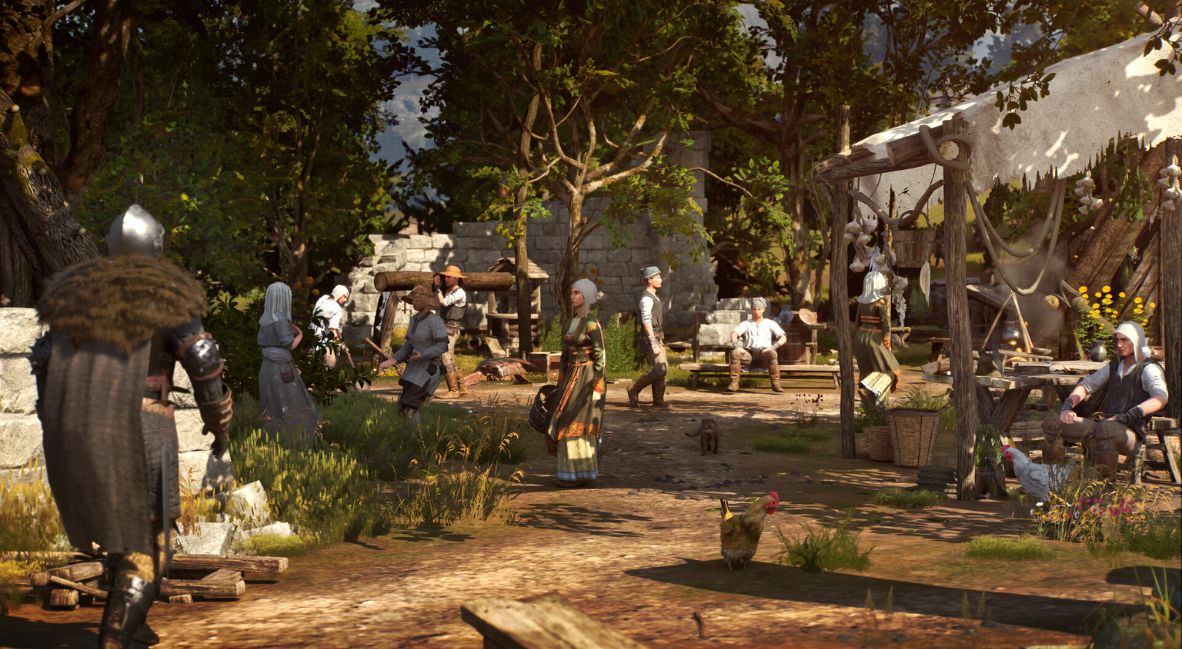
But Bellwright isn’t just about controlling a simple settlement; it’s about controlling kingdoms in the end. And that begs the question, how do you manage that from the game’s perspective, and now as a map painter? Gerben explained that the team is still refining this element.
He said, “The beginning of Bellwright is a story about rebellion and revenge, where if you are wrongly accused of a crime you didn’t commit, you have to go into hiding, and then you return to this land, and you search for answers. The land is occupied by an evil queen that you need to defeat to liberate the villages.
“That’s how you basically transition from being nobody to ruling this kingdom. How you go from there is not yet in the game, because, yeah, that’s pretty much where the current stage of our access ends. As you liberate the land, and now you’re ready to expand further, we will add in the next big updates.”
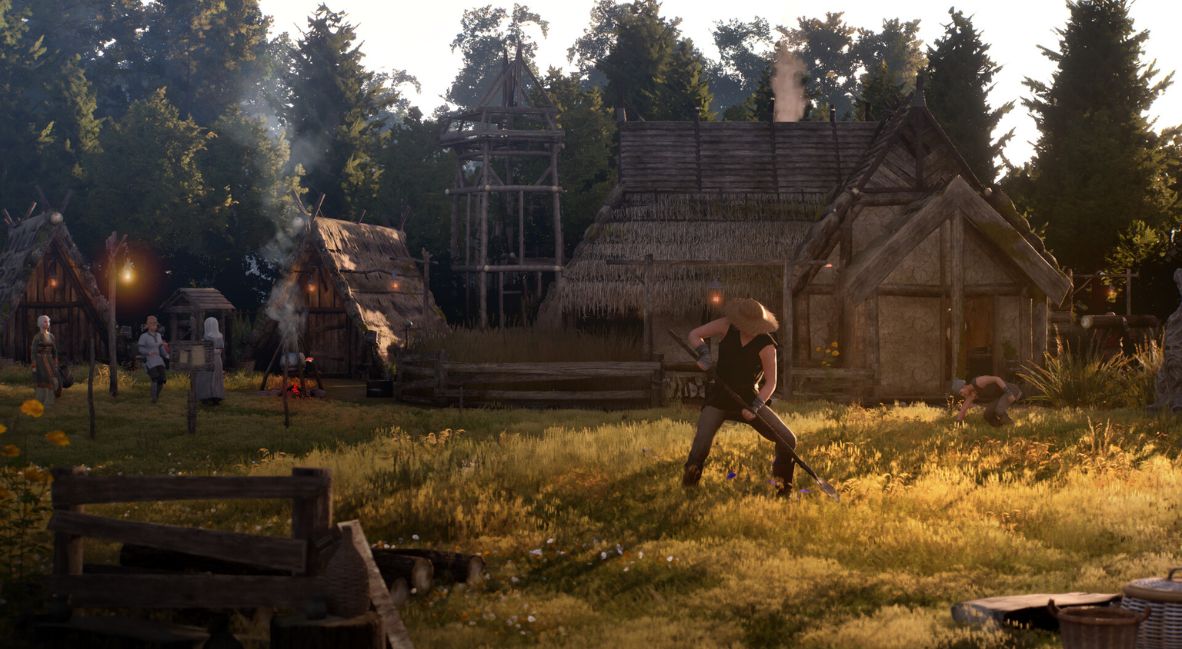
Speaking with Gerben, it was clear that there is a longer plan in place for Bellwright and its systems. When asked about what is next for the title and its approach to being a Colony sim, the answer was, well, relationships. He said, “One thing that right now, I would say is a little bit underexplored is relations between NPCS in the world and between players and NPCs.”
Continuing, “That is something that we really want to get deeper into, where your followers could form relations [with each other]. Someone likes someone, someone doesn’t like someone, they would have different personalities, etc. Because, yeah, that would help the game feel more alive and feel immersive. It’s a word I don’t like to overuse, because it’s like everyone tries to be immersive. I think that’s the right word in this situation.”
As Bellwright’s world interacts with itself around you, player agency was the next step for the conversation. When asked about the player’s impact on the world, Gerben explained, “That depends on your abilities right now in the moment, because as you start playing, you cannot do much. You have only one follower, and you can get a few more. You build a small camp deep into the woods, hidden from enemies, and yeah, you can start trading slowly with others, but there’s not much you can do until you progress further into the game.”
“But as your community grows, as your settlement grows, you start getting armies that you can protect, trade with villagers, and liberate villages from the Queen’s soldiers. They are not paying these terrible taxes anymore, and villages can start to prosper. And that also affects the player, because as villages start to prosper, they can also start producing goods that you can buy or use for your own sake. So, yeah, the more you go into the game, through the games, the more abilities you get,” he added.
Bellwright is focusing on NPC relations and building even more immersion into their Colony sim.
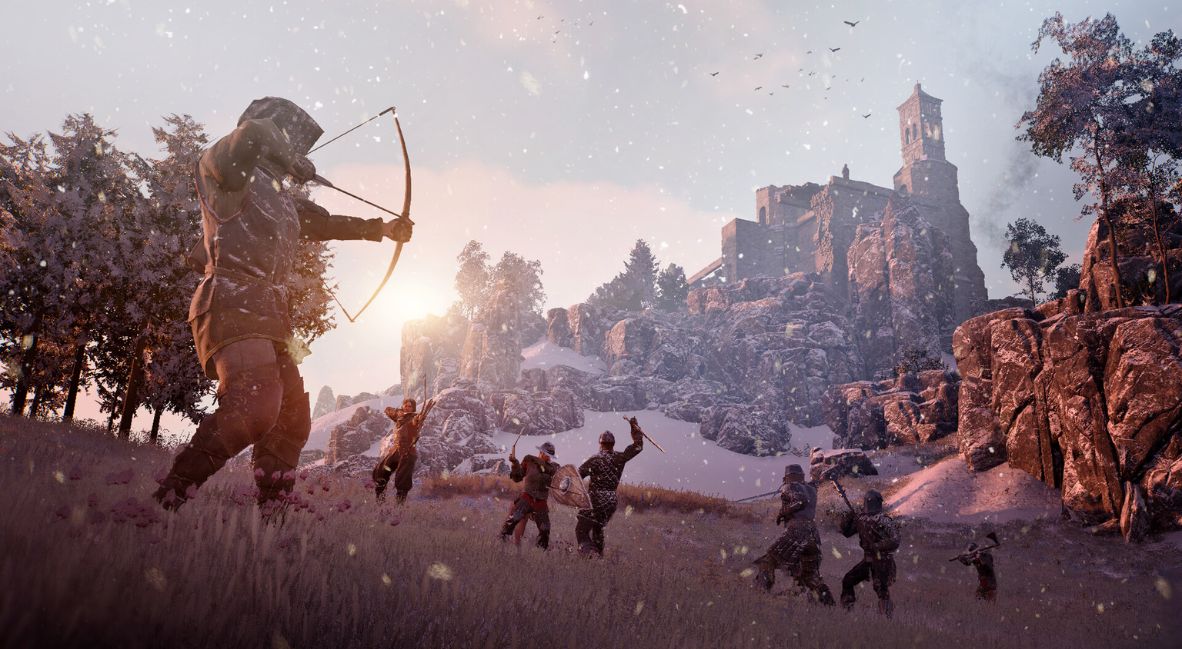
Even with all the growth that Bellwright has had since its early access two years ago, a 1.0 launch is still a bit away. “While we are really proud of the progress that we have made in the last two years since our initial release launch, we believe that there is still room for improvement and for even more exciting stuff,” Gerben said.
He continued, “Right now, we are focusing on optimization and improvements, and also we have a bunch of really exciting features to add that we don’t want to [rush], which includes courses, better and more advanced structures, like stone balls with sigils that you can also both protect your settlement, but also besiege enemies’ castles. And also, we want to focus more on the strategic element after liberating [the kingdom], including interacting with, fighting, and also engaging in diplomacy with other kingdoms. So once they are all in, yeah, then we will exit early access.”
In the next year, players can look forward to console ports, which Gerben said are set to release with the game’s early access two-year anniversary. In addition to arriving on console, he also added context for where other optimizations will be focused. “April 23 is a day when it will be two years since our episodes began, and we are planning to release many optimizations and quality-of-life updates, which should make the game much more accessible,” he said.
“After that, our main focus will be on horses. Horses are one of the main medieval elements that we still don’t have, so we are taking it very seriously, and that’s probably the main thing to look forward to this year. But after that, as I said, there will be relations between NPCs. They will be strategic elements, but that’s later,” Sergii Gerben ended our conversation, looking to the future of Bellwright.
Our conversation with Bellwright’s Sergii Gerben focused on growing Bellwright, the systems to come, and it’s also clear that a 1.0 launch is a bit down the way. In the meantime, players can expect more developments as the game’s second anniversary approaches.
Bellwright is available now in Early Access on PC via Steam.