
Star Trek: Starfleet Academy Episode 6 feels like the kind of hour Gene Roddenberry would have watched with a quiet smile. “Come, Let’s Away” doesn’t just borrow from Star Trek’s legacy: it interrogates it. This is the moment the series stops flirting with its potential and fully commits to asking whether the Federation’s ideals can survive a galaxy that no longer believes in them.
For weeks, Starfleet Academy has quietly placed legacy in the background: names behind the students, generations who came before, history treated almost like decoration. In Starfleet Academy Episode 6, that legacy stops being aesthetic and becomes operational.
The USS Miyazaki isn’t introduced as some grand mythic battleground. It’s a training ground. The assignment is straightforward: restore power to a century-old vessel running an experimental singularity drive, do it efficiently, and prove that War College and Academy cadets can function as one unit under pressure.
An experimental training goes awry in Starfleet Academy Episode 6.
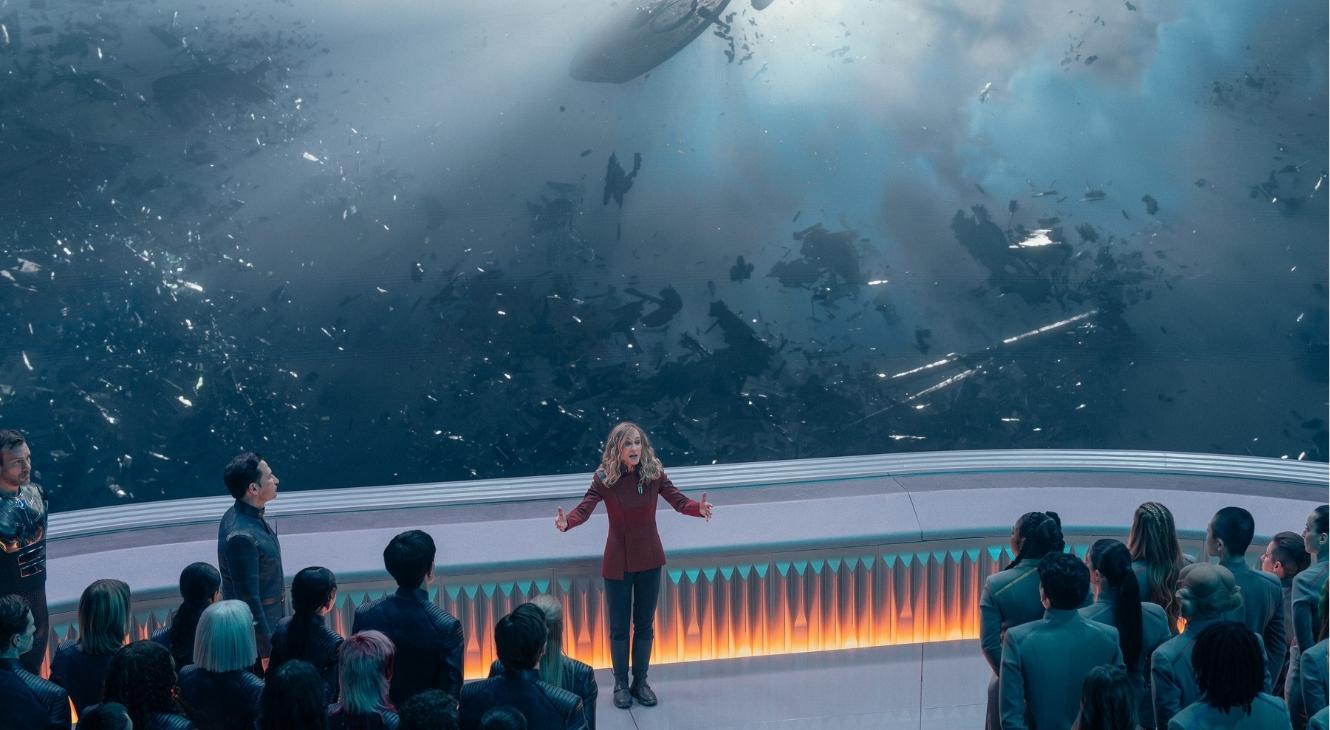
It’s a crisis response. That’s it. No heroics. No speeches. No moral dilemmas. Just, can you show up when something breaks? The USS Miyazaki’s original failure 150 years earlier wasn’t born from malice. It was a mechanical collapse, the kind of unpredictable disaster Starfleet exists to respond to.
In a post-Burn galaxy where catastrophe reshaped civilization overnight, that question feels almost procedural: when systems fail, can we work together fast enough to fix them? For five episodes, Starfleet Academy has been circling that idea. Cultural friction. Species differences. Political divides. The assumption has been that if the Federation’s future leaders can coordinate despite those differences, they’ll pass the test. And they do.
That’s what makes what follows matter. Because once the cadets prove they can beat the routine, Starfleet Academy Episode 6 pivots. The Miyazaki exercise isn’t the real question. It’s the warm-up. The real challenge isn’t whether different species can collaborate to solve a problem. We already know they can.
The real challenge is what happens when someone understands that cooperation and rejects it anyway.
Before any of that escalation, though, Starfleet Academy Episode 6 begins somewhere far quieter and far more radical. It opens with one of the most surface-level expressions of “boldly going” the franchise has ever entertained: intimacy between species.
On paper, that sounds almost quaint. Romance the alien. Kirk did it. Riker did it. For decades, that question was shorthand for progress. But in the 31st century, in a galaxy that has already survived the Burn, political fracture, and generational distrust, that frontier is a lived reality. What happens when the connection isn’t exotic, but complicated?
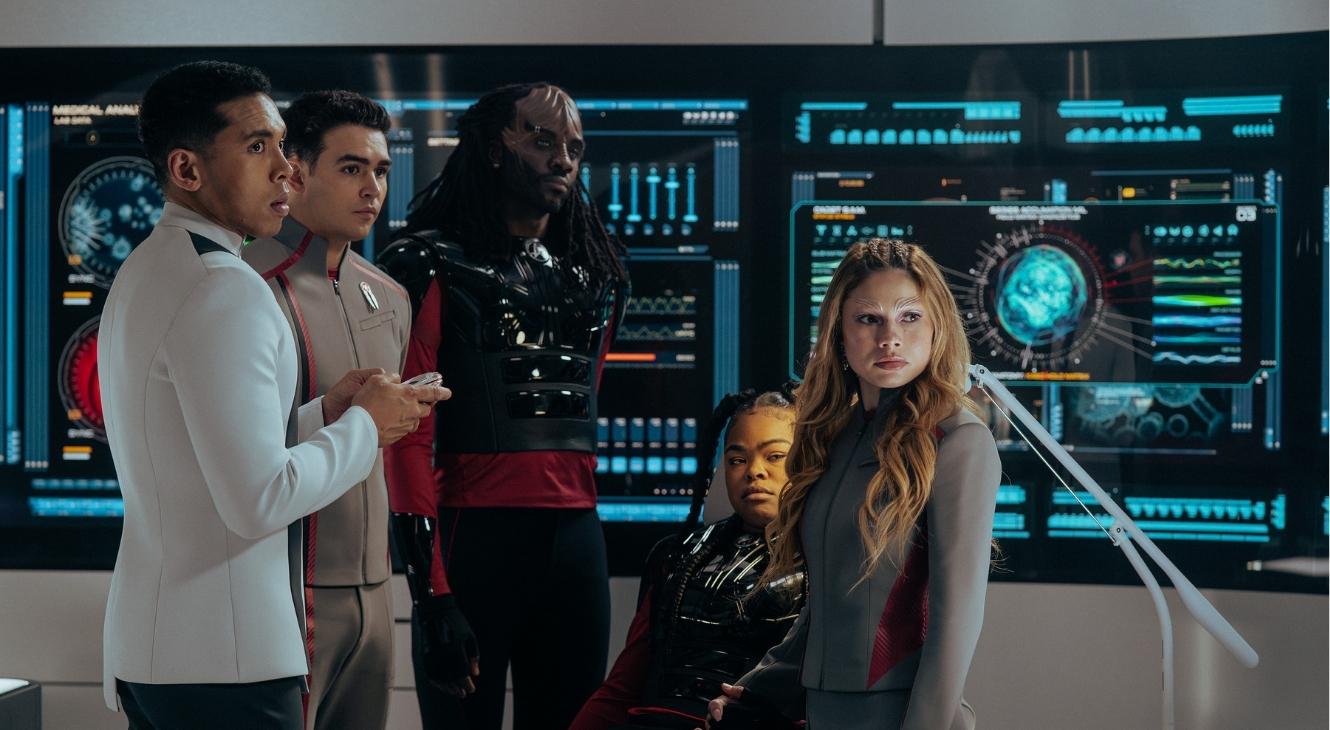
In Starfleet Academy Episode 6, Caleb (Sandro Rosta) and Tarim (Zoë Steiner)’s relationship pushes past spectacle and enters vulnerability. The challenge isn’t whether they can be together. It’s what that togetherness actually means when one partner experiences the world and the mind differently.
Starfleet Academy Episode 6 breathes new life into the romancing the alien trope.
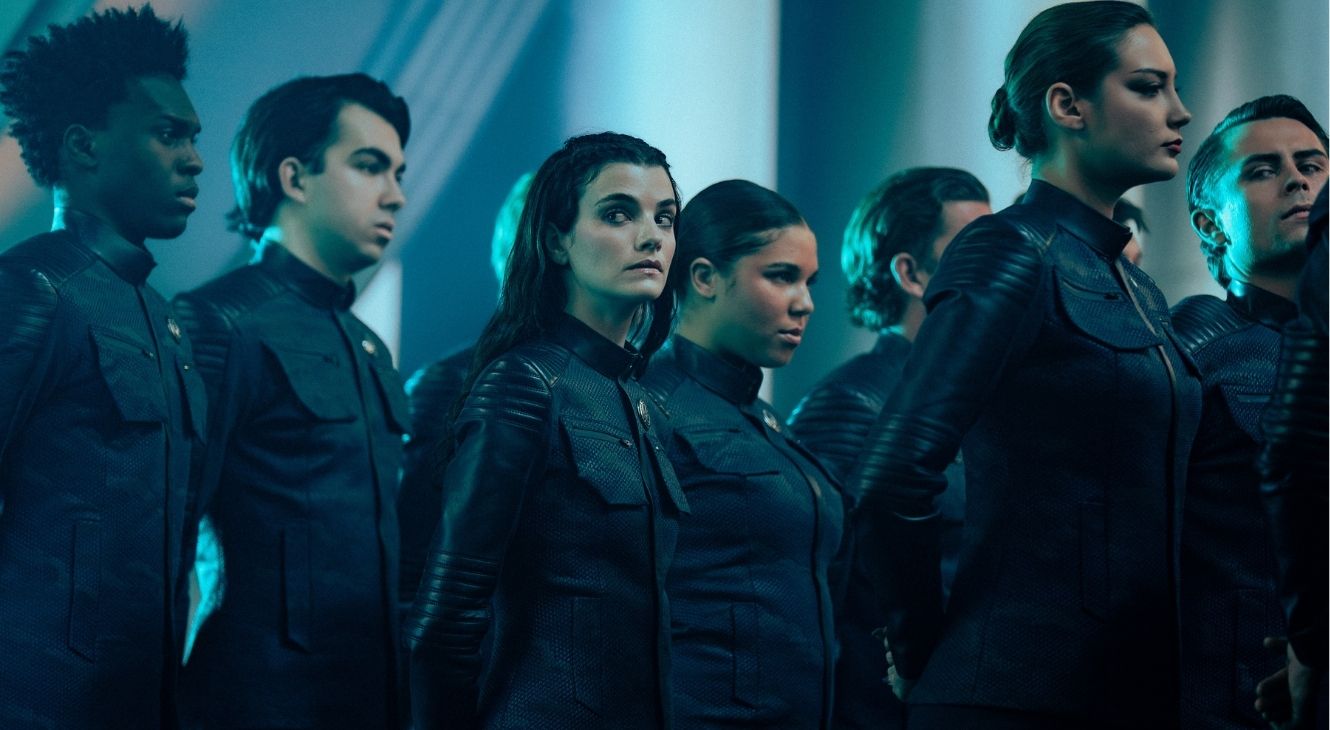
If early Star Trek flirted with the idea of interspecies romance as proof of tolerance, Starfleet Academy Episode 6 asks the next question: what are the emotional consequences of that proximity? That’s boldly going, too. And it’s not treated as a side plot. It’s the thesis in miniature.
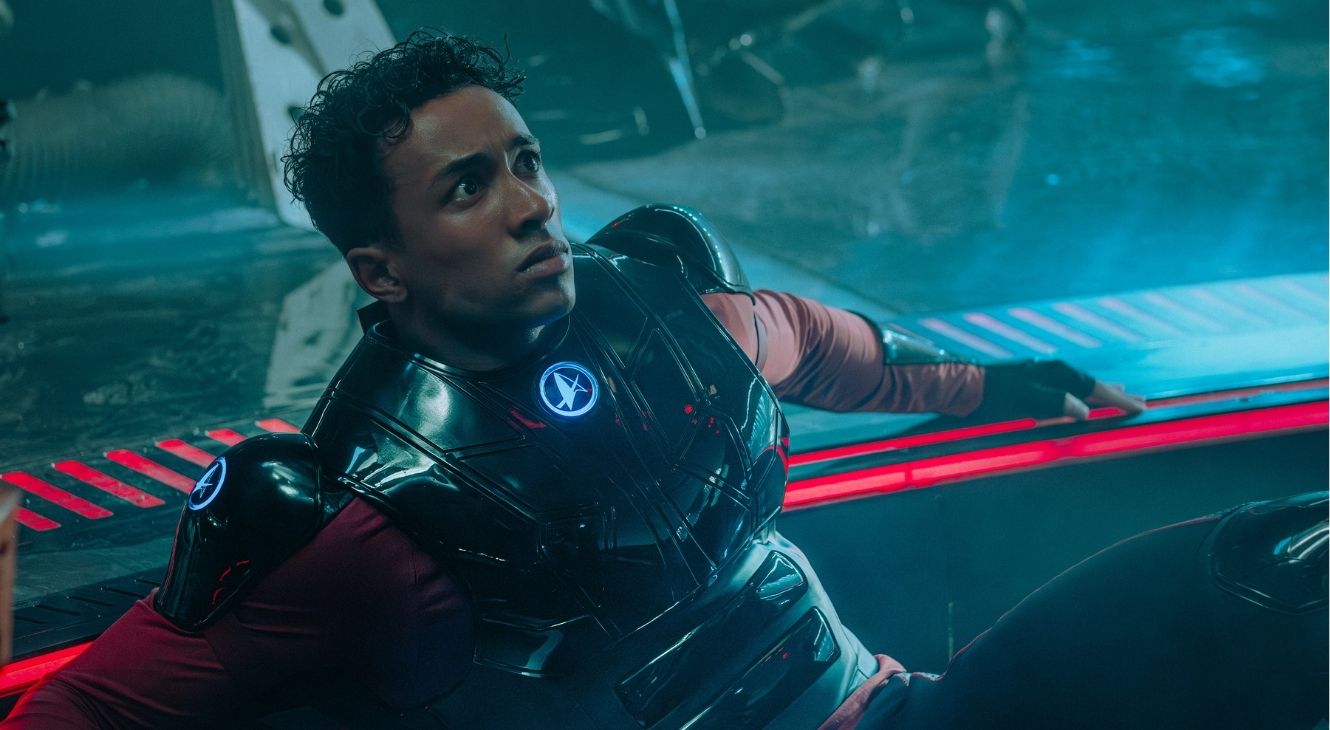
That emotional boldness runs parallel to something far more mundane, and that contrast is deliberate. The Miyazaki problem isn’t philosophical at first. It’s technical. The cadets restore power quickly using programmable matter, adapting tools that simply didn’t exist when the original crisis occurred.
What was catastrophic in the 31st century becomes solvable in the 3190s. It’s clean. Efficient. Proof that evolution matters. Proof that progress is real. They solve it. And then the galaxy reminds them that solving the old problem was never the real test.
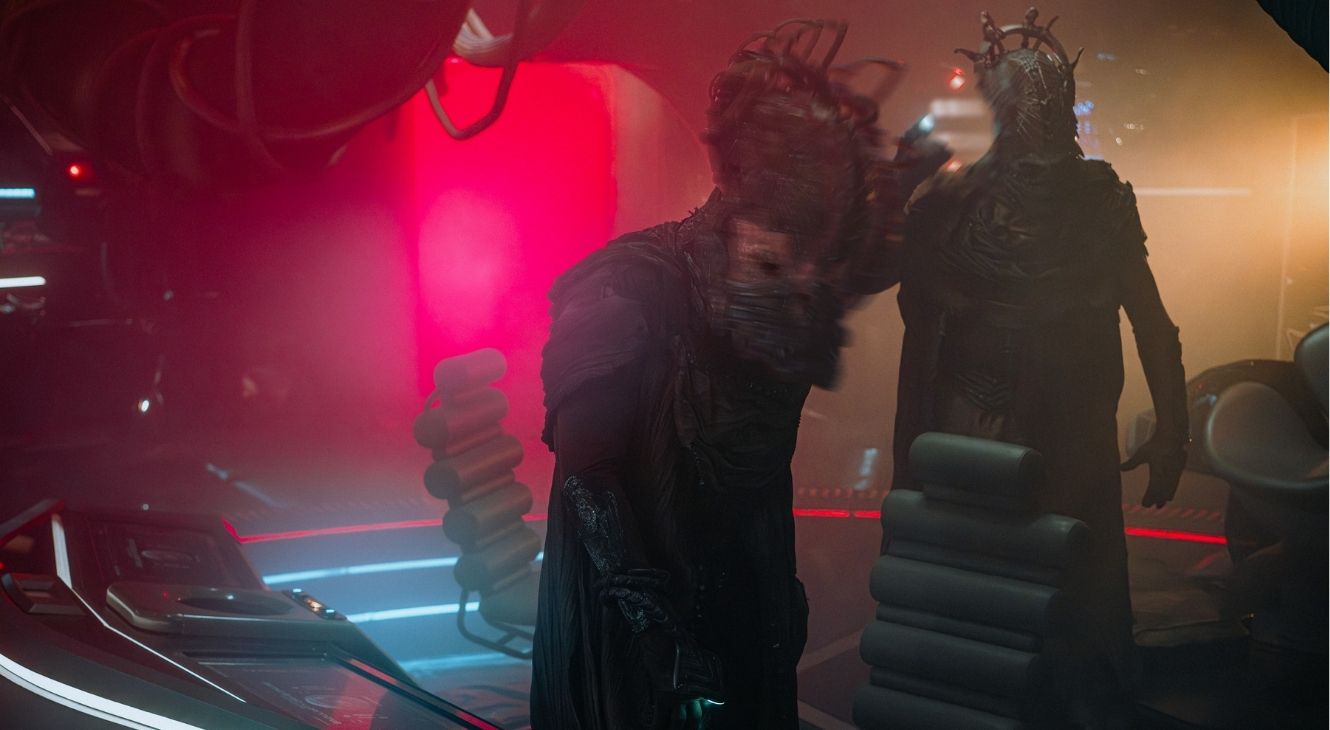
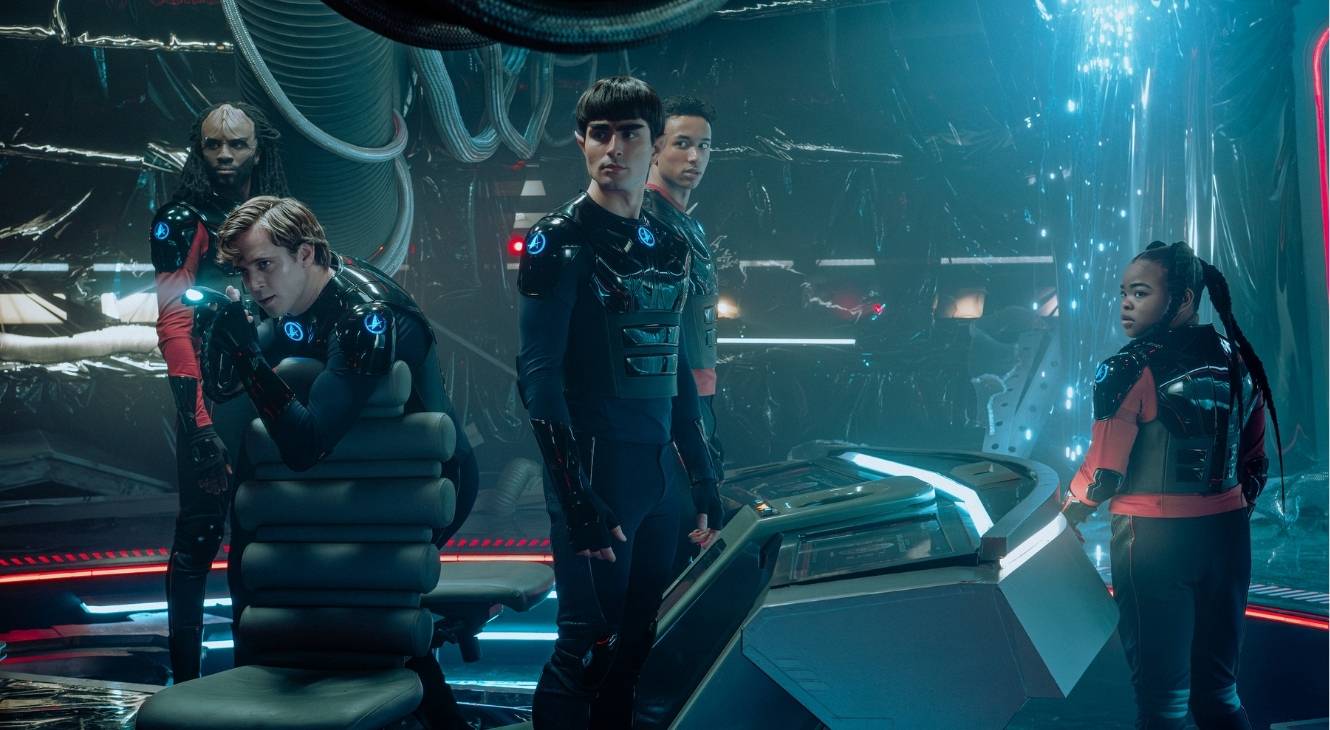
When the Furies arrive, the frontier’s newest threats, Starfleet Academy Episode 6 shifts from procedural confidence to existential threat without losing control of its pacing. The show doesn’t suddenly abandon its ensemble; it deepens it. This is where the character work that’s been simmering all season pays off.
No names are lingered on. No grand memorial roll call. But the weight of legacy, the unseen names behind those students, suddenly feels present. The DNA of The Original Series runs through Starfleet Academy Episode 6 without ever announcing itself. A century-old ship. A crew long gone. A crisis that once defined an era. The cadets aren’t reading about it anymore. They’re standing in it. And as the situation spirals, everyone gets a moment that reinforces why this cast works.
Sam (Kerrice Brooks) does something not even a Vulcan can. Jay-Den (Karim Diane) shows the kind of care that reframes what a Klingon-Human relationship looks like. Darem (George Hawkins) steps back when needed. Genesis (Bella Shepard) steps forward when it counts. Starfleet Academy Episode 6 never stops doing character work, even while things are collapsing around them. That balance is what makes the escalation land.
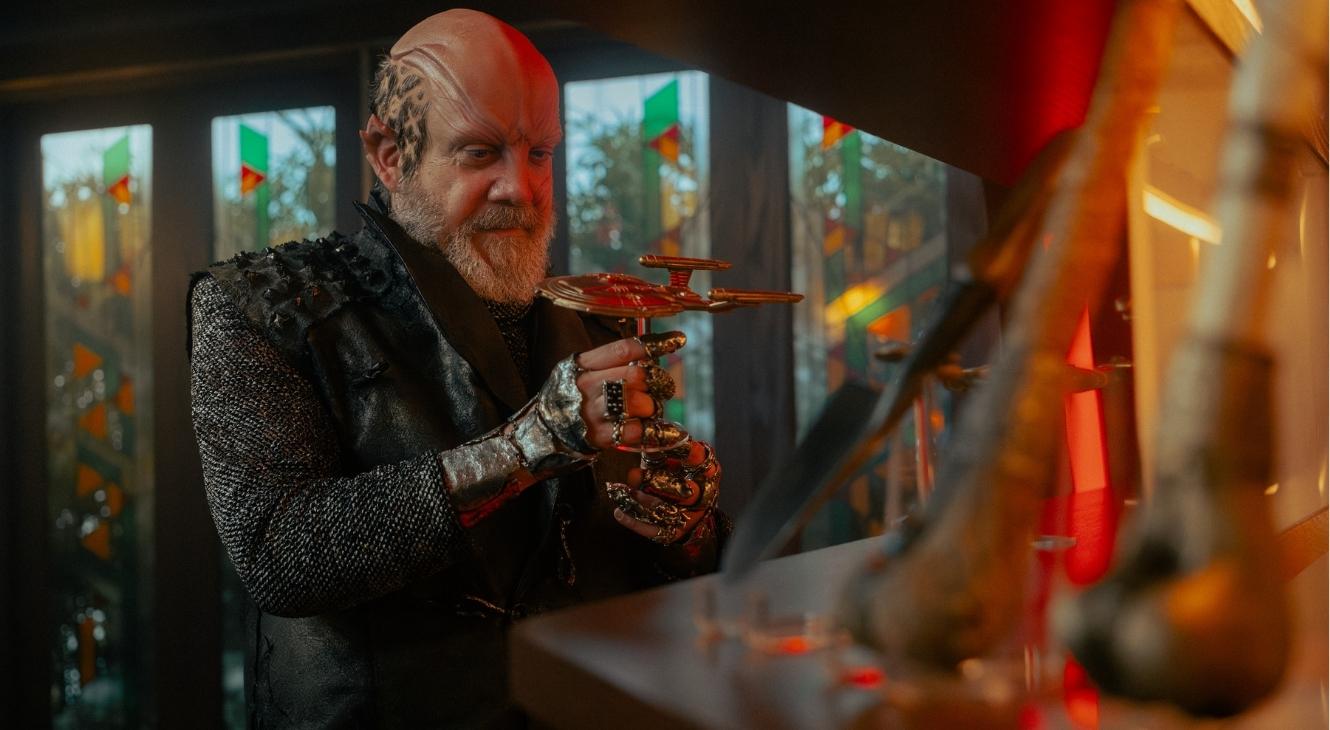
Braka is proving to be a terrifying villain in Paul Giamatti’s hands.
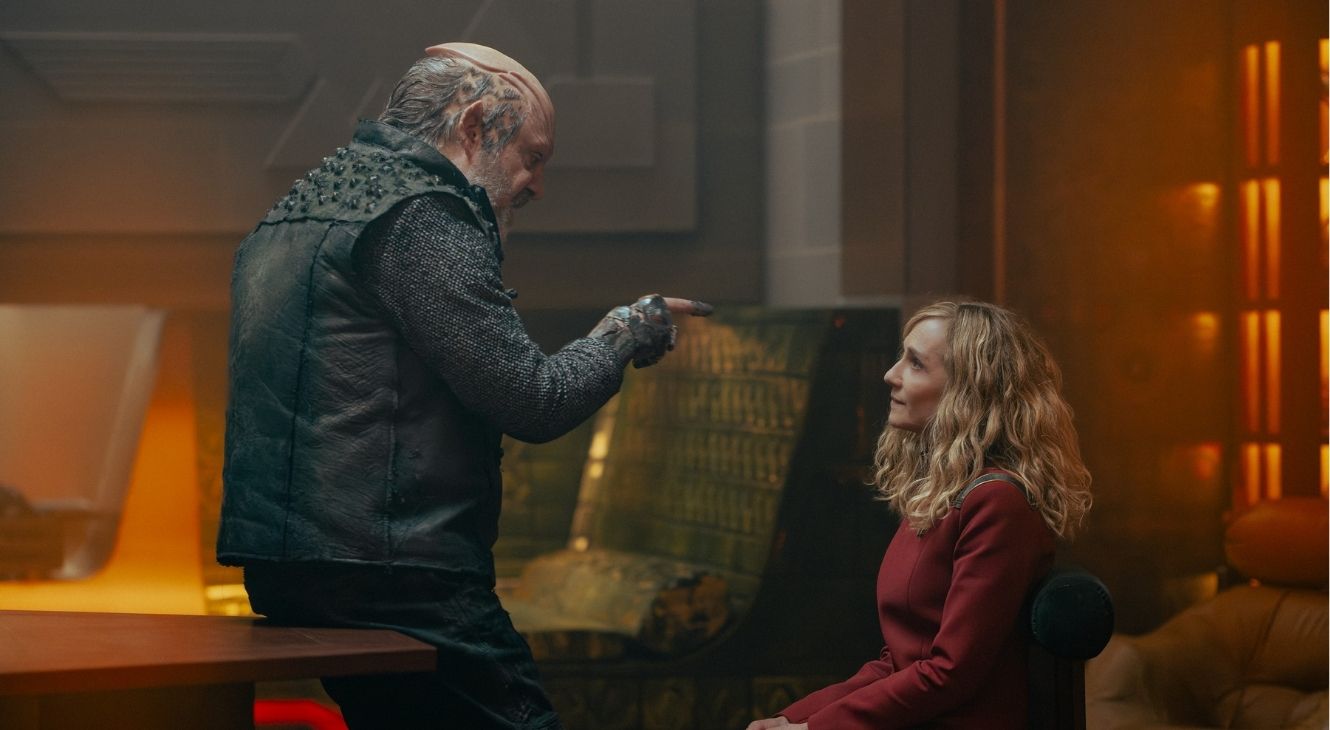
Because this isn’t the godlike Q snapping his fingers. This isn’t a puzzle box with a clever reset. The Furies represent something more unsettling: intelligence without empathy. Capability without a moral anchor or a point to make. They understand the Federation’s philosophy. They simply reject it.
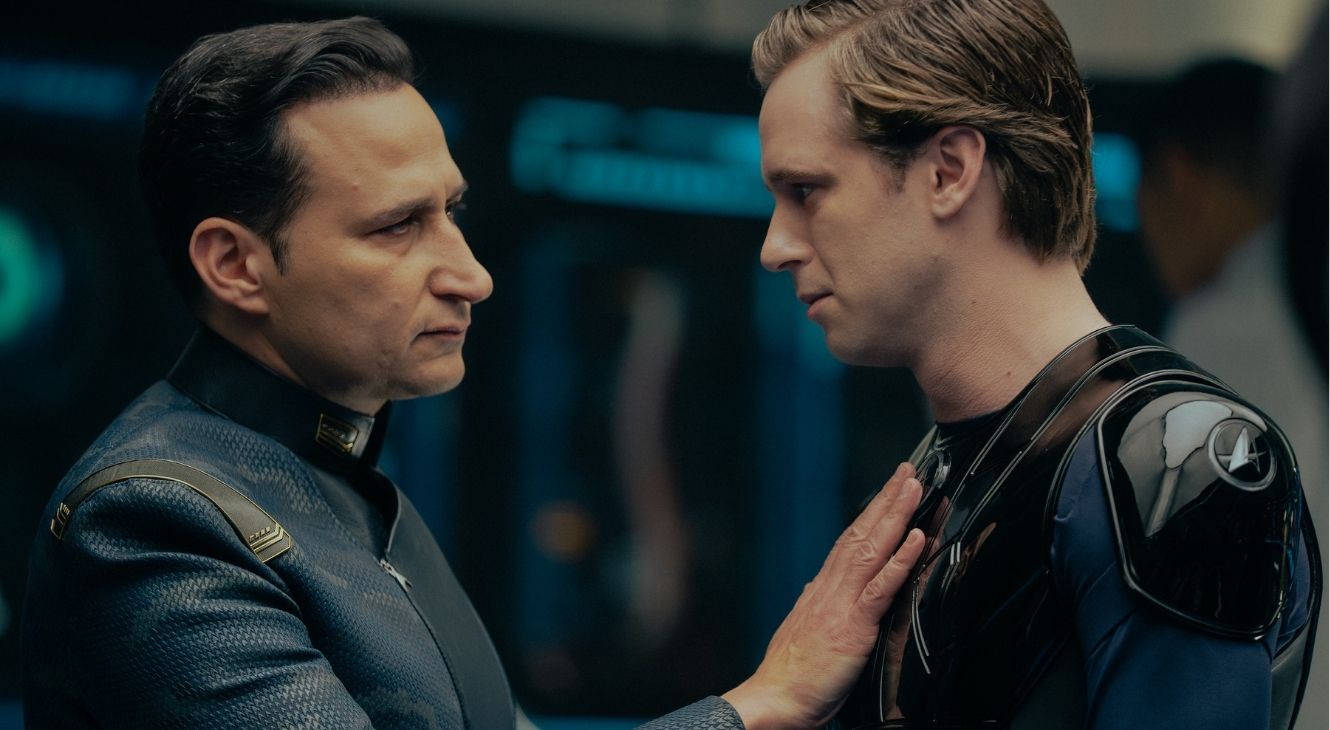
Nus Braka, played with unnerving precision by Paul Giamatti, embodies that rejection. He isn’t chaos. He’s intention. He doesn’t misunderstand Starfleet’s ideals; he resents them. He sees the Federation’s moral framework as arrogance, and he weaponizes that perception with surgical cruelty rarely seen. And that’s the tipping point.
Because Braka hasn’t just been threatening the Federation, he’s been narrating its unraveling. From the moment he reappeared after Captain Ike (Holly Hunter) captured him, he’s been delivering one long villain monologue, each episode adding another layer to his thesis. He doesn’t rant. He builds a case. Calmly. Patiently. Almost academically. And the terrifying part is that it doesn’t feel finished yet.
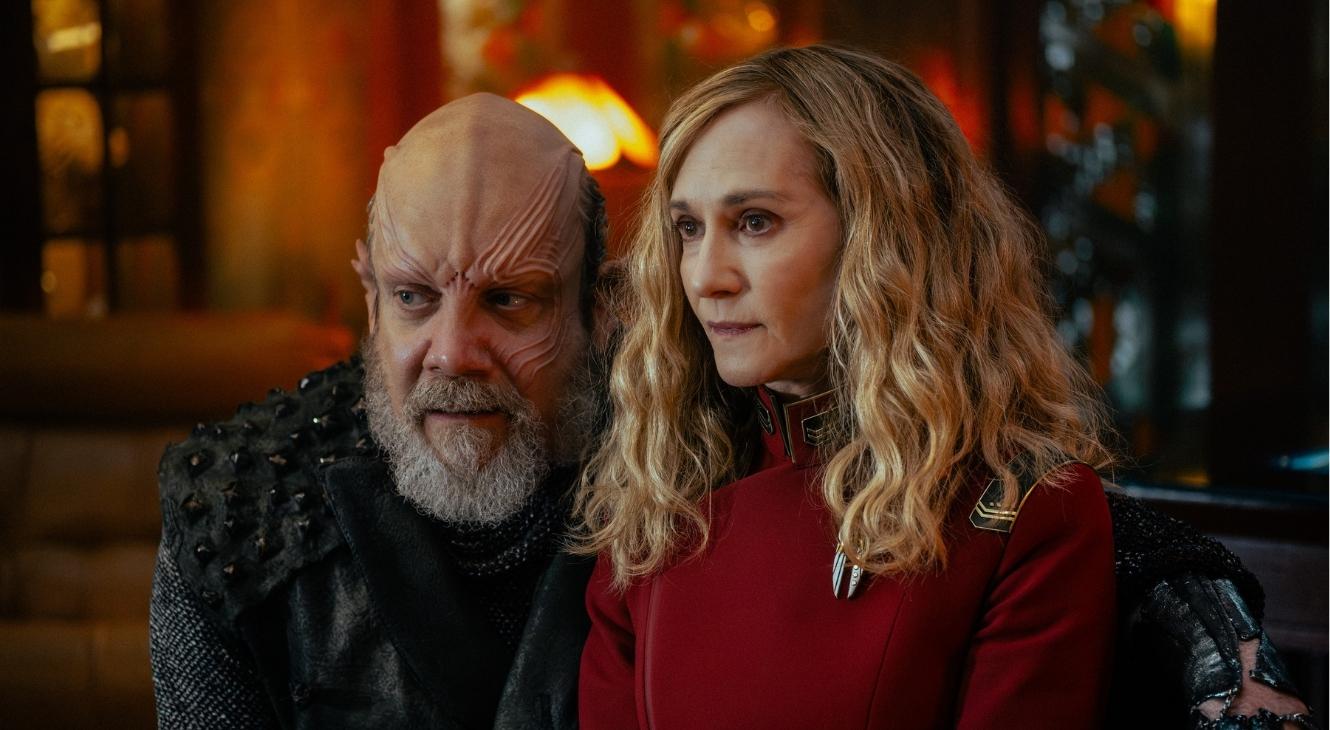
It feels like we’ve only heard the opening arguments. That restraint, that sense that he’s still holding something back, makes him one of the most unsettling antagonists Star Trek has produced in years. He can be sharp, even funny, while still radiating ideological menace. You thought past villains like Khan were complicated? Braka is a complication sharpened into a blade a Klingon would fear.
Starfleet Academy Episode 6 stops asking whether the next generation can cooperate across differences. It asks what happens when the person in front of you is just as intelligent, just as strategic, and openly committed to harm if it means their freedom.
The “needs of the many outweigh the needs of the few, or the one” has always been one of Star Trek’s cleanest moral equations. “Come, Let’s Away” complicates it without undermining it. What happens when someone understands that equation and chooses to violate it anyway? What happens when harm isn’t a tragic byproduct, but the point?
The USS Miyazaki transforms into a different kind of symbol by episode’s end.
That’s where the hour becomes something bigger than a training exercise gone wrong. And through all of it, Starfleet Academy Episode 6 keeps its eye on what makes this franchise distinct. Even as bodies fall and plans unravel, the story never drifts into nihilism. It doesn’t mock Roddenberry’s optimism. It stress-tests it.
The Miyazaki was once a symbol of bold exploration. Here, it becomes a crucible. The cadets prove they can adapt. They prove they can collaborate. But “Come, Let’s Away” makes it clear that adaptation alone isn’t enough. Progress isn’t just technological. It’s ethical.
This is where the series stops being about whether these students deserve to wear the uniform. It becomes about whether the Federation still deserves to exist. What makes “Come, Let’s Away” exceptional isn’t just the escalation. It’s the density of the questions it asks all at once.
Can empathy scale? Can cooperation survive resentment? What do you do with someone who understands your moral framework and rejects it anyway? When someone looks at “the needs of the many outweigh the needs of the few” and decides the equation itself is the problem, where does that leave you?
And those questions don’t disappear just because the crisis ends. They linger. Should someone like Braka have been handled differently years ago? Is imprisonment enough for someone who fundamentally rejects coexistence? When people break from the social contract so completely that they weaponize it, what does justice even look like? Starfleet Academy Episode 6 doesn’t answer those questions cleanly. It forces them into the open.
For much of the season, history has hovered in the background, names on walls, echoes of past captains, the weight of those who came before. In Starfleet Academy Episode 6, the only time the Original Series era is explicitly evoked is through a comic, a story within a story. And that choice matters. The past isn’t frozen in a museum. It’s preserved through narrative. Through memory. Through interpretation.
The comics aren’t treated as disposable tie-ins; they’re treated as living history. As canon in spirit, even when not physically present on screen. The message is clear without being preachy: the stories you love are still there. They still matter. They still inform this world. But clinging to them as the only valid expression of Star Trek misses the point.
Teamwork is not enough to succeed. Starfleet Academy Episode 6 shows this.
The franchise has always evolved. The Original Series gave way to The Next Generation. Deep Space Nine challenged that idealism. Discovery fractured the timeline and rebuilt it. And now Starfleet Academy pushes further, not by discarding what came before, but by confronting it.
Starfleet Academy Episode 6 embraces its Empire Strikes Back moment of this series because it strips away the illusion that good intentions are enough. The cadets succeed, they collaborate, they innovate, and it still isn’t enough to prevent loss. The victory doesn’t land clean. The lesson doesn’t resolve neatly. Instead, the episode leaves the Federation staring at the consequences of believing its ideals will automatically persuade everyone. That tension, between moral conviction and a universe that doesn’t care, is what gives this hour its weight.
What lingers after “Come, Let’s Away” isn’t spectacle. Its weight. The understanding that growth isn’t painless, that legacy isn’t decoration, and that optimism only matters if it can withstand pressure. Starfleet Academy Episode 6 doesn’t discard Roddenberry’s vision; it refines it. It carries the 31st century forward without pretending the past disappears, reminding us that boldly going has never meant starting over: it has always meant evolving.
Star Trek: Starfleet Academy Episodes 1-10 are streaming now on Paramount+.
Previous Episode | Next Episode
Star Trek: Starfleet Academy Episode 6
-
Rating - 10/1010/10
TL;DR
Starfleet Academy Episode 6 doesn’t discard Roddenberry’s vision; it refines it. It carries the 31st century forward without pretending the past disappears, reminding us that boldly going has never meant starting over: it has always meant evolving.